







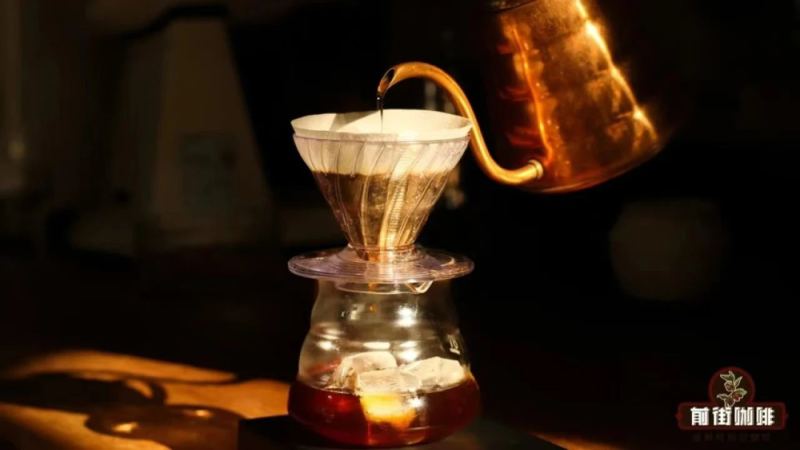
What ratio does street coffee use for hand-drip iced coffee
Iced pour-over follows a simple template: a coffee dose, about 10 times that weight in hot water, and 5 times the dose in ice. A three-stage pour at a moderate water temperature, a medium-fine grind, and a standard dripper cover the whole method, so beginners can follow the numbers and adjust afterward.
Pour-over means extracting coffee by manually controlling the water flow, using a dripper, filter paper, and a scale; nearly any bean works. The ratio above matches what street coffee shops commonly pour, and Front Street Coffee Flower Butterfly is used as the worked example, showing how floral and fruity or nutty notes shift with grind size and pouring rhythm.
If you want a refreshing iced coffee in the summer, pour-over is actually one of the lowest-barrier and easiest methods to get started with. This article sorts out the complete approach to iced pour-over coffee from scratch: first clarifying the basic concept of pour-over, then breaking down bean selection, equipment preparation, grinding, parameter setting, and pouring technique item by item, helping beginners make a delicious iced pour-over coffee just by following the template. The article provides the iced pour-over ratio commonly used in Front Street Coffee shops—the formula pairing coffee dose, 10 times hot water, and 5 times ice—along with specific operating rhythms for water temperature, grind size, dripper selection, and three-stage brewing, and uses Front Street Coffee Flower Butterfly as an example to show the actual brewing effect. Whether you prefer floral and fruity notes or nutty tones, you can find a bean selection and brewing direction that suits you in the text below, easily achieving summer coffee freedom.
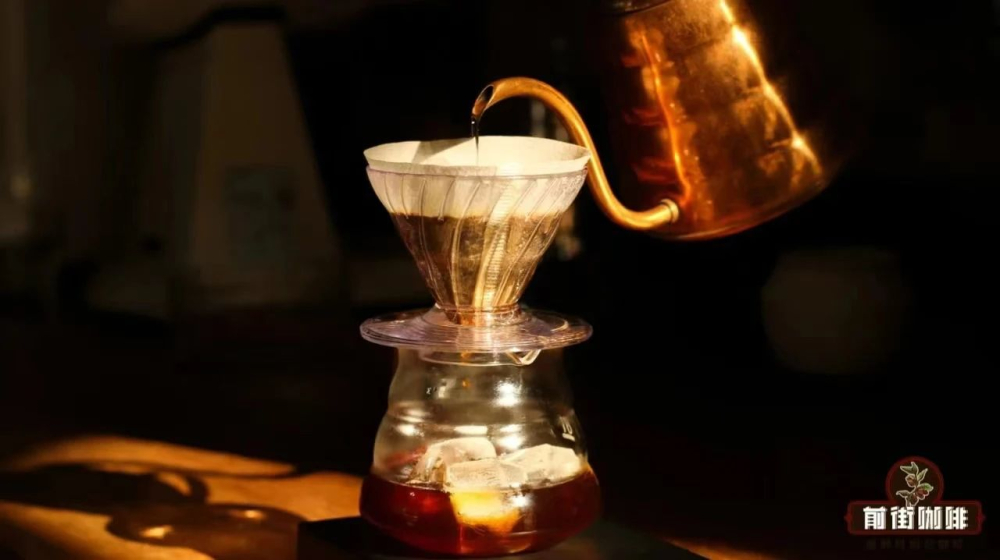
Many people think pour-over coffee is quite difficult as soon as it is mentioned, as if every detail matters—the coffee dose must be precise to the gram, the grind must be just so fine, the water temperature must be exactly how many degrees, and what pouring technique should be used... Actually, Front Street Coffee has always believed that if you are just drinking at home, there is no need to be tied down by all these rules and restrictions, let alone hold yourself to competition-level standards. You only need to first apply a reliable template, then slowly fine-tune it according to your taste, and you can make a cup of coffee that satisfies you.
It is midsummer right now. Rather than holding a scalding cup of coffee, most people probably want something icy and refreshing. So today Front Street Coffee will use iced pour-over as an example, breaking down its brewing logic and operating steps clearly, hoping everyone can easily enjoy coffee made by themselves.
What exactly does pour-over coffee refer to?
Simply put, pour-over coffee is a method of extracting coffee by manually controlling the flow of water. It belongs to the category of drip coffee, and the process uses tools such as a dripper, filter paper, and electronic scale. Pour-over has strong compatibility; almost any coffee bean can be brewed with it, and it can present the bean's own flavors relatively directly and completely, with no requirements for the location either. Precisely because of this, ever since the concept of specialty coffee became popular, pour-over became popular along with it.
In Front Street Coffee shops, all single-origin beans can be made as pour-over, and customers can choose cold or hot. When making hot pour-over, coffee grounds and hot water are extracted at a ratio of 1:15; if the customer orders iced pour-over, Front Street Coffee adjusts the coffee-to-water ratio to 1:10, then adds an additional 5 times the coffee dose in ice cubes to cool it down and appropriately dilute the concentration.
How do you make iced pour-over coffee quickly and deliciously?
Compared with other brewing methods, the pour-over process is indeed a bit more fiddly—weighing beans, grinding, folding filter paper, rinsing the dripper, adding grounds, then boiling water, pouring, and swirling the coffee liquid; the whole set of actions must be done by yourself. But it is precisely these steps that give making coffee an added sense of ritual. Enough chatter; let's move on to the formal brewing stage below.
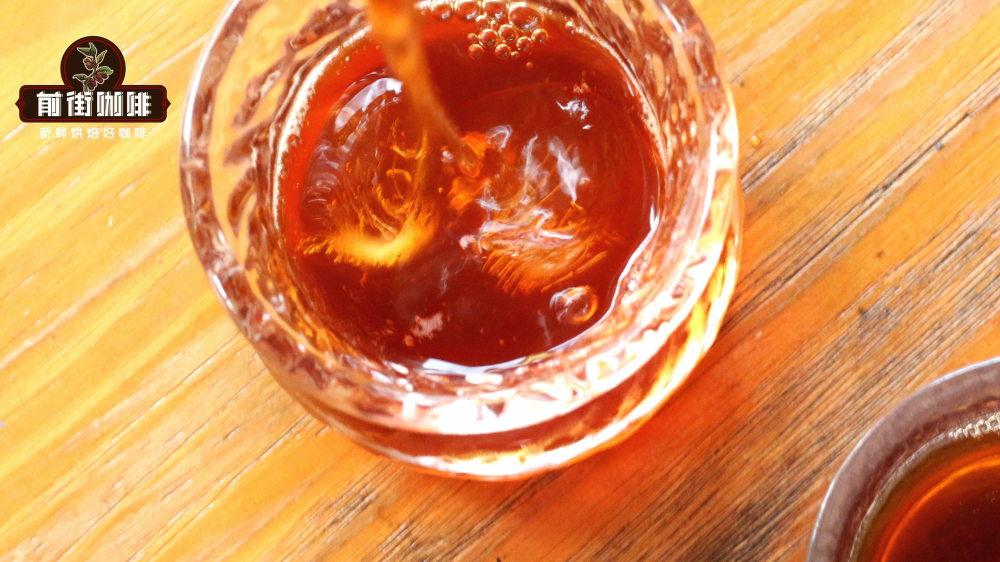
1. Pick a fresh bean you like.
The range of coffee beans to choose from is broad, but broadly they can be grouped into two directions: "acidic" and "bitter." If classified by roast level, there are three types: light roast, medium roast, and dark roast.
Friends who prefer black coffee with floral and fruity qualities can give priority to light to medium roast. Front Street Coffee recommends Fruit Ding Ding, Sun-Dried Flower Queen, and Panama Flower Butterfly; for those who want a more balanced taste, baristas usually choose medium roast, such as Front Street Coffee Strawberry Candy, Diamond Mountain, and Bird of Paradise; if you cannot accept sourness at all, then try medium-dark roast. Starting with Front Street Coffee Queen's Manor, Golden Mandheling, and Huilan is relatively safe, and you can taste aromas like chocolate and nuts.
So-called "fresh coffee" refers to beans still within their optimal flavor period. Front Street Coffee's flavor descriptions for every bean are based on the freshly roasted state. If the beans have been sitting for more than a month, much of the aroma has likely already escaped, and it is hard to recreate the original taste when brewing. Front Street Coffee is very clear about how crucial freshness is, so it only ships beans within 5 days after roasting, ensuring that everyone is still within the complete optimal flavor period when they receive them.
2. Prepare all the equipment
In addition to a bag of freshly roasted coffee beans, to brew a good cup of coffee you also need to prepare: an electronic scale with a timer function, a gooseneck kettle, a dripper, filter paper, a grinder, a thermometer, and a server.
The thermometer is used to measure the temperature of the hot water. Water temperature and grind size play somewhat similar roles—the higher the water temperature, the higher the extraction efficiency, the faster various substances are released, and the concentration rises accordingly. If you brew with water close to boiling, it is very easy to bring out bitterness. So when brewing medium-dark roasted beans, the parameters Front Street Coffee uses are different from those for light roasted beans: medium-dark roast is recommended at 87–90°C, while light roast needs a higher water temperature to stimulate aroma, so 91–93°C is used.
3. Grinding
The grinder plays a decisive role in pour-over; the coarseness and uniformity of the coffee grounds directly affect the taste of the final cup. If the grounds are too coarse, extraction is insufficient and the coffee tastes thin; if the grounds are too fine, extraction is excessive and the taste is bitter. When adjusting grind size, Front Street Coffee uses a tool—the Chinese No. 20 0.85mm standard sieve. For medium-light roasted beans, Front Street Coffee consistently maintains a 75–80% passing rate, corresponding to a medium-fine granulated sugar coarseness; for medium-dark roast, 70–75% is used, which is the degree of coarse granulated sugar.
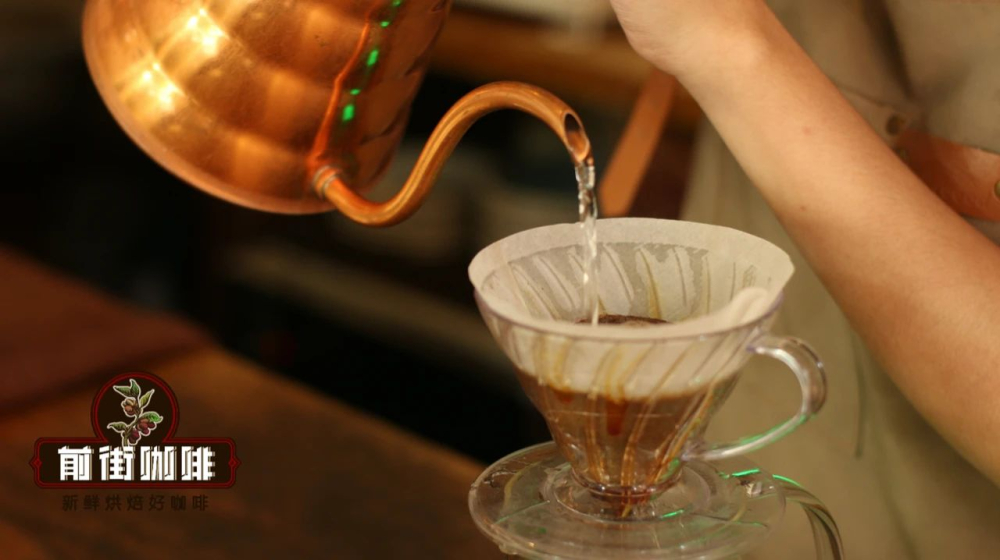
This iced pour-over demonstration uses Front Street Coffee Flower Butterfly, a washed Geisha blend, medium-light roast, with fresh citrus, white floral, green tea, and rounded caramel notes. Besides pour-over, it is also suitable for cold brew. To make the floral and fruity aroma more prominent, Front Street Coffee grinds it to granulated sugar coarseness, corresponding to 22 clicks on a C40 hand grinder and 9.5 on an EK43s electric grinder.
4. Set brewing parameters
There is a universal formula for iced pour-over: coffee dose + 10 times hot water + 5 times ice = iced pour-over coffee.
Coffee dose: 15 grams
10 times hot water: 150 grams
5 times ice amount: 75 grams
Water temperature: 92°C
Grind size: 83% passing rate on No. 20 sieve (EK43s setting 9, C40 setting 22)
Dripper: Hario V60
Technique: three-stage
First put 75g of ice cubes into the server, then pour 15g of ground coffee into the dripper and gently tap it level. In the first stage, use a small flow of 3–4ml/s to pour 30g of hot water from the center outward in small circles, and let it bloom for 30 seconds; after 30 seconds, use the same technique to pour the second stage of 60g of water, being careful not to raise the liquid level too high, otherwise it is easy to under-extract; when the coffee liquid is almost drained, pour all of the remaining 60g of hot water at a flow rate of 3ml/s, ensuring the total extraction time is controlled between 1 minute 50 seconds and 2 minutes.
The washed Flower Butterfly brewed this way has a rich fruity charm like lemon and pomelo, while also bringing out the sweet aroma of nuts. The mouthfeel is light, and the acidity, sweetness, and bitterness are balanced. However, after brewing, a small amount of crushed ice will remain in the server. If you do not want the coffee to continue being diluted, it is best to finish it before the ice has completely melted.
The above content is compiled by CoffeeHunters, a coffee news website.


