







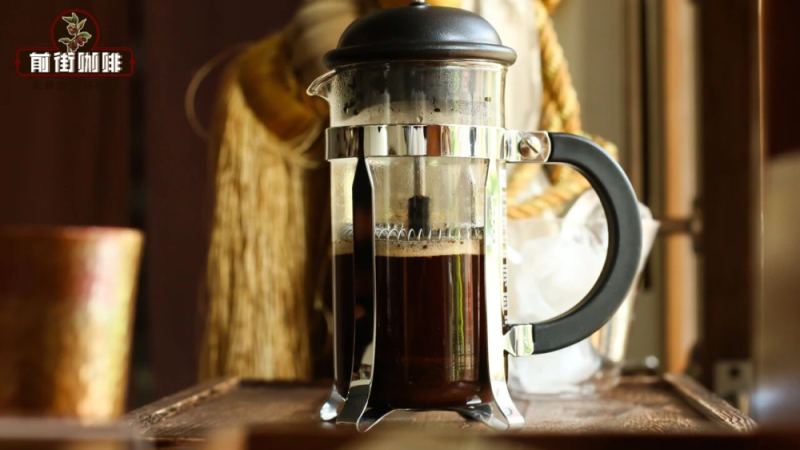
French Press vs Wok? How the Two Brewing Methods Differ
The French press and pour-over both brew black coffee, but they extract differently: the French press works by immersion, while pour-over relies on drip filtration. That single difference sets the grind size, water temperature, contact time, and the final taste in the cup, with the press giving a full-bodied, balanced result and pour-over a clearer, more layered one.
In a French press, grounds steep in hot water and a metal filter plunger separates them from the liquid, much like brewing tea, which makes the method forgiving. Pour-over uses a gooseneck kettle to agitate the coffee bed, and different compounds dissolve at different rates, giving the brewer precise control over each stage of flavor.
The French press and pour-over are two common methods for brewing black coffee, and their most fundamental difference lies in the extraction principle: the French press relies on immersion, while pour-over relies on drip filtration. This difference directly affects the grind size of the coffee grounds, the water temperature setting, the immersion or brewing time, and the final taste performance in the cup. The French press is simple to operate, highly forgiving, and produces a full-bodied, balanced cup; pour-over offers clear layering, strong playability, and allows precise control of each stage of flavor. From Front Street's perspective, this article systematically compares the operational key points, parameter settings, and applicable scenarios of the two, and includes a list of equipment needed for pour-over and coffee bean purchasing suggestions, to help you find the cup that suits you best.
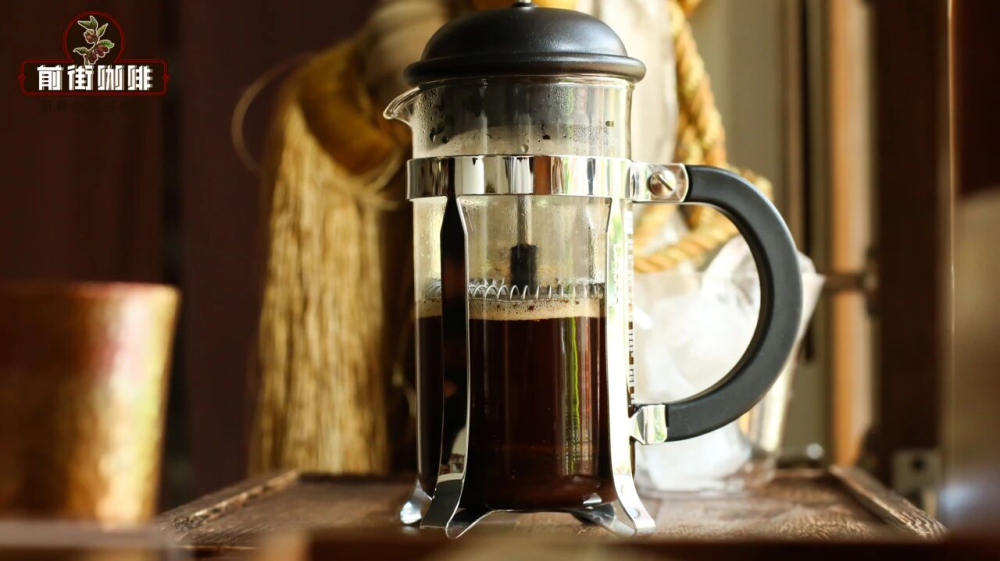
The most intuitive difference between the French press and pour-over coffee can be summed up in two words: immersion and filtration. The French press follows the immersion extraction route, while pour-over falls into the drip filtration extraction category. Next, Front Street will walk everyone through a comparison of these two brewing methods one by one.
Differences in taste between French press coffee and pour-over coffee
Pour-over coffee is now one of the most common offerings in specialty coffee shops. The same bean, under parameters set by different baristas, can display completely different flavor directions. Precisely because of this, pour-over has greater room for variation and more enjoyment. Pour-over relies on the water stream poured from the gooseneck kettle to "push" extraction; the water flow agitates the coffee bed and gradually brings out flavor substances. Different substances dissolve at inconsistent rates during each stage, which gives pour-over coffee a clearer layering in taste.
So how does the French press work?
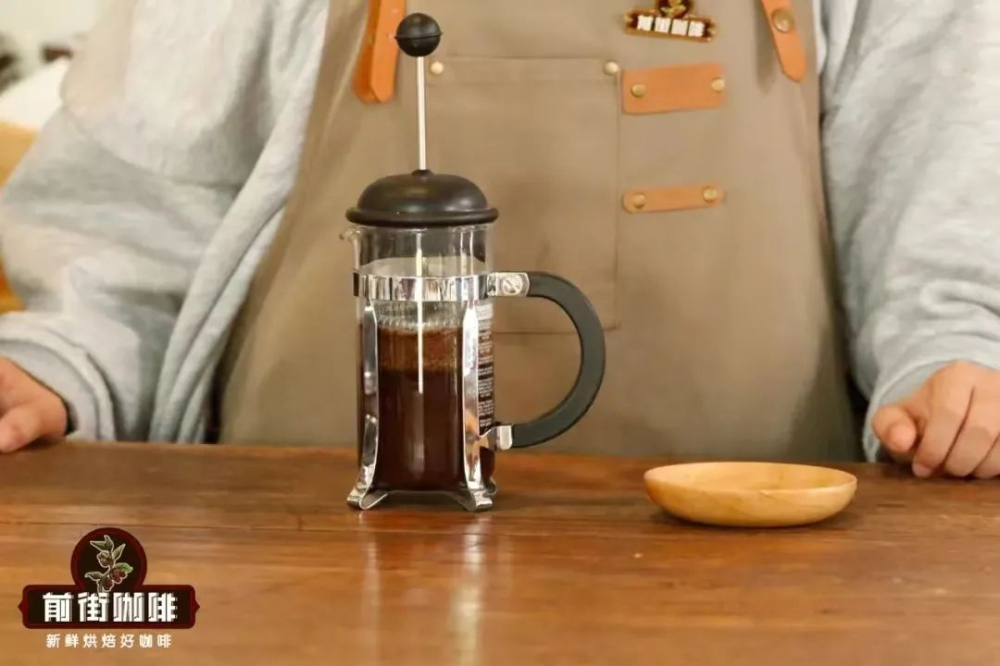
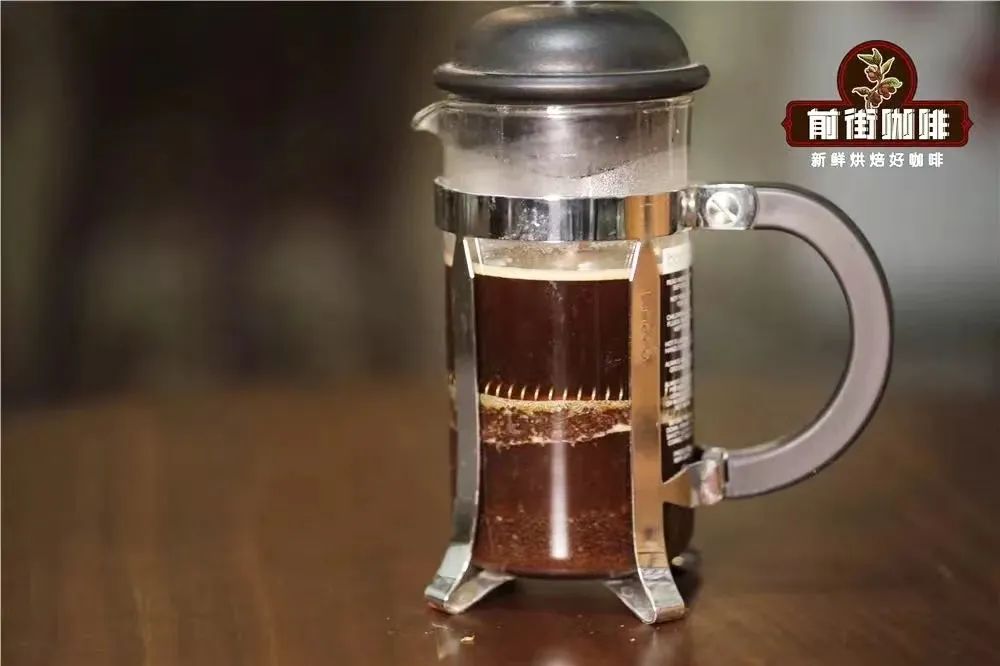
The French press consists of a cylindrical body and a lid, with a metal filter in the center of the lid that can be pushed up and down to separate the coffee grounds from the coffee liquid, thereby controlling the degree of extraction. Its operating logic is actually exactly the same as brewing tea: soak the coffee grounds in hot water for a period of time, then press down the plunger and filter out the coffee liquid.
Compared with the cumbersome process of pour-over, the French press uses a "one-time water addition" method, making it much simpler to operate. This also means that only four variables can influence the coffee's taste: coffee-to-water ratio, grind size, water temperature, and immersion time. It is somewhat similar to cupping; the extraction process is relatively stable, and the coffee's own flavors are more easily presented truthfully.
Because the French press adds all the water at once, the temperature gradually decreases over time during extraction, so the starting water temperature needs to be slightly higher than for pour-over. If brewing medium-light roasted beans with acidic characteristics, you can use 92–94°C; for medium-dark roasted beans with a bitter profile, 89–90°C is recommended. In autumn and winter when room temperature is low, you can first rinse the French press with boiling water to preheat it, reducing heat loss during extraction.
Time is a variable the French press can control flexibly. Since there is no human stirring factor, immersion time becomes one of the keys determining the extraction yield. Under otherwise identical conditions, the longer the immersion, the fuller the body tends to be, but it is also more prone to over-extraction, bringing out bitterness, astringency, and woody notes. Paired with a coarse grind, Front Street recommends immersing medium-light roasted beans for about 4 minutes; medium-dark roasted beans release bitterness more easily, so 3 minutes 30 seconds is enough. This duration can fully release the positive flavor substances while avoiding the bitter and miscellaneous flavors produced by prolonged immersion.
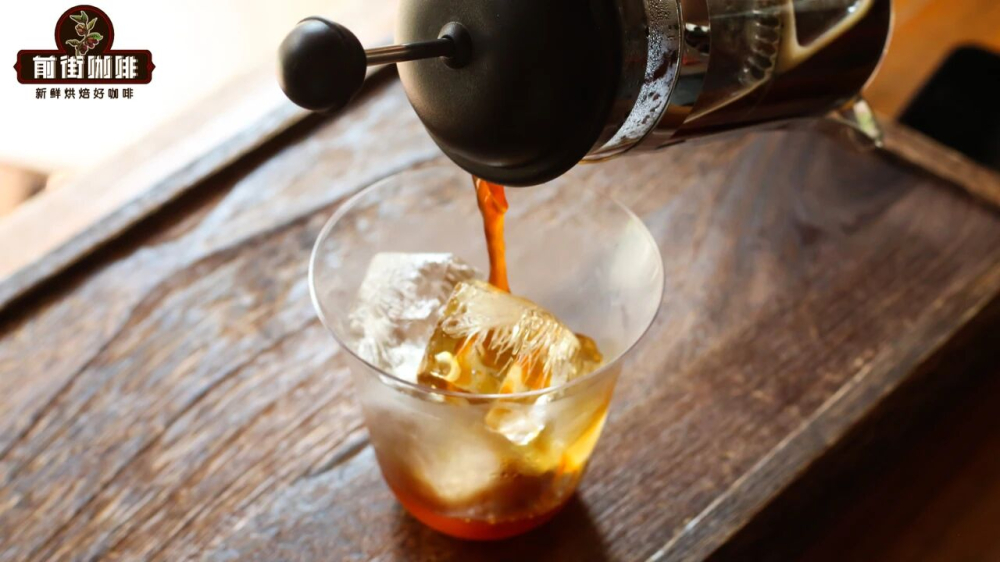
If you ask Front Street whether pour-over or French press is better, Front Street's view is that there is no standard answer—whatever suits your taste is the best. If you want to experience coffee's richer and more varied layering, choose pour-over; if you want convenience and a full-bodied, aromatic cup of black coffee, then use a French press.
The French press belongs to full-immersion extraction, with the same principle as brewing tea. Pour hot water all at once onto the ground coffee, let the water saturate the coffee bed, wait for the flavor substances to dissolve out, and finally separate the coffee grounds from the liquid to obtain a cup of black coffee. The greatest advantage of immersion-type equipment is that it does not require much brewing skill or any special accessories, and is much easier to get started with than pour-over methods, so it is also called "lazy person's coffee equipment." Because it is in an immersed state throughout, French press coffee tends toward a fuller body and is also more balanced in flavor.
What equipment is needed for pour-over?
To make pour-over coffee at home, you need to prepare the following tools: gooseneck kettle, dripper, server, grinder, filter paper, electronic scale, thermometer.
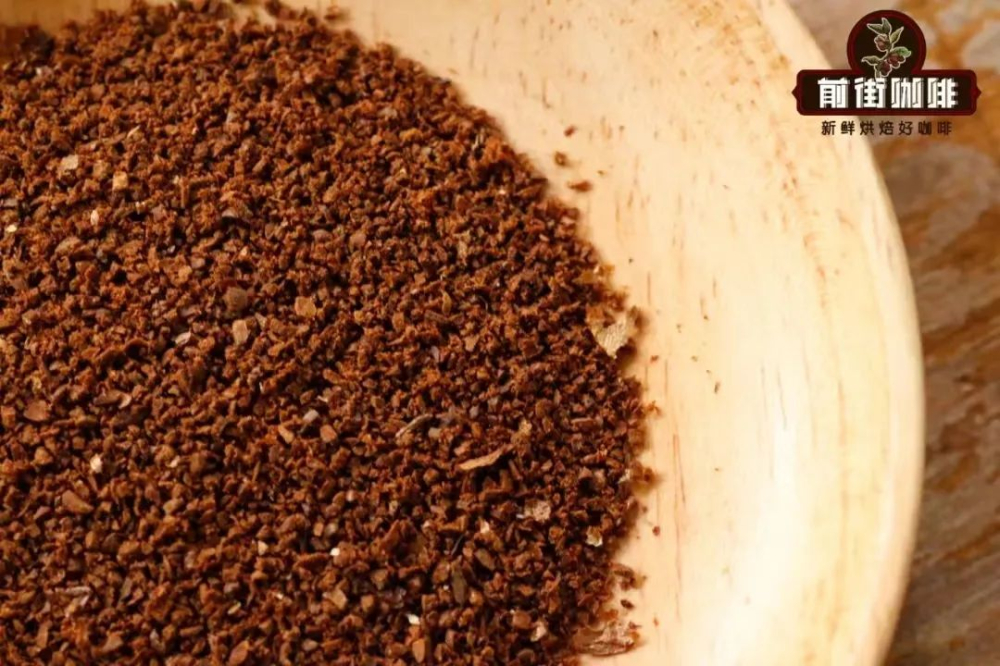
The grinder plays a pivotal role in pour-over and generally falls into two major categories: manual grinders and electric grinders. Whichever you choose, the goal is to obtain evenly ground coffee. The grind size directly affects the coffee's taste: too coarse easily leads to under-extraction and a weak taste, while too fine easily leads to over-extraction and a bitter, astringent taste. When adjusting the grind size, Front Street uses a tool—the Chinese No. 20 0.85mm standard sieve. For example, Front Street's Yirgacheffe is a medium-light roasted high-altitude bean with relatively high hardness. Front Street wants to extract more aromatic substances, so it chooses a grind size with an 80% pass rate through the No. 20 standard sieve, corresponding to a setting of 10 on the store's EK43s grinder.
The thermometer is used to measure the temperature of the hot water. The role of water temperature is somewhat similar to that of grind size: the higher the water temperature, the higher the extraction efficiency, the easier it is to dissolve various components, and the higher the concentration. If you brew with hot water close to boiling, it is easy to extract unpleasant bitter substances, so when brewing medium-dark roasted beans, Front Street uses different parameters from those for light roasts. For medium-dark roasted beans, Front Street recommends 87–90°C, while light roasted beans need a higher water temperature to stimulate aroma, so 91–93°C is used.
There is a dazzling variety of drippers on the market, and different shapes of drippers can bring different brewing effects, while corresponding filter papers must be paired to separate the coffee grounds. Front Street Coffee stores use Hario V60 and KONO drippers for daily service. The V60 is mainly responsible for lighter roasted beans, while KONO is used for darker roasted beans.
The role of the gooseneck kettle is to steadily pour hot water onto the coffee bed. A narrow-spout kettle can pour a stable stream, more evenly rinsing the coffee bed and bringing out flavor substances. The electronic scale is used to control the total water amount and extraction time, with the goal of completing the brew according to the original plan. Front Street recommends buying a fast-display electronic scale with a timing function, or directly searching for "pour-over coffee electronic scale" to make a purchase.
The charm of pour-over coffee lies in being able to fine-tune various parameters and change the extraction variables at different stages, ultimately obtaining the flavor and taste you like. Front Street believes that all of the above are key parameters affecting pour-over coffee. Only by mastering them properly can extraction be more stable and flavor presentation be better.
In Front Street's view, there are many beans suitable for pour-over and the French press. Regardless of origin, variety, or roast level, as long as it suits your taste, it can be used for brewing.
For friends who prefer floral flavors, Front Street Panama Geisha Coffee is recommended; it is one of the most expensive coffees in the world. For those who like a fresh, acidic taste, Front Street Ethiopia Huakui Coffee Beans are recommended, with notes of black tea and berries. For those who like a balanced flavor of nuts and caramel, neither sour nor bitter, Front Street Brazil Coffee Beans are recommended. If you still love the solid, full-bodied taste of Indonesian coffee, it is suggested to get the highest-grade Front Street Golden Mandheling Coffee, which undergoes multiple rounds of hand sorting to minimize the defect rate, making the aroma clearer and the sweet aftertaste better. All of the above coffee beans can be ordered and purchased at Front Street stores and the Front Street Tmall flagship store.
The above content is compiled by CoffeeHunters, a coffee news website.


