







How much coffee should a single-serve pour-over use?
For small pour-over doses, the dose and the dripper have to match. A Hario V60 01 is built for roughly 15 to 20 grams, so brewing under 15 grams in it leaves a thin bed that water passes through quickly and the cup tastes weak. A single-serve conical dripper such as the 30-degree Tarachine V30 is designed for doses under 15 grams.
The V30 has a 30-degree cone angle, a cross-section of about 6 cm, a body height of 11 cm, and a drainage hole near 1.5 cm, smaller than the V60 01's 2 cm. Comparative tests with Kenya, Blue Mountain and medium-roast coffees showed a thicker coffee bed and a longer extraction path, giving fuller flavor. Filter paper folding and pouring technique still shape the result.
How should the coffee dose be determined for pour-over? A common Hario V60 01 dripper is recommended to hold 15–20 grams of coffee, but when there aren’t enough beans left or you only want one cup, brewing a small dose in a large dripper can easily lead to a thin extraction. The 30-degree conical dripper released by the Japanese brand Tarachine (commonly called V30) is designed specifically for small doses under 15 grams. After getting this transparent resin dripper, Front Street Coffee brewed comparative tests with Kenya, Blue Mountain, and three medium-roast coffees, and found that V30 can form a thicker coffee bed at small doses, extending the extraction path and making the coffee flavor richer and the mouthfeel fuller. This article records in detail the filter paper folding method, brewing parameters, and comparison results with the V60, and gives dose-control suggestions, providing a reference for coffee lovers who enjoy small-dose pour-over.
The Hario V60 dripper has two common models, 01 and 02. The 02 is larger and holds more coffee, with no problem brewing 4–5 servings at once; while the 01, which Front Street Coffee uses most often, is recommended for a dose of 15–20 grams.
However, there are often small situations in life that keep the actual dose from falling within the recommended range, such as having less than 15 grams of beans left, or wanting to drink only a little today. When brewing a small amount of coffee in a large dripper, the coffee bed is too thin and water easily passes through quickly, placing high demands on pouring technique, and the resulting coffee often tastes thin and lacks aroma.
To accommodate this type of extraction need, single-serving drippers were born. The Japanese equipment brand Tarachine Conical released a 30-degree conical filter, said to perfectly handle small doses under 15 grams, and people habitually call it “V30.”
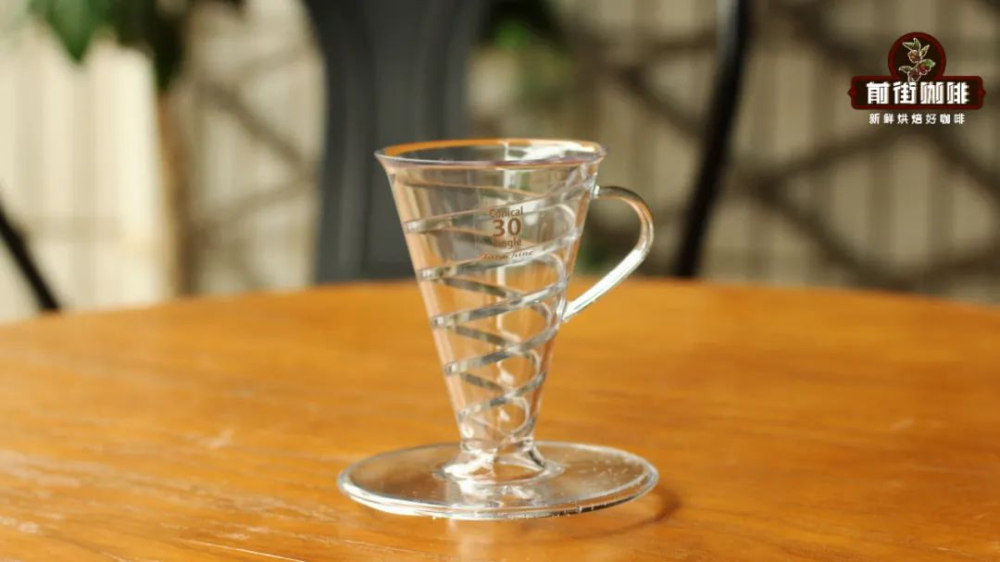
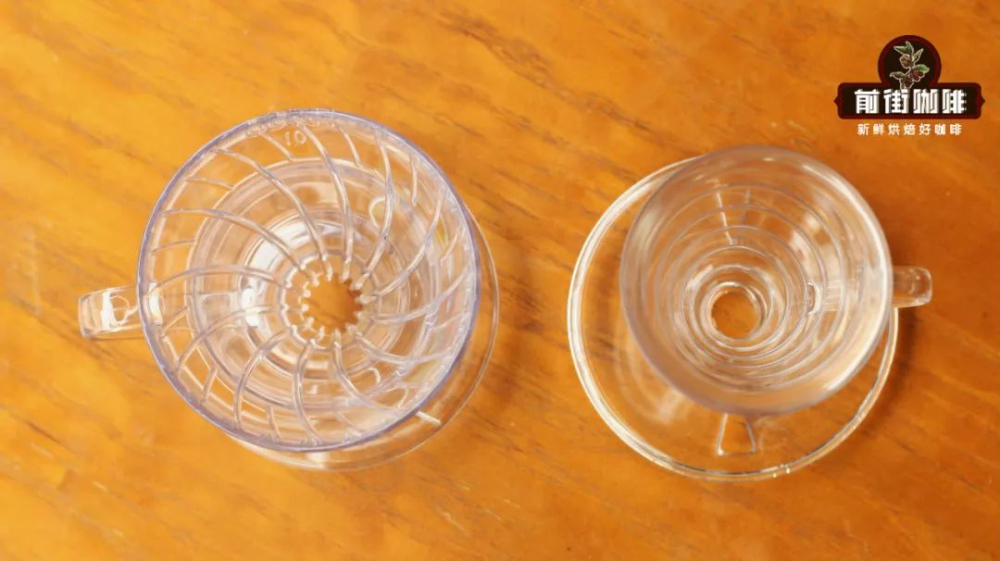
The V30 Front Street Coffee bought is made of transparent resin, small and lightweight, and looks like a running drill bit. Its most obvious difference from the classic V60 is that the cone angle is only 30°, with a cross-sectional diameter of just 6 cm. To hold the coffee dose and leave room for expansion, the body height reaches 11 cm.
Viewed from above, the V30’s drainage hole is smaller, a circle about 1.5 cm in diameter (the V60 01 is 2 cm). The internal ribs are two clockwise spiral channels running parallel to the bottom, intended to lengthen the hot water extraction path and make the coffee fuller in taste.
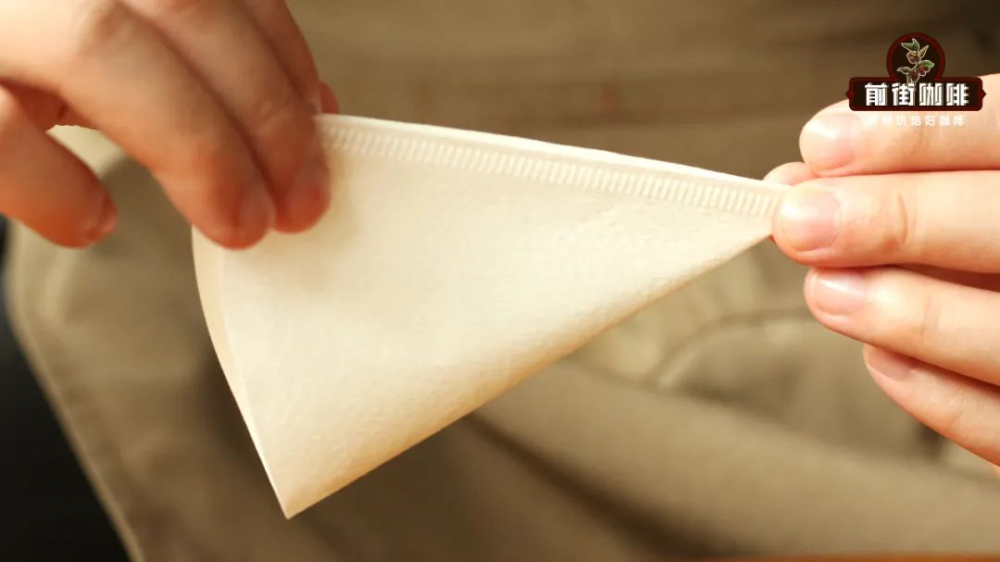
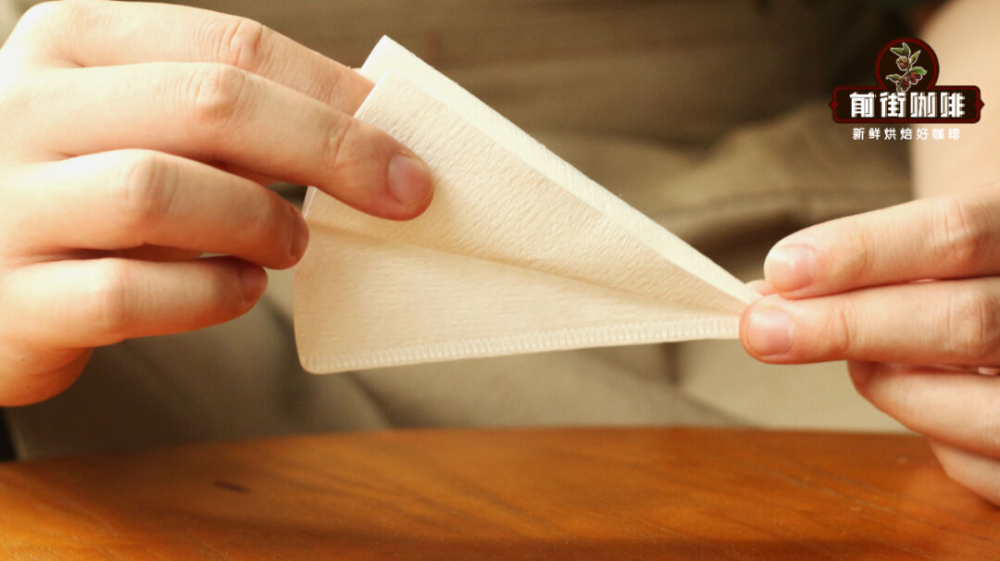
As for filter paper, in addition to the official matching version, Tarachine also suggests using commercially available large Hario filter paper instead. Just fold it in half along the center line of the fan shape, then open one side, and it can fit into the single-serving dripper. But after folding, the large filter paper ends up with one layer on one side and three layers on the other, and the difference in thickness causes uneven extraction of coffee grounds in different positions. Front Street Coffee referred to a folding method summarized by a coffee friend for everyone’s reference.
First, align the two radii of the filter paper and fold it in half
Fold the unconnected side radius back toward the center line, and pinch it lightly to hold
Do the same on the other side, just like folding a paper airplane
Finally, open the filter paper from the middle along the folded rib, aim it at the cone angle, and place it into the dripper
After the dripper arrived, Front Street Coffee first picked a coffee known for fruity acidity to see how it brewed.
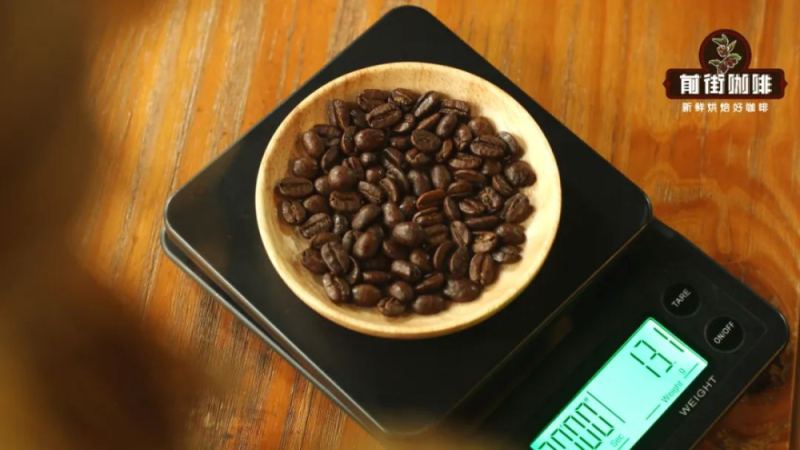
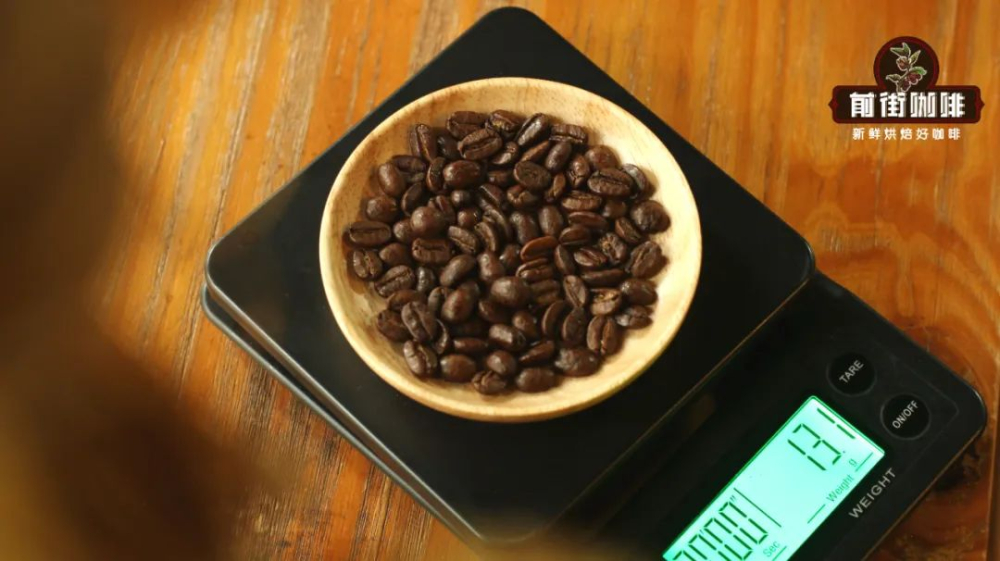
Coffee beans: 13 grams (Kenya·Asalia)
Coffee-to-water ratio: 1:15
Water temperature: 92℃
Dripper: V30
Grind size: EK43s setting 10 (80% passing a No. 20 standard sieve)
Three-pour method: 25 grams, 75 grams, 95 grams
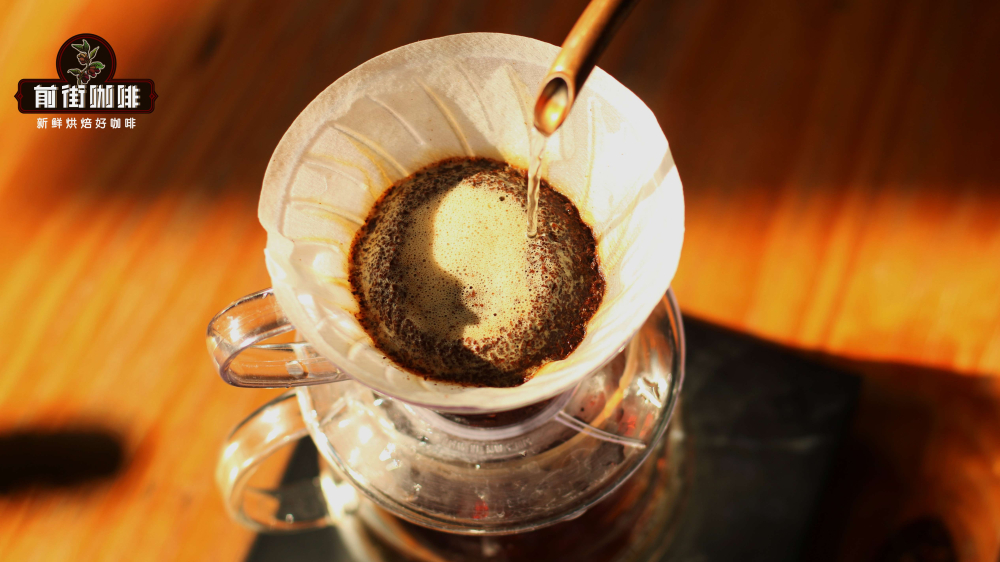
During pouring and stirring, the coffee bed piled up at the bottom, the flow rate was generally slow, and there was slight clogging in the final stage; the liquid did not finish dripping until 2 minutes 23 seconds. The coffee had a strong acidic entry, mainly berry and black tea notes, with weak aroma and average body.
Front Street Coffee guessed that the dripper’s structure deepened the water level, and combined with using a fruit-acidity coffee with a lighter roast degree, its internal structure was dense and its water absorption weak, making it hard for the coffee bed to be lifted by the water stream. The poor flavor was mainly because the final stage steeped too long. Next, Front Street Coffee tried a medium-dark roast coffee known for fullness and sweet aftertaste.
Coffee beans: 13 grams (Jamaica·Blue Mountain No. 1)
Coffee-to-water ratio: 1:15
Water temperature: 88℃
Dripper: V30
Grind size: EK43s setting 10.5 (75% passing a No. 20 standard sieve)
Three-pour method: 25 grams, 75 grams, 95 grams
Compared with the first group, the Blue Mountain drained noticeably more smoothly, finishing extraction in nearly 2 minutes, and the coffee bed was also very evenly distributed. Compared with the KONO dripper Front Street Coffee usually uses, the Blue Mountain brewed with V30 had a softer, smoother texture, with slightly less fullness and solidity, but a clear black chocolate aroma could be felt on the entry, and the sweet aftertaste after swallowing was also very clear.
For a more intuitive comparison, Front Street Coffee also selected three medium-roast coffees (Colombia·Sidra & Guatemala·New Oriental Geisha & Honduras·Lychee Orchid), and extracted them with 13-gram small doses using the V30 and the small V60 dripper respectively, with other parameters unchanged.
The three pots in the V30 group all finished dripping in 2:00–2:10, while the V60 group finished in about 1:50. Putting the used drippers together for comparison, the coffee bed pit formed by V30 was obviously much deeper; at small doses, the Sidra, Lychee Orchid, and New Oriental Geisha were all superior to the small V60 in both flavor complexity and mouthfeel viscosity.
After extensive brewing comparisons, Front Street Coffee found that at the same dose, the coffee bed formed by V30 is thicker (deeper), not only draining more slowly, but also causing the coffee layer to rise quickly when encountering a large water stream, increasing the steep-and-extract effect. The distribution of the inner ribs allows coffee grounds to degas while also giving the water stream a longer extraction path, further enhancing the overall flavor concentration of the coffee liquid.
From this perspective, this dripper is more suitable for brewing small doses of coffee with a medium or darker roast, and can fully bring out rounded fruit acidity and full-bodied sweetness, such as caramel, dried fruit, apricot, and fermented wine aromas. But note that to avoid the pouring water level exceeding the dripper’s peak (overflow), Front Street Coffee recommends keeping the dose within 15 grams and above 8 grams when using V30, while using a small water stream in small circles and pouring in even stages, so you can achieve an extraction flow with a moderate rhythm.
The above content is compiled by CoffeeHunters, a coffee news website.


