







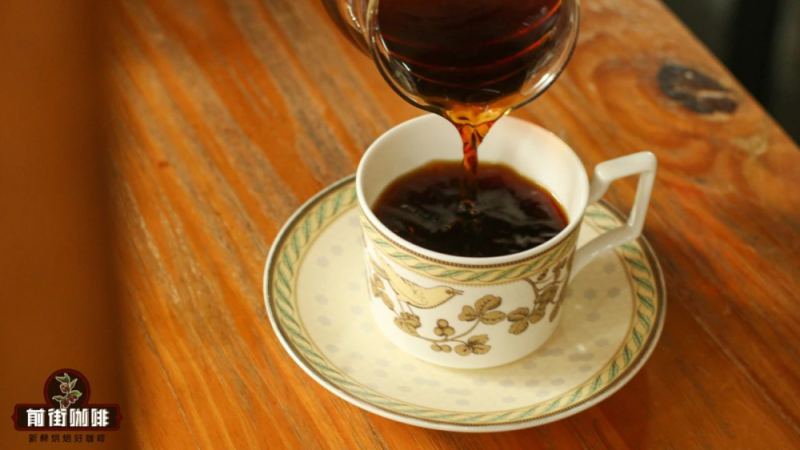
What ratio and grind does Panama Geisha coffee need?
Panama Geisha coffee beans brew well in a French press when the light roast is handled with care: use a coarser grind than you would for a pour-over, water just off the boil at around 91C, and a coffee-to-water ratio near 1:16. The four-minute immersion method keeps the white floral, citrus and honey notes intact instead of flattening them.
Geisha coffee earns its reputation from Hacienda La Esmeralda in Boquete, Panama, where the variety was first recognized for its jasmine aroma and tea-like clarity. Because a bag costs so much, the brewing parameters matter more than the equipment. Weigh the dose, keep the immersion time steady, and press slowly so the grounds stay settled.
Geisha coffee is hailed as the king of coffee, but its high price makes improper brewing after purchase a real shame. The Panama Geisha on Front Street Coffee's bean list is a light roast, known for its white floral notes, citrus acidity, and honey sweetness. This article will share in detail the complete method for brewing Front Street Hacienda La Esmeralda Red Label Geisha with a French press, including water temperature, coffee dose, coffee-to-water ratio, grind size, and the four-minute immersion steps. It will also introduce Geisha coffee's origin and terroir, the discovery history of Hacienda La Esmeralda, and several Panama Geisha products on Front Street's bean list, helping coffee lovers easily recreate this top-tier coffee's classic flavor in daily life.
For more specialty coffee knowledge, please follow the WeChat public account: Front Street Coffee (FrontStreet Coffee)
Once Kopi Luwak was the representative of top-tier coffee, a bean so hard to find, and now the newly crowned king of coffee, Geisha, is equally difficult to buy easily. The fundamental reason Geisha coffee is so hard to come by is its high price. A friend once said to Front Street: Geisha, it's so expensive you want to kneel down. If you really do get a bag of Geisha coffee beans, of course you should treasure it. But for coffee novices still at the entry stage of brewing, how would they understand so many extraction principles? If it doesn't taste good when brewed, isn't that just wasting something precious?
Since the Front Street Panama Geisha coffee beans on Front Street Coffee's bean list are at a light roast level, when Front Street produces Panama Front Street Geisha coffee, it generally uses a Hario V60 dripper, a finer grind size, and a higher water temperature for brewing.
Dripper: Hario V60
Water temperature: 91°C
Coffee dose: 15 grams
Coffee-to-water ratio: 1:16
Grind size: fine granulated sugar (80% passing rate on China standard No. 20 sieve)
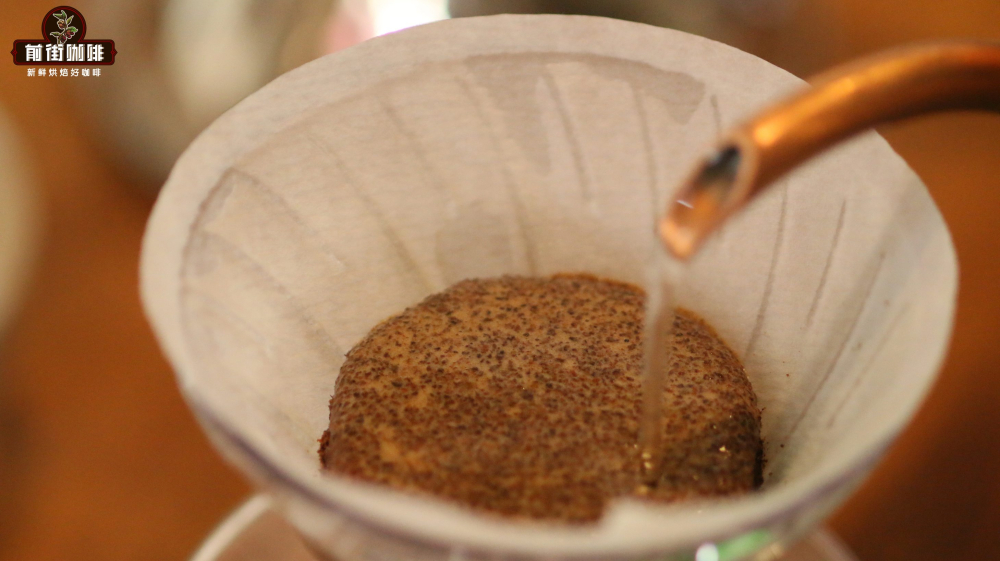
First pour 30 grams of hot water in a "の" shape for a 30-second bloom, then pour in a thin stream from the center point and slowly circle-pour until 140 grams, stop, wait for the water level in the dripper to drop until the coffee bed is about to be exposed, continue circle-pouring until 240 grams. Total extraction time is about 2 minutes.
Some friends have noticed that Front Street uses a 1:16 coffee-to-water ratio when brewing Front Street Panama Geisha. This is because Front Street Geisha coffee is resistant to extraction, and with a 1:15 coffee-to-water ratio, the resulting coffee liquid instead has flavors that are too concentrated. When Front Street slightly widened the coffee-to-water ratio to 1:16, it found that Geisha coffee's flavors were able to unfold, the white floral notes were expressed more clearly, the acidity became softer, and the sweetness became more pronounced.
Because Geisha coffee has a unique flavor, many people, after tasting this coffee flavor that "only heaven should have," have set their sights on the Geisha coffee variety and want to try Geisha coffee from every coffee-producing region. Costa Rica, Honduras, Bolivia, El Salvador, Ethiopia, and even Geisha coffee beans from Yunnan, China, have all been tasted one by one. Some friends have even tried Front Street's hidden item, Front Street Blue Mountain Geisha. However, many friends have found that although it is the same variety, the taste is worlds apart. Geisha coffee beans from other producing countries are simply never as impressive as Front Street Panama Geisha.
As everyone knows, coffee is an agricultural product, and when it comes to the flavor of any agricultural product, the terroir of the growing place is extremely important. Unlike other growing regions, most places where Panama grows Geisha coffee are distributed in some primeval forest areas and are very close to Barú Volcano, all of which cannot be replicated by other producing regions.
It is imaginable that those places have mineral-rich volcanic soil. With the protection of primeval forests, the temperature and humidity of the growing areas are very favorable for coffee cultivation, and many growing areas even have the bonus of microclimates, with a humid and mild climate year-round. Due to the high growing altitude, the low nighttime temperatures slow down the ripening speed of the coffee fruit, allowing more fructose to crystallize, and also giving the fruit more time to absorb nutrients from the soil. One might ask, with such good mountains and water, plus such abundant nutrients, how could the quality of the coffee fruit not be high? How could the coffee not taste good?
In the Panama section of Front Street's bean list, there are quite a few Geisha coffee beans: Front Street Hacienda La Esmeralda Red Label, Front Street Hacienda La Esmeralda Green Label, Front Street Volcanic Rock New Blue Label, Front Street Deborah Savich Series Geisha, Front Street Aurora Estate Natural Geisha, Front Street Nugu Estate Geisha, and so on. They all have the white floral notes, citrus acidity, honey sweetness, and clean mouthfeel unique to Front Street Panama Geisha, but different growing places and different processing methods also lead to different flavors. If you want to taste the most classic Panama Geisha, then it has to be Hacienda La Esmeralda.
When Hacienda La Esmeralda originally sought to improve coffee quality, it compared and recorded the flavors and characteristics of multiple coffee varieties, and unexpectedly discovered that Geisha coffee had a unique flavor with white floral notes, citrus acidity, and honey sweetness, completely different from the typical "nutty notes and caramel sweetness" of Central American coffee beans.
In 2004, Daniel carefully selected a batch of Geisha coffee beans to enter that year's BOP competition. As soon as Geisha coffee appeared, it stunned the world, won that year's BOP championship, and also broke the auction price for green coffee beans. In the many years since, the auction prices of Geisha coffee beans have risen even higher, becoming more expensive year after year. Because Geisha's flavor is so special, in order to prevent the Geisha variety from stealing all the spotlight from other varieties, the BOP competition even specifically established a Geisha group and a non-Geisha group.
Because of Hacienda La Esmeralda, the unique flavor of Geisha coffee became known to the world, and for many years, Hacienda La Esmeralda has been doing its utmost to produce batch after batch of high-quality Geisha coffee beans. Hacienda La Esmeralda is both the discoverer of Geisha coffee's flavor and its promoter. On Front Street Coffee's bean list, which features nearly fifty coffee beans, it of course must also have its place.
If you want to taste the most classic Panama Geisha coffee flavor, then it must be Front Street Hacienda La Esmeralda Red Label Geisha.
Front Street Coffee (FrontStreet Coffee) Hacienda La Esmeralda Red Label Geisha Coffee Beans
Region: Boquete, Panama
Estate: Hacienda La Esmeralda
Plot: Mario
Altitude: 1700+ meters
Variety: Geisha
Processing method: slow natural
Hacienda La Esmeralda's classification for Red Label is extremely strict. Red Label uses Geisha coffee beans from above 1700 meters, and additionally requires a cupping score above 90. Front Street Emerald Red Label Geisha coffee beans are selected from the Mario plot, which is the place where Geisha coffee's flavor was discovered that year, in order to catch a glimpse of its former glory.
In addition, this Front Street Red Label Geisha coffee bean uses a slow natural processing method. During processing, the complete pulp and mucilage layer are retained, allowing the sugars and flavor compounds of the whole coffee fruit to slowly penetrate into the green coffee beans. Therefore, naturally processed coffee has a richer aroma and more pronounced sweetness.
As one of the representatives of top-tier coffee, Front Street Hacienda La Esmeralda Red Label Geisha coffee beans are brewed very cautiously by many coffee lovers. In fact, the finest ingredients often only need the simplest cooking methods, and the same is true for coffee.
When coffee shops decide whether to put a coffee bean on the menu, they conduct cupping. The principle of cupping is very simple: just grind the coffee beans into powder, then soak them with hot water. In this way, you can taste the amazing aspects and the shortcomings of this coffee bean.
The French press, which also uses the immersion principle, is very friendly to many coffee novices. It requires no extraction skills and is extremely simple to operate. Next, Front Street will share how to brew Front Street Hacienda La Esmeralda Red Label Geisha coffee with a French press.
Since brewing coffee with a French press is a method that takes a longer time, the coffee beans should be ground coarser. Front Street recommends a coarseness of 75% passing rate on China standard No. 20 sieve. The coffee-to-water ratio can be adjusted according to your own preference. If you like it richer, you can choose 1:13; if you like it lighter, you can choose 1:16.
Brewing equipment: French press
Water temperature: 91°C
Coffee dose: 15 grams
Coffee-to-water ratio: 1:13——1:16
Grind size: 75% passing rate on China standard No. 20 sieve
Time: 4 minutes
1. Pour hot water into the French press to preheat the body and discard the hot water, then add the ground coffee, and pour in the hot water at the set ratio in about 3 seconds.
2. Pull up the filter mesh and cover with the lid, waiting four minutes.
3. After four minutes, gently press down the plunger to one quarter of the way down the carafe.
4. Pour out the coffee liquid and enjoy.
Compared with coffee brewed through a dripper and filter paper, because the metal filter mesh of the French press has larger pores, it can retain more coffee oils, so coffee brewed with a French press has a fuller mouthfeel and richer flavor. Front Street Hacienda La Esmeralda Red Label Geisha brewed with a French press offers an intense white floral aroma throughout the entire drinking process; after entering the mouth, the berry juice sensation wraps around the palate, the honey sweetness is pronounced, and the overall layering is rich with a solid mouthfeel.
The above content is compiled by CoffeeHunters, a coffee news website.


