







How do you adjust the pour-over ratio for Golden Mandheling?
Golden Mandheling from Sumatra brews as a pour-over with a medium-coarse grind, water in the high 80s Celsius, and a coffee-to-water ratio near 1:15, poured in three stages with a bloom first. The aim is to keep the heavy body while lifting the nutty, chocolate and herbal notes into a cleaner, sweeter cup.
Mandheling comes from around Lake Toba and Lake Tawar in North Sumatra, an Arabica covering the Lintong and Aceh regions and graded G1 after screening. Its thick mouthfeel also makes it a common base for espresso blends, where it adds body and a wild aroma alongside Brazilian beans or a small share of Robusta.
Mandheling is a highly distinctive coffee from the Sumatra region of Indonesia, known for its rich mouthfeel and herbal, chocolate, and nutty aromas. This article focuses on the pour-over brewing of Front Street Golden Mandheling, explaining in detail the coffee-to-water ratio, grind size, water temperature, dripper selection, and three-stage pouring technique, helping coffee enthusiasts brew a Mandheling that retains a rich body while achieving a clean, sweet-forward, and layered flavor. The article also covers the processing method of Mandheling beans, the G1 grade screening standards, and its dual identity as both a single-origin pour-over bean and a suitable component for espresso blends, making it a useful reference for readers who want to systematically adjust Mandheling parameters.
Front Street Indonesia Sumatra Golden Mandheling Brewing Method Sharing
Front Street Mandheling occupies a rather unique position, straddling the line between "single-origin coffee" and "espresso coffee": it possesses a remarkably outstanding body (with a mouthfeel close to Espresso), yet beneath its heavy bitterness and high richness, it reveals intense nutty, chocolate, and woody or cinnamon-like aromas. Because of this, Front Street Mandheling coffee beans can serve as both a single-origin pour-over bean and a base for making espresso.
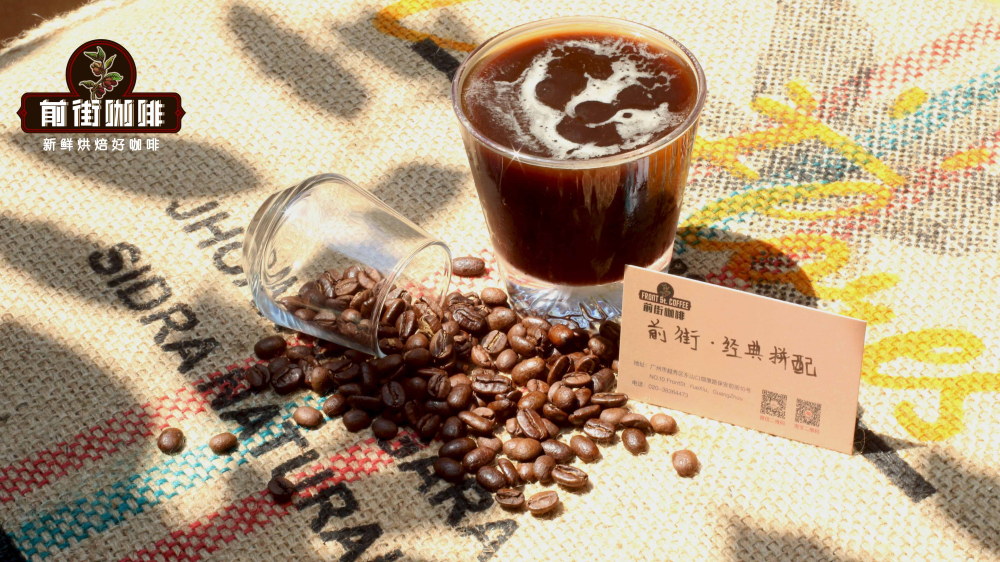
If you want to taste an espresso with Mandheling character, you can try Front Street Classic Blend. This blend combines Indonesian Mandheling beans with Brazilian espresso beans, retaining the wild aroma of Mandheling while incorporating the smooth mouthfeel of Brazilian beans, creating a complementary and harmonious flavor profile. Front Street Classic Espresso Blend adds Robusta to the traditional Mamba recipe, significantly enhancing the crema and making the espresso body more substantial. It is suitable for home brewing as well as for making latte art.
Front Street Mandheling coffee originates from the areas around Lake Toba and Lake Tawar in North Sumatra, Indonesia. It is an Arabica coffee covering the two well-known producing regions of Lintong and Aceh, and is a coffee bean that accounts for a relatively small proportion locally yet stands out in quality.
Sumatra has a tropical rainforest climate with frequent rainfall year-round, a humid environment, and scarce freshwater resources. Local coffee farmers cannot use the traditional washed method to process green beans, nor can they rely on sun-drying to complete the drying process. To address this, they invented the wet-hulled method, which takes only four days to complete, greatly shortening the fermentation and sun-drying time. This saves labor while also giving Sumatra Mandheling its unique herbal and earthy character.
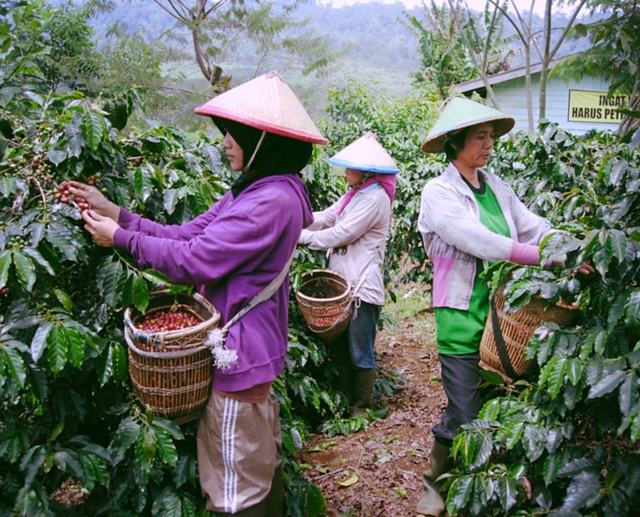
To improve the quality of Mandheling coffee beans, after purchasing green beans, PWN conducts an initial round of mechanical sorting, followed by three rounds of hand-picking to remove defective beans and retain only complete, uniform beans that meet the local highest G1 grade, thereby significantly reducing the defect rate of Mandheling coffee. G1 beans are sized above 18 mesh, and in a 300-gram green bean sample, no more than 3 defective beans are allowed. Front Street believes that with a lower defect rate, the coffee flavor becomes cleaner and the sweetness more pronounced.
Coffee-to-Water Ratio
Front Street brews a single serving according to production standards, using 15 grams of coffee grounds with a coffee-to-water ratio of 1:15. At this ratio, Golden Mandheling can showcase its layered flavors without losing its rich, full-bodied mouthfeel.
Grind Size
Golden Mandheling coffee beans are dark-roasted, and the internal structure of the beans is already quite porous. Once ground, they easily absorb water and release more substances. To avoid excessive extraction of bitter compounds, Front Street chooses a medium grind size, with a coarseness standard of 70% passing through a No. 20 sieve. Grinding too fine tends to bring out bitterness, while grinding too coarse makes the coffee thin and flavorless.
Brewing Temperature
Regarding water temperature, Front Street has learned that many bitter and burnt flavors stem from water that is too hot, so 87–88°C water is used here; if the temperature is lower than this, the aroma of Golden Mandheling may not be fully extracted.
Dripper Selection
Front Street baristas recommend using a KONO dripper when brewing this type of full-bodied coffee. Compared to the V60, the KONO dripper has a smooth curved surface with weaker airflow, and the straight ribs occupy only one-quarter of the dripper, allowing the coffee to stratify and form an immersion-style extraction with the hot water, resulting in a rounder, richer flavor. The KONO dripper is also suitable for medium-dark roasted coffees such as Front Street Queen's Estate and Front Street Jamaica Blue Mountain No. 1.
Extraction Technique
During brewing, Front Street uses its customary three-stage pouring to better bring out the rich mouthfeel and sweetness of Golden Mandheling.
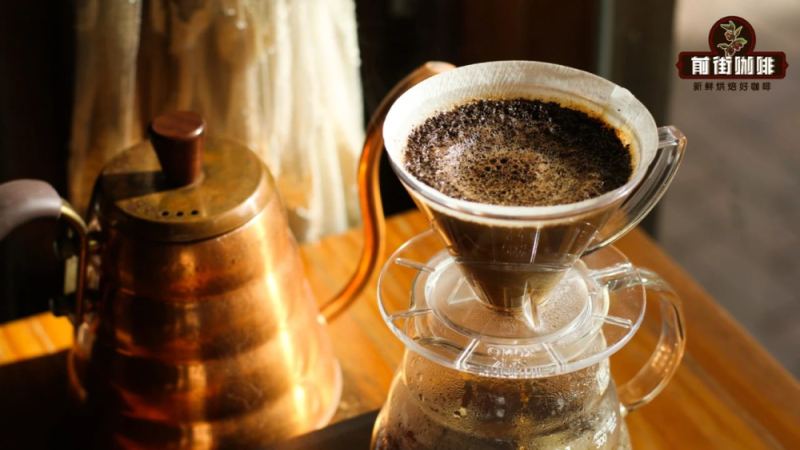
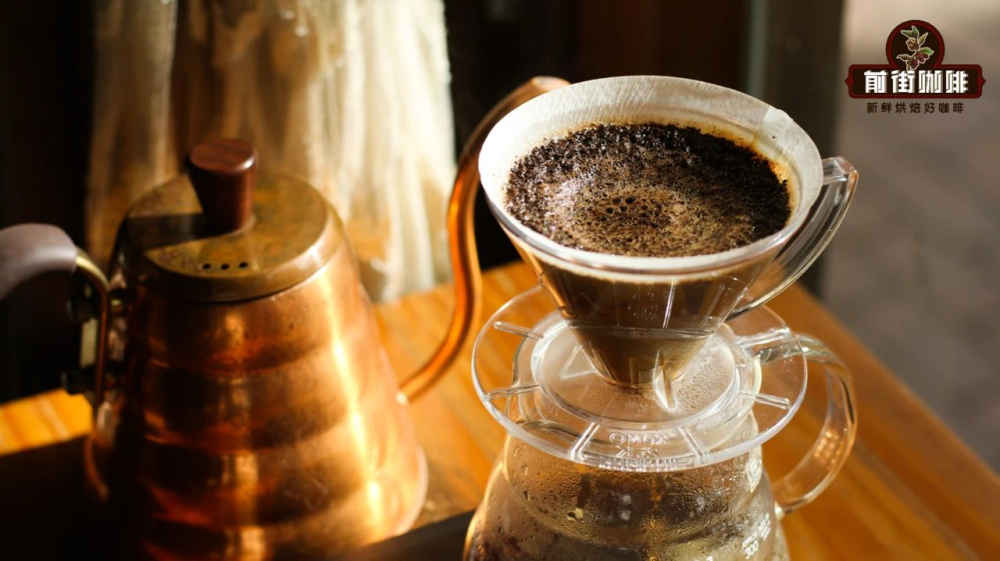
In the first stage, pour water at twice the amount of coffee grounds, i.e., 30 grams, and let it bloom for 30 seconds. Pour steadily and gently from the center, with the goal of saturating the entire coffee bed. At this point, an obvious hamburger effect can be observed as the coffee grounds are degassing. In the second stage, pour 100 grams of hot water in a circular motion, raising the coffee bed as much as possible so that the grounds form a wall clinging to the edge of the dripper, extracting more aromatic compounds. In the final stage, pour 95 grams of hot water in a small circular motion, with the goal of enhancing the sweetness in the latter part of the cup.
Pour-Over Golden Mandheling Coffee Flavor and Mouthfeel: As the temperature drops, the coffee reveals shifting layers, rich and clean with high balance, featuring intense nutty and caramel aromas with a hint of chocolate, and a lasting finish.
The above content is compiled by CoffeeHunters, a coffee news website.


