







Does an americano vs latte change your caffeine?
An iced Americano and an iced latte often carry the same caffeine when both are built on the same espresso shots; the milk in a latte adds volume, fat and sweetness but no caffeine. What actually shifts the number is the bean and the extraction, not the milk or the ice.
Caffeine keeps you alert by blocking adenosine from binding to receptors in the brain, so the fatigue signal never arrives. Robusta beans hold roughly twice the caffeine of Arabica, and a longer extraction pulls more of it, which is why a drip coffee or cold brew can outpace a single espresso-based drink.
Coffee is a daily must-have pick-me-up for many people, but caffeine content varies significantly across different types. From the perspective of Front Street Coffee, this article explains the science behind how coffee keeps you alert, compares the caffeine content of Robusta and Arabica beans, and details the caffeine data for common coffee drinks such as espresso, latte, Americano, pour-over, and cold brew. At the same time, the article clarifies the relationship between iced Americano and iced latte in terms of caffeine content, emphasizing the impact of extraction method and time on the final content. Whether you are a coffee enthusiast or an office worker relying on coffee to stay alert, you will find practical reference here.
For more specialty coffee knowledge, please follow: Front Street Coffee (Frontsteet Coffee)
When humans first used coffee, its core value lay in awakening the spirit. Whether it is an espresso quickly downed while standing, an Americano from the office drip machine kept warm all day, or a single-origin pour-over intentionally ordered at a café, they all serve the basic function of keeping you alert. People simply choose the cup that suits them best based on the drinking occasion, actual needs, and flavor preferences.
So, with such a rich variety of coffee, which one actually makes you feel most awake after drinking it?
Why does coffee make you feel energized?
The key ingredient in coffee that keeps you alert is caffeine. The feeling of tiredness is actually orchestrated behind the scenes by a substance called adenosine—the longer you stay awake, the more adenosine accumulates in the body, and the easier it is to feel sleepy. Caffeine, however, can block adenosine from binding to nerve receptors in the brain. As a result, the brain does not receive the fatigue signals sent by adenosine and continues to operate efficiently, temporarily masking the sense of exhaustion. Put simply, you use caffeine to create an illusion for your brain.
Therefore, the coffee with the strongest alerting effect is, in theory, the type with the highest caffeine content. And the final caffeine level of a cup of coffee is mainly determined by two factors: the caffeine content of the coffee beans themselves, and the specific brewing and extraction method. Below, Front Street explains these two aspects separately.
Differences in caffeine content among coffee beans
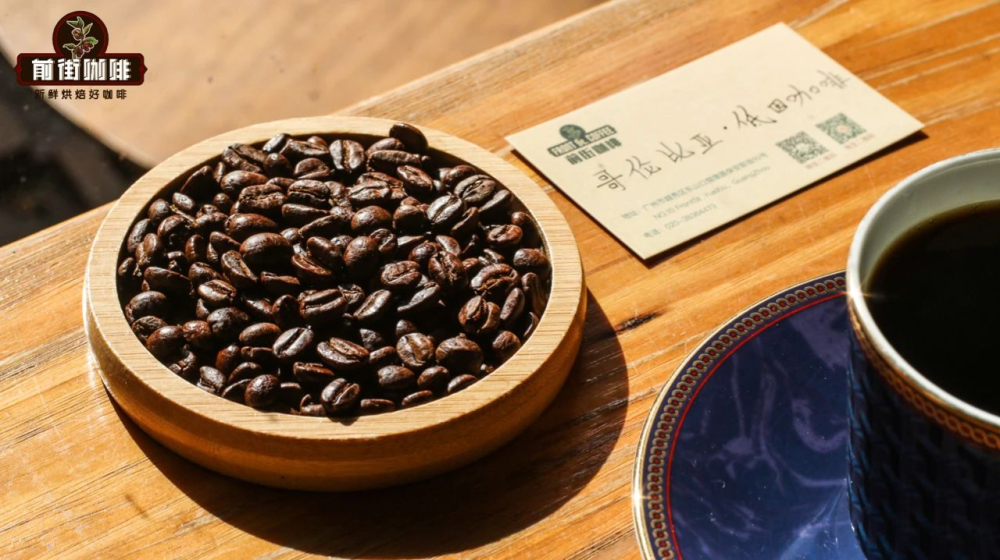
Different varieties of coffee beans do not have the same caffeine content. In the coffee we encounter daily, the main types are Robusta and Arabica. Robusta (abbreviated as Rob) has a higher caffeine content, accounting for about 2% to 4% of bean weight, mostly concentrated around 3%. Although the Arabica species has spawned many subdivided varieties in the specialty coffee world, looking at caffeine alone, its content generally ranges from 0.9% to 1.4%, mostly around 1.2%.
So, if you are after a higher caffeine intake, Robusta beans are the more suitable choice; if you want to control your caffeine intake, choose Arabica beans. Some friends may have heard of naturally low-caffeine coffee, and Front Street will briefly mention it here: naturally low-caffeine coffee also belongs to the Arabica species, and its caffeine content is about half that of regular Arabica, roughly 0.6%. For people sensitive to caffeine, this value is still not low. If you want to enjoy coffee flavor without consuming caffeine, you can choose artificially decaffeinated coffee beans, which contain almost no caffeine.
Caffeine content under different extraction methods
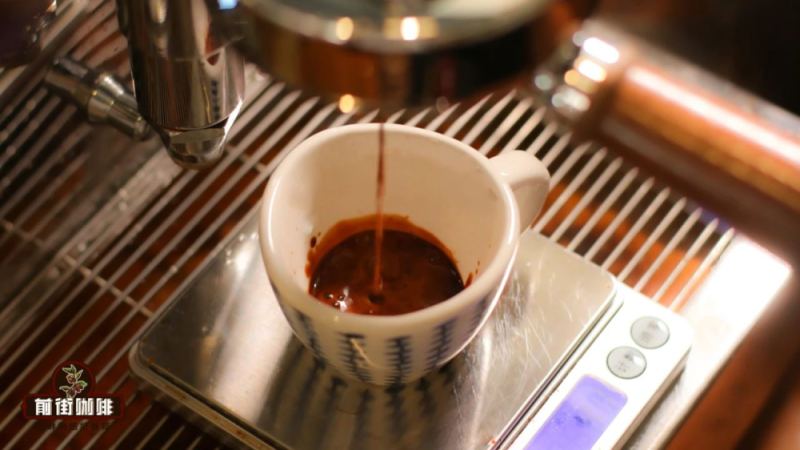
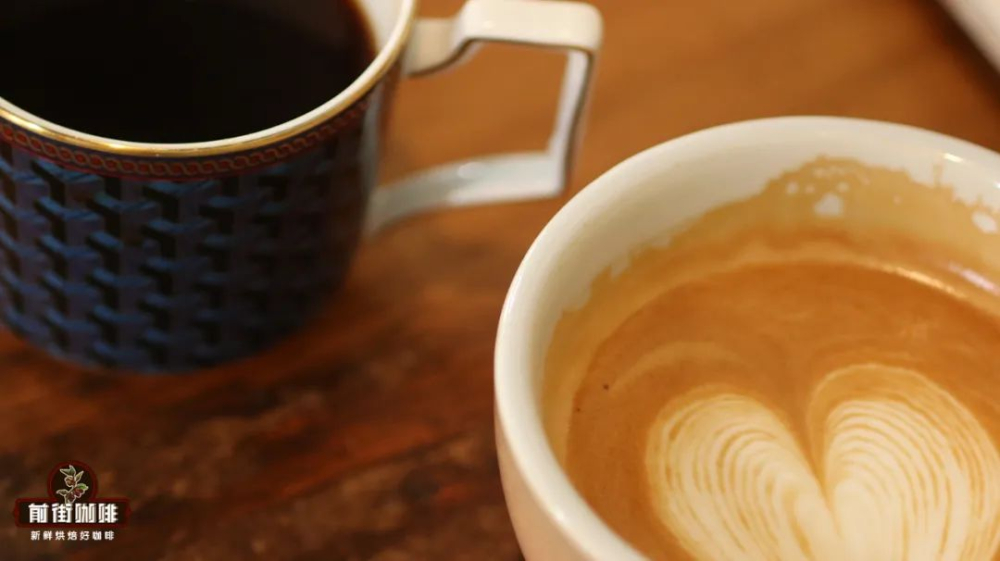
The caffeine content labeled on beverage packaging is usually written as "Xmg/100ml," which is expressed on a volume basis. But from a barista's operational perspective, measuring by "per cup" or "actual amount of coffee grounds used" is more intuitive. Take espresso-based coffee as an example: whether you make a latte or an Americano, as long as the base uses the same amount of espresso, the caffeine content of the final drink is the same.
Here is another example: add one shot of espresso to 200ml and 300ml of water respectively. If calculated by the concentration of "Xmg/100ml," the 200ml cup clearly has a higher caffeine concentration; but assuming both cups are fully consumed, the actual total caffeine intake is the same.
The amount of caffeine extracted is also related to extraction time. Under the same high-temperature conditions, the longer the extraction time, the higher the caffeine content. Therefore, drinks based on espresso are not actually the highest in caffeine. Coffee made by pour-over drip or French press immersion will have a higher caffeine content. And although cold brew and ice drip coffee use low-temperature extraction, because the extraction time is extremely long, their caffeine content even exceeds all the types mentioned above.
Below, Front Street lists the caffeine content of some common coffee drinks for reference. (Note: all coffee beans used are Arabica; cold brew and ice drip are affected by extraction duration, and here the baseline is 8 hours for ice drip and 12 hours for cold brew.)
espresso (20g grounds / 40g coffee liquid) about 100mg; latte, Americano, cappuccino, etc., caffeine content same as espresso, about 100mg; pour-over coffee (15g grounds / 195ml coffee liquid) about 90mg;
pour-over coffee (20g grounds / 260ml coffee liquid) about 120mg;
French press (20g grounds / 4-minute immersion) about 135mg; ice drip coffee (20g grounds / 200ml coffee liquid) about 135mg; cold brew coffee (20g grounds / 200ml coffee liquid) about 140mg; drip bag coffee (10g grounds / 120ml coffee liquid) about 50mg;
instant coffee (one packet) about 50mg.
Actually, sometimes coffee does not necessarily have to be drunk by yourself to keep you alert. According to the personal verification of the Front Street editorial team, letting your computer "drink" coffee has a faster and stronger alerting effect than drinking it yourself. If you do not believe it, you might as well give it a try.
The above content is compiled by CoffeeHunters, a coffee news website.


