







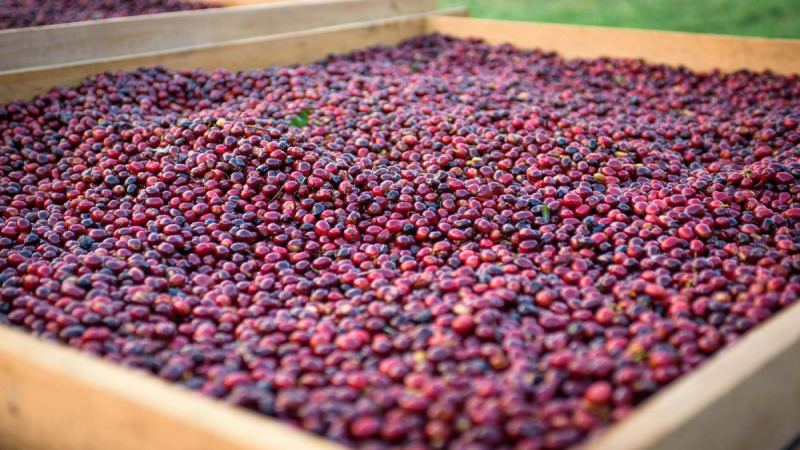
How do growing conditions shape geisha coffee flavor?
Geisha coffee is prized for delicate floral aroma and elegant fruit acidity, but the profile shifts by origin. Cupping three lots from Ethiopia, Colombia, and Costa Rica shows distinct characters, and each calls for its own pour-over parameters to bring out layered florals and a tea-like finish.
The variety needs high altitude, cloud cover or shade trees, and fertile soil to develop that complexity. Panamanian geisha is closely tied to the Chiriquí volcano and the Boquete region, where volcanic soil and steady rainfall support quality. Panama's Hacienda La Esmeralda divides plots and grades lots as Red, Green, and Blue Label.
Geisha coffee is renowned for its delicate floral aroma and elegant fruit acidity, but Geisha from different origins has its own distinctive flavor profile. This article starts with three Geisha coffees newly listed by Front Street Coffee, cupping the flavor characteristics of Ethiopia, Colombia, and Costa Rica origins respectively, and providing targeted pour-over parameter recommendations. At the same time, it deeply analyzes the planting history of Panama's Hacienda La Esmeralda, the logic behind its plot divisions, and the specific differences and brewing methods of the three grades—Red Label, Green Label, and Blue Label—helping coffee enthusiasts gain a more comprehensive understanding of Geisha coffee's terroir and quality control system.
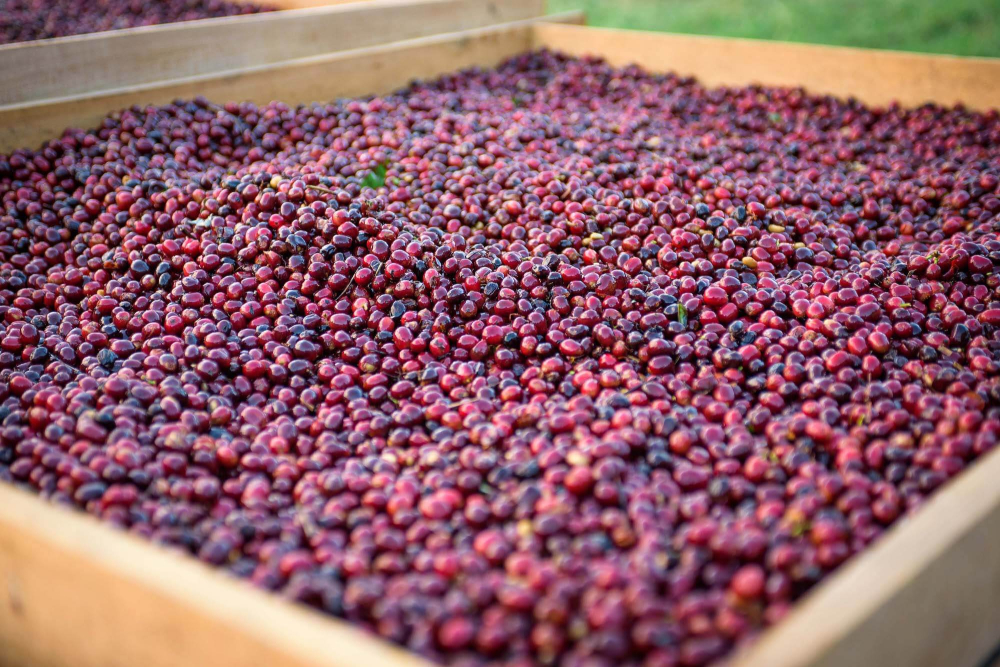
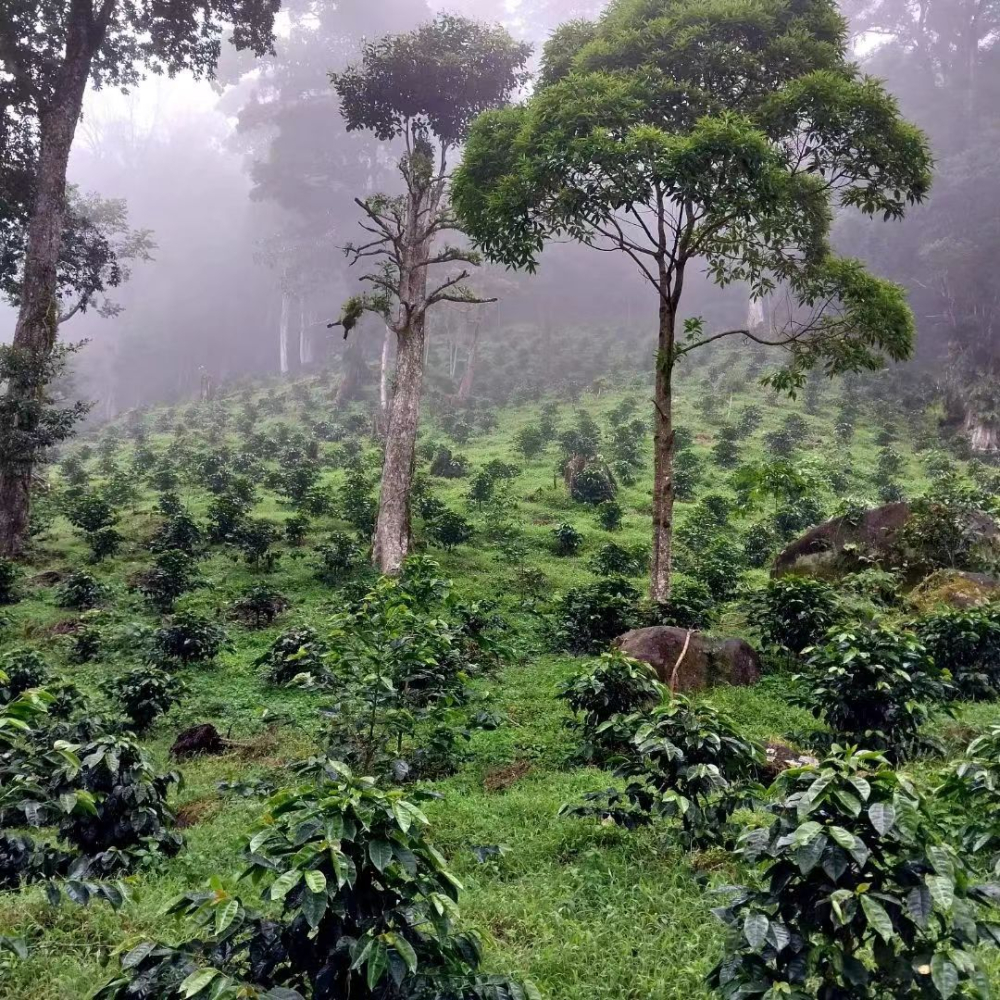
The reason Geisha coffee can present such delicate and elegant flavors is inseparable from its strict requirements for growing conditions. This variety prefers high-altitude areas, needs cloud cover or abundant shade trees to regulate light, and relies on fertile soil conditions. Only under such conditions can Geisha develop layered floral aromas, refined fruit acidity, and a long, tea-like sweet aftertaste.
Front Street Coffee continuously searches for different styles of Geisha beans across major origins, with the aim of helping coffee enthusiasts achieve so-called "Geisha freedom" as early as possible—finding those Geisha coffees that have both moving floral aromas and relatively affordable prices. By the way, the English Geisha/Gesha is quite close in pronunciation to the Japanese word for "geisha," so in some places Geisha is also called "Geisha."
Geisha coffee produced in Panama enjoys a global reputation, and the country's coffee-growing belt is almost entirely distributed around the Chiriquí volcano. Among them, the most scenic is the Boquete region, where volcanic soil is fertile, rainfall is abundant and regularly distributed, and dense vegetation and continuous cloud cover provide ideal growing conditions for coffee trees, also creating high-quality coffee beans with rich flavors.
Front Street Coffee—Geisha coffee beans from 3 coffee origins
Flavor Introduction
The three Geisha coffee beans newly listed by Front Street Coffee recently come from Ethiopia, Colombia, and Costa Rica.
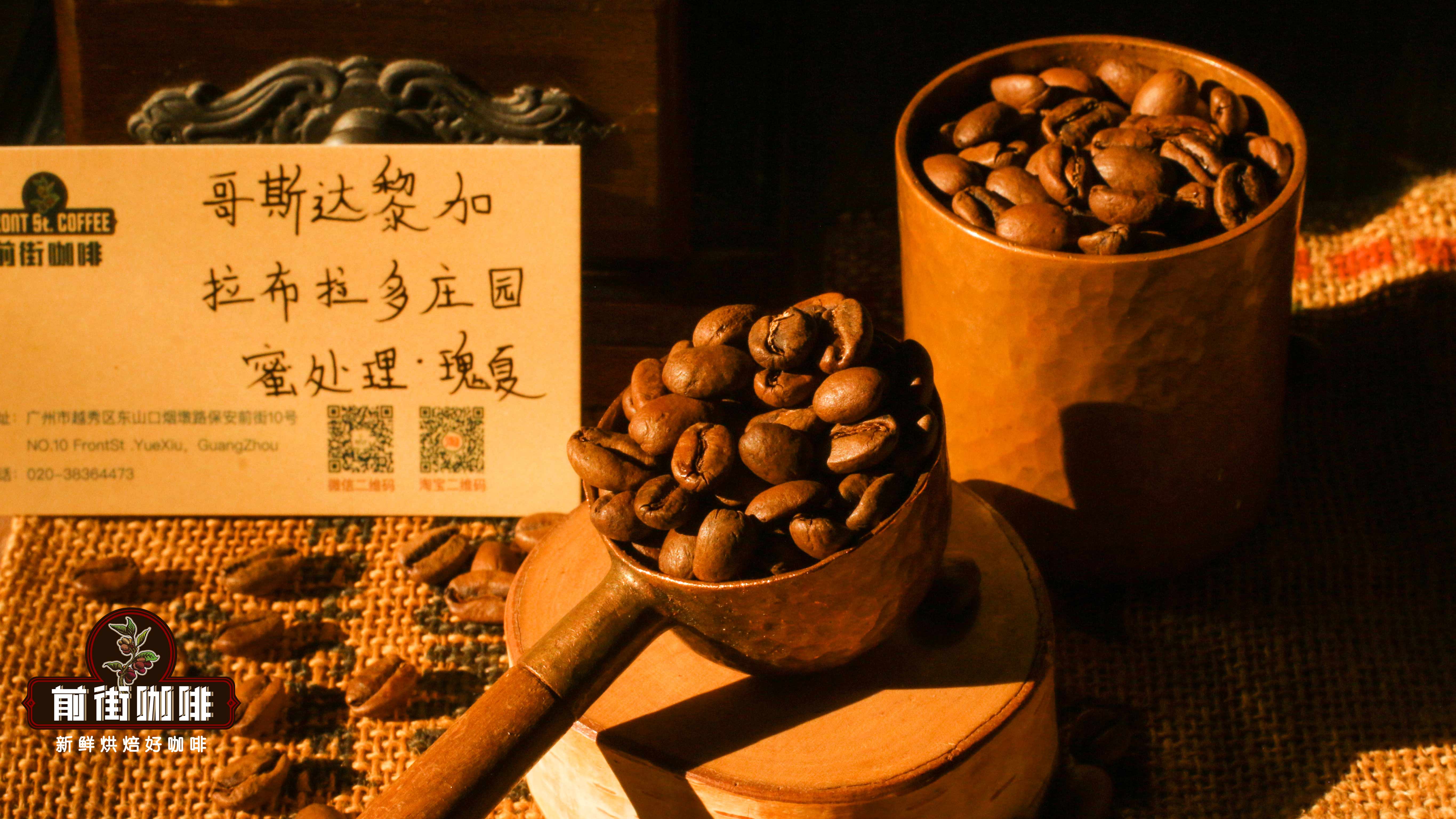
Front Street Coffee · Costa Rica origin Geisha coffee beans
From the perspective of the spread of the Geisha variety, Costa Rica actually planted Geisha earlier than Panama. Costa Rica's coffee-growing areas are mostly located in volcanic terrain, where volcanic ash brings abundant nutrients, and combined with mild temperatures and stable rainfall, these are important foundations for the country's ability to produce high-quality coffee. Since Panamanian Geisha became famous overnight, many estates in Costa Rica also began introducing Geisha, with estates in the Tarrazú region being especially active.
Front Street Coffee · Costa Rica Labrador Estate Honey Process Geisha coffee beans
The Tarrazú region has abundant microclimates, with a day-night temperature difference of up to 26 degrees Celsius. This significant temperature difference helps coffee cherries accumulate more nutrients, thereby forming more refined flavors. After cupping the Geisha from this region, Front Street found that its flavor base has similarities to Panamanian Geisha, also carrying floral aromas and lemon-like acidity, with relatively high cleanliness, a mouthfeel as smooth as juice, and an overall relatively full performance.
Through cupping, it can be judged that Costa Rican Geisha has relatively good overall body, so it is recommended to use a water temperature of 91-92 degrees Celsius and brew with a 1:15 coffee-to-water ratio. For grinding, medium-fine grinding is recommended, using the Chinese standard No. 20 sieve as a reference, with a passing rate controlled at about 80%.
Front Street Coffee · Ethiopia origin Geisha coffee beans
Ethiopia's most representative Geisha comes from Gesha Village Estate, one of the few large estates in Ethiopia that focuses on cultivating the Geisha variety. What Gesha Village cultivates belongs to the wild Geisha variety, which is similar to the well-known Panamanian Geisha in plant morphology and flavor, but overall, it still tastes noticeably different from Panamanian Geisha.
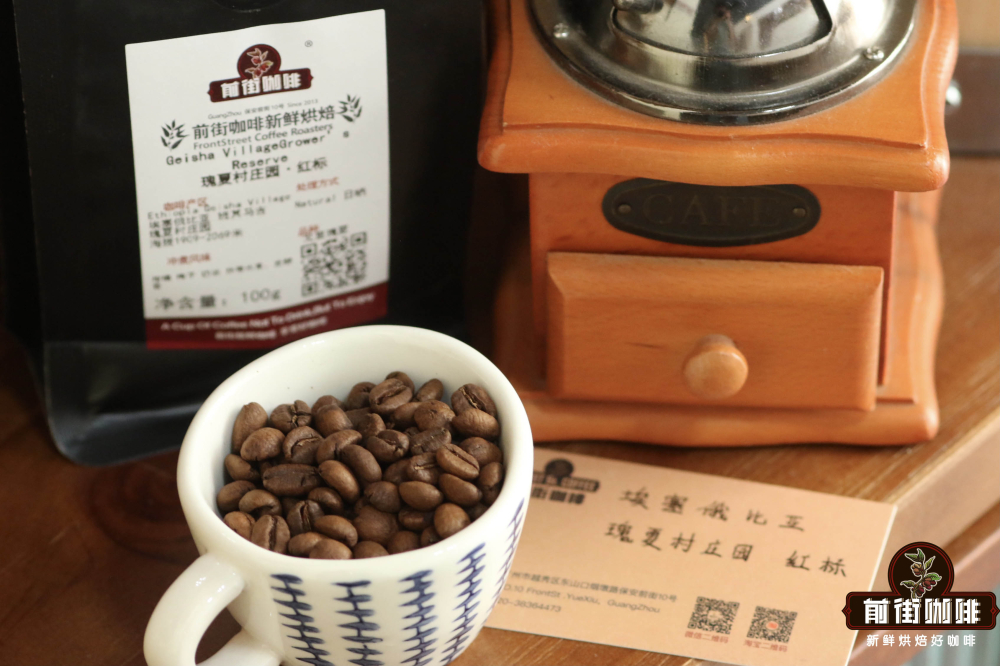
Front Street Coffee · Ethiopia Gesha Village Natural Red Label Geisha coffee beans
In order to distinguish these two sources of Geisha, Gesha Village named the local Ethiopian variety "Gori Gesha," because this variety was first discovered in the Gori Gesha forest. After Front Street cupped Gesha Village's Geisha coffee, it found that its flavor is centered on yellow stone fruits (yellow peach), with a medium-high sweetness, and outstanding lots can even present a toffee-like sweet flavor.
According to the cupping results, Ethiopian Geisha's sweetness is quite prominent, so during brewing, 91-92 degrees Celsius can likewise be used to bring out more sweetness. For grind size, medium-fine grinding is recommended, using the Chinese standard No. 20 sieve as a reference, with a passing rate of about 80%, and a recommended brewing ratio of 1:15.
Front Street Coffee · Colombia origin Geisha coffee beans
Colombia only began introducing Geisha from Panama in recent years. Colombia's coffee-growing areas are mostly located in mountainous regions, with diverse microclimates, mild temperatures, and good water resources, providing a superior environment for coffee growth. After Front Street cupped Colombian Geisha, it perceived floral aromas, soft acidity like orange or mandarin, honey-like sweetness, and a long tea-like finish.
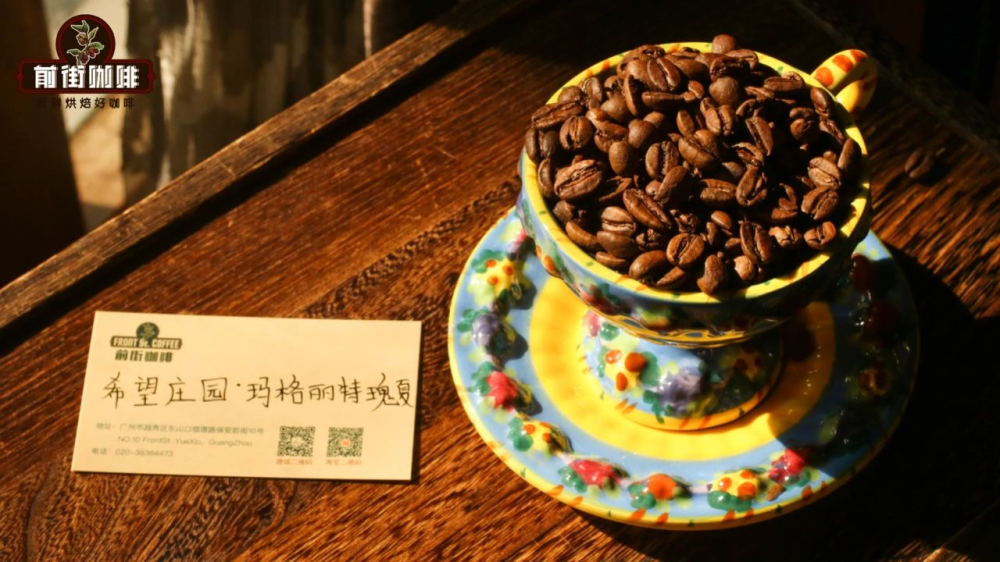
Front Street Coffee · Colombia Hacienda La Esperanza Margarita Geisha coffee beans
The cupping results show that Colombian Geisha's overall style tends toward softness and balance, so a water temperature of 90-91 degrees Celsius is recommended, brewing with a 1:15 coffee-to-water ratio. For grind size, medium-fine grinding is recommended, using the Chinese standard No. 20 sieve as a reference, with a passing rate of about 78%.
Why Panama Hacienda La Esmeralda's Geisha coffee beans are so expensive
Hacienda La Esmeralda's high-altitude location, mineral-rich volcanic soil, and practice of planting coffee trees in windbreaks precisely meet the harsh environmental requirements of the Geisha variety. It was Hacienda La Esmeralda that first noticed Geisha coffee had a captivating floral aroma, separated this variety from numerous coffee varieties in 2003 for careful cultivation, and in 2004 won the BOP green bean competition championship with it. Geisha thus became famous overnight, also establishing Hacienda La Esmeralda's benchmark position in the specialty coffee field.
Front Street Coffee · Introduction to Panama Hacienda La Esmeralda
Geisha coffee beans have been advancing triumphantly since winning the championship in Panama's BOP green bean competition in 2004, and later expert identification confirmed that this variety originated in Ethiopia. Afterward, the Peterson family invested a great deal of energy into infrastructure construction to support excellent lot separation and refined post-processing techniques.
In 1964, American banker Rudolph Peterson retired and moved to Panama, buying Hacienda La Esmeralda in Boquete, initially mainly operating a dairy business. Later his son Price resigned from his job as a doctor to help his father manage the farm, and in 1987 introduced the Caturra and Catuai coffee varieties, and in 1994 established a washed processing plant, from then on Hacienda La Esmeralda had its own coffee processing capability.
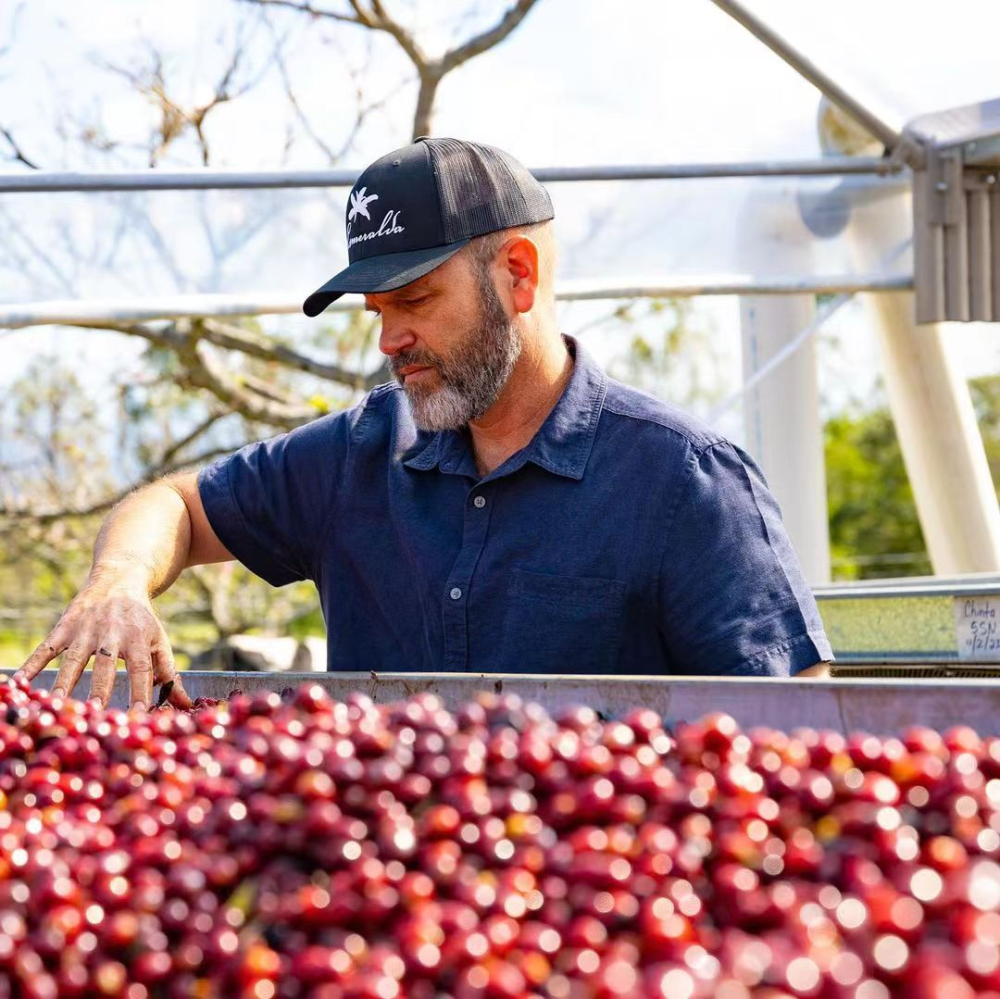
Hacienda La Esmeralda estate owner
At present, Hacienda La Esmeralda mainly has three estates cultivating the Geisha variety: El Velo, Cañas Verdes, and Jaramillo. In 1996, Hacienda La Esmeralda bought the nearby Jaramillo, which had superior geographical conditions and good flavor performance from its original coffee varieties. El Velo was acquired by Hacienda La Esmeralda in 2012.
Front Street believes that Hacienda La Esmeralda's strategy of acquiring estates with excellent output and higher altitude was a uniquely distinctive decision at the time, and it was precisely this layout that allowed Hacienda La Esmeralda to occupy an irreplaceable position in the coffee industry. Among them, Jaramillo Estate is precisely the plot where Geisha is planted. Due to scarce production, the former estate owner initially used it only as a windbreak tree, and only after acquisition discovered its extraordinary flavor.
This is precisely the charm of Geisha coffee—the harsher the growing environment, the more outstanding the flavor performance.
Although Hacienda La Esmeralda discovered coffee beans with outstanding flavor from the beginning, in order to achieve precise management, they cupped different areas within the estate one by one, and then determined planting plots based on altitude. Precisely because of this, today we have the familiar Geisha grades Red Label, Green Label, and Blue Label, all divided according to altitude. Front Street Coffee will elaborate on this part in detail below.
Front Street Coffee · Plot divisions of the Geisha variety at Panama Hacienda La Esmeralda
Hacienda La Esmeralda is extremely meticulous in dividing Geisha planting plots, mainly into three plots: Jaramillo, Cañas Verdes, and El Velo. Each plot is further subdivided into smaller plots.
Jaramillo
Annual rainfall about 4000 ml, average daytime temperature 19-25°C, average nighttime temperature 11-15°C, average altitude 1600-1700 meters. The Jaramillo plot is divided into 5 small plots: Mario, Noria, Reina, Bosque, and Buenos Aires.
Cañas Verdes
Annual rainfall about 3500 ml, average daytime temperature 16-23°C, average nighttime temperature 10-15°C, average altitude 1600-1800 meters. It includes 9 small plots in total: Lino, Coronado, Fundador, León, Montaña, Trapiche, Chinta, Cabaña, and Tumaco.
El Velo Estate
This is the youngest sub-estate of Hacienda La Esmeralda, with an average altitude of 1700-1900 meters. In addition to planting Geisha and Catuai, this plot also has a small amount of other introduced varieties, such as Laurina, Pacamara, Mocha, and SL28. El Velo is divided into 7 small plots in total, namely: Guabo, Portón, Durazno, Mural, Higo, Buena Vista, and Guila.
Front Street Coffee · Introduction to Panama Hacienda La Esmeralda Red Label and Green Label coffee beans
Front Street Coffee · Panama Hacienda La Esmeralda Red Label Geisha coffee beans
What we usually call "Red Label" refers to Geisha lots planted at altitudes between 1600-1800 meters, with cupping scores reaching above 90 points, mainly from the two producing areas Jaramillo and Cañas Verdes. Red Label lots have two processing methods, washed or natural, and can only be obtained through global auctions.
In the independent auction held by Hacienda La Esmeralda itself, only the Geisha lots selected from the divided plots to participate in the auction count as auction Red Label. Guests often ask whether auction Red Label tastes better or Red Label tastes better; in fact, non-auction Red Label and auction Red Label belong to the same plot, and the only difference is whether they participated in the auction. Front Street Coffee believes there is no need to deliberately pursue the auction level; on the one hand, the price is indeed relatively high, and on the other hand, if you just want to try it, Red Label is already a very good choice.
Geisha of this grade uses natural or washed processing, and its flavor expression is special and bright floral aroma and citrus aroma.
Front Street Coffee · Panama Hacienda La Esmeralda Green Label Geisha coffee beans
Commonly known as Green Label. Green Label lots do not participate in auctions, but the quality is still excellent. Green Label Geisha is planted at an altitude of 1600-1800 meters, mainly blending lots from different plots such as Jaramillo and Cañas Verdes.
Because it adopts a mixed-plot model, sometimes Green Label and Red Label can have very high flavor similarity. Although Green Label is not as high-grade as Red Label, it still retains Geisha's classic flavors—floral aroma, fruit aroma, citrus-like acidity, and a thick, juicy mouthfeel. Green Label lots likewise have washed or natural processing.
Front Street Coffee · Further reading
People often ask what exactly the difference is between Red Label and Green Label. Front Street Coffee gives the most straightforward answer: Red Label can be traced back to a specific small plot, while Green Label is blended beans and cannot be traced. Precisely because it adopts a blended-bean model without detailed plot labeling, sometimes Green Label and Red Label have very high flavor similarity, but the next production may change again. Front Street Coffee feels that drinking Green Label is a bit like the mood of buying a lottery ticket—perhaps the lot you drink this time happens to taste like Red Label.
Although Green Label is not as high-grade as Red Label, it still carries Geisha's classic flavors: floral aroma, fruit aroma, citrus acidity, and a thick, juicy mouthfeel. Green Label Geisha likewise has washed or natural processing.
Front Street Coffee · Panama Hacienda La Esmeralda Blue Label Geisha coffee beans
The brand Geisha 1500 is what we commonly know as Blue Label Geisha. It selects beans from an altitude of 1400-1500 meters, produced from a blend of beans from three different plots: Jaramillo, Cañas Verdes, and El Velo. Its flavor expression is slight floral aroma, fruit acidity, and sweetness, and the mouthfeel is relatively not thick enough. At present, Blue Label Geisha has two processing methods, washed and natural, among which the natural lot was only introduced in small batches at the end of 2019.
But starting from 2021, Hacienda La Esmeralda adjusted the grading of Geisha coffee. Beginning with the 2021 harvest season, Hacienda La Esmeralda will cancel the Blue Label lot (Geisha 1500).
Front Street Coffee · Brewing parameters for Panama Hacienda La Esmeralda Red Label and Green Label coffee beans
The brewing parameters recommended by Front Street Coffee are: Hario V60 dripper, 90°C water temperature, 15 grams of coffee, 1:15 coffee-to-water ratio, grind size like fine granulated sugar (Chinese standard No. 20 sieve passing rate 80%).
The determination of grind size is carried out by Front Street through the sieving method. According to the grind recommendations given by the Specialty Coffee Association of America (SCA) for pour-over coffee, Front Street then verifies through actual operation. After brewing with different grind sizes, the differences in the finished product are obvious, and the grind size for each coffee bean will differ—this is the significance of sieving. If there is no sieve at home, Front Street Coffee recommends judging by observing the flow rate: if the water flows too fast, the grind is coarse; if the water flows too slowly, the grind is fine.
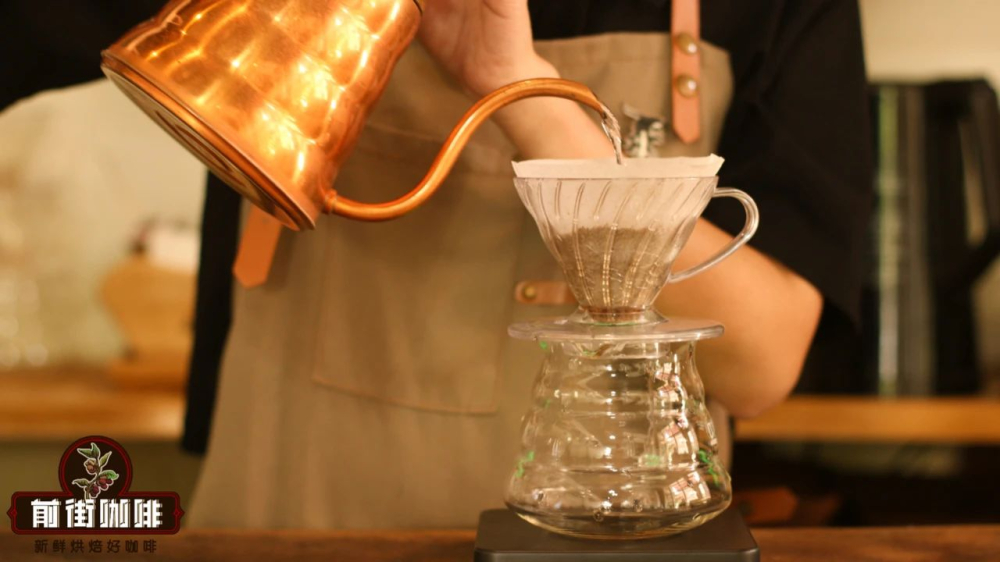
First place the folded filter paper into the dripper, and you can use a small amount of hot water to wet it to ensure it fits, then pour 15 grams of ground coffee into the dripper, and tare the electronic scale.
For the first pour, add 30 g of water for a 30-second bloom. Start timing at the same time as pouring. Throughout, pour with a small stream from the center point and spiral outward, paying attention to wetting the entire coffee bed.
After 30 seconds, begin steadily pouring the second stage of 95 g of water with a slightly larger stream, with the aim of lifting the entire coffee bed. The water column needs to be poured vertically and evenly. At this time the timed scale shows 125 g, and pouring is completed in about 55 seconds.
When the liquid level drops to halfway, begin using a small stream to pour the third stage of 100 grams in a small spiral, trying to control the stream from spiraling too wide, as it easily disturbs the coffee bed and causes under-extraction. The final total pouring amount is 225 grams, and the drip completion time is about 2 minutes. After removing the dripper, swirl the coffee liquid in the server to mix it evenly, and it is ready to taste.
Front Street Coffee · Flavor descriptions of Panama Hacienda La Esmeralda Red Label, Green Label, and Blue Label coffee beans
[Red Label]
It has bright rose and citrus aromas, as well as notes of brown rice, berries, apricots, mixed fruits, and honey. The juice-like body is thick, the flavor layers are rich, and the sweetness is obvious.
[Green Label]
Rich jasmine floral aroma, high sweetness, with flavors of citrus, berries, juice-like character, cream, green tea, orange peel, and cantaloupe. The overall layers are rich, and the floral and citrus notes persist in the finish.
For more coffee bean information, please follow Coffee Workshop (WeChat public account cafe_style)
For professional coffee knowledge exchange, please add WeChat ID kaixinguoguo0925
The above content is compiled by CoffeeHunters, a coffee news website.


