







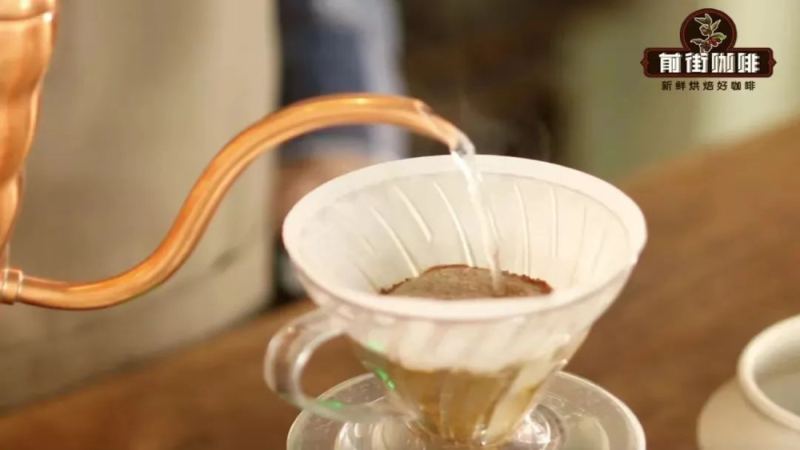
Does the Bloom Count Toward the Coffee Process Time?
The bloom does count toward total extraction time, and 30 seconds is a common starting point rather than a fixed rule. Blooming releases carbon dioxide trapped in freshly ground coffee so water can dissolve flavor compounds instead of running straight through the bed. Judge the end of the bloom by how the coffee bed degasses, not by the clock alone.
In a drip-style coffee process, water flows continuously under gravity, so gas left in the grounds blocks extraction and lowers efficiency. Immersion brewers can wait out the gas, but pour-over cannot. Roast date, roast level, and pouring method all shift the ideal bloom duration: fresher and darker roasts release more gas, so they often need a longer bloom than older or lighter ones.
The blooming stage in pour-over coffee is often regarded as a key step that determines flavor. Many enthusiasts ask: Does the 30-second bloom count toward the total extraction time? And what is the purpose of blooming? Starting from the principle of carbon dioxide release, this article explains why drip-style pour-over must be bloomed, and analyzes the effects of three states—insufficient blooming, excessive blooming, and moderate blooming—on coffee taste. It also draws on Front Street's brewing experience to explain how roast date, roast level, and pouring method change the optimal bloom duration, helping readers flexibly judge based on the state of degassing in the coffee bed, rather than rigidly sticking to a fixed number of seconds.
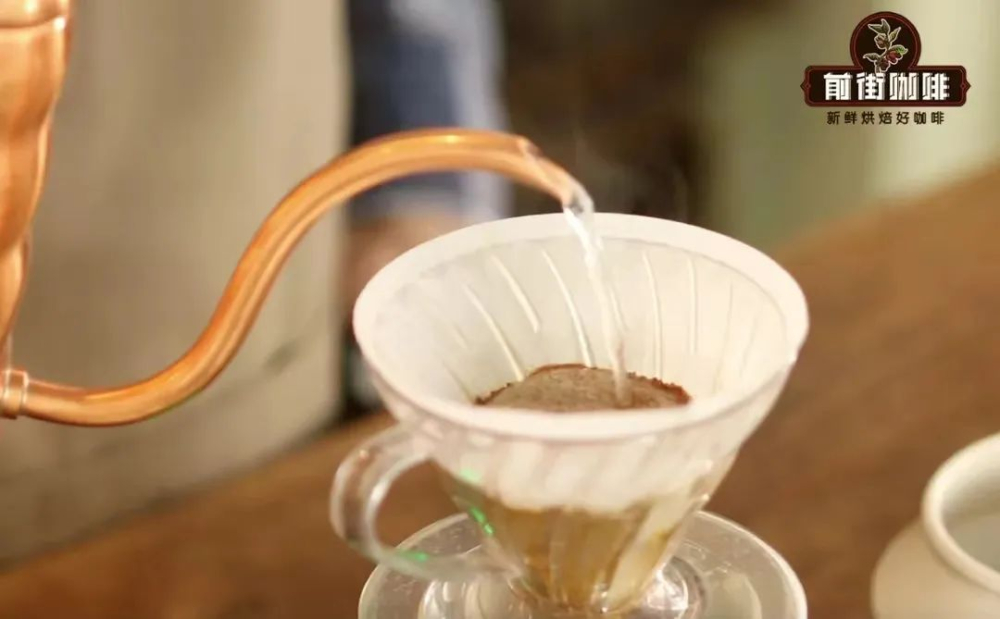
In the entire pour-over coffee process, the blooming stage plays a pivotal role. Whether a cup of coffee ultimately tastes good often depends first on whether the bloom was done properly. Therefore, learning to bloom is an unavoidable lesson for every pour-over enthusiast.
To learn blooming, you need to grasp three things: what effect blooming has on the final flavor, how much water to pour, and how long the bloom should last. Regarding water volume and pouring technique, Front Street has already broken these down in detail in past articles, so this time Front Street will focus on the question of bloom duration.
Let's first talk about why pour-over absolutely requires blooming. Although freshly ground coffee powder contains rich flavor compounds, it is also wrapped in a large amount of carbon dioxide. These gases hinder the release of flavor components.
For immersion-style brewers, carbon dioxide is not much of a problem, because the immersion time can be controlled manually—after the coffee meets water, the gas is allowed to escape first, and then the flavor compounds can naturally be fully released.
But pour-over is a drip-style extraction, and water flows continuously into the server under gravity. If you do not first release the carbon dioxide in the coffee grounds before pouring, and instead keep pouring continuously, then the water will struggle to effectively dissolve flavor compounds and will simply fall straight into the server. This is what we commonly call low extraction efficiency.
For this reason, pour-over needs the step of "blooming" to first release the carbon dioxide in the coffee grounds, so that subsequent pouring can more smoothly extract flavor compounds.
So how long should the bloom actually wait? I believe everyone is familiar with the phrase "30 seconds." That's right—the bloom parameter given by the vast majority of brewing recommendations is 30 seconds. What is the basis behind this number?
It is actually a relatively safe length of time chosen based on how most coffee beans expand and degas in the coffee bed during a conventional circular-pour bloom. Blooming can be roughly divided into three situations: insufficient blooming, excessive blooming, and moderate blooming.
Insufficient blooming means not giving the coffee grounds enough time to degas, so that during subsequent brewing gas is still being released continuously, producing large bubbles. This condition interferes with extraction, and the coffee tends to taste thin and astringent.
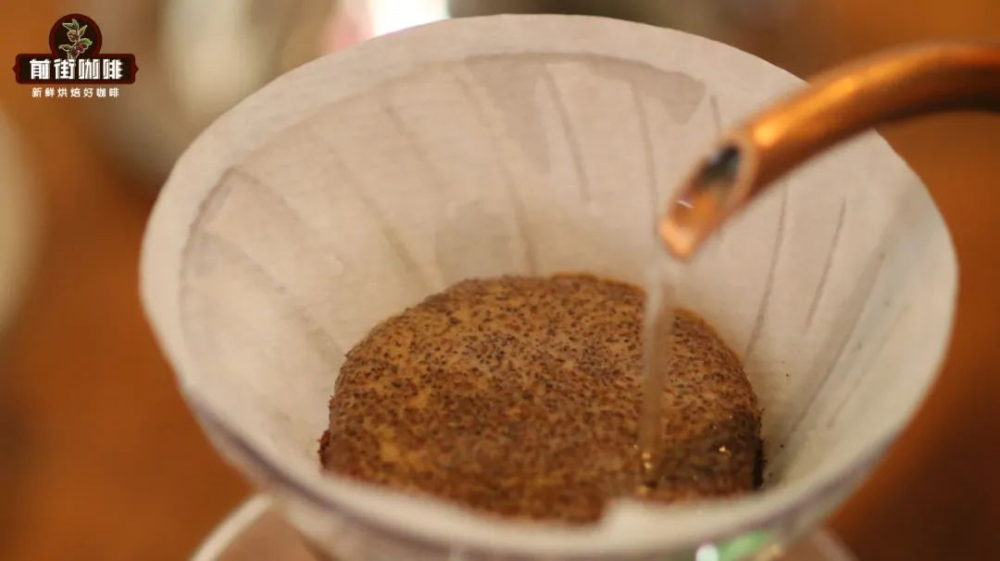
Excessive blooming means the bloom lasts too long, the carbon dioxide has already been fully released, and the excess water has dripped through the dripper's flow channels into the server. The entire coffee "hamburger" appears dried out, with hollows appearing between the coffee particles. Excessive blooming tends to give the coffee bitterness and off-flavors.
A coffee bed that has been bloomed too long will, during subsequent pouring, first be punched into a hole, and only then will foam slowly emerge.
Moderate blooming is when the surface of the coffee bed is completely wetted and expanded, the gas has just finished being released, and the coffee bed is stable and no longer puffing out gas. Moderate blooming is a continuous process (about 5 seconds), not a single instant. So the 30-second bloom time is suitable for most coffee beans. Even if a beginner does not understand the principle of blooming, following the brewing recommendation can still produce a good-tasting cup of coffee.
Of course, the universal 30 seconds cannot satisfy the broad community of pour-over coffee enthusiasts, who turn instead to studying the principles of blooming and discovering the optimal bloom time for themselves. As Front Street said earlier, the purpose of blooming is to release the carbon dioxide inside the coffee grounds, so the amount of carbon dioxide, the rate at which it is released (the bloom state), and the pouring method will all affect the optimal bloom time.
The amount of carbon dioxide inside coffee beans is related to how long it has been since the roast date. Freshly roasted coffee beans have vigorous carbon dioxide gas. If brewing is carried out at this time, the bloom time needs to be appropriately extended to ensure gas release. Front Street will combine this with actual conditions to arrive at the final bloom time (about 35 seconds).
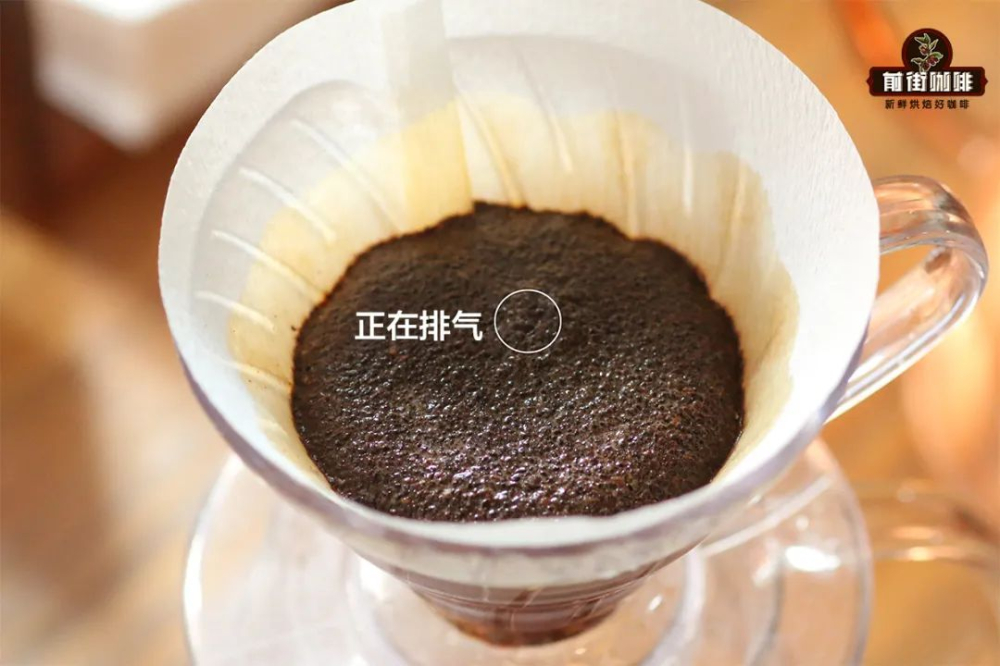
After a 4-7 day resting period, the gas inside the coffee beans gradually stabilizes. During the 4-30 day period, Front Street will, based on actual conditions, bloom for about 28-30 seconds. After 30 days, the gas in the coffee beans has almost completely dissipated. At this point the bloom no longer domes or only slightly domes, so the bloom time needs to be shortened to around 20-25 seconds.
In addition, coffee at different roast levels releases gas at somewhat different rates.
Dark-roasted coffee beans represented by Front Street Indonesia Mandheling, Front Street Colombia Huila, and Front Street Brazil Cerrado, although relatively rich in gas, have loose fibers that give them good water absorption, allowing them to absorb water and degas better. When we bloom dark-roasted coffee, we can see the coffee bed rise into a very large hamburger, with degassing orderly and not rushed, so the bloom time can be slightly shortened by 5-8 seconds.
For light-roasted coffee beans, such as Front Street Natural Red Cherry, Front Street Florihana, and Front Street Panama Geisha, these have richer floral and fruity flavors. Because their texture is relatively hard, water struggles to reach the inside of the particles, so degassing efficiency is lower, and enough time must be reserved for the coffee grounds to degas. The bloom stage can be extended by 5-8 seconds.
Different pouring methods also mean different degassing times. The common 30-second bloom uses the common circular-pour bloom; this approach can evenly wet the coffee grounds, and degassing efficiency is also high. There is also brewing like the Japanese drip method, where the dripping process is actually the coffee's degassing process, that is, the bloom. This form of blooming lasts 2-3 minutes.
So when judging bloom time, we can start from actual conditions and observe the state of the coffee bed (the hamburger). When pouring for the bloom, first make sure the entire coffee bed is wetted, then observe the expansion and degassing state of the coffee grounds. When the coffee bed stabilizes and no longer puffs out gas, that means the bloom is finished and you can continue pouring. If at 25 seconds the coffee bed has already stabilized and stopped moving, then you can wait another 2 seconds to confirm stability before starting to pour. If the time exceeds 30 seconds but the coffee bed is still degassing and bubbling, then you need to wait until the coffee grounds finish degassing before starting to pour.
The above content is compiled by CoffeeHunters, a coffee news website.


