







Does single-origin espresso always mean better coffee?
SOE stands for Single Origin Espresso, meaning the espresso is pulled from beans of one producing region or one variety. It is not automatically better than a blend. Single-origin beans emphasize traceability and a distinctive origin flavor, while blends are built for balance, body and consistency across milk drinks.
Espresso itself is extracted at roughly 9 bars of pressure through a fine, tightly tamped puck, which yields a small, intense shot that most people dilute with milk or water. For a coffee american style drink, milder and less acidic results usually come from medium to dark roasted blends, which the article illustrates with five espresso blends of different positioning.
Walking into a specialty coffee shop, you'll often see SOE on the menu. It stands for Single Origin Espresso. Many people mistakenly believe that single-origin beans are necessarily superior to blends, but is that really true? From the perspective of Front Street Coffee, this article first explains the extraction principles of espresso, then clarifies the respective characteristics of single-origin beans and blended beans, and finally recommends five espresso blends with different positioning, helping you make a more suitable choice when pursuing a non-sour taste.
For more specialty coffee knowledge, please follow: Front Street Coffee (Frontsteet Coffee)
On many coffee shop menus, an option appears—SOE. SOE stands for Single Origin Espresso. Many specialty coffee shops easily create an impression that single-origin coffee beans seem more premium than espresso blends.
Before truly understanding SOE, Front Street will first walk everyone through the extraction principles of espresso. When watching a barista make milk coffee, you can often see this scene: quickly dosing coffee grounds into the portafilter basket, distributing, tamping, and brewing—and a cup of espresso base is complete.
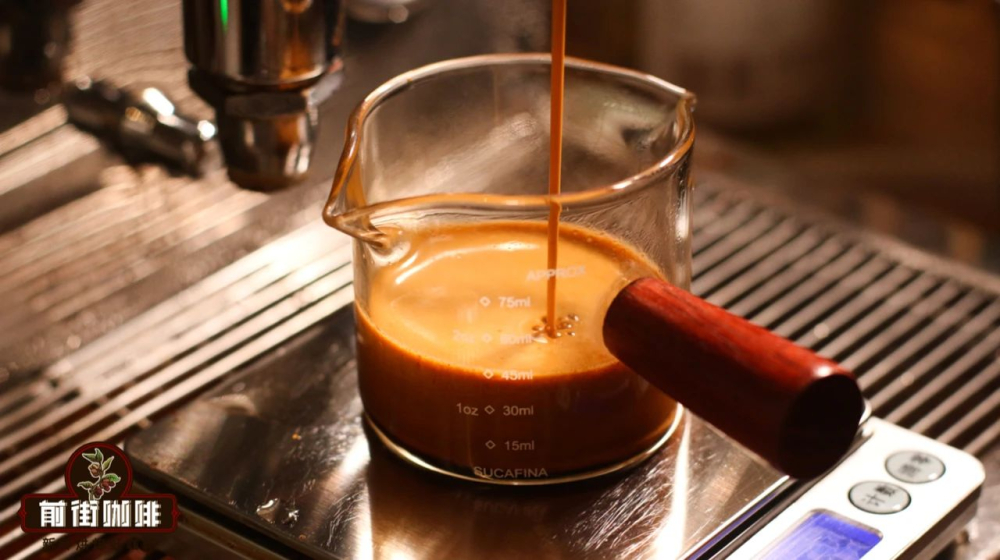
This process involves multiple steps: first grind the coffee beans into an extremely fine powder, level the portafilter basket, then lock it onto the group head and start the brewing switch. The espresso machine uses about 9 bars of high pressure to force nearly boiling hot water through the tightly packed coffee puck, and then thick, viscous coffee liquid drips out.
As long as the extraction parameters are controlled within a reasonable range, the coffee liquid obtained in this way can naturally fully extract the ideal soluble substances from the beans. However, because the flavor is too concentrated, most people choose to add milk or water to dilute it before drinking.
Single-origin coffee beans refer to coffee beans from a single producing region or a single variety. With the rise of the third wave of specialty coffee, more and more coffee shops have begun offering single-origin coffee. The core value of single-origin coffee lies in traceability, allowing enthusiasts to understand which producing region, estate, or even specific variety the high-quality coffee in their cup comes from. These single-origin beans often carry distinctive, recognizable flavors endowed by their origin, producing region, and bean variety. It is precisely the third wave's emphasis on coffee knowledge—such as brewing methods and regional flavors—that has driven the popularity of single-origin coffee. Single-origin beans are usually suitable for pour-over, ice drip, and cold brew.
As mentioned earlier, the characteristic of single-origin beans is to present the unique flavor of the producing region, such as the berry acidity of Front Street Kenya. If used to make SOE, both the advantages and disadvantages will be greatly amplified, and the espresso liquid made from Front Street Kenya single-origin beans may also have an unpleasant sharp acidity. Therefore, espresso in coffee shops today is still mainly based on blended beans.
Blended beans, also called combined beans, are made by mixing multiple single-origin coffee beans together, allowing each to fully bring out its strengths while making the flavor more stable. For example, if a certain bean has a mild taste but lacks body, another bean with high body can be added, allowing them to complement each other's strengths and make up for weaknesses, complementing or enhancing each other in taste, thereby creating a richer new flavor. In addition, compared with SOE, which emphasizes a single origin, espresso blends are more affordable and offer better value for money. Below are the five most popular blends from Front Street Coffee, each customized for different needs:
NO.1 Homestyle Blend Coffee—Front Street Classic Espresso Blend
Front Street Classic Blend flavor: classic coffee flavor, nuts and chocolate, mild taste, neither sour nor bitter, high sweetness.
Suitable for: coffee beginners, people with choice difficulty, lovers of balanced flavor. Whether with milk or black coffee, hot or iced, it works well; it doesn't fuss over brewing equipment and requires no technique—it tastes good however you brew it. A classic choice you can buy with your eyes closed and never go wrong, drink it however you like.
NO.2 Fruity Espresso Blend—Front Street Strawberry Candy Espresso Beans
Front Street Strawberry Candy flavor: rose, strawberry jam flavors, low acidity, creamy mouthfeel, rich berry aroma, suitable for making small cups of latte and flat white.
Suitable for: people who use espresso machines and moka pots and like to drink refreshing coffee.

NO.3 Nutty Cream Blend—Front Street Specialty Espresso Blend Beans
Front Street Specialty Blend flavor: with a comfortable sweet aroma, extremely smooth on entry, with obvious roasted nut, cocoa, and maple syrup flavors, and a sugarcane sweetness in the finish, very pleasant.
Suitable for: suitable for various specialty coffee shops and home use.
NO.4 Shop-Use Blend—Front Street Commercial Espresso Blend Beans
Front Street Commercial Blend flavor: sweet and mellow taste, with rich dark cocoa and toasted bread flavors, very easy to drink; made into a latte, it is rich and smooth, leaving a lingering fragrance after drinking.
Suitable for: those pursuing high value for money, suitable for various specialty coffee shops and home use.
NO.5 Tasty and Affordable Blend—Front Street Basic Espresso Blend Beans
An espresso bean recommended by many baristas—Front Street Black Cocoa Blend flavor: mild acidity, mainly chocolate and nutty notes, balanced taste, smooth with milk, refreshing as Americano.
Suitable for: those pursuing high value for money and with large coffee demand, suitable for home coffee machines and moka pots.
Ordinary espresso beans are mostly used to make Espresso, Americano, Latte, or Cappuccino, etc. The coffee taste is more balanced, smoother, and more stable, so it can be said to be more mainstream in flavor.
The above content is compiled by CoffeeHunters, a coffee news website.


