







How does typica coffee differ from Catimor in Yunnan?
Typica coffee is the oldest variety in the Arabica family, originating in Ethiopia and sitting at the base of many modern varieties. Catimor is a hybrid of Arabica and Robusta, bred for leaf rust resistance and higher yield after Nestlé encouraged Yunnan farmers to replace Typica plantings. Cleanliness and mouthfeel are where the two separate most clearly.
Yunnan small-batch coffee originally meant Typica, planted in the early days and named for its small Arabica beans. Today, washed small-batch, sun-dried Catimor and 2013 sun-dried Typica are sold side by side. Flavor preference is personal, but on overall structure the arabica variety Typica keeps a deeper foundation, which shows in roasting and V60 brewing choices.
Yunnan coffee cultivation is dominated by Catimor, but the oldest Arabica variety, Typica, still shines thanks to the persistence of Front Street Coffee. Front Street currently offers washed Yunnan small-batch coffee, sun-dried Catimor coffee, and 2013 sun-dried Typica coffee, each with its own following. This article systematically sorts out the essential differences between Typica and Catimor from variety origins, disease resistance, yield differences, cupping flavors, to the distribution of Yunnan's main producing regions, and shares Front Street's roasting approach for Yunnan beans and V60 brewing parameters, helping coffee enthusiasts gain a more comprehensive understanding of Yunnan coffee's past and present.
For more specialty coffee knowledge, please follow the WeChat public account: Front Street Coffee (FrontStreet Coffee)
Front Street currently has two Yunnan coffees on sale: one is the washed Yunnan small-batch coffee and sun-dried Catimor coffee of the Catimor variety, and the other is the 2013 sun-dried Typica coffee. Guests often ask which of these two types of beans is more worth buying. Front Street's view is that both are good, and taste preferences vary from person to person—you may find Typica smooth, while someone else may prefer the texture of Catimor.
However, judging by overall quality, Catimor's performance ultimately falls short of Typica. The reason is that Typica is the oldest variety in the Arabica family, with the deepest flavor foundation; Catimor is a hybrid of Arabica and Robusta, and Robusta is inherently inferior to Arabica in cleanliness and mouthfeel.
Yunnan small-batch coffee originally referred to the Typica planted locally in the early days. Small-batch means small-bean Arabica, so Yunnan coffee originally belonged to the Arabica system. Arabica is further subdivided into many varieties, among which the oldest are Typica and Bourbon. Typica originated in Ethiopia and is the oldest native variety there; almost all Arabica varieties today can be traced back to Typica. Later, when Nestlé entered Yunnan, because Typica had poor disease resistance and there was a need to increase yield, farmers were guided to cut down the excellent-flavored Typica and plant varieties with slightly inferior flavor but strong disease resistance and high yield. Initially, S288, which is resistant to leaf rust, was introduced, and later it was replaced by the higher-yielding Catimor. In other words, the coffee trees currently grown in Yunnan are mainly Catimor.
Typica has an elegant flavor, but the tree is delicate, has low disease resistance, and is susceptible to leaf rust. The bean yield is also low, making economic benefits difficult to guarantee. In recent years, Typica in Central and South America has also gradually been replaced by Caturra and Catuai, and Typica is increasingly hard to find. Despite its outstanding flavor, Typica's popularity is still not as widespread as Bourbon.
The most distinctive marker of the Typica coffee tree is the bronze color of its top leaves, so some people also call it "red-top coffee." As the environment has changed, Typica has continued to evolve genetically, giving rise to many variant varieties better adapted to local conditions, usually regarded as new varieties. The familiar Front Street Indonesia Mandheling coffee, Front Street Jamaica Blue Mountain coffee, Front Street Hawaii Kona coffee, Front Street Yunnan small-batch coffee, and others are all variant descendants of Typica.
Catimor, by hybridizing two plants, combines the characteristics of both, especially resistance to coffee leaf rust (from Robusta genes) and a compact, small tree shape, making large-scale cultivation easier. Due to the infusion of Robusta lineage, Catimor is not only stronger than Typica in leaf rust resistance, but its yield is also three times that of Typica. It is precisely these two points that have made Catimor the preferred variety for Yunnan coffee. It should also be noted that Catimor matures earlier and has an extremely high yield, usually exceeding other commercial coffee varieties.
The offspring of Catimor T-8667 has a smaller plant type, but the fruit and seeds are larger. T-5269 in the Catimor series grows vigorously and can adapt well to lowlands with annual rainfall exceeding 3000 mm and altitudes of 600 to 900 meters. T-5175 is efficient and robust, but may have problems at too high or too low altitudes. In low-altitude areas, the cupping quality of Catimor is not much different from other commercial varieties, but once the altitude exceeds 1200 meters, Bourbon, Caturra, and Catuai perform better in cupping.
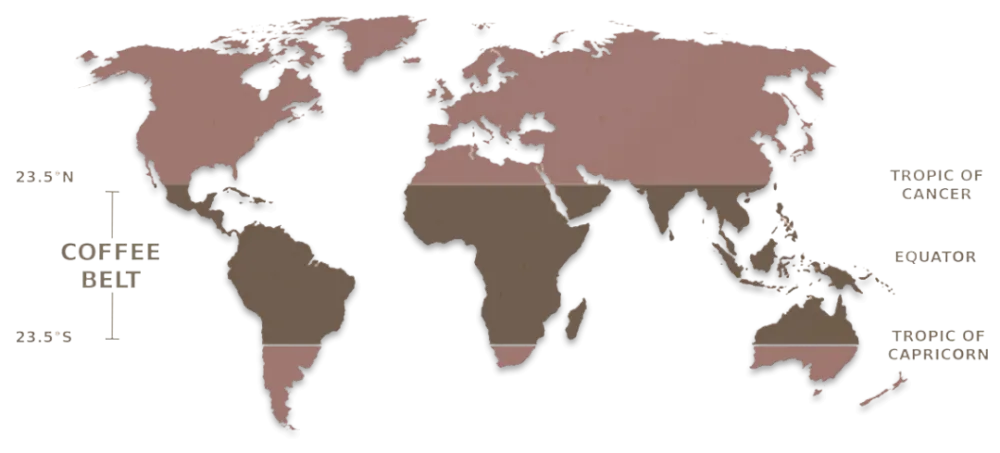
Western and southern Yunnan Province lie between 15°N and the Tropic of Cancer, with most areas at altitudes of 1000 to 2000 meters. The terrain is mainly mountainous and sloping, with obvious undulation, fertile soil, abundant sunshine, plentiful rainfall, and large temperature differences between day and night. These unique natural conditions create the special flavor of Yunnan small-bean coffee—strong but not bitter, fragrant but not harsh, with a slight fruity note.
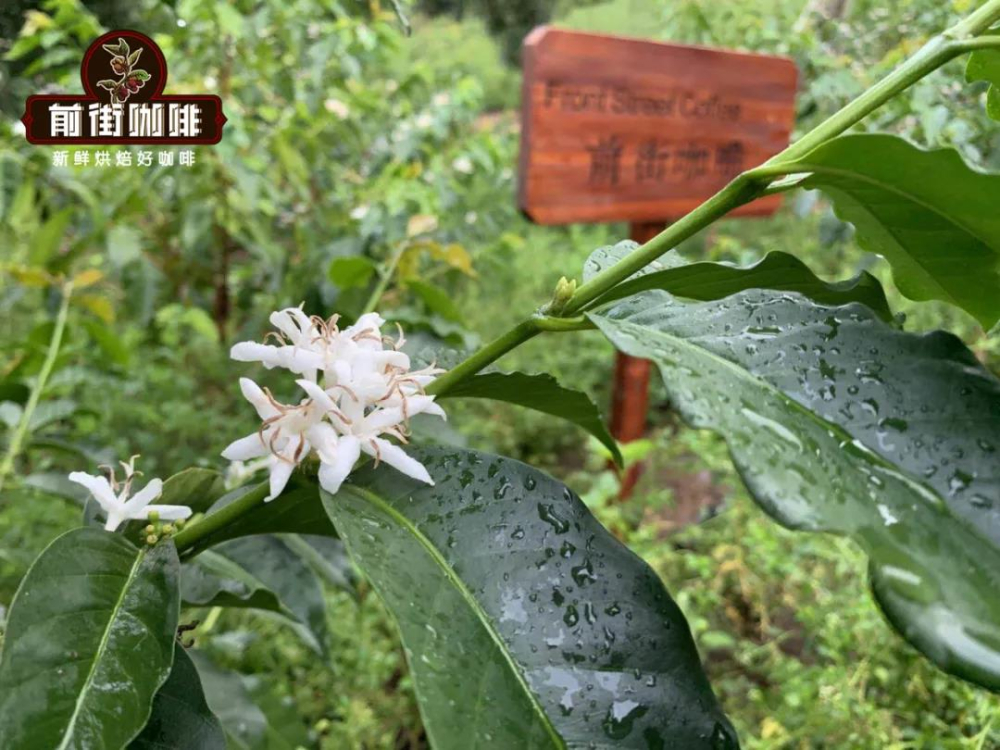
Yunnan small-batch coffee is a short-day plant. Coffee has the characteristic of flowering multiple times with a concentrated flowering period. The flowering period of small-batch coffee in Yunnan is from February to July, with the peak flowering period from March to May. Flowering is greatly affected by climate, especially rainfall and temperature. Coffee flowers are very short-lived, only 2 to 3 days. Small-batch coffee generally begins to open at 3 to 5 a.m. and blooms fully from 5 to 7 a.m. The coffee fruit development cycle is relatively long; small-batch coffee fruit takes 8 to 10 months to mature, usually maturing from October to December of the same year. Rainfall has a significant impact on fruit development, and climatic conditions directly affect fruit quality.
Main Yunnan Coffee Producing Regions
Yunnan's planting areas are mainly distributed in Lincang, Baoshan, Simao, Xishuangbanna, Dehong, and other prefectures.
Baoshan
Baoshan has an average temperature of 21.5 degrees Celsius, with a maximum of 40.4 degrees, and basically no frost throughout the year, making it recognized as the best small-batch coffee producing area. The small-batch coffee cultivated here is famous at home and abroad for being strong but not bitter, fragrant but not harsh, with small and uniform beans, rich aroma, and a fruity note. Tasting experts from the International Coffee Organization have rated Yunnan coffee in the same category as Colombia's wet-processed small-batch coffee, as the highest quality coffee in the world.
Pu'er
Pu'er City is famous for tea, with a coffee planting area of 789,000 mu, coffee bean output of 586,600 tons, and total output value of 2.469 billion yuan, having become Yunnan's largest coffee planting base. Its climate, geography, and soil conditions are unique for growing coffee. It has become mainland China's largest coffee producing region, with the largest coffee planting area, the highest output, and the finest coffee trading distribution center.
Lincang
Lincang City is located in the southwestern part of Yunnan Province. The Tropic of Cancer passes through its south. It borders Pu'er to the east, Dali to the north, Baoshan to the west, and Myanmar to the southwest. Therefore it is also known as the Lancang River, a shining pearl on China's southwestern border. The average annual temperature in Lincang City is between 16.8 and 17.2°C. Dry and wet seasons are distinct, with abundant sunshine.
Yunnan's Lincang has also established a plantation specifically for growing Typica variety coffee trees and a small number of Bourbon variety coffee trees, with the aim of letting everyone see the charm of Yunnan coffee beans, because Typica is one of the oldest varieties derived from Arabica, and its flavor expression is naturally the most original and best, so Front Street Coffee (FrontStreet Coffee) chose it.
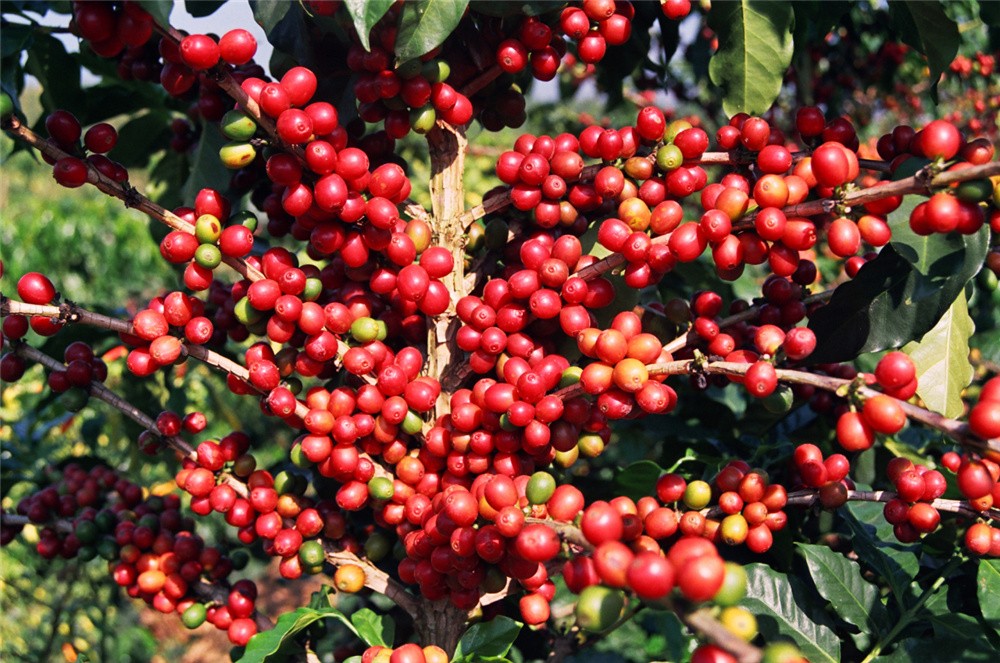
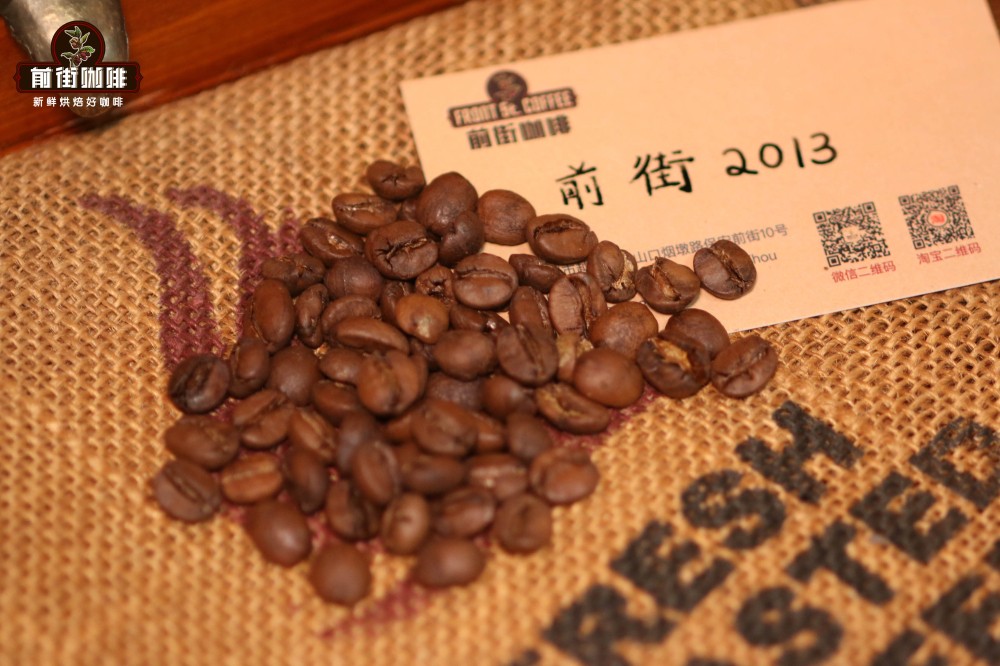
Front Street selected the Typica variety, which is pure Arabica and has a superior flavor to the Catimor currently grown in Yunnan. From seedling to first fruiting, it takes at least 4-5 years, which is also why Yunnan coffee farmers, even knowing that Catimor has inferior flavor, are unwilling to tear it up and replant. Front Street's first batch of self-produced Yunnan coffee beans from 2020-21 was named "Front Street 2013" and received unanimous praise. In February 2022, Front Street 2013 from the new season was finally released to the public again.
Yunnan Coffee Beans Processing Methods
Most Yunnan coffee currently sold on the market is mainly Catimor coffee. In order to change some of the undesirable flavors of the Catimor variety itself, many use special processing methods to alter the coffee beans' original flavor. However, Front Street Coffee (FrontStreet Coffee) believes that changing coffee flavor through processing methods is not a long-term solution. Everyone approaches special processing methods with the mentality of trying something new, while traditional processing methods are everyone's true love. Applying traditional processing methods to Catimor may produce pleasant flavors during brewing.
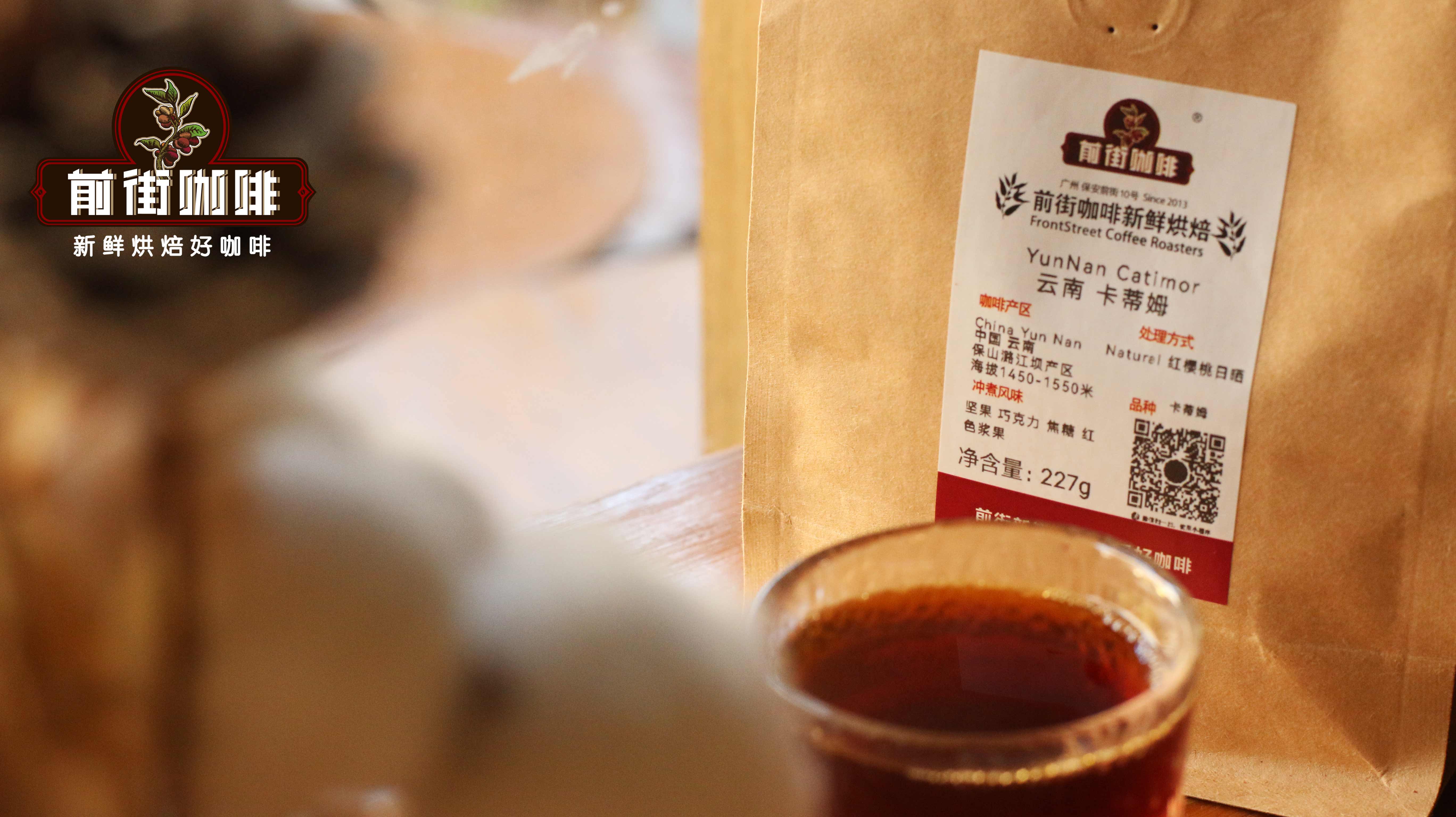
Yunnan coffee beans use the most traditional washed and sun-dried processing methods. Front Street has washed Front Street Yunnan small-batch coffee, Front Street sun-dried Catimor coffee, and Front Street 2013 sun-dried Typica coffee. Front Street believes that the washed taste is relatively clean, while the sun-dried taste is relatively mellow with better sweetness.
Front Street Brewing Parameters for Yunnan Coffee
In order to preserve the sweet-and-sour taste and tea-like characteristics of Front Street Yunnan coffee, Front Street Coffee (FrontStreet Coffee) gives it a medium roast. When brewing, you can use a V60 dripper, a 1:15 coffee-to-water ratio, medium grind (about the size of coarse granulated sugar / 75% passing through a Chinese No. 20 standard sieve), and a water temperature of 88 degrees.
Use staged extraction, using twice the amount of coffee powder in water for blooming, that is, 30 grams of water for 30 seconds of blooming. The reason the blooming process is needed is to allow the coffee powder to release its internal carbon dioxide gas, thereby making the later extraction more stable. Pour water in a circular motion at a small flow rate until 125 grams, then pause, continue pouring until 225 grams, then stop. After the water in the dripper has dripped through, remove the dripper. Start timing from the beginning of pouring; the extraction time is 2'00". Next, pick up the entire cup of coffee and shake it evenly, then pour it into a cup for tasting.
[Front Street Washed Yunnan Small-Batch Coffee Flavor] Herbal, nutty aroma, chocolate, caramel.
[Front Street Yunnan Sun-Dried Catimor Coffee Flavor] Performance: nuts, chocolate, spices, caramel, plum.
Front Street Coffee Brewing Suggestions:
Regarding coffee brewing, Front Street has always believed that the freshness of coffee beans has a great relationship with coffee flavor, so the coffee beans shipped by Front Street Coffee (FrontStreet Coffee) are all within 5 days of the roast date. Front Street's roasting philosophy is "freshly roasted good coffee," so that every customer who places an order receives the freshest coffee when they get it. The resting period for coffee is about 4-7 days, so when customers receive it, it is exactly at its best flavor.
For friends who need ground coffee, Front Street kindly reminds you: if the coffee beans have been ground in advance, there is no need for further resting, because during transportation, the pressure generated by carbon dioxide inside the packaging can also make the coffee flavor rounder, so you can brew a cup immediately upon receiving the coffee grounds. However, coffee grounds need to be brewed promptly, because after contact with air, coffee grounds oxidize relatively quickly, which means the coffee flavor will dissipate relatively quickly, and the coffee flavor will not be as good. Therefore, Front Street recommends buying whole beans and grinding fresh before brewing, so that you can better taste the coffee's flavor.
Front Street believes that when it comes to what flavor or variety a coffee is, each has its own advantages, and it entirely depends on personal preference. Different varieties will certainly have different flavors; this is the most fundamental point. Different producing regions also have different flavors. Front Street has more than fifty single-origin coffees from different producing regions, with many different varieties as well, and everyone is welcome to come and taste them.
The above content is compiled by CoffeeHunters, a coffee news website.


