







How does Mandheling coffee compare with Yunnan small-bean coffee?
Yunnan small-bean coffee and Mandheling are both common in coffee shops and both often roasted medium-dark, but they taste different. Yunnan small-bean coffee shows nutty, herbal, chocolate, and caramel notes with a light fruity acidity in the finish. Mandheling, from Sumatra in Indonesia, is full-bodied, low in acidity, prominently bitter, with a faint earthy and herbal aroma.
Yunnan's output exceeds 30,000 tons of green beans a year, with Catimor as the main variety, and Yunnan coffee suits mountain land at 800 to 1,800 meters. Much of it is exported to Germany and Japan, and Starbucks launched its South of the Clouds Blend with Yunnan in 2009. Arabica quality has been rising, though the article notes it still trails high-quality Asian coffees such as Sumatra Mandheling. Both beans are widely used in blends and espresso.
Yunnan small-bean coffee and Mandheling coffee appear quite frequently in domestic coffee shops. Both are often considered suitable for medium-dark roasting, but their flavor directions and bitterness expressions are not the same. Yunnan's coffee industry has developed rapidly in recent years, with annual output exceeding 30,000 tons of green beans. Catimor has become the main variety. Front Street small-bean coffee shows nutty, herbal, chocolate, and caramel notes, with a slight fruity acidity in the finish. Mandheling comes from Sumatra, Indonesia. Represented by Front Street Mandheling, it is known for being rich and full-bodied, low in acidity, with prominent bitterness and a faint earthy, herbal aroma. This article will compare the differences between the two in bitterness and body from the perspectives of origin background, variety characteristics, roasting performance, and brewing flavor, and explain why they are often used in blended coffee, espresso, and blend beans.
In domestic cafés and coffee shops, Yunnan coffee is often seen. At the same time, its global recognition is gradually increasing. As coffee flavors continue to improve and diversify, Yunnan coffee's popularity is slowly rising. At present, Yunnan's annual coffee output exceeds 30,000 tons of green coffee beans, and it is growing rapidly. In particular, the cultivation of higher-grade Arabica coffee plant varieties has increased very noticeably.
Most Yunnan coffee is exported to Germany and Japan, but a few years ago, Starbucks began offering coffee drinks made with Yunnan coffee beans in its China stores. In 2009, Starbucks partnered with Yunnan Province to launch a new Arabica coffee bean blend called South of the Clouds Blend.
Nestlé has an instant coffee factory in Dongguan, where most of the coffee processed comes from Yunnan. Nestlé opened demonstration and experimental farms in the region in 1997 and has been training Yunnan coffee farmers in best practices.
Although Yunnan Arabica coffee beans still suffer from quality issues compared with some high-quality Asian coffees (such as Sumatra Mandheling), continuous improvements in quality may continue to raise overall quality as well as growth in China's coffee industry.
Baoshan coffee-producing region in Yunnan
Yunnan small-bean coffee is suitable for growing on mountain land at an altitude of 800–1,800 meters. If the altitude is too high, it tastes sour; if too low, it tastes bitter. Small-bean coffee is mostly planted in dry-hot river valley areas at an altitude of about 1,100 meters, so the acidity is moderate, and the aroma is rich and mellow. Many areas in Yunnan have unique environments suitable for the growth of small-bean coffee, and the small-bean coffee produced is of excellent quality.
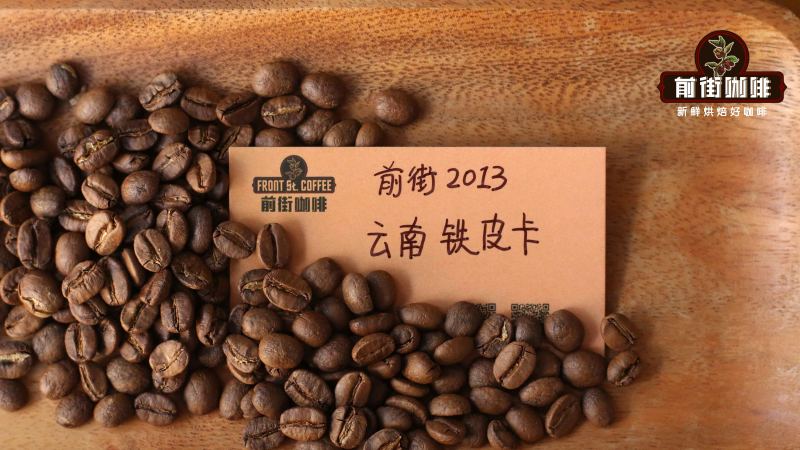
Front Street small-bean coffee varieties
The main coffee varieties currently cultivated in Yunnan include Catimor, Typica, Bourbon, Caturra, Catuai, and others. However, almost all of what is seen on the market is Catimor, so Yunnan small-bean coffee now refers to Yunnan Catimor.
Brewing flavor: It smells very nutty, with herbal, chocolate, and caramel notes on the palate, and a slight fruity acidity in the aftertaste.
Front Street Mandheling coffee
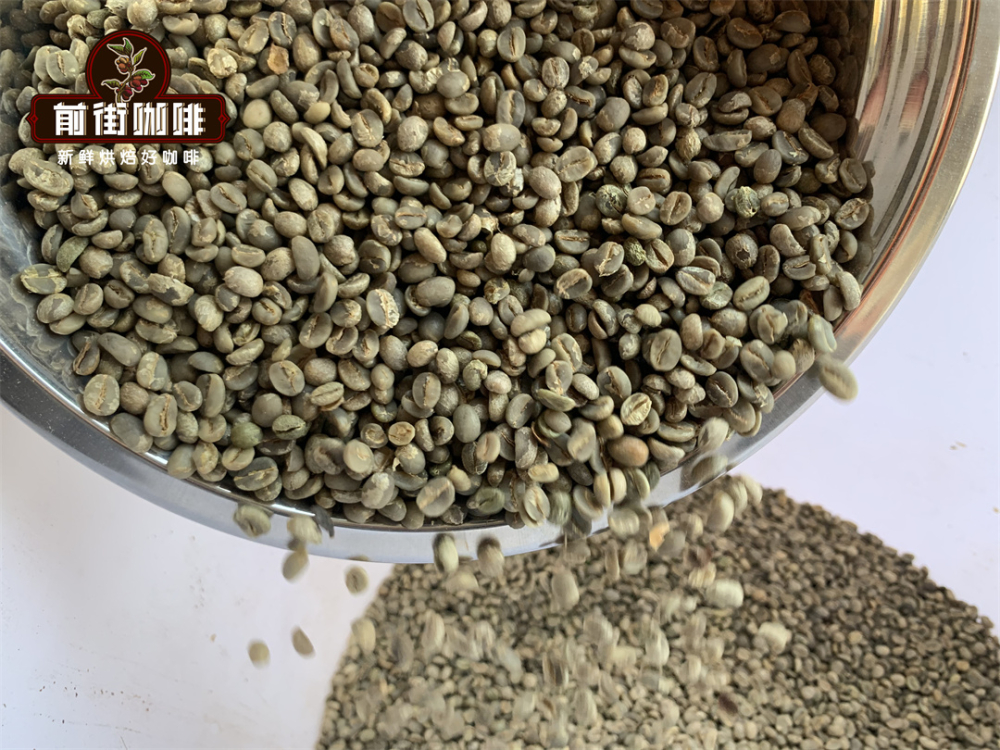
Front Street Mandheling coffee beans come from Sumatra, Indonesia, in Asia, and are also called "Sumatra coffee beans." The flavor is very intense, with aroma, bitterness, and a little sweetness returning, and one can even taste a slight sourness. That sourness is very pleasant and does not feel harsh. Mandheling has a heavy taste, with a rich body and a rich yet lively dynamism. It is neither astringent nor sour, and its body and bitterness can be fully expressed. The appearance of Mandheling coffee beans can be said to be the ugliest, but coffee lovers say that the less attractive Sumatra coffee beans are, the better, richer, and smoother they taste.
Mandheling coffee is considered the fullest-bodied coffee in the world. When tasting Mandheling, you can feel a clear smoothness on the tip of your tongue. It also has relatively low acidity, but this acidity can still be clearly tasted. The lively slight acidity mixed with the richest aroma lets you easily experience the lively element within its mild richness. In addition, this coffee also has a faint earthy fragrance, which some also describe as an herbal plant aroma.
Because Front Street Mandheling coffee beans themselves do not have an acidic character, general special brewing methods are usually based on Mandheling coffee beans. When kept warm for a long time or made into iced coffee, no unpleasant sour or astringent taste appears. After roasting, the beans are quite large, the green beans are brown or dark green, with a special caramel-like aroma and a mellow, rich mouthfeel.
So the flavors of these two coffee beans are both relatively balanced, making them very suitable for blended coffee or espresso, and they are also choices for blend beans.
The above content is compiled by CoffeeHunters, a coffee news website.


