







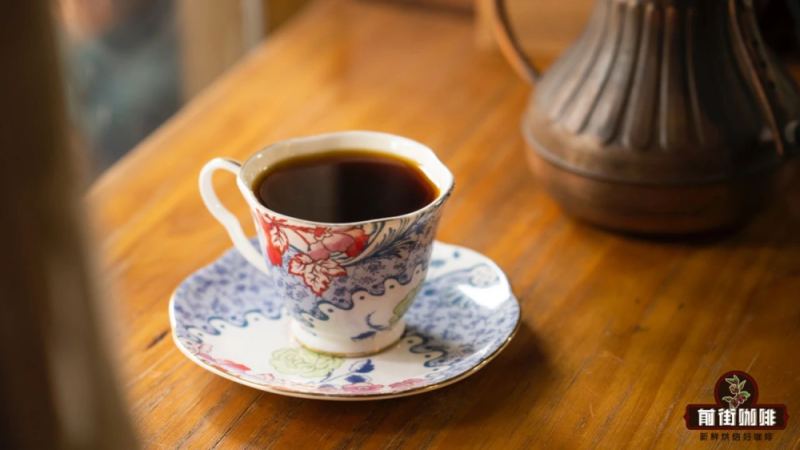
Why does Yirgacheffe coffee taste floral and citrus-like?
Yirgacheffe coffee tastes bright and citrus-like with jasmine aromatics because of three factors: high altitude and a large day-night temperature swing that let cherries ripen slowly, washed processing introduced in 1972 that restored clean aromatics, and a medium-light roast that keeps the lively fruit acidity intact. The region sits in Ethiopia, coffee's birthplace.
Terroir matters. The growing area sits high with a cool climate and moderate rainfall that avoids excessive humidity, conditions that suit the delicate coffee tree. At home, a V60 three-pour recipe is recommended. A trial drop at the end of first crack gave more vibrant acidity but weaker caramelized aromatics and a thinner finish, so the roaster settled on a medium-light roast for balance.
Yirgacheffe is where many coffee lovers take their first step into the world of light-roasted specialty coffee. It is renowned for its bright acidity reminiscent of citrus and lemon, along with its elegant jasmine aroma. What exactly creates this signature flavor? Front Street Coffee breaks down the flavor code of Yirgacheffe one by one, from terroir and processing methods to roast profiles and brewing parameters. Ethiopia's high altitude and large day-night temperature difference allow coffee cherries to mature slowly, accumulating more aromatic compounds; the washed processing technique introduced in 1972 restored the beans' inherent pure aromatics; and a medium-light roast perfectly preserves the lively fruit acidity. The article also includes a V60 three-pour brewing recipe recommended by Front Street Coffee baristas, helping you recreate a classic cup of Yirgacheffe at home.
For more specialty coffee knowledge, welcome to follow our WeChat official account: Front Street Coffee (FrontStreet Coffee)
Front Street has noticed that many friends' first encounter with light-roasted beans began with Yirgacheffe. With its bright acidity reminiscent of citrus and lemon, plus fresh jasmine aromatics, this bean has become one of the most recognizable representatives of specialty coffee, highly regarded in coffee circles around the world. To understand what makes Yirgacheffe so special, let's first look together with Front Street at what conditions combine to shape its flavor.
To highlight the floral penetration and lively acidity of Front Street's natural-process Yirgacheffe, we once tried dropping the beans at the end of first crack during a light roast. The acidity was indeed more vibrant, but the caramelized aromatics were weaker, and the sweetness and finish felt somewhat thin. To achieve better balance for the entire bean, Front Street ultimately settled on a medium-light roast. If you'd like to taste the classic flavor of Yirgacheffe, you can now place an order on the Front Street Coffee (FrontStreet Coffee) Tmall flagship store.
Yirgacheffe comes from the birthplace of coffee
The Yirgacheffe growing region is located in Ethiopia, the birthplace of coffee, at a very high altitude with a cool and pleasant climate and moderate rainfall that avoids excessive humidity—perfect for the delicate coffee tree. Local farmers cultivate coffee in mist-shrouded mountains, mostly using garden-style mixed planting alongside other cash crops, and you can often see coffee trees growing beneath banana trees.
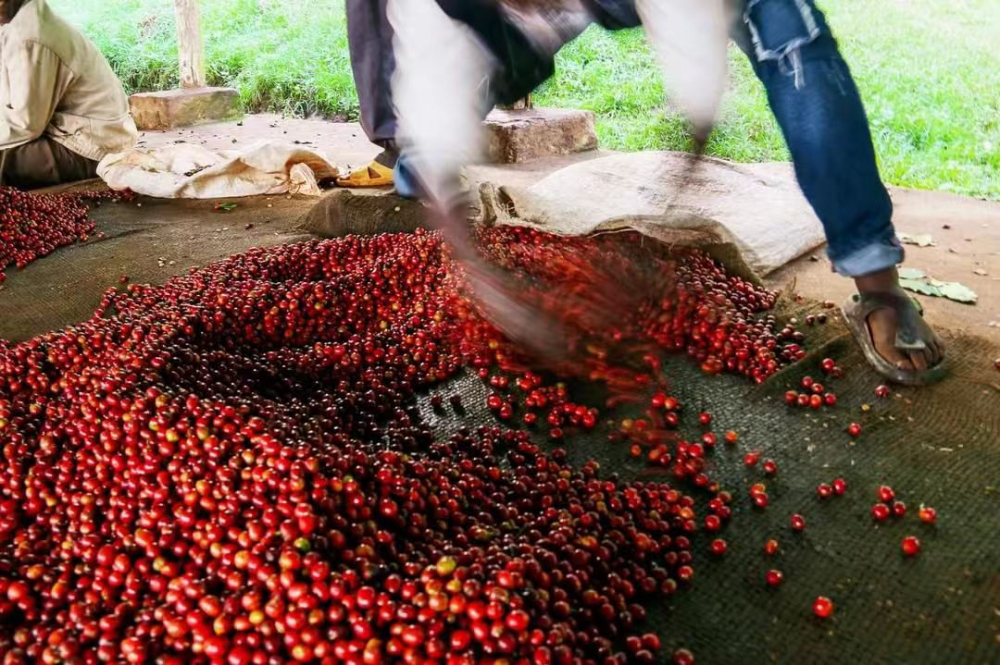
The high altitude brings significant day-night temperature differences, slowing the coffee tree's growth pace. The cherries need longer to mature, allowing them to accumulate richer aromatic compounds, and the harvest season is correspondingly later. Typically from October to January, farmers are busy picking coffee cherries in the mountains and their own backyards, gradually producing the next year's Yirgacheffe lots.
Washed processing elevates Yirgacheffe's flavor
What truly made Yirgacheffe famous is that washed processing restored the coffee beans' inherent aromatics. In the past, Yirgacheffe used the natural method with relatively crude techniques, making quality control difficult and defect rates high. The resulting beans often carried earthy and rotten fruit flavors. Such lots could only be sold at low prices, and growers received inadequate returns. To improve quality, the Ethiopian government introduced more advanced washed processing technology and supporting equipment from Central and South America in 1972.
Compared with the traditional natural method, the biggest difference in washed processing is that multiple steps can remove defective cherries. After picking, coffee cherries are first poured into water, and buoyancy is used to scoop out beans that are not dense enough and float to the surface; then a depulper removes the skin and flesh, and the beans are placed in fermentation tanks for 18 to 36 hours to let the mucilage layer break down (the specific duration depends on local temperature and humidity); next, the parchment beans are scrubbed through washing channels for 30 to 60 minutes. The specially designed channels, combined with water flow, can remove low-density, poor-quality beans. The high-quality parchment beans are then drained and dried on African raised beds for about 14 days. Once the target moisture content is reached, they can be bagged and stored.
Washed processing gives Yirgacheffe a refreshing citrus character and elegant white floral notes, bright and delicate overall, performing impressively in cupping. This is why Yirgacheffe was separated from the Sidama region and became the renowned growing region it is today in the coffee world.
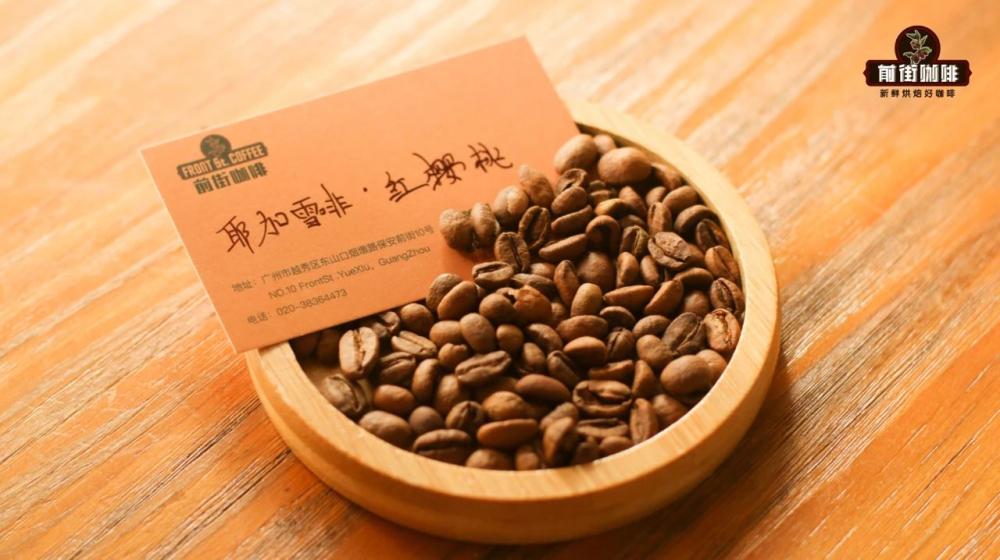
Of course, Yirgacheffe also has excellent natural-process lots, such as the Natural Red Cherry on Front Street's bean list. The cherries are dried in the sun with their skin and flesh intact, requiring manual turning at regular intervals to prevent over-fermentation and off-flavors. Natural processing gives Yirgacheffe fermented fruit aromatics and pronounced sweetness.
Light roasting preserves more bright acidity
Unlike the era when "coffee should be bitter," light-roasted Yirgacheffe can be said to have opened a new chapter for "fruit-acid coffee." Coffee tastes intensely bitter mainly because roasters roast the beans very dark, pushing the flavor profile toward nuts and dark chocolate. With the rise of the specialty coffee philosophy, to preserve more acidity, roasters roast Yirgacheffe only to an appropriate light level, allowing it to express pleasant fruity sweet-tartness and white floral notes.
A preference for sweetness and a fear of bitterness happen to be the general public's common taste, which is one of the reasons Yirgacheffe is so popular around the world. Such a popular Yirgacheffe naturally made it into Front Street's entry-level daily drinking bean series. Front Street's daily drinking beans let friends new to coffee experience the basic flavors of the growing region at a very low price, and the small-package design also avoids waste from not being able to finish a bag.
Yirgacheffe tastes better brewed this way
No matter which flavor profile of coffee beans you're brewing, Front Street recommends choosing freshly roasted beans so you can taste the complete flavor. Coffee beans enter their optimal tasting period 4 to 7 days after roasting, and once that window passes, the aromatics dissipate at an accelerated rate. All coffee beans sold by Front Street are freshly roasted within 5 days, so you can brew and drink them directly upon receipt.
High-altitude coffee beans have a harder texture, and light-roasted Yirgacheffe has not undergone significant changes, so Front Street Coffee baristas choose a relatively high water temperature to extract more aromatic compounds. To avoid over-extraction while still bringing out a full Yirgacheffe flavor, Front Street uses a medium-fine grind here. In addition, Front Street Coffee baristas want to highlight Yirgacheffe's richer layered aromatics, so they choose the V60 dripper for brewing. The dripper's spiral rib design helps coffee grounds release gas, maximizing the volatilization and dissolution of aromatic and acidic compounds.
Dripper: V60 Water temperature: 91-92°C Dose: 15g Coffee-to-water ratio: 1:15 Grind size: medium-fine (No. 20 sieve, 78% passing)
Using a three-pour extraction: first bloom with 30g of water for 30 seconds, then pour in a slow circular stream until reaching 125g for the first pour stage. When the water level drops and the coffee bed is almost exposed, continue pouring until reaching 225g and stop. After all the coffee has dripped through, remove the dripper. (Timing from the start of the bloom) Total extraction time: 2'00".
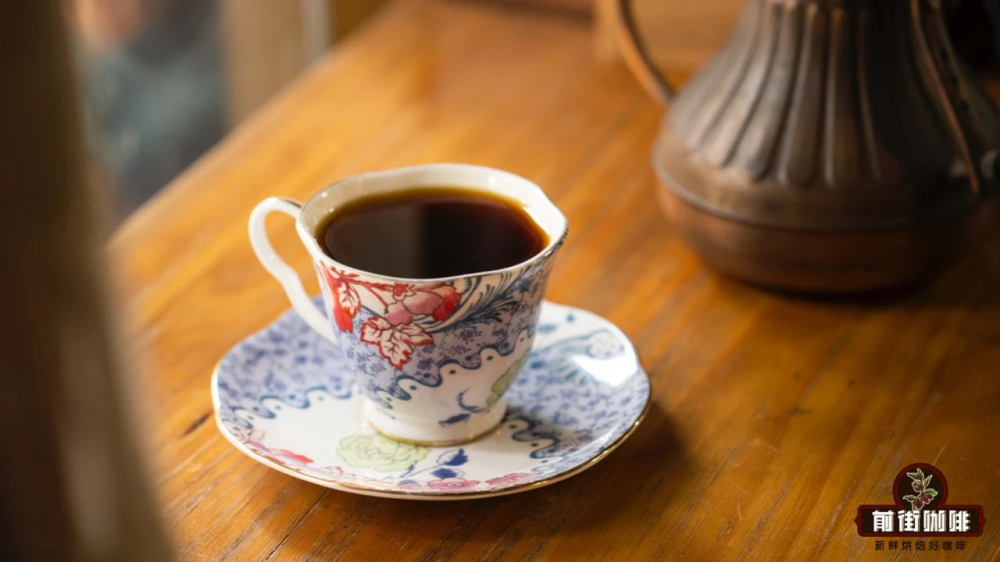
The washed Yirgacheffe daily drinking beans, once ground, offer refined floral and fruity aromatics. On the palate, there's bright, uplifting acidity like lemon and berries, with prominent sugarcane sweetness. As the temperature drops, it takes on a green tea-like mouthfeel with a long, lingering finish.
The above content is compiled by CoffeeHunters, a coffee news website.


