







How does Kenya's green coffee bean grading work?
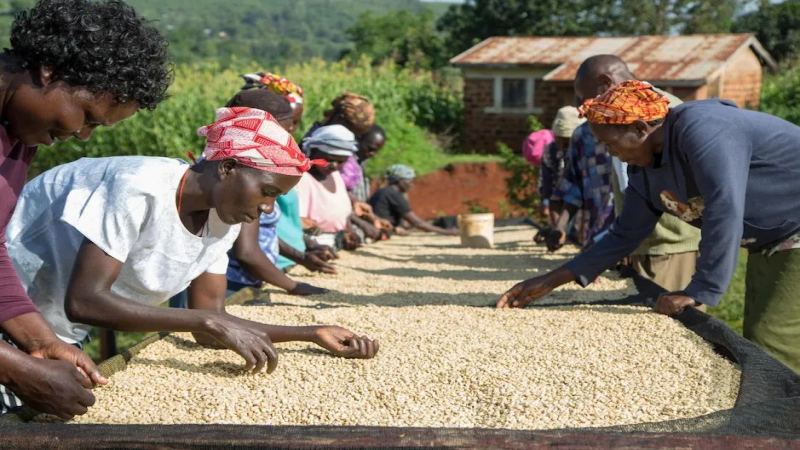
Kenya sorts its coffee by bean size and cup quality. AA covers screen sizes 17 and 18, roughly 6.75 millimeters and up, while AB covers 15 and 16. PB, C, E, TT and T sit lower in the list. Flavor classes TOP and PLUS sit on top of the size grades as a quality marker.
The better grades usually come from washed lots built on SL28 and SL34, which give berry aromas and bright acidity. As frontstreet coffee shows with an AA lot, a medium-light roast and a careful pour-over keep those fruit notes readable rather than roasted away.
Kenyan coffee is renowned worldwide for its rigorous grading system and distinct flavor characteristics. This article systematically outlines the size grading system for Kenyan coffee beans, including the specific standards for common grades such as AA, AB, and PB, while also introducing flavor grading methods like TOP and PLUS. Drawing on Front Street Coffee's roasting and brewing practices, and using Kenyan Asalia coffee beans as an example, the article explains in detail the flavor performance and pour-over parameter recommendations for AA-grade beans, providing coffee enthusiasts with a complete reference from selection to tasting.
For more specialty coffee knowledge, please follow our WeChat official account: Front Street Coffee (FrontStreet Coffee)
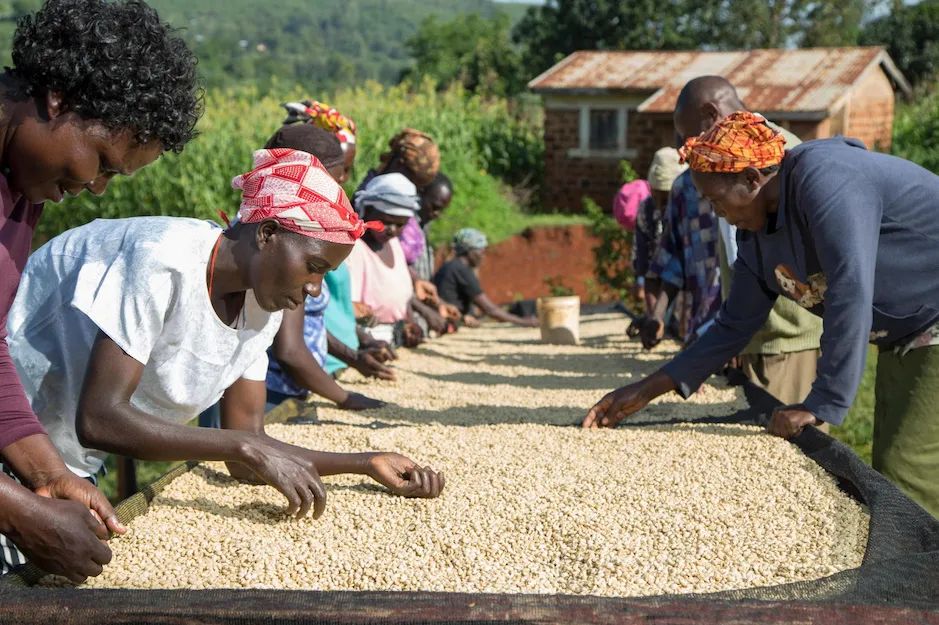
As early as the 1930s, Kenya established a rigorous coffee bean grading system, based primarily on bean size, shape, and hardness, classified from highest to lowest as AA or AA+, AB, PB, C, E, TT, and T. This set of standards can serve as a reference for selection, and is also combined with coffee flavor performance for comprehensive evaluation. Currently, the most common grades on the consumer market are AA, AB, and PB.
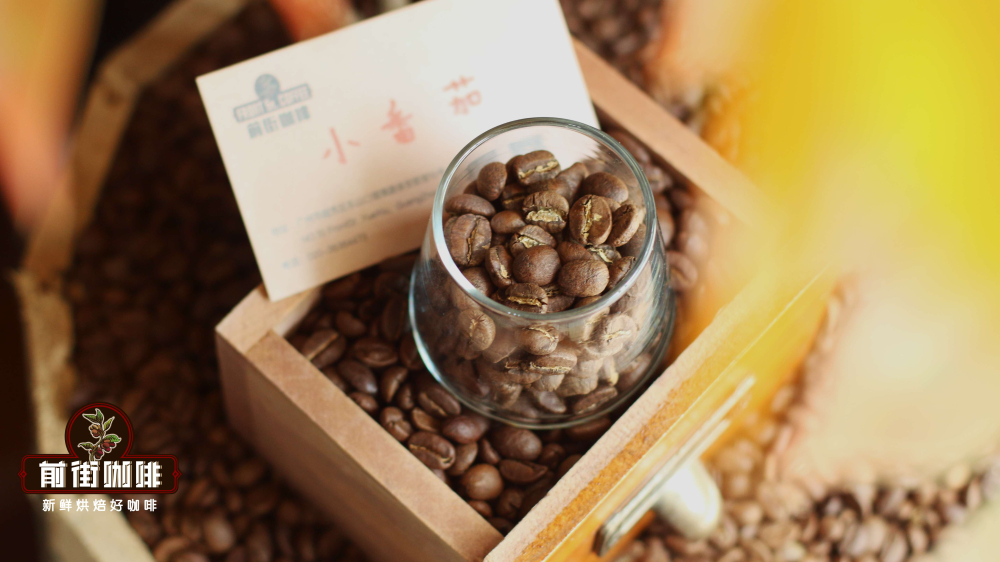
Taking Front Street Coffee, which has deep roots in the coffee field, as an example, its bean list includes a Front Street Kenya Small Tomato, which is the highest grade AA, using the locally mainstream washed processing method, with a variety combination of SL28 and SL34. After medium-light roasting, this bean exhibits exceptionally outstanding berry aromas that are unforgettable at first sip.
[Coffee Size Grading]
AA grade is a specification term in green coffee bean trading, primarily referring to bean size. AA grade represents larger beans, typically with a green bean screen size of 17 mesh or above (17 mesh corresponds to a screen aperture of 6.75 millimeters). AA grade corresponds to 17 and 18 mesh, while AB grade corresponds to 15 and 16 mesh.
AA Plus (AA+) refers to AA-grade beans with exceptionally excellent cup quality (flavor, mouthfeel) AA grade screen size is 17 to 18 AB grade screen size is 15 to 16, accounting for the majority of production C grade screen size is smaller than AB grade TT grade consists of lighter beans blown out from AA and AB grade beans by an airflow separator T grade consists of lighter beans blown out from C grade beans by an airflow separator E grade Elephant Bean is a large mutated bean formed by two beans fused together, also called Elephant ear UG refers to those that do not meet the above standards PB Peaberry, classified by shape, unrelated to flavor and weight.
[Flavor Grading] In addition to size grading, Kenya also adopts a flavor grading method, using TOP, PLUS, and FAQ to select excellent-quality coffee for reference. Evaluation indicators cover green beans (size, color, defects), roasted beans, and cup quality (acidity, body, flavor characteristics, defects). In practice, they simplify this into three dimensions: Acidity—Body—Flavor, quickly scoring each bean on a scale of 1 to 3 for each item. If a bean is labeled 1-1-1, it corresponds to TOP AA.
The Kenyan Asalia coffee beans roasted in-house by Front Street belong to the AA grade, originating from the Thika region, using the Kenyan 72-hour washing method, with varieties SL28 and SL34, and are a favorite among many who prefer acidic coffee. If you are tasting this Kenyan Asalia coffee for the first time, Front Street recommends starting with a hot pour-over black coffee, which allows you to more fully appreciate the flavor characteristics of Kenyan coffee.
[Brewing Recommendations] Front Street Coffee (FrontStreet Coffee), considering that this bean is light-roasted, uses a higher water temperature paired with a faster-flow dripper, aiming to extract its bright acidity with high temperature while avoiding over-extraction caused by high temperature, thus choosing the faster-flow V60 dripper. The main parameters are as follows: V60 dripper, coffee-to-water ratio 1:15, coffee dose 15 grams, water temperature 91°C, grind size (80% passing through a No. 20 standard sieve).
In terms of brewing technique, Front Street Coffee (FrontStreet Coffee) uses staged extraction, namely a three-stage pouring method: first pour 30 grams of water for a 30-second bloom, then pour 125 grams in a circular motion for the second stage, and when the water level drops to just about to expose the coffee bed, continue pouring to 225 grams, with a total time of 2 minutes (including bloom).
Flavor performance of Kenyan Asalia coffee: on the palate, it presents flavors of smoked plum and cherry tomato, with intense and full-bodied acidity, a prominent sweetness in the mid-palate with a juicy quality, and a finish of berry notes and yellow sugar sweetness, accompanied by green tea aromas.
The above content is compiled by CoffeeHunters, a coffee news website.


