







How Does the Kenyan Coffee Grading System Work?
Kenya grades coffee mainly by bean size, running from E and AA down through AB, PB, and C. AA is the larger screen size and AB sits just below it, but size is not the same as quality. Altitude and variety play a larger role in the bright fruit acidity and full body that Kenyan coffee is known for.
The SL28 and SL34 varieties were developed at Scott Laboratories in 1930, which is where the SL name comes from. Growing regions such as Nyeri and Thika sit between roughly 1,200 and 2,300 meters on volcanic red soil. The K72 double washing process, with its long soak, further shapes the clean, layered flavor in the cup. Note that the largest coffee bean grade is not automatically the sweetest.
Kenya, as a representative producing country of East African specialty coffee, is known for its coffee beans' bright fruit acidity and full body. This article systematically reviews Kenya's coffee grading system, from E, AA, AB to PB, C and other grades in terms of bean size and characteristics, and introduces the geographical advantages of major producing regions such as Nyeri and Thika. It also provides an in-depth analysis of the flavor differences among classic varieties such as SL28 and SL34, as well as Kenya's signature K72 double washing process. The article also includes the brewing parameters and flavor description of Front Street Cherry Tomato Coffee, providing coffee enthusiasts with a complete reference from bean selection to extraction.
For more specialty coffee knowledge, please follow: Front Street Coffee (Frontsteet Coffee)
Kenya is located in East Africa, with the equator running through its center and the Indian Ocean bordering its southeastern coast. The country mainly grows Arabica coffee, among which the two varieties SL28 and SL34 are especially famous. Both were developed in laboratories and are of mixed lineage. They were published by Scott Laboratories in 1930, which is where the name SL comes from. In recent years, they have been highly praised in the specialty coffee circle.
Front Street believes that Kenyan coffee has rich layers of flavor, prominent fruit aromas, and a full, sweet-and-acidic entry. Thanks to geographical conditions such as high altitude, abundant rainfall, fertile soil, and diverse microclimates, coffee can multiply in diverse ways, also creating many regions suitable for cultivation.
Kenya's main producing regions include: Nyeri, Kirinyag, Ruiru, Thika, Kiambu, Muranga, and Kenya West. Among them, Nyeri is the most common in Taiwan, with an altitude of about 1,200 to 2,300 meters, nutrient-rich volcanic red soil, and coffee beans of excellent quality and stable yield, with rich fruity acidity, making it arguably the most typical Kenyan coffee.
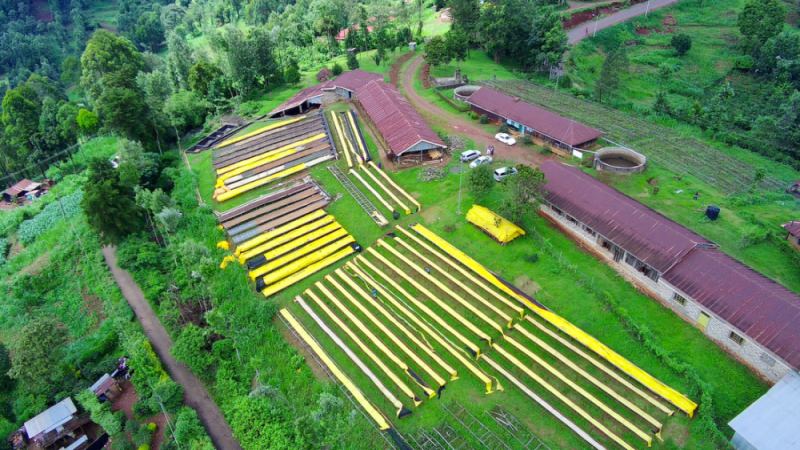
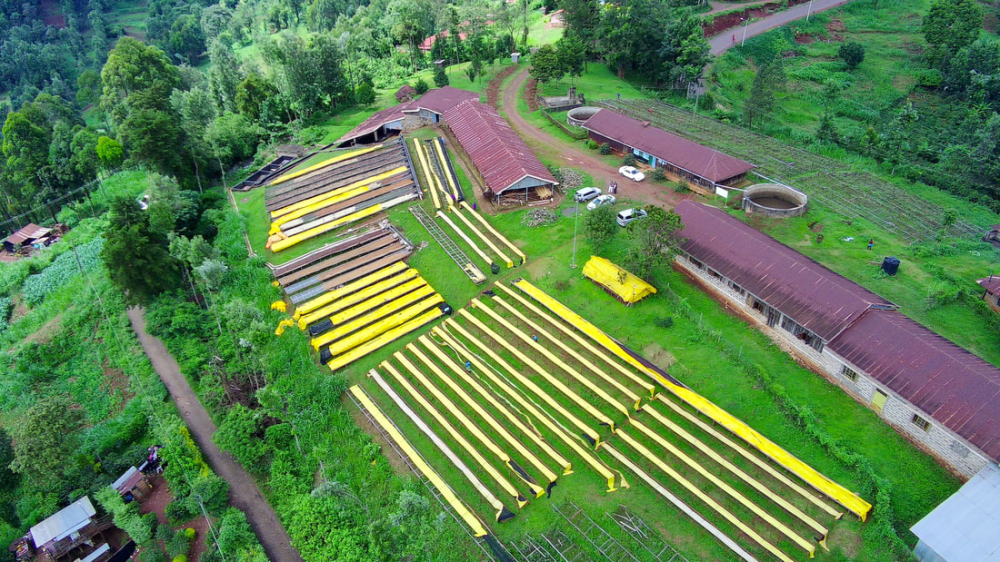
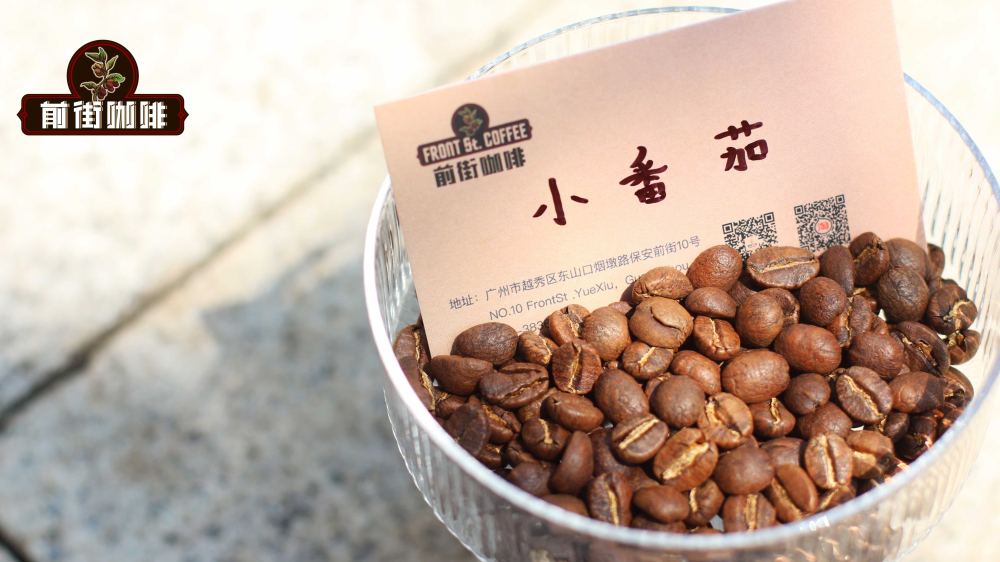
Other producing regions are mostly smallholder estates, with altitudes between 1,300 and 2,200 meters. Each region, relying on different environmental advantages, selects coffee beans of excellent quality and unique flavor and sends them to processing plants for subsequent processing. Therefore, many coffee enthusiasts use processing plants with strict quality control as a basis for selecting beans. In order to present the most authentic and classic Kenyan flavor, we selected Front Street Cherry Tomato as a representative. It comes from the Bee Processing Plant in Thika, belongs to the highest-grade AA lot, and uses double washing processing, with diverse flavors such as cherry tomato, smoked plum, sherry, and caramel.
Kenyan Coffee Bean Classification
Regardless of region or variety, Kenyan coffee beans are mostly graded by bean size, from largest to smallest as E, AA, A, AB, B, PB, C. The two most common in Taiwan are AA and AB. Among them, Kenya AA, with moderate acidity and a full texture, is the highest grade and also the most recognized by specialty coffee.
E (Elephant Bean)
E stands for Elephant. It is formed by two beans combining into one, growing into an oversized bean due to abnormal development, and is extremely rare, with a bean diameter of about 7.1 mm. It is a common grade of Kenyan specialty coffee beans and is also one of the most recognized beans in specialty coffee. The coffee bean size is about 6.7–7.1 mm. Most Kenyan coffee beans fall into this grade. This grade gets its name from a mixture of A and B bean sizes. A coffee beans are about 6.8 mm in size, while B coffee beans are about 6.2 mm in size.
A
The coffee bean size is about 6.8 mm.
B
The coffee bean size is about 6.2 mm.
PB
Peaberry, because only one seed develops inside the fruit, forms a small and round coffee bean. Some people particularly prefer the flavor of these peaberries, so although they are rare in number, they are still picked out and sold.
C
The coffee bean size is smaller than B, about 5.6–6.0 mm.
TT
Because the weight and hardness of this type of coffee bean do not meet the standard, and some are even defective, they are removed from AA and AB beans.
T
Because the weight and hardness of this type of coffee bean do not meet the standard, and some are even defective, they are removed from C-grade beans.
MH
Coffee beans that have become overripe and fallen to the ground are not exported due to poor quality and mainly circulate within the Kenyan market.
In Kenyan specialty coffee, in addition to the official grades AA and AB, exporters also make more detailed flavor classifications of the beans. Common ones include AA TOP, AA+, AA++, AB+, AB TOP, and AA FAQ. Most green bean merchants conduct their own cupping and add the word TOP to beans of excellent quality and special flavor (such as AA TOP, AB TOP). However, flavor classifications are all labeled by the merchants themselves and have no direct connection with the official Kenyan coffee authorities.
Front Street has learned that in Kenyan specialty coffee, in addition to the two official grades AA and AB, exporters also specifically make detailed classifications of Kenyan coffee beans. Common flavor categories include AA TOP, AA+, AA++, AB+, AB TOP, and AA FAQ. Most green bean merchants conduct their own cupping and add the word TOP to coffee beans of excellent quality and special flavor (such as AA TOP, AB TOP). However, the flavor classification part is all labeled by the merchants themselves and has no direct relationship with the official Kenyan coffee authorities.
Kenya Specialty Coffee Beans
As mentioned earlier, in 1930, Scott Laboratories published the cultivation of the SL series of coffee beans, successfully growing varieties that combined quality and stress resistance, namely SL28 and SL34. SL28 combines the lineages of French Mission, Mocha, and Yemen Typica. It has excellent sweetness and varied layered flavors while remaining balanced and easy to drink, with flavors reminiscent of citrus and smoked plum. Although SL34 is similar in flavor to SL28, it is fuller and richer overall, with an additional taste progression extending from acidity to a sweet finish, adding more sparks to the drinking experience. In addition to the lineages of French Mission and Yemen Typica, SL34 also has Bourbon mixed in, and by comparison, it is also better able to adapt to changeable climates.
In recent years, the emerging K7 variety is mainly planted in low-altitude areas. Because its roots develop more deeply, it is more drought-tolerant than other varieties. As for the two varieties Batian and R11, like the SL series, they are hybrids bred in laboratories, mainly used to enhance survivability and resist coffee bean-related diseases.
Processing Methods of Kenyan Coffee Beans
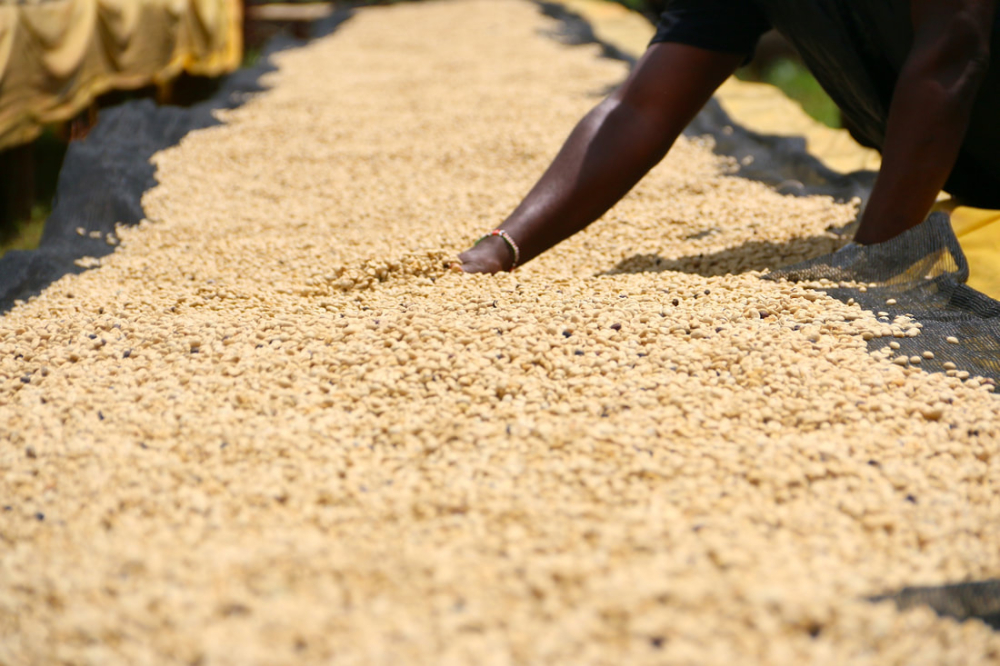
Kenya is a tropical producing region with two rainy seasons each year, allowing two harvests. 60% are concentrated from October to December, and the other 40% from June to August. Generally, Kenyan coffee cherries are processed by the washed method. This washed processing is different from ordinary washed processing and is called the K72 processing method.
Compared with ordinary washed fermentation time, Kenya's fermentation time is as long as 72 hours, which is what we often call 72-hour washing, also known as the double washing method. Its processing steps are: harvest when the coffee cherries reach ripeness with a sweetness of 21, select the best cherries for pulping, soak and ferment in a tank for 24 hours, using clean river water in the tank, wash after 24 hours, then soak in clean river water to ferment for another 24 hours, wash again, ferment again, repeat 3 times, for a total fermentation time of 72 hours. Ordinary washed fermentation time is at most 36 hours. This repeated process of fermenting and then washing gives Kenyan coffee beans strong acidity and a delicate feel. In this processing method, one point to note is that during fermentation, the water needs to be changed every few hours to prevent the coffee beans from becoming foul. Currently, the Cherry Tomato Coffee launched by Front Street is processed in this way, possessing relatively strong acidity, with a thick sourness like cherry tomato and smoked plum.
Front Street Brewing Sharing
Front Street selects coffee that has been roasted for 4 days for brewing, using 15 grams of coffee grounds, paired with a V60 dripper, and a relatively fast flow rate, which not only makes clogging less likely but also highlights the coffee's original flavor. Brew at a ratio of 1:16, using a water temperature of 90 degrees. This prevents high temperatures from easily extracting bitter substances and lower temperatures from accentuating the coffee's acidity.
This time, staged brewing is used. First, pour 30 g of water for blooming for 30 seconds; at this point the coffee expands quite fully. In the second stage, pour 120 g of water in a small circle at the center. The pouring height is 5 cm, with a gentle force, and there is no need to stir intentionally. When the water level drops to 1/2 of the coffee bed, begin the third stage of pouring. In this stage, pour gently in circles from the center outward, with a flow rate of about 4 g/s, until reaching 240 g and then stop pouring. End extraction after all the coffee liquid in the dripper has dripped through. The time is about 1 minute 50 seconds.
Flavor: Bright berry acidity, cherry tomato. Round and full body, smooth. Finish with a light tea aroma.
The above content is compiled by CoffeeHunters, a coffee news website.


