







What Makes Antigua Coffee Smoky and Bright?
Guatemalan coffee is known for clear fruity acidity, a smooth body, and a distinct smoky tone that insiders sometimes call cigarette coffee. Antigua coffee comes from one of the country's eight growing regions, where high altitude, volcanic soil, and cool nights slow cherry maturation and concentrate flavor.
Coffee cultivation in Guatemala dates to the 1700s, and Jesuit priests introduced trees around 1750. By 1880 coffee made up ninety percent of the country's exports. The country sits within the coffee belt, and its Bourbon, Typica, Caturra, and Catuai varieties, processed by washed and natural methods, shape the cup. Hardness grading also reflects the altitude at which the beans were grown.
Guatemalan coffee has long been renowned for its bright fruity acidity and distinctive smoky aroma, standing out uniquely among Latin American origins. From the perspective of Front Street Coffee, this article systematically reviews Guatemala's coffee cultivation history, the flavor differences among its eight major regions, high-altitude growing conditions, hardness grading standards, washed and natural processing methods, and the characteristics of major varieties such as Bourbon, Typica, Caturra, and Catuai. The article also provides detailed product information on Front Street Coffee's Huehuetenango daily drinker beans and Antigua La Flor del Café beans, along with the roasting curve and V60 brewing parameters for La Flor del Café, for coffee enthusiasts' reference.
For more specialty coffee knowledge, please follow our WeChat official account: Front Street Coffee (FrontStreet Coffee)
Among the coffee-producing countries of Latin America, Guatemala's beans stand out with their clear fruity acidity and smoky tonality. Its smooth mouthfeel and highly recognizable flavor have earned it the nickname "cigarette coffee" among coffee insiders. Below, Front Street takes you on a deeper look at Guatemala's coffee regions and flavor characteristics.
Guatemalan Coffee Cultivation History
According to materials consulted by Front Street, as early as 1747, local residents of Guatemala had already mastered the techniques of coffee cultivation and consumption. In 1750, Jesuit priests introduced coffee trees to this land. In 1845, with the establishment of the Guatemalan Coffee Cultivation and Promotion Committee, coffee gradually rose to become an important economic crop for the country. Under the strong push of government forces, by 1880 coffee accounted for ninety percent of Guatemala's total exports. To further expand production, the rulers at the time turned their eyes to indigenous lands, forcing them to sell their farmland and relocate to more barren areas.
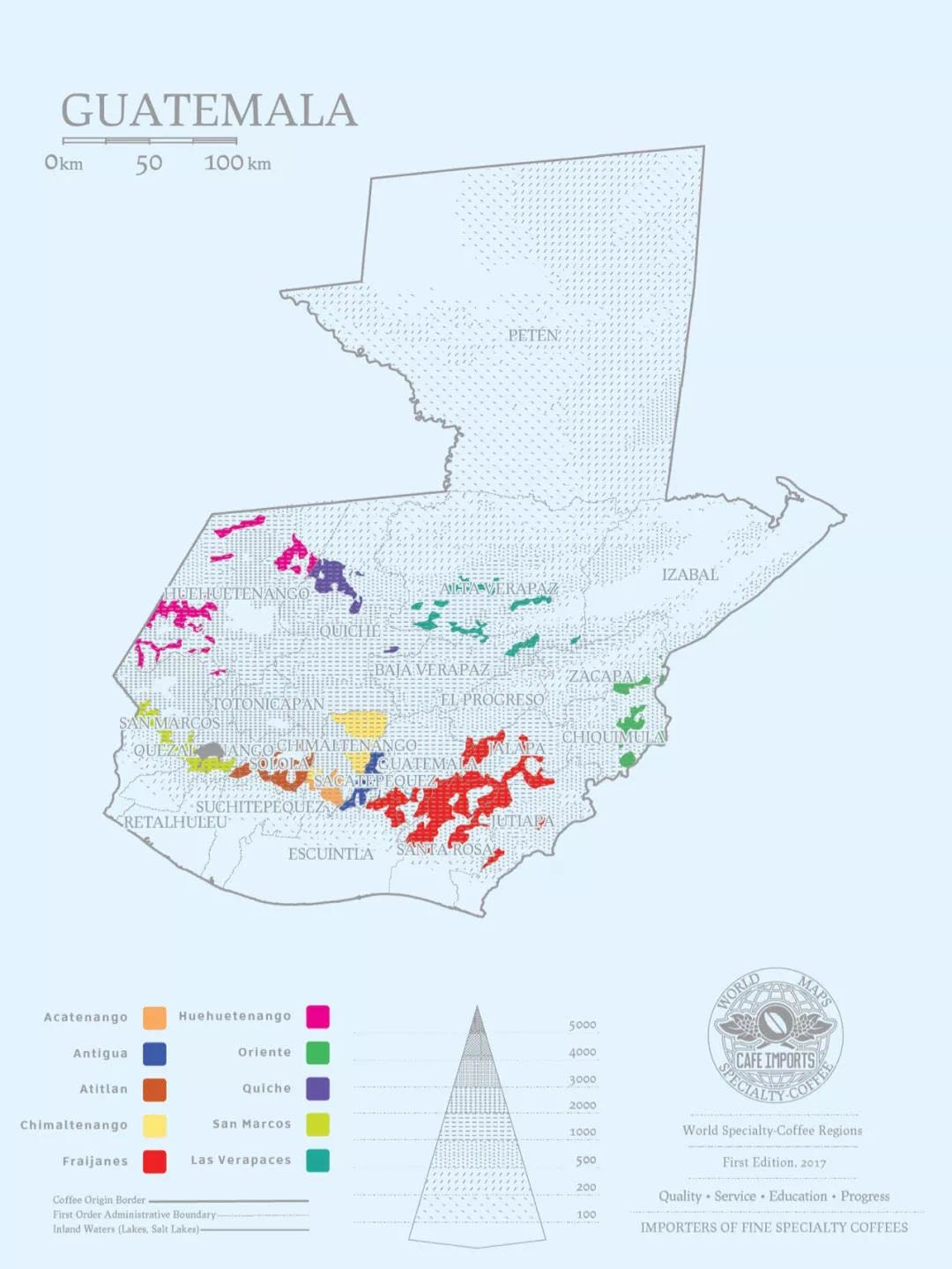
Because of this history, even today most coffee production activities in Guatemala remain concentrated in the southern region. According to Front Street's understanding, Guatemala is currently divided into eight coffee regions, each producing coffee with its own distinctive flavor. Overall, however, Guatemalan coffee presents a mild, mellow body, elegant aroma, and pleasant fruity acidity—worthy of being called the nobility of coffee. The Guatemalan Antigua La Flor del Café beans sold at Front Street Coffee (FrontStreet Coffee) stores are deeply favored by coffee enthusiasts.
Guatemalan Coffee Growing Regions
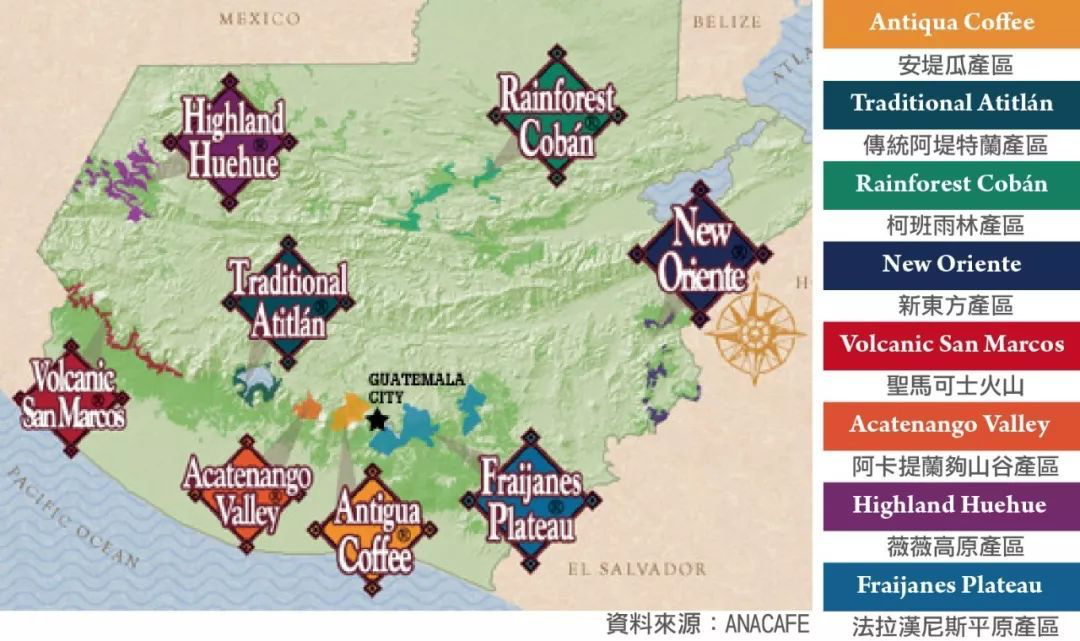
As Front Street Coffee (FrontStreet Coffee) mentioned above, Guatemala has eight coffee-growing regions, each showing different flavors due to different geographical distributions. Next, Front Street Coffee (FrontStreet Coffee) will briefly describe the characteristics of these eight regions one by one.
Antigua
This was once the old capital and an ancient city, relatively close to the capital. It is the most famous of all Guatemalan coffee regions, and naturally the most expensive, so counterfeit Antigua coffee beans are not uncommon on the market. The highest-priced ones are Bourbon coffee cherries grown in the volcanic soil most characteristic of Antigua. Flavor: Balanced acidity and sweetness. Altitude: 1500-1700m
Acatenango Valley
This is Guatemala's eighth coffee region. According to Front Street's understanding, this area was early on a supplier to Antigua and is adjacent to it. The valley is magnificent, with coffee farms distributed along the volcanic valley. The valley traps warm, humid air, and combined with large day-night temperature differences, it provides an ideal growing environment for coffee cherries. Flavor: Outstanding sweetness, delicate fruity acidity; both flavor and aroma are widely loved by coffee fans. Altitude: 1300-2900m
Rainforest Coban
This region has extremely high rainfall, is shrouded in clouds and mist year-round, has a cool climate, and soil rich in limestone and clay. The post-harvest processing method often directly affects the quality of coffee from this region, but when processed properly, the flavor is exceptionally full and alluring. Flavor: Outstanding mouthfeel, with notes of chocolate and tropical fruit. Altitude: 1300-1500m
Volcanic San Marco
Coffee quality in this area fluctuates considerably. With abundant rainfall, coffee cherries bloom densely once it rains, making sun-drying after harvest entirely dependent on luck, so coffee quality in this region is not stable enough. Flavor: Pronounced acidity and sweetness; properly processed cherries display a full and unique aroma. Altitude: 1400-1800m
Traditional Atitlan
The soil around Lake Atitlan is very fertile. The highest coffee is grown at 1950 meters, and most coffee farms extend from slopes down to the lakeside, where the altitude is still 1500m. This is also Guatemala's largest and most famous high-altitude lake region. Flavor: Intense aroma, syrupy body. Altitude: 1500-1750m
Highland Huehue
This region has the highest average altitude in Guatemala and is a volcanic production area. Although the route from the capital to this region is rugged and remote, dry hot winds from Mexico blow here, allowing Highland Huehue to grow coffee cherries at elevations of 2000m. Flavor: Bright, delicate acidity with floral notes and evolving flavors. Altitude: 1500-2000m
Fraijanes Plateau
This region is a volcanic production area with relatively high altitude. The soil is rich in pumice, which can even be ignited. Its coffee flavor is of the balanced type, but with an additional unique aroma compared to Antigua. Front Street believes this is probably related to the soil characteristics and highly variable temperature and humidity conditions of the region, making the coffee flavor particularly prominent. Flavor: Unique aroma, balanced flavor, mild acidity, full body. Altitude: 1400-1800m
New Oriente
This region is close to neighboring Honduras. Its climate is similar to Coban's, but some areas are hotter. New Oriente is a volcanic region, yet its flavor is completely different from other volcanic production areas. Flavor: Pronounced aroma, with notes of chocolate and spice. Altitude: 1200-1700m
Guatemalan Coffee Growing Conditions
Guatemala borders Mexico to the north, Honduras and El Salvador to the south, the Caribbean Sea to the east, and the Pacific Ocean to the west. This geographical layout of mountains and sea, combined with tropical rainforests, volcanic geology, highland valleys, and diverse microclimates, provides exceptional conditions for growing Arabica coffee beans.
The northern and eastern coastal plains of Guatemala have a tropical rainforest climate, while the southern highlands have a subtropical climate, with a year divided into wet and dry seasons—the wet season from May to October and the dry season from November to April of the following year. The narrow, fertile flatlands along Guatemala's Pacific coast have a tropical climate. The central highlands are also Guatemala's cultural center. According to Front Street Coffee (FrontStreet Coffee), at elevations of 1300-1800 meters, temperatures are mild year-round, with daily temperatures between 18 and 28°C; at higher elevations, January and February tend to be relatively cold.
Annual precipitation in the northeast is 2000-3000 millimeters, while the south receives 500-1000 millimeters. Guatemala has a high average altitude, with the coffee belt distributed above 1500 meters, between 14 and 16 degrees north latitude. This is most conducive to growing Strictly Hard Beans, all of which are washed processed. Of these, 45% of the beans are specialty grade—a fairly high proportion—and there is also a small amount of Robusta variety coffee beans.
Guatemalan Coffee Bean Grading
As Front Street Coffee (FrontStreet Coffee) mentioned above, Guatemala's coffee-growing regions, due to high altitude and suitable temperatures, are able to produce Strictly Hard Beans. Therefore, Guatemala's coffee grading is also based on bean hardness and altitude, because the higher the altitude at which coffee grows, the greater the density of the fruit and the more unique the flavor. The following is Guatemala's coffee bean grading standard (ranked from highest to lowest quality):
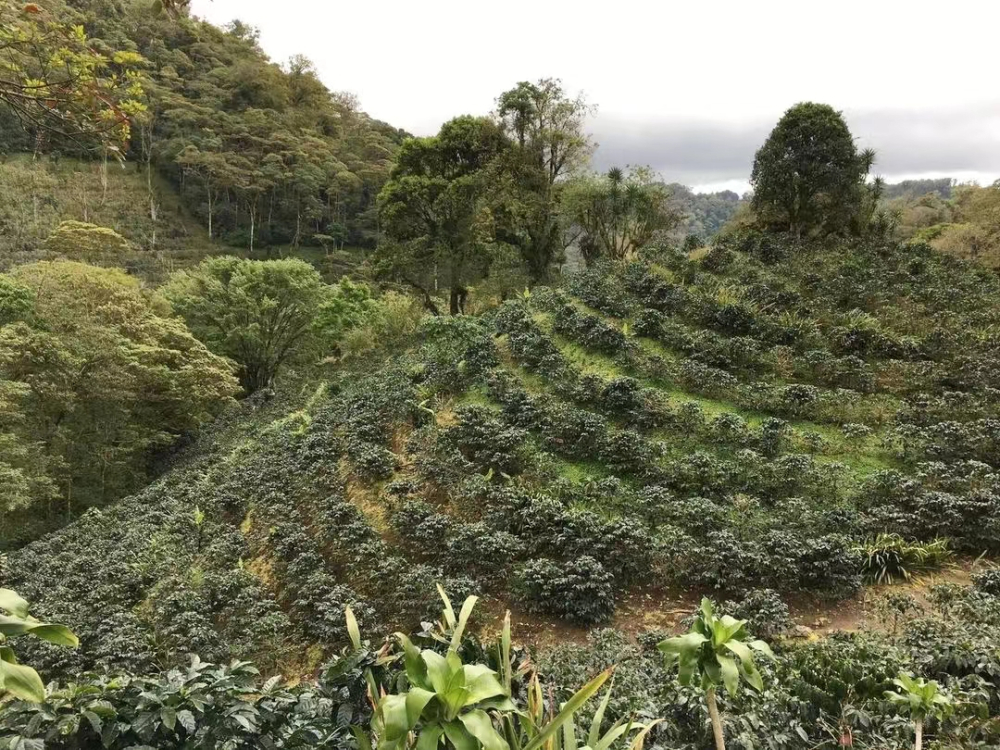
SHB (Strictly Hard Bean): Growing altitude 1500-1700 meters;
HB (Hard Bean): Growing altitude 1350-1500 meters;
SH (Semi-Hard Bean): Growing altitude 1200-1350 meters;
Extra Prime (Extra Prime Washed Bean): Growing altitude 1000-1200 meters;
Prime (Prime Washed Bean): Growing altitude 850-1000 meters;
Good Washed (Good Washed Bean): Growing altitude 700-850 meters.
Guatemalan Coffee Processing Methods
According to Front Street Coffee (FrontStreet Coffee), most Guatemalan coffee cherries are washed processed, with only a small amount using the natural method.
As Front Street Coffee (FrontStreet Coffee) mentioned in previous articles, the washed processing method best showcases a coffee bean's most original flavor and is also the starting point for understanding a region's flavor. That is why the daily drinker beans launched by Front Street Coffee (FrontStreet Coffee) are mainly washed processed—for example, Front Street Coffee (FrontStreet Coffee)'s Guatemalan Huehuetenango daily drinker beans use the washed method; the natural method, on the other hand, adds aroma and fermented notes on top of the region's base flavor.
Washed Processing Steps
1. Harvesting. After picking ripe coffee cherries, first remove impurities and defective beans and screen out floating beans—up to this point, it is the same as the natural method.
2. Pulping. Fresh cherries are sent into a pulping machine to remove the skin and pulp. Unripe cherries, because their pulp separates less easily, are screened out at this stage. After passing through the pulping machine, what remains is mucilage, parchment, and the seed.
3. Fermentation to remove mucilage. The seeds with mucilage still attached after pulping are transferred into fermentation tanks. Although it is called the washed method, it does not actually wash away the mucilage; rather, through fermentation, the mucilage is removed by biological breakdown. The fermentation process takes about 16-36 hours, during which the beans must be stirred frequently to accelerate the separation of mucilage from the seeds. Washed fermentation produces acidic substances such as citric acid, malic acid, and acetic acid, which penetrate the green beans, giving washed beans a heavier acidity than natural ones. After fermentation is complete comes the actual washing—rinsing the beans clean once more.
4. Drying. After washing, the beans also need to be sun-dried or machine-dried to bring moisture content down to 12%. Because the pulp has already been removed in the washed method, there is no need to worry about mold during drying as there is with the natural method. The dried parchment green beans are also not as hard as natural-process beans that still contain pulp and skin, and can be hulled to obtain green beans.
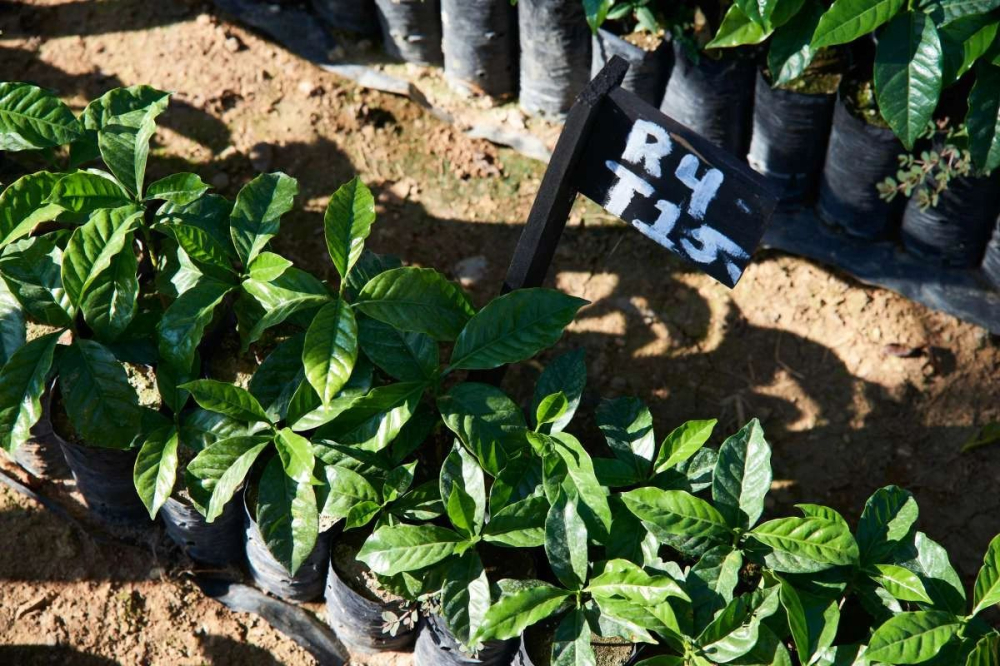
Natural Processing Steps
1. Harvest ripe coffee cherries.
2. First remove impurities and defective beans.
3. Screen floating beans: Pour coffee cherries into a water tank. Ripe, plump cherries sink to the bottom, while unripe or damaged cherries float to the surface.
4. Sun-drying: Scoop out the ripe coffee cherries that sank to the bottom of the tank and spread them on a drying patio for sun-drying, reducing moisture from 70% to about 10-12%. They need to be turned several times each day for even drying, and covered at night to prevent moisture.
5. Removing the husk: After about two to four weeks of sun-drying, the outer layer of the coffee seed has dried and hardened. At this point, a hulling machine is used to remove the husk, and the process is complete.
6. Packaging and shipping: The hulled coffee beans are packed bag by bag—what we generally call green beans. Finally, through different roasting processes and brewing variations, coffee can present millions of flavor variations.
Guatemalan Coffee Varieties
According to Front Street Coffee (FrontStreet Coffee), Guatemala mainly cultivates single-origin coffee beans of the Bourbon, Typica, Caturra, and Catuai varieties.
Bourbon: A natural mutation of Typica. The coffee cherries turn burgundy red when ripe, and the beans are relatively round. Bourbon grown at high altitude usually has better aroma and bright acidity, with a flavor reminiscent of red wine.
Typica: Typica has excellent flavor and is recognized as a specialty coffee variety, but its yield is extremely low and it is susceptible to coffee leaf rust, requiring more labor for management. Typica coffee originated in Ethiopia and southeastern Sudan and is the most widely cultivated coffee variety in the Western Hemisphere. The plant is relatively robust but not tolerant of strong sunlight. Typica's top leaves are copper-red, hence the name "copper-top coffee."
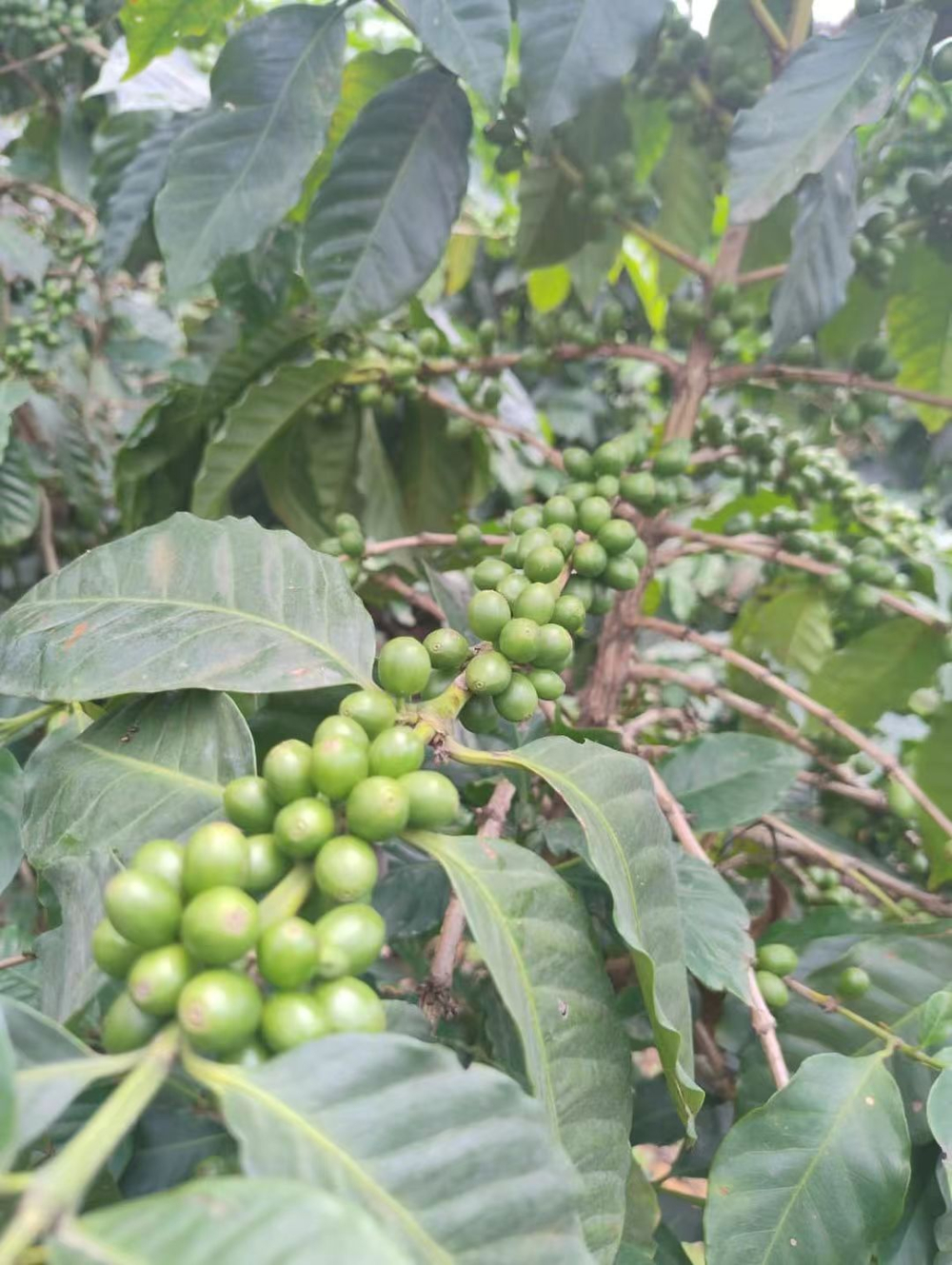
Caturra: A natural mutation of Bourbon, discovered in Brazil in 1937. Its tree is shorter and smaller than Bourbon. Because it inherits Bourbon's lineage, its disease resistance is relatively weak, but its yield is higher than Bourbon's. Although discovered in Brazil, Caturra is not suited to growing in Brazil, so it was not planted on a large scale there; instead, it became widespread in Central and South America—for example, Colombia, Costa Rica, and Nicaragua all cultivate Caturra on a large scale.
Catuai: An artificial hybrid of Caturra and Mundo Novo. Catuai inherits Caturra's short stature, requires no shade, is easy to grow, and convenient to harvest. It also has better resistance to natural disasters than Mundo Novo. In terms of flavor, it has good acidity. Catuai generally comes in red and yellow cherry types.
The above is the information on Guatemalan coffee beans compiled by Front Street Coffee (FrontStreet Coffee). Next, Front Street Coffee (FrontStreet Coffee) will introduce all of Front Street's current Guatemalan coffee beans.
Front Street Coffee (FrontStreet Coffee) Guatemala Huehuetenango (Daily Drinker Bean)
Country: Guatemala Region: Huehuetenango Altitude: 1500-2000m Varieties: Bourbon, Caturra, Catuai Processing: Washed Bean appearance: Relatively uniform bean size Flavor: Nuts, lemon peel, berries, citrus
Front Street Coffee (FrontStreet Coffee) Guatemala Antigua La Flor del Café Coffee Beans
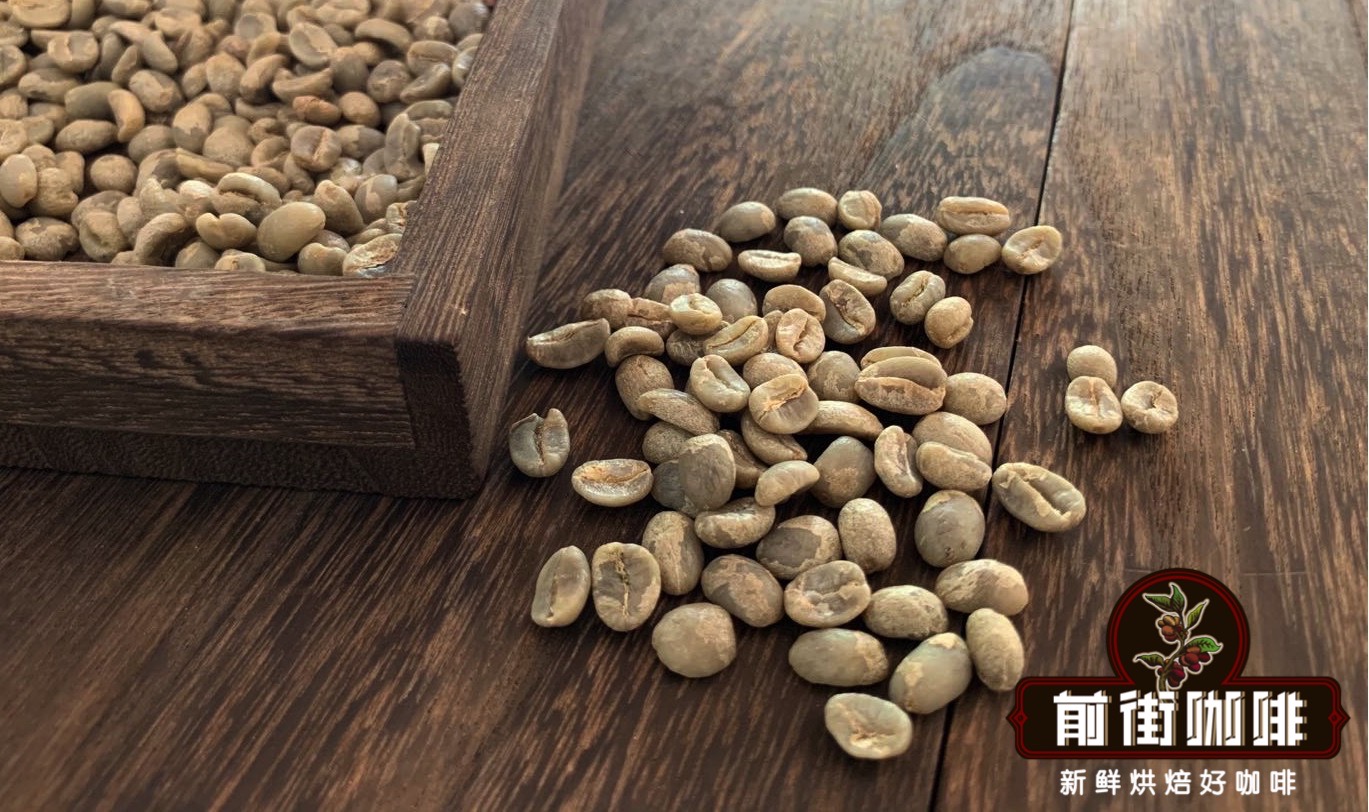
Country: Guatemala Region: Antigua Altitude: 1200m Varieties: Bourbon, Caturra Processing: Washed
Flavor: Berries, citrus, light floral notes, soft fruity acidity, chocolate finish
The above is a brief introduction to Front Street Coffee (FrontStreet Coffee)'s two Guatemalan coffee beans. Front Street conducts extensive roasting and brewing tests whenever it launches a new coffee bean, and selects the optimal roasting and brewing data to brew for coffee fans to taste. Next, Front Street will share the roasting and brewing data for the Guatemala Antigua La Flor del Café coffee beans for coffee fans' reference.
[Front Street Coffee (FrontStreet Coffee) Roasting Recommendations]
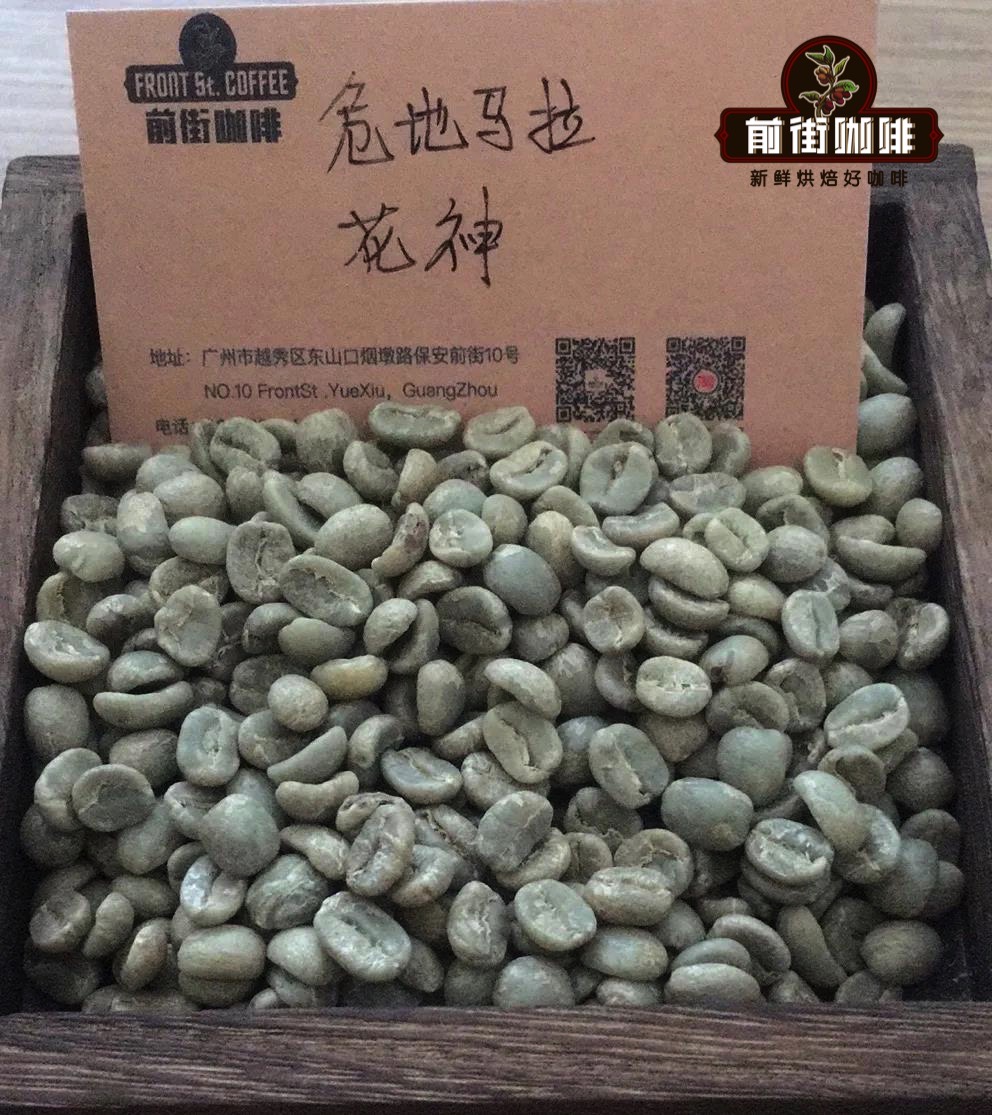
These green coffee beans are round, yellow-green in color, with good uniformity and medium moisture content. Therefore, Front Street's roaster aims for a medium roast—on one hand to preserve the bright acidity that showcases floral and fruity aromas, and on the other hand to enhance richness and balance.
Roaster: Yangjia 600g semi-direct fire
Charge at 200°C. Set airflow to 3. After 30s, adjust heat to 160°C, airflow unchanged. Turning point at 1'36". Maintain heat. At 4'50", the bean surface turns yellow and the grassy smell completely disappears, entering the dehydration phase. Reduce heat to 140°C, adjust airflow to 4. At 4'50", dehydration is complete. Reduce heat to 140°C. At 8'32", ugly wrinkles and dark spots appear on the bean surface, and the toasted bread smell clearly turns to coffee aroma—this can be defined as the prelude to first crack. At this point, listen carefully for the sound of first crack. At 8'37", first crack begins. Reduce heat to 80°C, open airflow fully to 5 (be very careful when adjusting heat—do not reduce it so much that cracking sounds disappear). After first crack, develop for 1'50", drop at 195.3°C.
[Front Street Coffee (FrontStreet Coffee) Brewing Recommendations]
Dripper: V60 Dose: 15g Ratio: 1:15 Temperature: 90°C Grind: EK43s grinder setting 10
[Front Street Coffee (FrontStreet Coffee) Brewing Method]
Pulse pouring.
Bloom with 30g water for 30 seconds, pour to 125g in stages, then when the water level is about to expose the coffee bed, continue pouring to 225g and stop. When the water level is about to expose the coffee bed, remove the dripper. (Start timing from the beginning of bloom.) Total extraction time is two minutes.
[Flavor Description]: Floral, citrus acidity, caramel, slight smoky note
The above content is compiled by CoffeeHunters, a coffee news website.


