







Why Are Rare Coffee Beans Like Laurina Hard to Grow?
Laurina and Pink Bourbon are rare coffee beans from the Bourbon family. Laurina, also called pointed Bourbon, holds only about 0.5 percent caffeine and once thrived on Réunion Island, where annual production reached 4,000 metric tons by 1800. Hurricanes, fire ants, and leaf rust cut plantings until the last commercial batch was shipped in 1942.
Its low yield and susceptibility to leaf rust and black spot keep supply small, which supports high prices and places it among the most expensive coffee on specialty lists. Pink Bourbon is valued for its pink cherry color, though the trait is genetically unstable. Guatemala's Nueva Granada estate and Colombia's Isabella estate are noted growing sites for these varieties.
Rare members of the Bourbon family—Laurina and Pink Bourbon—one once flourished and declined on Réunion Island, the other has attracted attention for its romantic pink color. Which countries are actually suitable for them to put down roots and grow? This article combines records from the "New Edition of Coffeeology" and Front Street Coffee's cupping data to trace Laurina's bumpy history from 18th-century glory to near extinction, analyze the genetic reasons why Pink Bourbon's color is difficult to maintain consistently, and explain in detail the terroir characteristics of Guatemala's Nueva Granada estate and Colombia's Isabella estate. Whether you are drawn by its low-caffeine trait or cannot forget the citrus notes and floral finish, this article will provide you with solid reference information.
According to the "New Edition of Coffeeology" by Mr. Han Huaizong, French researchers once selected the highest-yielding individuals from the only thirty-plus mutant Bourbon plants remaining on Bourbon Island and launched a five-year restoration project. According to the recollections of those who tasted it at the time, the flavor of this mutant Bourbon was different from ordinary coffee: there was no bitterness on entry, the fruit acidity was gentle and beautiful, the citrus aroma was abundant, and one could even catch a fresh fragrance similar to Chinese lychee.
Laurina
The Laurina tree resembles a miniature Christmas tree, with shorter branches and narrow leaves, and its caffeine content is only 0.5%. This variety is highly susceptible to leaf rust and black spot, which is also the core reason its yield has always remained low. In addition, its red cherries ripen earlier than those of other varieties.
With excellent flavor performance and lower caffeine content (having less impact on sleep), Laurina had already won widespread favor as early as the 18th century. King Louis XV of France, the novelist Balzac, and other famous figures were once loyal fans of it.
During the two hundred years from the 18th to the 19th century, Laurina was once planted on a large scale on Bourbon Island, and in 1800 annual production climbed to a peak of 4,000 metric tons. However, the good times did not last. A series of disasters—hurricanes, fire ants, leaf rust, and others—struck one after another, and the scale of cultivation continued to shrink. By 1942, the last batch of Laurina shipped to France amounted to only 200 kilograms. After that, this variety disappeared completely, and even its name no longer appeared in official archives.
After the 1950s, no one on Réunion Island planted coffee anymore, and the focus of agriculture shifted entirely to crops such as sugarcane. The island's connection with coffee was thus severed, and Laurina was widely regarded by the coffee world as "extinct."
Although today's Laurina no longer commands the exaggerated prices of earlier times, it is still an extremely precious bean. So, what exactly does this costly Laurina taste like?
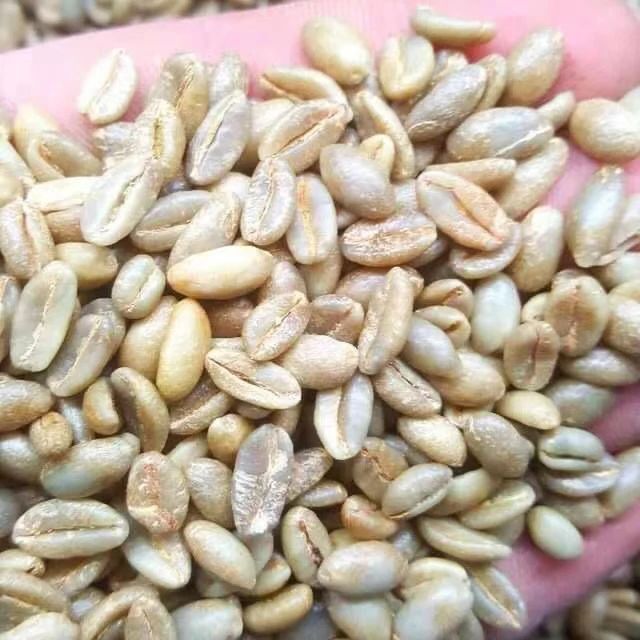
From the appearance of the roasted beans, Laurina beans are generally small and uniform in size, slender in shape, pointed at both ends, and resemble wheat.
Pink Bourbon
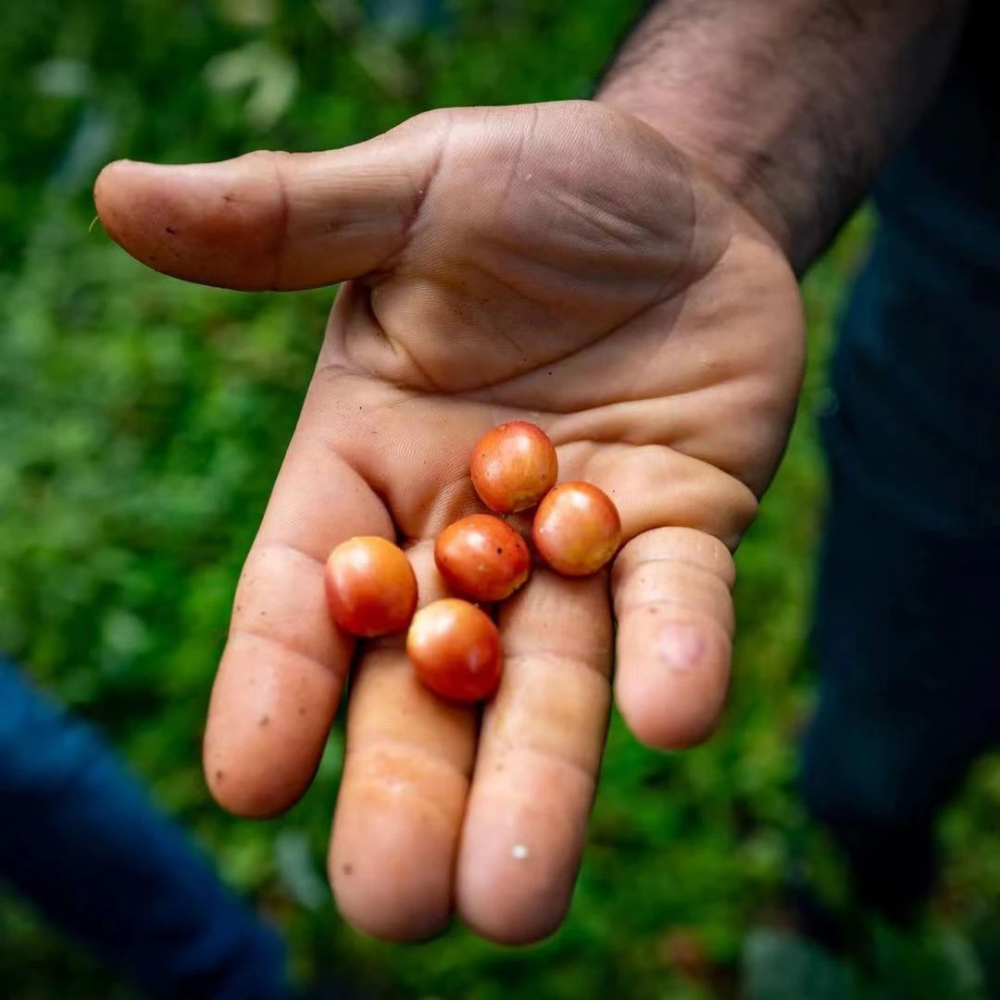
Pink Bourbon, as the name suggests, has coffee cherries that take on a romantic pink hue when ripe. This is a very rare new variety, developed by crossing and selecting Red Bourbon and Yellow Bourbon.
The key reason Pink Bourbon is called rare is that maintaining that beautiful pink color is extremely difficult. Sometimes the harvested fruit appears orange. This is because the color of the coffee fruit ultimately depends on the recessive genes carried in the pollen grains.
Among the pollen grains we selected for crossing, there are both yellow genes tending toward Yellow Bourbon and red genes tending toward Red Bourbon, and these genes are all recessive and very easily interfere with one another.
Front Street Coffee: Colombia · Isabella Pink Bourbon pink bourbon Estate origin: Huila, Isabella Variety: Pink Bourbon Processing method: Semi-washed Roast level: Light-medium roast Flavor: Noticeable citrus notes on entry, sweet orange, sugarcane sweetness, pleasant juicy mouthfeel, relatively balanced overall.
Front Street Washed Guatemala Nueva Granada Estate Laurina Guatemala Nueva Granada Laurina Washed Cupping flavor: Orange aroma, peach, sweet persimmon, floral tea, fruit candy Naturally low-caffeine variety Laurina
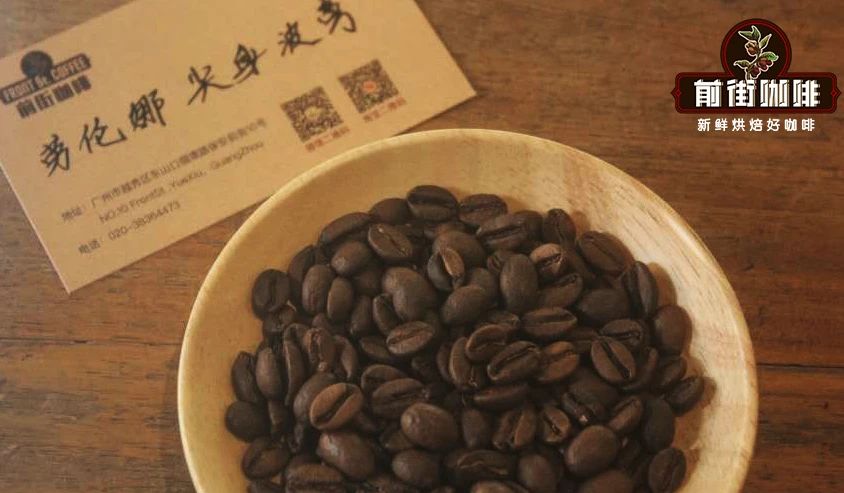
Estate origin: Nueva Granada Estate Nueva Granada Variety: Laurina Processing method: Washed Roast level: Light-medium roast light Roast Flavor: Flowers, orange, peach, white peach, cocoa, elegant and delicate, with a long finish.
Laurina is a naturally low-caffeine variety. Arabica coffee usually has a caffeine content of about 1.2%–1.6%, while Laurina is between 0.4% and 0.75%, roughly only half that of ordinary coffee. With its distinctive floral aroma, peach-like notes, and smooth cocoa flavor, it leaves a deep impression.
Laurina is undoubtedly one of the rarest and most expensive coffee varieties in the world.
Finca Nueva Granada is located in San Marcos, Guatemala, and is a century-old German estate. It has endured civil war and multiple volcanic eruptions and still stands today. The estate is surrounded by Tajumulco and Tacana, the highest active volcanoes in Central America, with magnificent scenery, and the covering of volcanic ash also gives the coffee produced here an especially delicate mouthfeel and rich layering. The estate's irrigation water comes from volcanic springs and is rich in minerals. All post-washing processing stages use this natural water source, which is also an important reason its coffee fermentation performs outstandingly and tastes so good.
The estate has long been committed to promoting Rainforest Alliance certification, child protection associations, and various social care initiatives, and its estate spirit commands deep respect.
Front Street Coffee once brewed a pot of naturally processed Laurina coffee. The parameters and flavor description are as follows: Parameters: Dose 15 g Dripper Hario V60 Water temperature 89°C Medium-fine grind Coffee-to-water ratio 1:15 Brewing method— Staged extraction Use 29 g of water for blooming. When the surface of the coffee bed changes from wet to dry, the bloom can be ended. The blooming time is 30 seconds; Pour with a small stream in the center to 120 g for the first stage. When the liquid level drops and is about to expose the coffee bed, continue pouring to 230 g and stop. When the liquid level drops and is about to expose the coffee bed, remove the dripper. (Start timing from the beginning of the bloom.) The extraction time is 1 minute 45 seconds.
Flavor: The dry aroma is rich floral notes, orange, and tropical fruit aromas; the wet aroma has obvious floral notes. It is smooth on entry, with red fruit, plum, and honey peach flavors, and an elegant, delicate, and long finish.
The above is some related information compiled by Front Street Coffee We hope this article can help everyone understand coffee more deeply.
The above content is compiled by CoffeeHunters, a coffee news website.


