







What Does Coffee Picking Have to Do With Cold Brew and Ice Drip?
Cold brew, ice drip and cold steeping are three separate iced coffee methods. Cold brew soaks ground coffee in cold water for at least 12 hours, and up to 24 to 48 hours for a heavier body, then filters. Ice drip passes cold water slowly through a bed of grounds, while hot-brewed iced coffee is extracted with 82 to 95 degrees Celsius water in under five minutes and then chilled.
The dividing line is temperature and time. Low temperature and long extraction define cold brew; hot brewing extracts fast and is then cooled with ice. For ice drip with Huakui beans, grinding size, drip time and the coffee-to-water ratio are the parameters to adjust. Bean selection for cold methods matters more than technique, and the choice should follow personal taste.
A glass of iced coffee in summer always brings coolness and comfort, but the iced coffee family actually has many members, and cold brew, ice drip, and cold steep each have their own particularities. From the perspective of Front Street Coffee, this article systematically sorts out the definition, historical origins, and two major production styles of cold brew coffee, compares its essential differences with hot-brewed iced coffee, and shares the specific parameters for making Huakui coffee beans with ice drip, as well as practical suggestions on grinding, time, and coffee-to-water ratio. Whether you want to try cold steeping at home or want to understand the logic behind the ice drip products of specialty coffee shops, you can find clear answers and actionable methods here.
Coffee occupies a place among the world's three major beverages and has long been integrated into modern daily life. Whether busy with work or enjoying leisure time, many people are accustomed to brewing a cup and savoring it slowly. In the heat of midsummer, if you can hold a cup of iced coffee in your hand, the feeling of stuffiness immediately dissipates, and it is extremely pleasant.
But do you know that iced coffee actually has many different classifications? How is each one made? Next, Front Street will explain them one by one to help everyone easily distinguish different iced coffees and master the method of making a loving cup of coffee at home.
Every hot summer, many customers walk into a FrontStreet Coffee store, and the first thing they ask is whether there is cold brew coffee.
Cold brew coffee, written in English as Cold Brew Coffee, is made by soaking ground coffee beans in cold water, usually for no less than 12 hours, and then completing extraction and filtration with the help of professional equipment. If you want a heavier body, you can also extend the soaking time to 24 to 48 hours.
Low temperature and long extraction are the two hallmarks of cold brew coffee, and also the most core distinction between it and hot-brewed coffee.
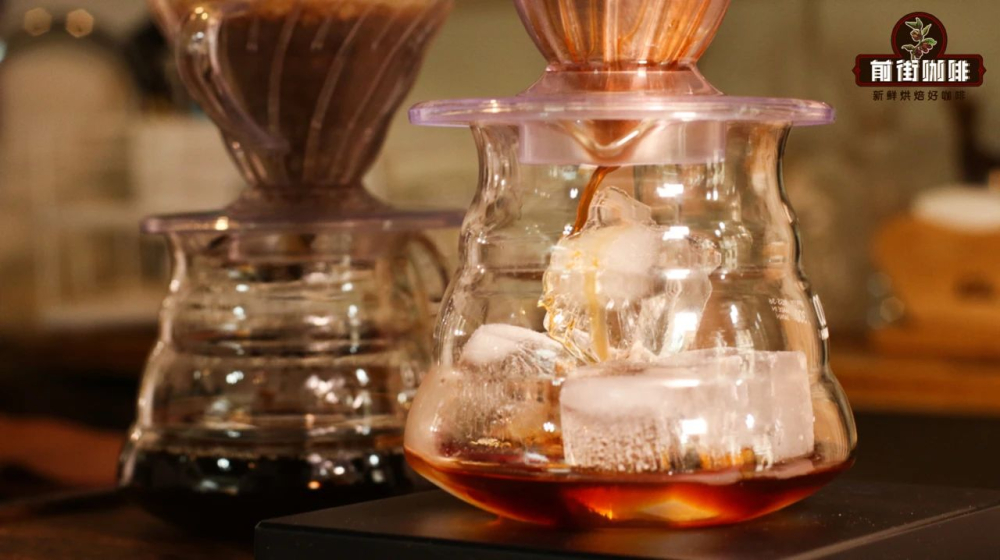
Hot-brewed coffee uses hot water to extract flavor from coffee beans, with the water temperature mostly controlled between 82 and 95 degrees Celsius, and the whole process generally does not exceed 5 minutes. The iced pour-over coffee produced by Front Street belongs to this category—first extracted with hot water, then rapidly cooled by adding ice. The fastest espresso takes only 18 to 30 seconds, using near-boiling hot water and forcing water through a compact puck of coffee grounds at about 9 bar of pressure. The resulting espresso liquid is mixed with iced water in a certain ratio to become iced Americano.
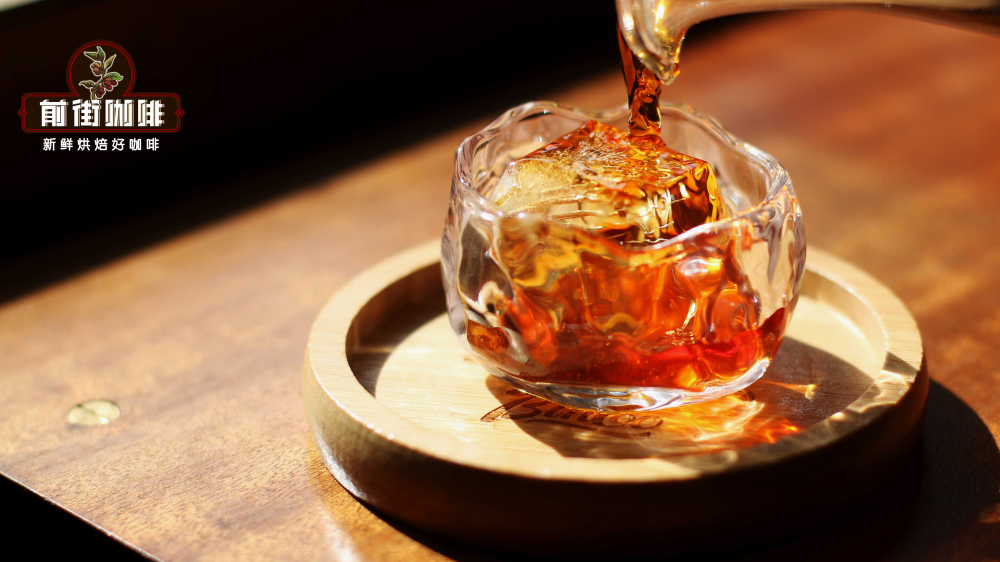
People often confuse various iced coffees. Although they all have the word "iced" in their names, their essences are very different. Some iced coffees are slower to make and can also reach a cold-brew-like temperature, but the coffee beans have actually gone through a process of first hot and then cold. If the ratio is not controlled well, the melted ice water will dilute the coffee; moreover, the high-temperature stage has already caused the coffee to undergo the same changes as hot brewing.
Cold brew coffee, however, far exceeds hot-brewed coffee in terms of time investment. When it comes to the long extraction time of cold brew, it is worth summarizing with a slightly poetic line: "What you are drinking is not just a cup of coffee, but also a long wait."
Where does cold brew coffee come from?
In the book Coffee Life in Japan, Merry White, a professor at Boston University in the United States, introduces Japanese coffee culture and several extraction methods, with special emphasis on Japanese ice drip coffee (also known as KYOTO COFFEE) and cold brew coffee. Cold brew coffee began to become popular in the United States around 2014 to 2015, and then spread globally, becoming a trend. So, is Japan the birthplace of cold brew coffee?
In the 1941 book Nanyang Sketches by Japanese author Keiji Nomura, we found some clues about cold brew coffee. The book mentions that cold brew coffee originated from an extraction method in the former Dutch colony of Indonesia: finely grind coffee powder, soak it in water overnight, and then let the coffee liquid seep and filter out drop by drop through a device below the soaking container.
In addition to Southeast Asia, in the 1980s it was also discovered that the mountain indigenous people of Peru in South America had long drunk this immersion-style cold brew coffee as an elixir of immortality; long-lived residents in the southern mountainous areas of the former Soviet Union also had the habit of drinking cold brew coffee. However, these records are not well known to the public, yet they may be the earliest prototype of cold brew coffee.
Cold brew coffee mainly has two production styles: one is ice drip coffee, and the other is cold steep coffee. Broadly speaking, all processes of low-temperature coffee extraction can be included in the category of cold brew.
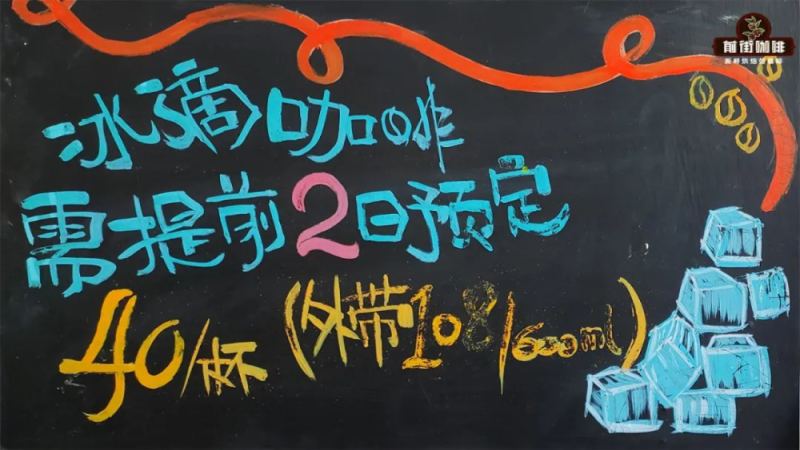
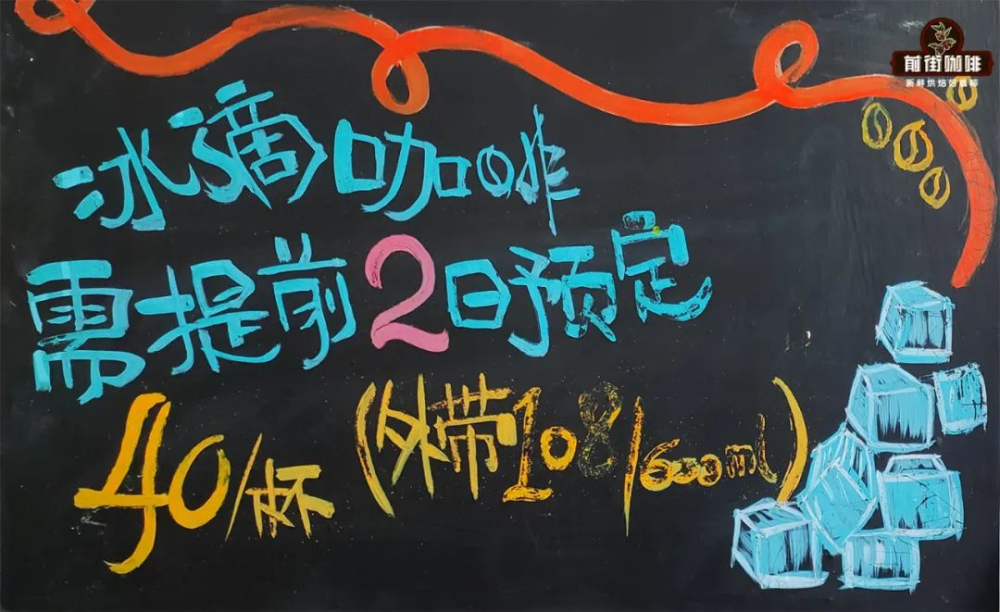
Ice drip coffee is made by allowing ice cubes to melt and extract drop by drop. Those ice drip devices in specialty coffee shops that look like chemical instruments are a common way of realizing cold brew. The cold brew coffee produced by FrontStreet Coffee stores includes both ice drip and regular cold steep, among which ice drip is more popular with customers because it often has a wine-like mouthfeel.
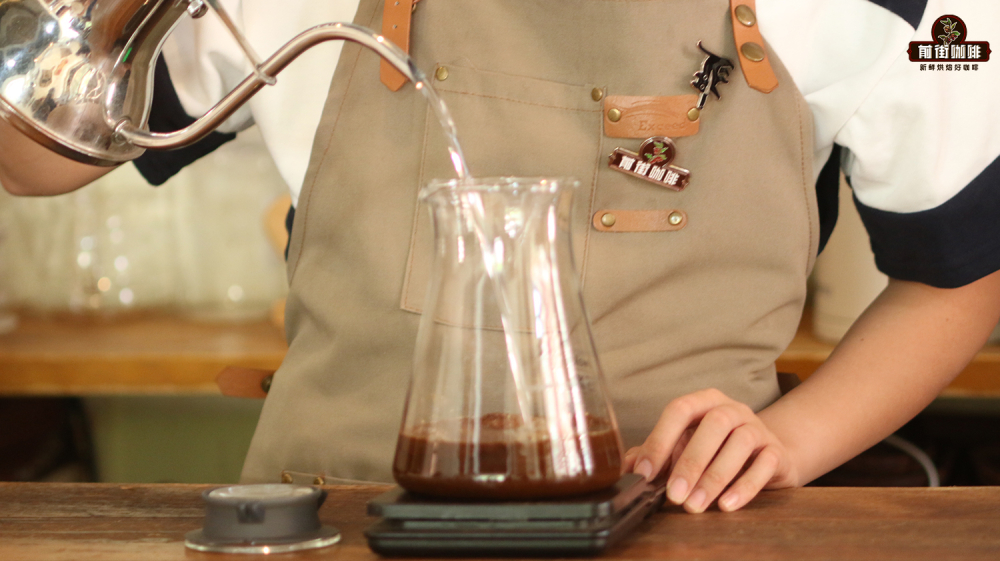
Cold steep coffee, on the other hand, is made by using low-temperature water according to a certain coffee-to-water ratio and soaking for a long time at low temperature. Because the equipment needed for cold steep coffee is simple and convenient, and the requirements for extraction technique are not high, it is the best option for making cold brew coffee at home.
Friends often ask the baristas at FrontStreet Coffee what coffee beans are suitable for cold brew. Because cold brew uses low-temperature water, the extracted coffee will not have too much bitterness, off-flavors, or other large-molecule flavor substances dissolved out; instead, it leans more toward small-molecule flavors such as fruity and floral acidity and sweetness. Therefore, the baristas at FrontStreet Coffee usually recommend coffee beans with better acidity, such as Huakui coffee beans.
Huakui coffee beans are produced in the Sidamo region. Sidamo is one of the important coffee-producing regions in Ethiopia, and its naturally processed coffee beans are famous for their rich berry notes.
Huakui coffee beans were once sent by DW Company in 2017 to participate in that year's TOH competition, and with their rich strawberry cream flavor they won the championship in the natural group of the Ethiopian division. They were subsequently introduced to mainland China by a Beijing green bean merchant and named "Huakui," meaning chief of a hundred flowers, which shows the high expectations placed on them. In the same year, contestant Li Jianfei used Huakui coffee beans to win second place in the China division of the World Brewers Cup, beating many Geisha contestants, and Huakui coffee beans thus successfully broke into the mainstream.
According to the naming method of Huakui coffee beans as "Huakui X.0," the 2022 Huakui coffee beans should be called "Huakui 6.0." At the start of the Ethiopian coffee picking season, Front Street also reserved a batch at the first opportunity. It is believed that before long, everyone will be able to purchase Huakui Coffee 6.0 products at Front Street.
The parameters for FrontStreet Coffee using Huakui coffee beans to make ice drip coffee are as follows:
Coffee dose: 60
Coffee-to-water ratio: 1:10
Water temperature: 0°C——4°C
Time: 6 hours——8 hours
Grind level: 85% passing through a Chinese standard No. 20 sieve
[About Grinding] In a low-temperature water state, the exchange reaction between coffee flavor substances and water is slower. Front Street suggests grinding coffee beans for ice drip slightly finer than for pour-over. For cold steep coffee, because water and coffee grounds are in contact for a long time, Front Street suggests grinding the coffee beans coarser than for a French press, with a coarseness close to the size of breadcrumbs.
[About Extraction Time] When FrontStreet Coffee makes ice drip coffee, the drip time is generally controlled at about 6 to 8 hours. However, Front Street needs to remind everyone that ice drip coffee is not ready to drink on the same day it finishes dripping. Instead, it should be placed in the refrigerator for low-temperature fermentation overnight, so that the flavors can blend better, making the aroma richer, the mouthfeel smoother, and the layers more distinct.
[About Coffee-to-Water Ratio] Friends who often read FrontStreet Coffee articles will easily notice that Front Street most commonly uses a 1:15 coffee-to-water ratio. But when making ice drip coffee, Front Street suggests using a 1:10 coffee-to-water ratio and adding ice cubes to dilute it when drinking. This can satisfy the need for a strong taste at the beginning, and as the ice cubes melt and the coffee concentration further decreases, you can taste the refreshing side of cold brew coffee.
The ice drip coffee made by FrontStreet Coffee using Huakui coffee beans has a rich, complex berry juice sensation on the palate, a heavy and viscous mouthfeel, and a relatively obvious fermented note.
For more coffee bean information, please follow Coffee Workshop (WeChat public account cafe_style)
For professional coffee knowledge exchange, please add WeChat ID kaixinguoguo0925
The above content is compiled by CoffeeHunters, a coffee news website.


