








How Do I Froth Milk for a Latte With Oat Milk?
Oat milk and cow's milk differ in composition and behavior, so copying a standard latte method onto oat milk usually gives a bitter, thin result. Three points decide the outcome: the oat milk chosen, the ratio of coffee to plant milk, and the frothing technique. Handling those correctly yields a full-bodied, smooth oat latte at home.
Oat milk is a grain beverage made by grinding plant seeds or fruits with water; its protein content gives the milky white color, the same logic as soy milk. Oat milk's grain fragrance and layered texture pair well with coffee, and it is lactose-free. Since plant milks are not dairy, the drink is not a true milk coffee, which matters when judging how long to froth milk for latte texture.
For friends who are lactose intolerant, an oat latte is an excellent alternative for enjoying a milk coffee. But many people who make their own lattes with oat milk often find the taste somewhat bitter and not as smooth as the dairy version. In fact, oat milk and cow's milk differ noticeably in composition and characteristics, so directly applying the traditional latte method often yields poor results. Drawing on Front Street's practical experience, this article explains in detail the differences between oat milk and milk lattes, and focuses on three key areas—choosing oat milk, adjusting the ratio of coffee to plant milk, and milk frothing techniques—to help you make a full-bodied, smooth oat latte at home.

Many friends, because their bodies lack enough lactase, experience bloating, diarrhea, and other discomfort after drinking beverages containing lactose, so they can only stay away from regular milk coffee. But this problem is not unsolvable—as long as you switch to a lactose-free alternative, you can still enjoy the pleasure of a "milk coffee." An oat latte is exactly such a choice: it replaces milk with plant-based oat milk, allowing lactose-intolerant people to drink it with peace of mind.
The reason "milk coffee" is placed in quotation marks here is not to emphasize the tone, but because plant milks are not, strictly speaking, dairy products, and drinks made with them naturally cannot be considered true milk coffees.
What exactly is plant milk?
Simply put, plant milk is a grain beverage made by grinding plant seeds or fruits rich in protein and fat with water. Because of the presence of protein, these drinks often take on a milky white color close to that of cow's milk, which is how they got the name "plant milk" (it's easy to understand by analogy with soy milk
). Soybeans, walnuts, peanuts, almonds, hazelnuts, and more are all common ingredients for making plant milk. Although there are many kinds of plant milk, the one that appears most often in coffee shops is still, without question, oat milk.

Oat milk's rise to popularity was not driven by a single chain brand alone; more crucially, its texture is special enough on its own. Tasted alone, you can sense a rich grain fragrance and abundant layers of mouthfeel, and when combined with coffee the two bring out the best in each other. Add to that the advantage of being lactose-free, and oat lattes have only grown more popular in recent years.
However, Front Street's back office frequently receives reader messages reporting that the lattes they make with oat milk are not only not as good as expected, but instead carry a noticeable bitterness, far less smooth than ordinary milk lattes.
In fact, just as making a latte with milk requires attention to many details, an oat milk latte has its own requirements. If you directly copy the regular latte recipe, the final result will indeed suffer considerably.
But with a slight adjustment in approach and a newly designed method for making oat lattes, it may turn out more delicious than you imagine. Below, Front Street shares a few key points worth noting when making a good-tasting oat latte.
Point one: choosing the oat milk
To make a satisfying latte, we specifically choose the milk that best matches the current coffee's flavor. Oat milk lattes follow the same logic—oat milks from different brands vary greatly in taste and mouthfeel, so choosing the right oat milk is the first step to making this cup of coffee well.
The espresso paired with oat milk must have sufficiently prominent flavor and good body to balance the grain-like aromas. When making oat milk lattes, baristas recommend two popular products, Front Street Classic Blend and Front Street Commercial Blend: one combines the wild style of Brazil and Mandheling, while the other features multiple nutty aromas as its main theme, with a small amount of Robusta beans added to enhance the richness of the crema and its golden color.

If you prefer complex nutty aromas such as almond, apricot kernel, and walnut, Front Street Specialty Blend and Front Street Dark Cocoa Base Blend are more suitable. Both contain a high proportion of Brazilian coffee beans, bringing a comfortable bittersweet taste and a very smooth entry. Front Street Specialty Blend carries the nutty, chocolate, and caramel aromas characteristic of Colombian coffee, along with a moderate acidity; Front Street Dark Cocoa Base Blend incorporates the ripe plum acidity of Yunnan small-bean coffee, and after grinding gives off the fragrance of creamy chocolate, with a balanced flavor and high versatility—besides lattes, it can also produce a variety of espresso drinks.
Point two: controlling the ratio
After choosing the oat milk, the next issue to solve is the ratio. Although oat milk's aroma is not weak, its sweetness is not as good as that of cow's milk. If you use the same ratio as for a milk latte, the coffee flavor will stand out even more.
So we can appropriately increase the proportion of oat milk in the whole drink. That way, the coffee is less likely to overpower the flavor of the oat milk, and it naturally won't taste so bitter.
In addition, oat milk will separate after sitting for a long time, so it needs to be shaken well before use to restore a uniform state. Many friends fail at making oat lattes simply because they skip this step.
Point three: handling the latte art
This is the last detail to watch out for. Oat milk has a lower protein content than fresh milk, so frothing it is more difficult. If you froth oat milk the same way you froth milk when making a hot milk coffee, the foam may be too thin, causing the latte art pattern to drift and fail to take shape.
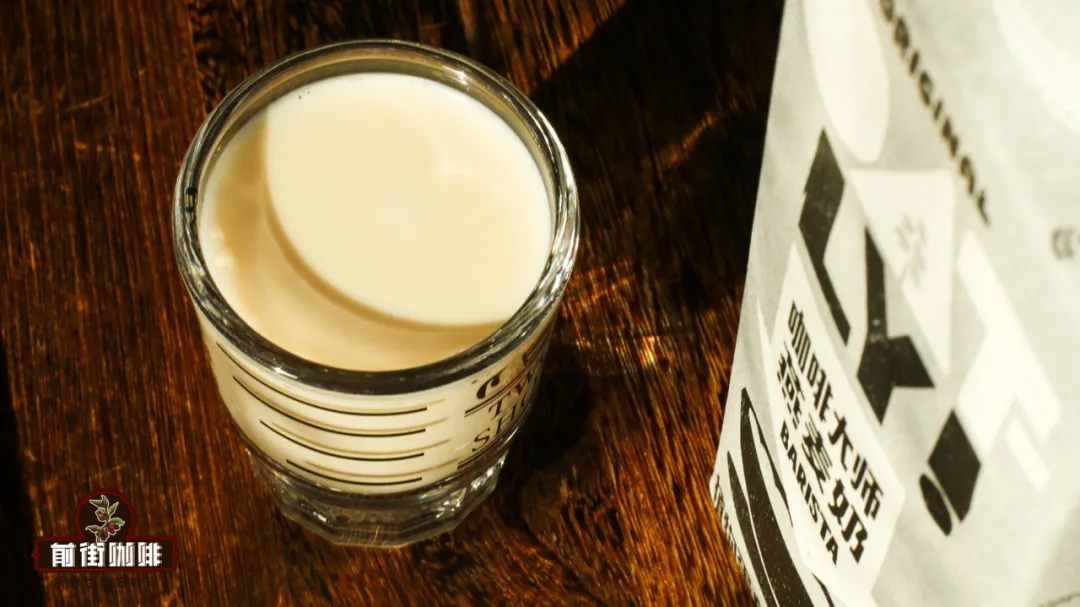
So when frothing oat milk, you can appropriately increase the thickness of the foam. For example, the foam thickness of a regular latte is about 1 cm; when making it with oat milk, you can froth an extra 0.5 to 1 cm of foam on top of that, making the pattern easier to form and less likely to shift position.
The above content is compiled by CoffeeHunters, a coffee news website.


