







Why Does Geisha Panama Coffee Lead Specialty Coffee?
Geisha reached Panama from Ethiopia's Kaffa forest and showed its full potential at Hacienda La Esmeralda in Boquete, where high altitude and a climate between the Pacific and Atlantic produce delicate floral aromas and elegant fruit acidity. Yes, Geisha coffee beans can be pulled as espresso, a style known as SOE, or single-origin espresso.
SOE costs more than ordinary espresso beans and is usually reserved for single-origin lots of high quality, since it highlights one specific producing area. Roasters often prefer pour-over instead, because it presents Geisha's floral and fruit layers more clearly than the concentrated pressure of an espresso shot.
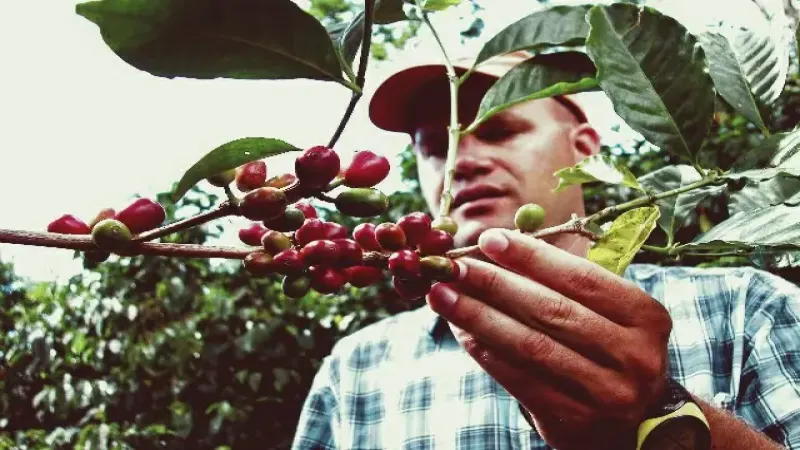
Geisha coffee is widely recognized as a star variety among specialty coffees, and the Geisha produced at Panama's Hacienda La Esmeralda is the benchmark among them. Geisha originated in Ethiopia and was later introduced to Panama, where, thanks to the local unique climate and high-altitude growing conditions, it displayed delicate floral aromas and elegant fruit acidity, making a stunning debut. So, can Geisha coffee beans be used to make espresso? Front Street Coffee offers its own answer from the perspectives of product positioning, roasting difficulty, and flavor performance. This article will guide you through Geisha's origin and spread, the terroir advantages of Panama's Boquete producing region, and why Front Street prefers to present Geisha's unique charm through pour-over.
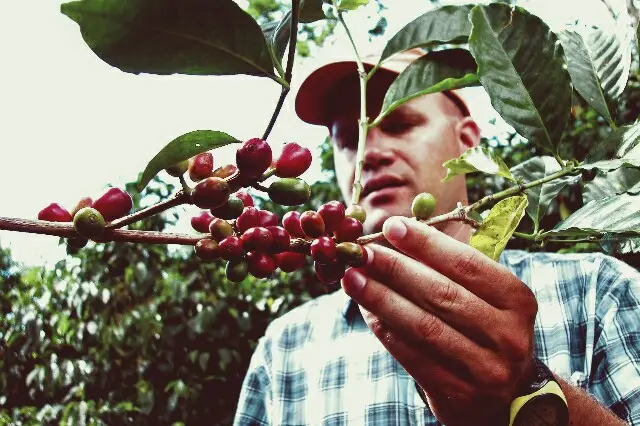
If you were to ask where the most famous and most worthwhile Geisha coffee comes from, the answer is almost without suspense — Panama's Hacienda La Esmeralda. Panama's terroir creates Geisha's outstanding quality, and Panama coffee's international reputation has largely spread because of Geisha. Panama-grown Geisha can be called the best, and it also differs noticeably in flavor from Geisha from its original home in Ethiopia. Although Geisha is a single-origin coffee bean, it can also be used to extract espresso, a practice known as SOE, or single-origin espresso. Usually only single-origin beans of outstanding quality are used to make SOE; the cost is higher than ordinary espresso beans, but it can present the unique regional flavor of a specific producing area.
Jung Jung Lee, CEO of Maristella Roasting and Coffee Lab, once said: "Panama coffee's flavor is very unique, which may be related to its location between the Pacific Ocean and the Atlantic Ocean and its special climate conditions. Geisha Panama coffee is widely known, and this is exactly why I came to look for this special flavor."
Geisha Coffee
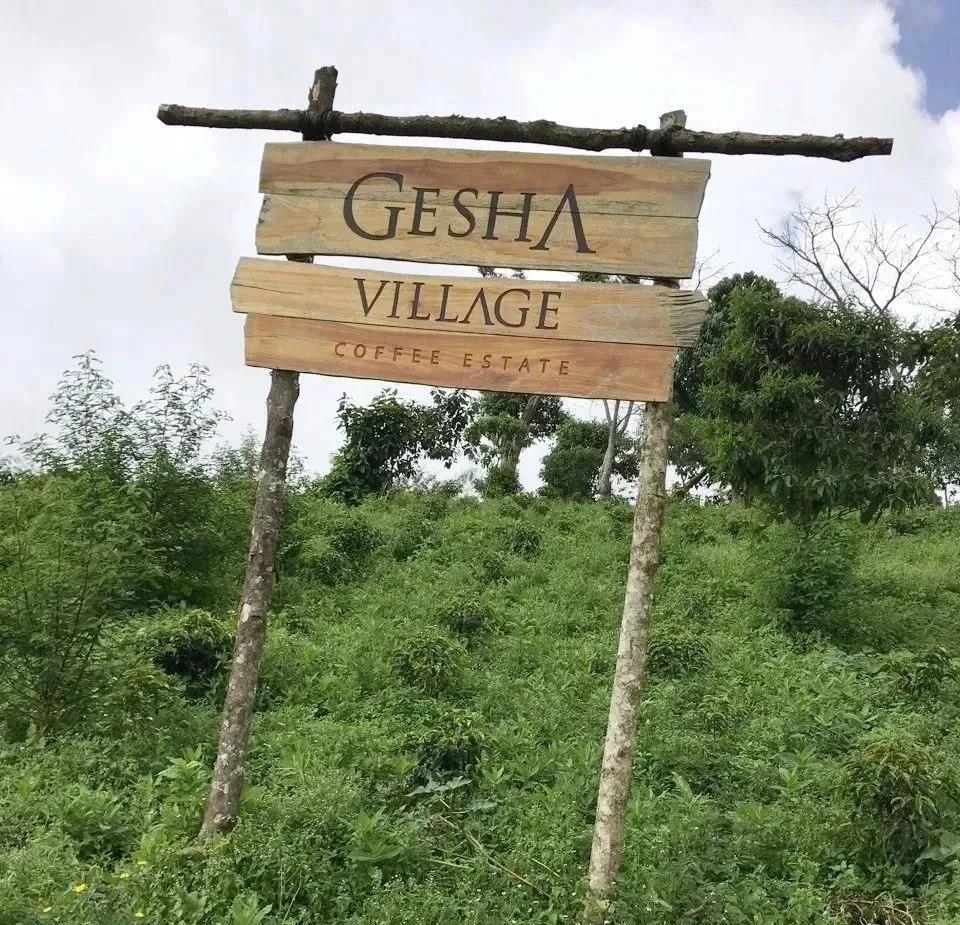
Geisha, also known as Gesha, is an extremely rare coffee variety that can only display its outstanding quality under very specific environments. It was first discovered in the 1930s in the Kaffa forest near Gesha town in Ethiopia. Ethiopia is the birthplace of coffee and possesses an extremely rich gene pool of varieties, so many Ethiopian coffee beans are simply labeled "heirloom" for variety. Geisha was discovered in 1931 in the Gesha forest of Ethiopia, where it was not valued locally at the time and was even used as a windbreak. After that, Geisha was sent to the Kenya Coffee Research Institute, introduced to Uganda and Tanzania in 1936, to Costa Rica in 1953, and to Panama in 1970. Eventually, Panama's Hacienda La Esmeralda separated it from other varieties and entered it in competition, winning the BOP competition in 2004 and becoming famous overnight. Since then, Geisha entered the public eye and became a leader among specialty coffees.
Although Panama Geisha was introduced and planted from Ethiopia, the Geisha variety and flavor in the two places still differ. Although Geisha's flavor is exquisite, this elegant trait cannot be separated from a specific growing environment. Geisha is very picky about growing conditions, requiring high altitude, cloud cover or abundant shade trees, and fertile soil. High-altitude Geisha usually has obvious floral aromas and delicate, elegant fruit acidity, so Panama's growing environment is an important factor in establishing Geisha's fame and one of the reasons it has swept the world.
Since Panama Geisha rose to fame, places around the world have begun researching and planting the Geisha variety, including many estates in Panama itself. The Geisha coffee beans Front Street has sourced include not only those from Panama's Hacienda La Esmeralda, but also those from Colombia and Costa Rica, and of course Ethiopia's Geisha as well. Front Street's single-origin beans cover more than a dozen from Ethiopia and more than 50 from around the world.
Panama Coffee Producing Regions
Panama's terrain is undulating throughout, with crisscrossing valleys and gullies; apart from the north and south coastal plains, it is mostly mountainous. The country is close to the equator and has a tropical maritime climate, humid during the day and cool at night, with an average annual temperature of 23 to 27 degrees Celsius. The year is divided into dry and rainy seasons, with average annual rainfall of 1,500 to 2,500 millimeters. High-quality Panama coffee is mainly grown in the northwest near Costa Rica and close to the Pacific Ocean. Coffee produced in the Boquete coffee producing region of Chiriqui Province is especially famous.
[Boquete Coffee Producing Region]
Boquete's growing altitude reaches as high as 1,400 to 1,900 meters. It is located near the border between Panama and Costa Rica, close to the famous Baru Volcano, with beautiful scenery and fertile soil; its climate and soil conditions are very suitable for producing high-quality coffee. Many excellent estates are distributed within the Boquete producing region. In addition to Hacienda La Esmeralda, there are also Elida Estate, Kotowa Duncan Estate, and others, all producing high-quality specialty coffee. This is due not only to Boquete's mild climate conditions and the fertile volcanic ash soil of Baru Volcano, but also to another important factor — the varied microclimates of the Boquete highlands.
The washed Boquete Geisha coffee from the Boquete producing region, as a representative of Panama Geisha coffee, has been included among Front Street Coffee's daily beans.
Panama's Hacienda La Esmeralda
The reason Hacienda La Esmeralda's Geisha became a world-famous coffee began with an accident. Retired Swedish-American banker Rudolph Peterson bought Hacienda La Esmeralda in Panama to spend his later years, and unexpectedly, by a stroke of luck, the coffee trees on the estate bore fruit; he casually sent them to competition, and as a result became famous overnight, winning the 2004 Panama Specialty Coffee competition national championship in one stroke. The Geisha from Hacienda La Esmeralda's Esmeralda Estate in Panama can be called the most famous Geisha. Since 2005, Hacienda La Esmeralda's Geisha has won more than a dozen championships in various world coffee competitions. Hacienda La Esmeralda's Geisha is generally divided into three tiers: Red Label, Blue Label, and Green Label, among which Red Label is the top auction lot.
Can Panama Geisha coffee be made as espresso?
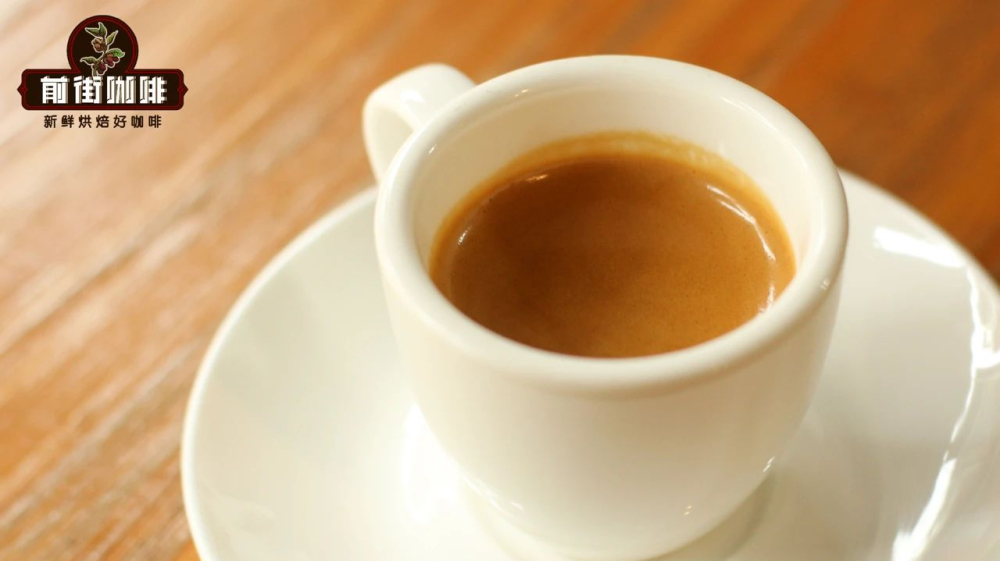
We know that espresso is usually based on blend beans or dark-roasted beans, so that the extracted espresso has rich crema and a better mouthfeel. If light-roasted beans are used to make espresso, the taste may be too sharp and sour. Although today's popular SOE single-origin espresso can be made with single-origin specialty beans, the roast level is relatively darker than for pour-over so the flavor is better. So can Geisha coffee be made as espresso? Front Street believes that Geisha coffee beans can indeed be used to make espresso, but for such an expensive specialty bean, Front Street prefers to brew it by pour-over to better showcase Geisha's characteristics. For example, for Blue Mountain coffee, Front Street also mostly uses the pour-over method.
For Geisha coffee, Front Street Coffee stores serve it only as pour-over coffee.
What is Geisha? Geisha is merely a variety of coffee, while espresso is merely a way of presenting coffee. Geisha coffee can be enjoyed through different brewing methods: it can be made into espresso with a semi-automatic espresso machine, or brewed with a dripper, moka pot, drip coffee maker, and so on.
Geisha coffee's advantage lies in its more vivid flavors. For example, the washed Geisha from Panama's Hacienda La Esmeralda on Front Street Coffee's bean list shows relatively obvious notes of floral aroma, citrus, nuts, and tea as soon as it is brewed. What about Hacienda La Esmeralda's natural Geisha? Tropical fruit and floral notes can both be tasted.
Why doesn't Front Street Coffee use Geisha coffee to serve espresso? First, we have not yet dialed in Geisha coffee's espresso; how can a product that has not been adjusted and tested be served to customers? Even for the Warm Sun blend coffee beans used every day, Front Street Coffee's baristas must adjust according to the beans' condition before opening the store each day. In addition to the espresso parameters, making Americano with Geisha also requires readjusting the ratio of espresso to water, and making milk coffee also requires readjusting the ratio of espresso to milk. Second, from a product perspective, is Geisha coffee suitable as a daily offering? Obviously unrealistic. Besides the higher cost, not choosing Geisha to make espresso is actually the same principle as Front Street Coffee choosing blend beans rather than single-origin espresso for its espresso offerings.
What does it take to make espresso with Geisha coffee? To highlight Geisha coffee's flavor, the roast level must not be dark. For example, when competition contestants roast Geisha, most roast it to a very light level, then use a large dose when extracting. What challenge does a lighter roast level bring to store offerings? It makes consistency of the product harder to control.
The third reason is based on the performance of the Geisha variety. As mentioned earlier, Geisha coffee's advantage is that its flavors are vivid enough, but the Geisha variety also has disadvantages. Geisha coffee's biggest disadvantage as espresso is that its body and mouthfeel are not enough, and if it is washed Geisha, the sweetness is also not enough.
This is also why Front Street Coffee chooses a blend as its store espresso bean. Blending is actually far more complex than imagined. When Front Street Coffee's roaster designed the Warm Sun blend in 2019, they had already tried using Sherry coffee beans as a single-origin espresso SOE solution, but found it lacked layers, and only then added Yirgacheffe for experimentation. In the end, after repeated testing, the ratio of 60% Sherry barrel coffee beans to 40% natural Yirgacheffe was finalized.
Front Street Brewing Suggestions:
Whether making espresso or pour-over coffee, Front Street has always believed that coffee bean freshness has a great impact on coffee flavor. Therefore, the coffee beans shipped by Front Street Coffee are all within 5 days of the roast date. Front Street's roasting principle is "freshly roasted good coffee," so that every customer who places an order receives the freshest coffee. Coffee's resting period is about 4 to 7 days, so when customers receive it, it is exactly at its best flavor.
For friends who need ground coffee, Front Street warmly reminds you: after coffee beans are ground in advance, they no longer need to be rested, because during transport the pressure produced by carbon dioxide inside the package can also make the coffee flavor rounder, so you can brew a cup immediately after receiving the ground coffee. However, ground coffee needs to be brewed promptly, because after ground coffee contacts air it oxidizes relatively quickly and its flavor dissipates relatively quickly, so the coffee's flavor will not be as good. Therefore, Front Street recommends buying whole beans and grinding fresh before brewing, so you can better taste the coffee's flavor.
For professional coffee knowledge exchange and more coffee bean information, please follow Coffee Workshop (WeChat public account: cafe_style)
For more specialty coffee beans, please add the private WeChat of Front Street Coffee, WeChat ID: qjcoffeex
The above content is compiled by CoffeeHunters, a coffee news website.


