







Where Does Yunnan Coffee Stand in the Coffee Industry?
Yunnan small-bean coffee is Arabica, named for its relatively small, uneven beans, bright acidity, and clear floral and fruity aromas. It is the main variety grown in China, and its quality now places it among the recognized arabica-growing origins rather than only as a bulk supplier.
Arabica originated in Ethiopia and was refined on the Arabian Peninsula before spreading worldwide. Coffee arrived in China in 1892 with the French missionary Tian Deneng at Zhukula Village in Dali, and 24 trees over 90 years old still stand there today, while Hainan's 1908 attempt and other trials did not take hold.
Yunnan small-bean coffee, which is Arabica, has relatively small beans, bright acidity, and prominent floral and fruity notes, and is the main variety grown in China. This article covers everything from the origin of the species and its spread to Yunnan's introduction and industrialization history, then moves on to consumers' stereotypes about Yunnan coffee, its real situation and quality status in the international market, and retains related recommendations from Front Street Coffee. By sorting through history and reality, it helps coffee lovers rediscover the value and position of Yunnan small-bean coffee.
What exactly is small-bean coffee?
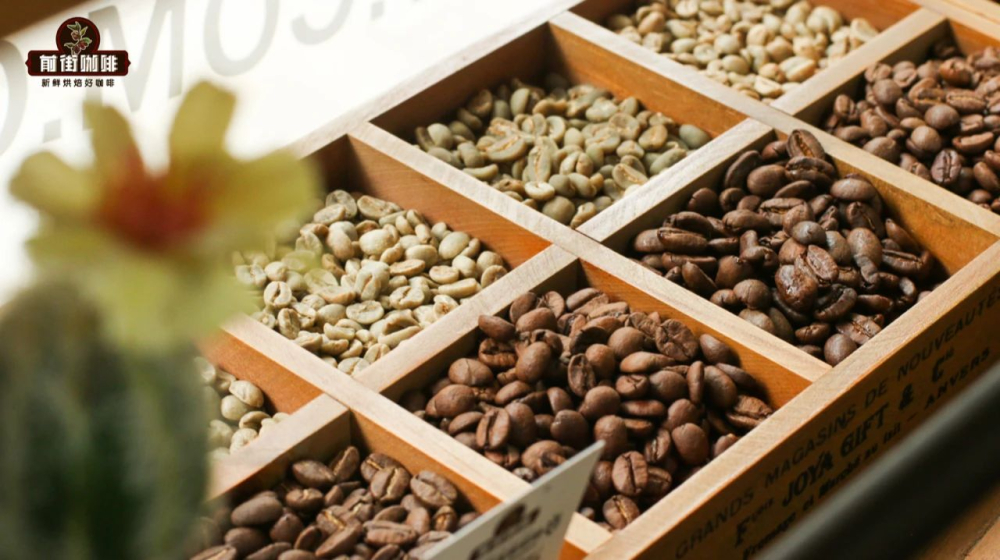
The scientific name of small-bean coffee is Arabica. Its place of origin is Ethiopia, and it was later selected and improved on the Arabian Peninsula, making it arguably the earliest and most traditional type of Arabian coffee. Native small-bean coffee has several distinct characteristics: relatively small beans, uneven plumpness, relatively high acidity, and often clear floral and fruity aromas.
The spread of small-bean coffee
The starting point of world coffee: Ethiopia
Coffee was first discovered in the highlands of southwestern Ethiopia in Africa. The most widely circulated story is that a shepherd noticed it by chance, and from there began the first stop of world coffee—the Ethiopian coffee kingdom.
The second stop in coffee's spread: Arabia
In the 13th century, Ethiopian troops invaded Yemen and brought coffee into the Arab world. Coffee quickly became popular there. A key driver was the ban on alcohol at the time, which allowed coffee to become a substitute beverage and also prompted Arabs to begin improving the variety. Later, along with resource plundering and war, coffee gradually spread across the world.
The origins of Yunnan small-bean coffee
In 1892, during the late Qing Dynasty, China was still in a semi-colonial and semi-feudal society, and many foreign invaders and species poured in together. Coffee entered China with the French missionary Tian Deneng, landing in Zhukula Village, Dali, Yunnan. To this day, 24 coffee trees over 90 years old still survive in Zhukula Township.
Hainan also tried introducing coffee in 1908, but the results were not ideal, and trial plantings in several other regions also failed to produce good results. In 1952, technical staff from the Mangshi branch of the Yunnan Agricultural Experimental Station brought back more than 70 kilograms of fresh fruit from Nongxian Village and conducted trial plantings in Lujiangba, Baoshan City. They found that it adapted well and had excellent quality, and from then on it gradually developed and expanded. In the late 1980s, Nestlé began introducing Catimor coffee in the Simao region of Yunnan (now Pu'er City), and China's coffee planting area continued to grow as a result, while quality also improved markedly through constant experimentation. In 1992, the United Nations Development Programme (UNDP) assisted the Chinese government in establishing China's first modern coffee factory. After that, Yunnan coffee continued to improve and expand. According to the latest data from the Yunnan Provincial Department of Agriculture, Yunnan's coffee output reached 136,000 tons in 2017, accounting for more than 95% of the country's coffee output.
The position of Yunnan small-bean coffee in the coffee world
Yunnan coffee in the eyes of Chinese people
It can be said that more than 95% of people in China started drinking coffee with instant coffee, with Nestlé 3-in-1 instant coffee being especially typical. Later, as living standards improved, most people's first encounter with freshly ground coffee was in cafés, among which Starbucks is the most well known. In addition, some people's first coffee purchase was a Yunnan specialty picked up casually in the tourism market.
As a result, the Yunnan small-bean coffee in many people's impressions became like this: instant coffee is not aromatic, bitter with a burnt taste; 3-in-1 is sickly sweet, has no coffee aroma, yet has a strong artificial flavor and also contains a large amount of non-dairy creamer. Meanwhile, cafés were once seen by many as a symbol of petty bourgeois taste and showing off, with too high a threshold, making freshly ground coffee seem out of reach; even after entering a shop, what people drank was mostly blended coffee, with the milk flavor overpowering the coffee flavor.
Yunnan coffee's place in the world
It has no status. Yunnan coffee has won awards before, but that has not prevented foreign buyers from driving down prices when purchasing, paying 20 cents lower than the international green coffee futures price.
Would Colombian coffee, Ethiopian coffee, or Brazilian coffee end up like this? The answer is very clear: only Chinese coffee, despite no low quality, lacks corresponding status and price.
What is the quality of Yunnan small-bean coffee really like?
After a century of refinement, coupled with modern improvements in quality of life and growing domestic demand for coffee, Yunnan coffee's quality has also been continuously rising. But domestic consumers do not seem to buy it. In many people's impressions, Yunnan coffee is still "not good to drink, not as good as imported goods."
In fact, the quality of Yunnan coffee is already no lower than imported beans of the same grade. Many foreign green bean buyers purchase from Yunnan at more than 20 cents below the international coffee price, then ship it abroad for transshipment, labeling, or processing, and then sell it back to China, where it becomes "imported." Perhaps the "imported coffee" you are drinking right now is actually China's Yunnan small-bean coffee—you just have not realized it yet. Support domestic coffee. Set aside the low-quality instant coffee that makes quick "one-time tourism" money in the tourism market, and you will find that Yunnan coffee really is good.
For professional coffee knowledge exchange and more coffee bean information, please follow Coffee Workshop (WeChat public account: cafe_style). For more specialty coffee beans, please add the private WeChat of Front Street Coffee (FrontStreet Coffee), WeChat ID: kaixinguoguo0925
The above content is compiled by CoffeeHunters, a coffee news website.


