







What makes Golden Mandheling coffee different from other Mandheling?
Golden Mandheling is the trademarked name for Mandheling green beans selected and exported by Pwani Coffee Company (PWN) of Medan, Sumatra. Because PWN registered the English name, only its own lots qualify as true Golden Mandheling. The beans come from Sumatra's wet-hulled processing, and PWN buys only the finest-looking local lots, so its output reaches specialty grade.
Mandheling itself is a broad trade term covering many varieties, grades, and processing methods, which is why everyday drinkers struggle to tell them apart. PWN has traded Sumatra coffee for export since 1957 and built its name on strict lot selection. Cupping comparisons of Lintong Mandheling against Golden Mandheling show the graded lots with cleaner sweetness and a rounder body.
Mandheling is synonymous with Indonesian coffee, but the Mandheling available on the market is incredibly diverse, with varying grades, processing methods, and brands, making it difficult for ordinary consumers to distinguish between them. This article focuses on the Golden Mandheling produced by PWN, outlining Indonesia's wet-hulling processing method, green bean grading standards, and PWN's stringent quality control, to help you understand why Golden Mandheling is regarded as the representative of specialty Mandheling. The article also includes Front Street's cupping comparison of Lintong Mandheling and Golden Mandheling, as well as specific brewing parameters for Golden Mandheling, making it suitable reading for enthusiasts who wish to gain a deeper understanding of Indonesian coffee.
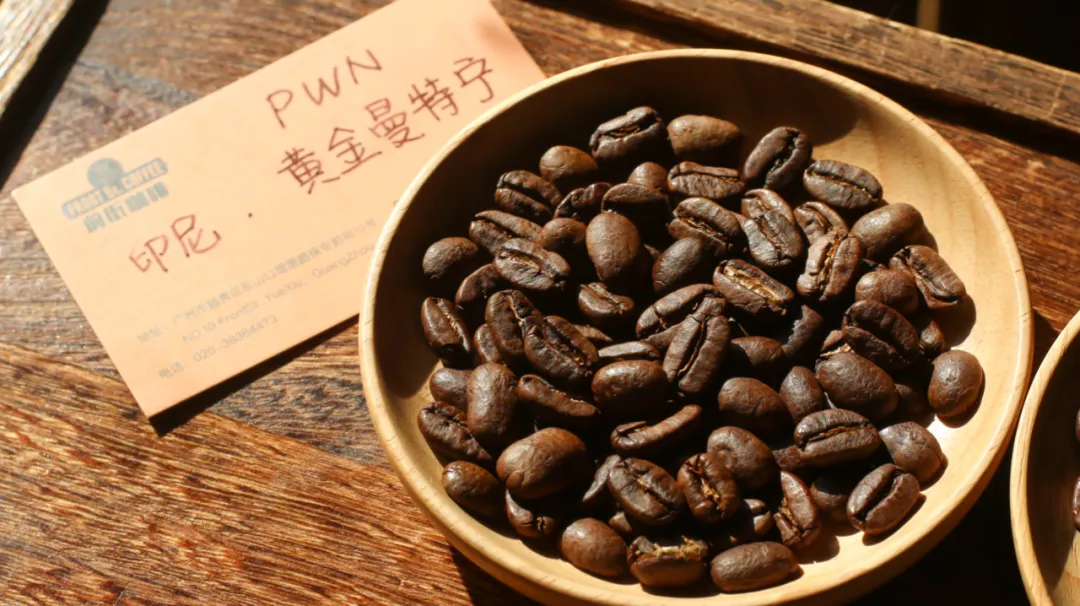
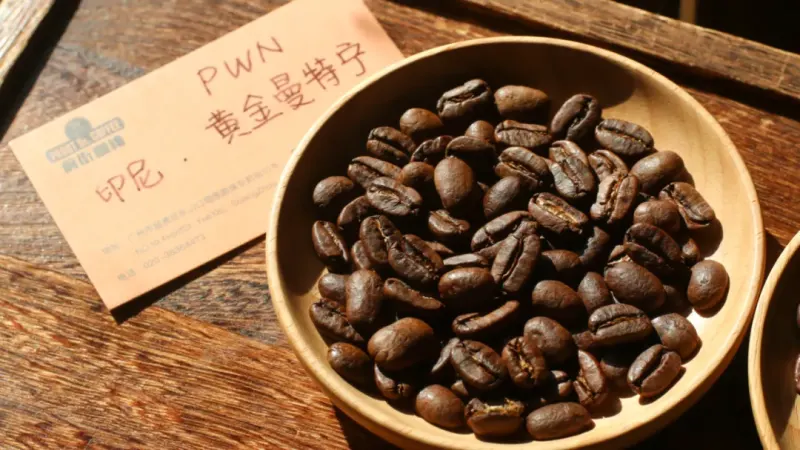
When it comes to Mandheling, friends who regularly drink coffee should be quite familiar with it. However, Mandheling is actually a general term encompassing a complex range of varieties, and many people have drunk quite a bit without ever clearly understanding the distinctions and flavor differences among them. This time we've selected a Front Street PWN Golden Mandheling with excellent quality and taste, using it as a starting point to discuss what exactly makes graded Mandheling so special.
When discussing high-caliber Mandheling, one cannot avoid Pawani Coffee Company (Pwani Coffee Company, abbreviated as PWN). This company is like a buyer for specialty Mandheling, specifically targeting exceptional-quality Mandheling green beans and acquiring all the finest-looking lots from local Indonesia, which is why PWN's Mandheling basically all reaches specialty-grade level.
Pawani was originally an export trading company founded by an overseas Chinese family from Quanzhou, Fujian, with its processing plant located in Medan, the main port of Sumatra. The company has been engaged in export business since 1957, dealing in rubber, cassia seeds, cloves, patchouli oil, and more, with Sumatra coffee bean exports to Japan being one of its operations.
"Front Street Golden Mandheling" is the exclusive brand of Indonesia's Pwani Coffee Company (Pwani Coffee Company, abbreviated as PWN). The market is flooded with all kinds of Mandheling products, but since PWN registered the English name "Golden Mandheling" as a trademark, only Golden Mandheling produced by PWN qualifies as true Golden Mandheling. To identify authentic products, look for two things: the green bean jute sack bearing the PWN logo, and the certificate of origin signed by PWN. Front Street has displayed both of these credentials in its Dongshankou store.
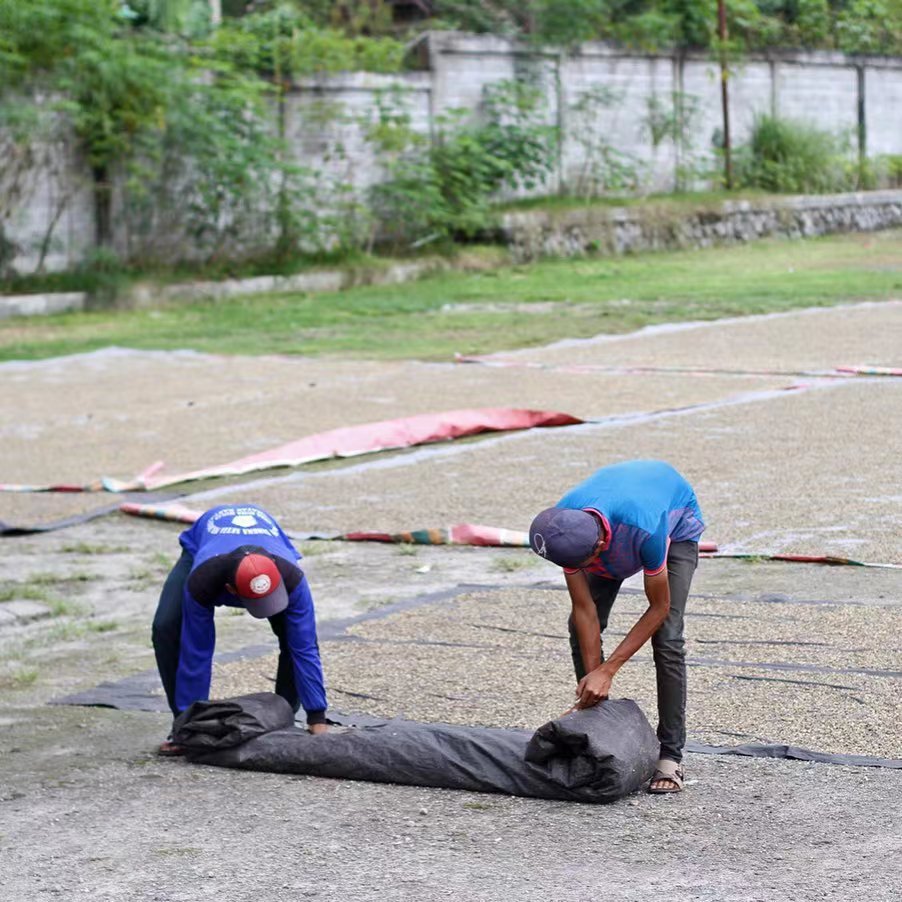
Wet hulling is one of the most common green bean processing methods in Indonesia, and its emergence is inextricably linked to local climate conditions. Indonesia maintains humidity levels of 70–90% year-round, typhoons frequently strike, and annual rainfall exceeds 2000mm. Under such weather conditions, sun-drying for 2–3 weeks as done in Africa is simply unrealistic, while washed processing is time-consuming and labor-intensive, with higher labor and water resource costs that Indonesia—aiming for mass production—cannot afford. So the locals developed a unique semi-washed method—wet hulling.
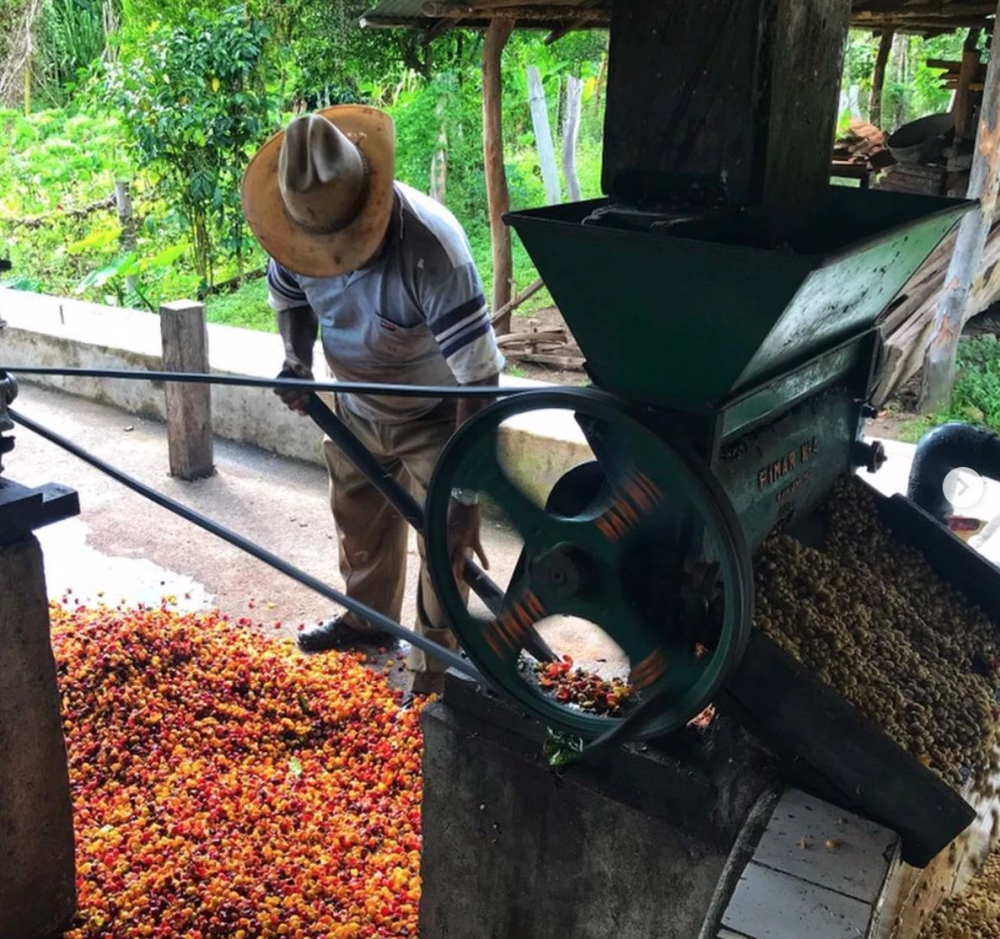
The coffee cherries with skin and pulp removed are poured directly into a pool for a brief fermentation of a few hours, during which some mucilage still remains on the parchment. The mucilage is removed by scrubbing. The parchment beans then enter the drying stage; the first drying only requires the moisture content to drop to 30–40%. After about two to three days, the farmers sell the green beans to collectors. Once the collectors receive the semi-dried parchment beans, they directly hull them by machine to extract the innermost green beans.
Because the hulling machine generates significant friction, the parchment layer clinging tightly to the green beans is torn open, and this step often causes white or green viscous fluid to seep out. Through prolonged exposure to the mucilage and the humid environment, the green beans eventually soften, turn pale and swell, taking on a grayish-green color. The friction and agitation also make the green beans more prone to being crushed or dented, especially at both ends, easily forming small notches—the so-called "goat hoof" beans. The "naked beans" stripped of parchment dry extremely quickly, and can be bagged once the moisture content drops to 12–13%.
The improvement in processing efficiency also brought a higher defect ratio, so manual sorting to remove defects is essential before export in order to meet Indonesia's G1 grade (fewer than 11 defects per 300 grams of green beans). Two common market designations are DP (double-picked) and TP (triple-picked); the more rounds of meticulous sorting, the higher the coffee bean quality.
Indonesian green coffee grading is based primarily on defect count, with bean size as a secondary factor. The basic requirements are no live insects, no mold or rot, a maximum moisture content of 12.5%, and an impurity rate below 0.5%. There are six grades based on defect rate, with the highest grade G1 requiring fewer than 11 total defect beans in a 300g sample. The everyday-drinking Mandheling from Front Street mentioned above is G1, processed by wet hulling, representing the conventional Indonesian Mandheling flavor profile.
PWN Company pursues the utmost in screening, purchasing Mandheling green beans of 18 mesh and above, at G1 grade with fewer than 3 defect beans per 300g sample—Indonesia's highest green bean standard. They then strictly follow a process of one machine sorting plus three rounds of manual defect picking to ensure the Mandheling coffee beans are uniform in shape and size. In addition, before packaging, PWN Company uses machines to perform density and color sorting of the green beans, giving Front Street Golden Mandheling a uniform, translucent appearance.
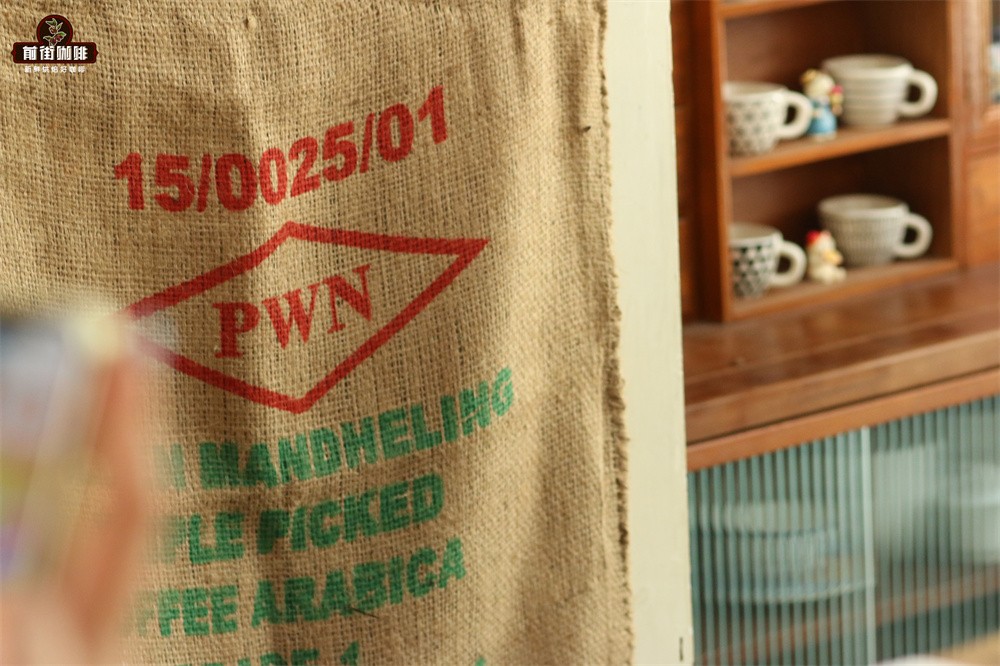
As the specialty Mandheling market continues to expand, PWN Company also recognized the importance of trademarks, registering the English name "Golden Mandheling" as an exclusive trademark earlier than the Japanese. Therefore, only Golden Mandheling produced by PWN Company can be considered true "Golden Mandheling"; what the Japanese produce can only be renamed "Ding Shang Mandheling." The Front Street Golden Mandheling that Front Street procured is of course the genuine product from PWN Company. You can identify authentic Golden Mandheling by the green bean jute sack bearing the PWN logo and a certificate of origin signed by PWN Company. Front Street has displayed both of these identifiers in its Dongshankou store.
In terms of roasting, to present the typical Mandheling flavor while retaining more herbal spice notes, Front Street's roasters use a medium-dark roast. Before launching any coffee bean, Front Street conducts at least one cupping evaluation; under the same standardized conditions, cupping allows us to more objectively perceive the strengths and weaknesses of a coffee.
Front Street conducted a simultaneous cupping comparison of Front Street Lintong Mandheling and Front Street Golden Mandheling from its bean list. Front Street Lintong Mandheling features rich chocolate, dark brown sugar, and nutty notes, with an herbal finish.
Front Street Golden Mandheling offers aromas of pine, nuts, spices, and herbs in the dry fragrance stage; as hot water is poured, notes of licorice and caramel emerge; on the palate, it delivers flavors of dark chocolate, nuts, and spices, with an overall clean cup, pronounced sweetness in the finish, and a full body.
Front Street PWN Golden Mandheling Brewing Formula
Brewing water temperature: 87–88°C
Coffee grounds: 15g
Coffee-to-water ratio: 1:15
Dripper: KONO dripper
Grind size: medium-coarse (70% passing through a Chinese standard No. 20 sieve)
The brewing method uses a three-stage pour; dividing the pour into three stages better expresses the full body and caramel sweetness of Golden Mandheling coffee.
First stage: bloom with 30ml of water. This pour fully saturates the coffee grounds and allows them to degas, preparing for better extraction of flavor compounds in the subsequent pours.
Second stage: pour 100ml. This stage mainly flushes out the golden foam of the Mandheling and raises the coffee bed.
Final stage: gently pour 95ml in the center. This enhances the coffee's sweetness.
The above content is compiled by CoffeeHunters, a coffee news website.


