







How Do You Brew Mandheling Coffee as Pour-Over?
Mandheling is an Arabica coffee from the Mandailing region near the Bukit Barisan mountains in North Sumatra. It has a full body, low acidity and a faint herbal, woody agarwood aroma, and Golden Mandheling adds higher cleanliness and a stronger mouthfeel. For pour-over, use a KONO dripper, 88C water, 15 grams of coffee and a 1:15 ratio.
Sumatra's tropical rainforest climate, with high heat, humidity and rainfall, pushed local smallholders toward the wet-hulling method, which suits the environment and builds the mellow profile. Smallholders also grow coffee among mountain forests. Golden Mandheling suits beginners, while experienced drinkers often reach for the specialty-grade single-origin lots.
Mandheling coffee is the iconic representative of Indonesian coffee, deeply loved for its mellow body and unique herbal, woody agarwood aroma. This article will start with Mandheling's origin background and the history of the wet-hulling process, analyze the transformation of its flavor from high-acid green beans to mellow dark roast, and share Front Street Coffee's Golden Mandheling pour-over recipe, including the reasons for choosing the KONO dripper, 88°C water temperature, 15 grams of coffee grounds, and a 1:15 coffee-to-water ratio. Whether you are a beginner just getting to know Mandheling or an enthusiast looking to refine your brewing technique, you will find practical references here.
Mandheling coffee is both an important representative of Asian coffee and an iconic variety of Indonesian coffee. It carries an agarwood-like aroma of herbs and forest wood, feels full and mellow on the palate, and leaves a long finish. There used to be a saying that Mandheling was favored mostly by men, because its flavor profile leans heavy, while women might prefer the bright, floral and fruity light style of Ethiopian coffee. However, Front Street Coffee has observed that although this tendency did exist in earlier years, the situation has now changed—more and more female consumers are beginning to favor Mandheling coffee as well.
Mandheling belongs to the Arabica species, and its place of origin is the Mandailing region near the Bukit Barisan mountains in North Sumatra. This coffee stands out for its body, has low acidity, and carries a faint herbal note. Compared with regular Mandheling, Golden Mandheling has higher cleanliness, stronger body, and a better overall mouthfeel. Therefore, Front Street Coffee regards Mandheling as the representative of Indonesian coffee and a bean suitable for beginners; while more knowledgeable coffee enthusiasts often prefer the specialty-grade single-origin Golden Mandheling.
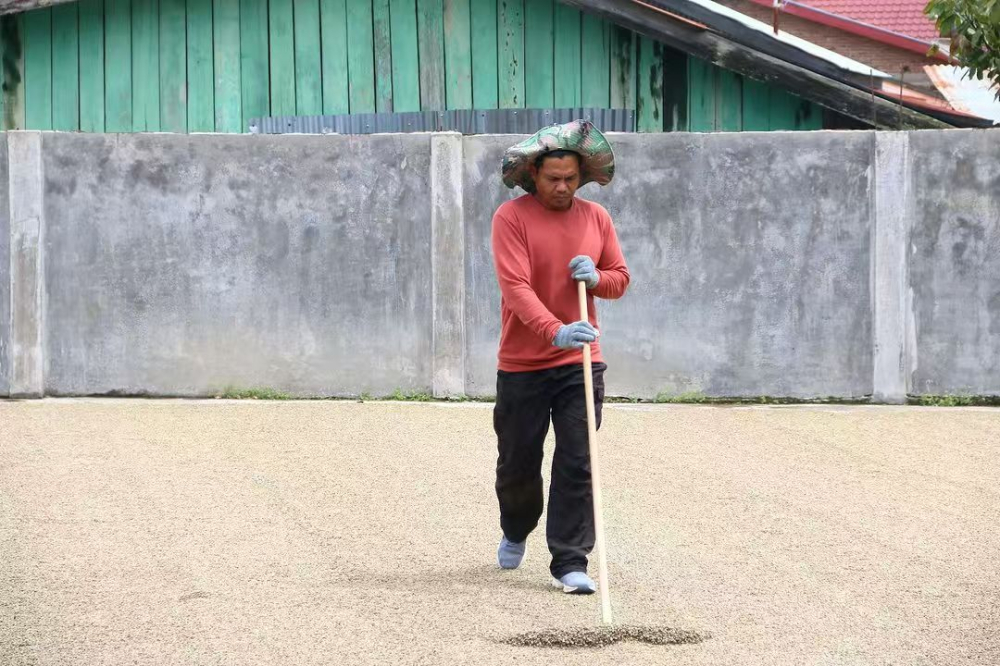
Which processing method is used for coffee beans usually depends on the local climate conditions, because only by adapting to the environment can the origin's flavor be better presented. Sumatra is the largest island in Indonesia, straddling the equator and featuring a tropical rainforest climate with high temperature, high humidity, and abundant rainfall. Local smallholders mostly grow coffee among pristine mountain forests.
Sumatra is rich in water resources and has a warm climate year-round, but there is one unfavorable factor: frequent rainy days and successive typhoons make it difficult to obtain the sustained sunny weather required for the natural process. At the same time, local economic conditions are limited, and farmers cannot afford the higher cost of the washed process. Thus, a highly regional processing method, wet hulling, emerged. It is precisely this seemingly accidental processing method that created Mandheling's unique flavor.
The well-known characteristics of Mandheling include herbal aroma, caramel sweetness, low acidity, and a mellow mouthfeel. But many people may not know that, judging from the green beans themselves, Mandheling is actually a coffee bean with fairly high acidity. The key to its acidity transforming lies in the roast level advancing from medium-light to medium-dark, gradually converting acidity into caramelized flavors.
As roasting continues, coffee's acid-bitterness balance, aroma expression, and mouthfeel change accordingly. Acidity gradually decreases as the roast deepens. When City Roast, that is, medium-light level, is reached, the sourness begins to weaken at an accelerated pace. At the same time, the body increases, and bitter compounds slowly accumulate until the coffee is officially discharged from the roaster.
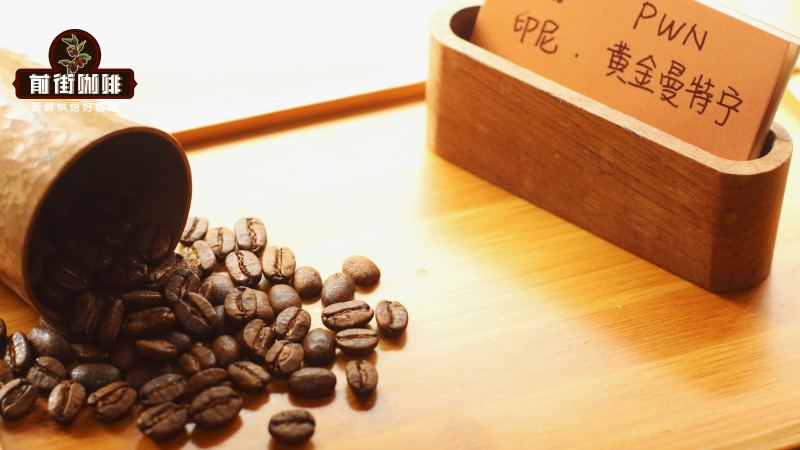
When roasting this PWN Golden Mandheling, Front Street Coffee chose a dark roast in order to fully present its mellow mouthfeel. Dark-roasted beans release flavor substances more easily during brewing, so Front Street Coffee recommends using a coarser grind and a lower water temperature to avoid over-extraction and the appearance of burnt bitterness.
Dripper: KONO dripper
Water temperature: 88 degrees Celsius
Dose: 15 grams
Coffee-to-water ratio: 1:15
Grind size: 70% passing through a Chinese standard No. 20 sieve
When making pour-over coffee, Front Street Coffee usually uses two drippers: the Hario V60 and the KONO dripper. The Hario V60's 12 long ribs and 12 short ribs serve to guide flow. Because the filter paper cannot fully fit against the wall of the dripper, the water flow rate is relatively fast.
The KONO dripper has a smooth wall surface and 12 short ribs at the bottom for flow guidance. During brewing, the moistened filter paper can cling tightly to the wall, reducing the space for air flow, so the water flow rate is slower and it has a certain immersion effect, which can slightly extend the contact time between hot water and coffee grounds, thereby enhancing the body.
First pour in 30 grams of hot water and bloom for 30 seconds, then slowly pour in a thin stream from the center in circles up to 125 grams. When the water level in the dripper drops to the point where the coffee bed is about to be exposed, continue pouring in circles up to 225 grams. The total extraction time is about 2 minutes.
The above content is compiled by CoffeeHunters, a coffee news website.


