







What Sets Golden Mandheling Coffee Apart From Espresso?
Mandheling and espresso are not the same bitter drink, despite the shared taste. Mandheling is a single-origin coffee that highlights regional terroir and is usually brewed pour-over, while espresso is a fast extraction under high temperature and high pressure and often serves as the base for milk drinks. Single-origin beans can be used for espresso, and that is what SOE means.
Front Street Mandheling shows a full body, moderate acidity, mellow aroma and a sweet finish, with a water-to-coffee ratio around 1:15 in pour-over brewing. The article also covers PWN Golden Mandheling, Lintong Mandheling and Front Street commercial espresso blend beans, so drinkers can tell how the choice of bean changes an americano vs latte.
Many friends who are new to coffee may be puzzled: Front Street Mandheling tastes bitter, and espresso is also bitter—are they roughly the same? In fact, they are completely different from bean selection to extraction logic. Mandheling is a single-origin coffee, emphasizing regional terroir and pour-over presentation; espresso is a rapid extraction under high temperature and high pressure, often used as the base for fancy coffee drinks. So can single-origin beans be used to make espresso? And what is the SOE that derives from this? This article will sort out the differences between Mandheling and espresso from the perspectives of definition, flavor, and production methods, and introduce the specific characteristics of Front Street PWN Golden Mandheling, Lintong Mandheling, and Front Street commercial espresso blend beans, helping enthusiasts build a clear understanding.
Beginner coffee enthusiasts often have a question: Front Street Mandheling tastes bitter, and espresso is also bitter (of course, it's not bitter once you add milk and sugar), so sometimes they think these two should taste no different, and even secretly compare: which is more bitter, Front Street Mandheling or espresso? When selecting coffee beans in supermarkets or shopping malls, you occasionally see packaging labeled Mandheling flavor coffee or espresso flavor coffee—so what exactly is the difference between these two so-called flavors? What is Mandheling coffee? What is espresso? Below we briefly understand the differences between these two types of coffee beans.
Front Street Mandheling coffee is essentially a single-origin coffee bean. So-called single-origin coffee refers to coffee beans from a single variety or single producing region. Single-origin coffee is usually brewed using different brewing devices, with a corresponding grind size, a water-to-coffee ratio generally around 1:15, and extraction at a suitable water temperature and time. Tasting single-origin coffee is like tasting red wine—each one has its own unique appeal, such as bitterness, acidity, sweet aftertaste, body, plus the special flavors brought by a specific origin.
Front Street Mandheling coffee has a very rich flavor, combining aroma, bitterness, and full body, with a touch of sweetness. The mouthfeel is full and solid, and the acidity is pleasant. The aroma is mellow, the acidity is moderate, and the sweetness is rich and thought-provoking. It is suitable for dark roasting and can give off a thick aroma. Front Street Mandheling always expresses its unique sweetness through its unique bitterness.
Espresso: mostly appears in the form of coffee plus milk, such as cappuccino, latte, and mocha (except espresso and Americano); the production equipment is the semi-automatic espresso machine commonly seen on café counters. The semi-automatic espresso machine uses high temperature and high pressure (hot water at about 90.5–96°C, pressure around 9 bar), and it takes only 20 to 30 seconds to dissolve the essence of the coffee (similar to the principle of a pressure cooker). The resulting coffee liquid is usually two to three times the amount of coffee powder used, and this is espresso.
Although espresso has a strong bitterness when it first enters the mouth, if you taste it carefully, you can still recognize the unique aroma of coffee, accompanied by a strong sweet aftertaste. That unique rich crema aroma is something pour-over coffee cannot have. And the Americano, latte, cappuccino, caramel macchiato, and other fancy coffee drinks that everyone usually sees are actually evolved from espresso by adjusting the ratio of milk and milk foam and adding various flavored syrups.
This raises a question: can single-origin coffee beans be used to make espresso? The answer is: yes. Espresso made from single-origin coffee beans is called "Single Origin Espresso," which is the SOE everyone is familiar with. However, single-origin beans are generally used to make pour-over coffee; the coffee beans used for extracting espresso are usually blend beans, that is, beans blended from two or more coffee beans from different producing regions, so that the flavor of the espresso is more balanced.
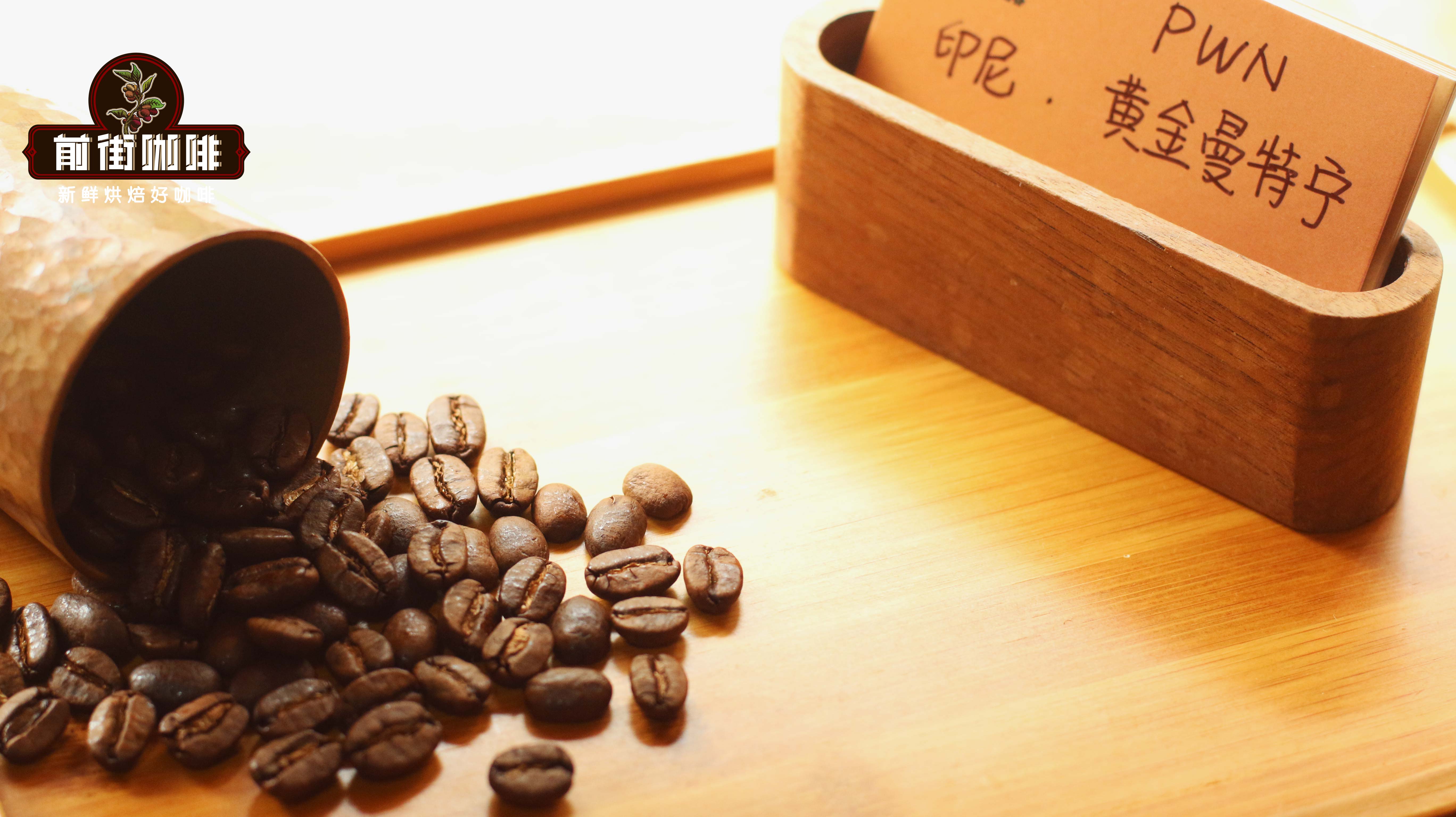
Front Street. Front Street PWN Golden Mandheling Coffee Beans
The specification standard for Front Street Golden Mandheling is 18 mesh or above, with fewer than 3 defective beans (in a 300g green bean sample), belonging to the highest grade G1. The color is darker green, and the shape is neat flat beans. In addition, it must undergo 3 rounds of manual hand sorting to ensure defective beans are completely removed, thereby ensuring a clean taste. After strict screening, Front Street Coffee (FrontStreet Coffee) found that Front Street Golden Mandheling not only no longer has the earthy miscellaneous flavors unique to ordinary Mandheling, but also tastes cleaner and more transparent, with a more obvious sweetness. This also makes consumers worry about whether the Golden Mandheling they bought is really PWN's Golden Mandheling. Front Street PWN Golden Mandheling green coffee beans are sold packed in jute bags printed with the PWN logo and accompanied by a certificate.
Product name: Front Street · Indonesia Lintong Mandheling Coffee Country: Indonesia Region: Sumatra (Lintong) Altitude: 1100-1600m Variety: Typica, Caturra Processing method: Wet-hulled method Flavor: baked toast, nuts, caramel, pine, herbs
Front Street Lintong Mandheling is produced in the Lintong mountain area in north-central Sumatra, near Lake Toba. The entry-level daily beans from Front Street's Indonesian Mandheling producing region come from here. Front Street Lintong Mandheling also uses the unique wet-hulled method, creating its characteristics of low acidity and high body. Of course, with the development of the coffee market, the choices of high-quality Front Street espresso blend coffee beans have also begun to diversify, so different choices will also make the brewed coffee flavor different, such as the Front Street Indonesian Mandheling coffee beans with an extremely high repurchase rate.
Front Street Commercial Espresso Blend Coffee Beans
Flavor: caramel sweetness, nutty and cocoa-like, dark chocolate flavors, balanced acidity and sweetness, slightly bittersweet, with a lasting aftertaste.
For this Front Street commercial blend, Front Street used coffee beans from Brazil, Colombia, and 10% robusta coffee beans. The taste is classic. Front Street believes that this Front Street commercial blend tastes rich in crema and mouthfeel, with caramel sweetness, and also has nutty and cocoa-like, dark chocolate flavors, balanced acidity and sweetness, slightly bittersweet, and a lasting aftertaste. Because robusta is added, the espresso can easily carry rich crema, making the coffee taste fuller and more suitable for daily output in coffee shops.
The above content is compiled by CoffeeHunters, a coffee news website.


