







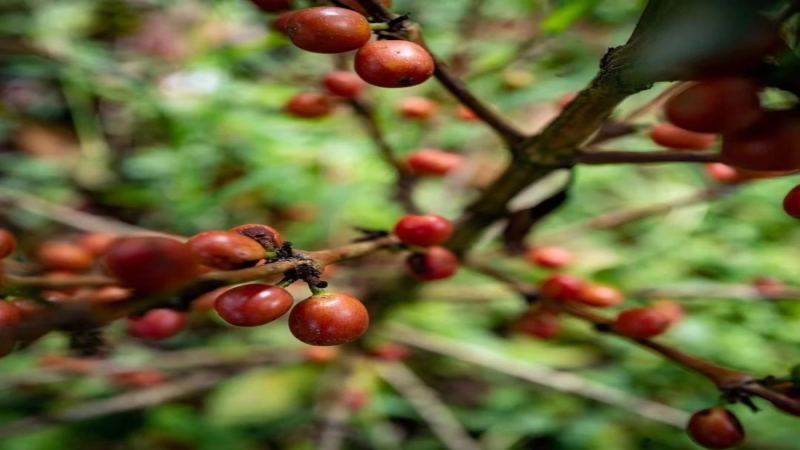
Why Is Pink Bourbon One of the Rarest Coffee Seeds?
Pink Bourbon is a rare Bourbon family member created by crossing Yellow Bourbon with Red Bourbon. Recessive yellow and red genes interfere with each other, so yields stay very low and the variety long went unnoticed. Trees are grown at 1,500 to 2,000 meters, and the beans are denser than those of other varieties.
Among the types of coffee seeds growers plant, Pink Bourbon is demanding. The trees need careful management through the whole cycle, and pickers struggle to judge ripeness because the fruit resembles unripe Red Bourbon, so lots get mixed. It was first grown by Gabriel Castaño at Finca La Granada in Huila, Colombia, and is now planted in Colombia and Guatemala.
Pink Bourbon is an extremely rare member of the Bourbon family, produced by crossing Yellow Bourbon with Red Bourbon. Because recessive genes interfere with each other, its yield is extremely low, and it remained little known for a long time. This article systematically reviews the growing conditions and varietal origins of Pink Bourbon, introduces its current cultivation status and cupping flavors in Colombia and Guatemala, and further recounts the historical path by which the Bourbon variety spread from Réunion Island to the rest of the world, as well as the characteristics of common variants such as Red Bourbon and Yellow Bourbon. At the end, Front Street Coffee's V60 pour-over parameters and brewing steps are included to help coffee lovers better present Pink Bourbon's fresh, multi-layered flavor expression.
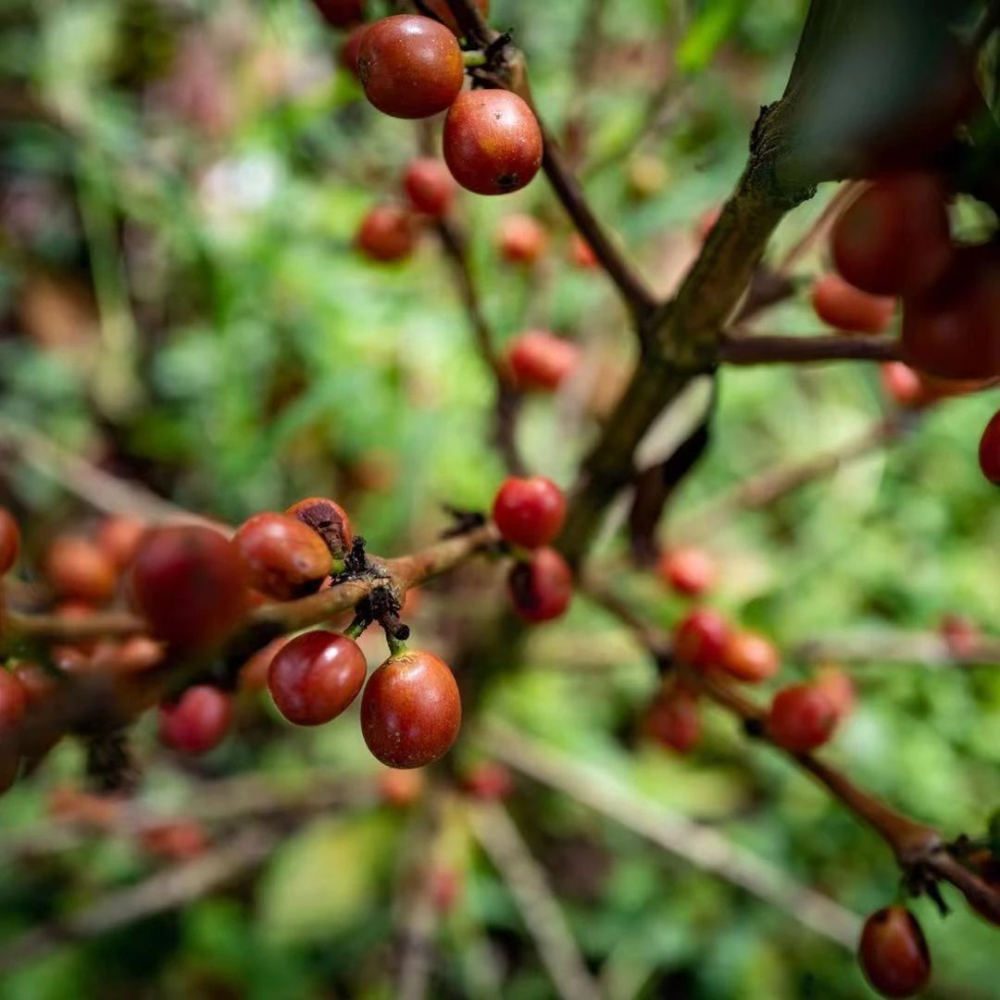
For more specialty coffee knowledge, please follow: Front Street Coffee (Frontsteet Coffee)
Among the Bourbon family members—Red Bourbon, Yellow Bourbon, Orange Bourbon, and Pink Bourbon—Orange Bourbon already has a relatively small yield, while Pink Bourbon's yield is even smaller. Precisely because Pink Bourbon is so scarce, for a long period in the past it was almost unknown to the outside world.
Pink Bourbon's Growing Conditions
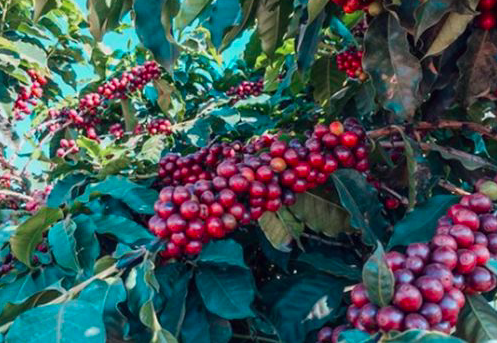
Pink Bourbon is produced by crossing Yellow Bourbon with Red Bourbon. Its disease resistance is especially outstanding, and its flavor is also quite excellent. Compared with other varieties, its coffee beans are denser, but its yield is very limited, and it is usually grown at altitudes of 1,500 to 2,000 meters. Cultivating Pink Bourbon is by no means easy: the entire coffee tree growth cycle requires meticulous management, and the demands on the growing environment are quite strict. Another difficulty appears at the harvesting stage: workers find it very hard to judge by appearance whether the fruit is ripe. The root cause is that Yellow Bourbon's yellow gene and Red Bourbon's red gene are both recessive genes, and they easily interfere with each other, making it difficult for Pink Bourbon to produce stably; in addition, Pink Bourbon closely resembles unripe Red Bourbon and is hard to identify, often becoming mixed together. This is precisely why Pink Bourbon is rare.
The Origin of Pink Bourbon
Pink Bourbon was first grown by a coffee farmer named Gabriel Castaño in the Huila region. His farm, Finca La Granada, is located in the Acevedo production area, the second-highest production area in Colombia, with altitudes reaching 1,800 meters. Warm days and cool nights create an appropriate growing-stress environment for the coffee trees. The farm covers only 2 hectares, and Gabriel owns 8,000 Pink Bourbon trees. The rich flavors shown during cupping gradually spread Pink Bourbon's reputation.
At first, Pink Bourbon was interplanted with other Bourbon and Caturra varieties, and only later was it harvested and processed separately. Its performance in the cup is also quite special: unlike the generally flatter characteristics of ordinary Bourbon, Pink Bourbon has fresh floral aromas and a juicy sweetness like blueberries and green grapes, with cherry notes emerging in the middle and a sweetness similar to yellow sugar in the finish; in terms of acidity, it shows more of a complex layering of citrus and berries.
At present, Pink Bourbon can be found in both Colombia and Guatemala. Pink Bourbon coffee has rich flavor layers, bright acidity, and a round, full body; in terms of mouthfeel characteristics, it has sweet orange, sugarcane sweetness, a pleasant juiciness, and small tomato flavors, drinking somewhat like Kenyan coffee.
Next, let's extend the discussion to the familiar Bourbon coffee, whose spread is likewise worth understanding.
Bourbon coffee was first planted on Réunion Island, which was also called Île Bourbon (le Bourbon) before 1789. Bourbon is a secondary variety resulting from a mutation of Typica, and together with Typica it belongs to the oldest surviving coffee varieties; its green fruit turns bright red when ripe.
As an old variety of coffee beans, Bourbon differs from Typica in that Bourbon's leaves are broader than Typica's, its growth is denser, and its coffee yield is also higher than Typica's. Its coffee beans are relatively large in shape, uniform in size, and even and glossy in color; the green fruit turns bright red when ripe.
Bourbon coffee's yield is nearly 30% higher than Typica's, but its overall yield still ranks at a relatively low level among the many coffee varieties, and it is likewise susceptible to leaf rust.
Bourbon is a branch of the Arabica species. It generally bears red fruit and is called Red Bourbon; besides that, there are also Yellow Bourbon and Orange Bourbon, among which Yellow Bourbon has a relatively lower yield, though its quality is better.
The Spread Route of the Bourbon Variety
The Typica variety introduced to Brazil in 1727 had a low yield and was prone to disease, so Bourbon was introduced to Brazil around 1860 via Campinas in the south, and quickly expanded northward to other regions of South America and Central America. In Latin America today, Bourbon has largely been replaced by its variants (especially Caturra, Catuai, and Mundo Novo, etc.), but Bourbon is still grown in countries such as El Salvador, Guatemala, Costa Rica, and Peru.
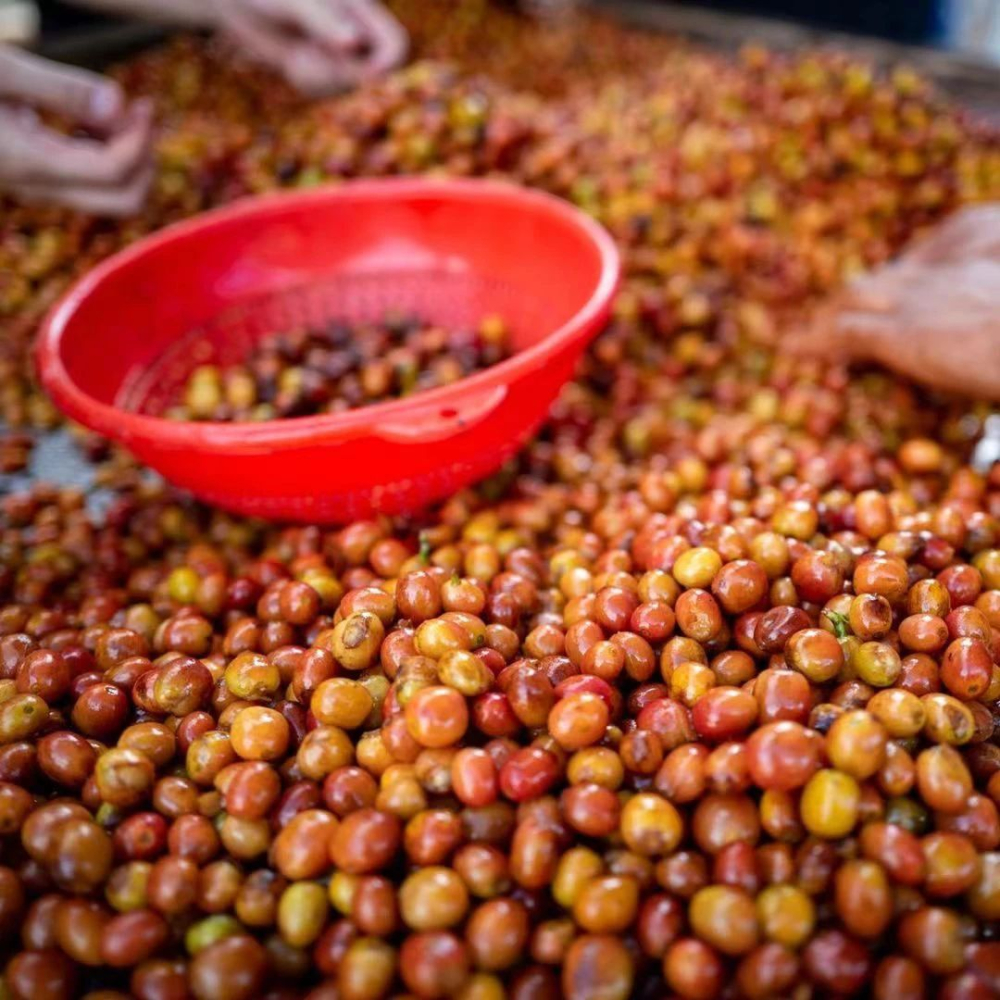
In Africa, French missionaries known as Spiritan (from the Congregation of the Holy Spirit) played an important role in the spread of Bourbon. In 1841, the first church was established on Réunion, and in 1859 a branch was established in Zanzibar; from Zanzibar, in 1862 one branch each was established in Bagamoyo (on the coast of Tanzania, then called Tanganyika) and Saint Augustine (Kikuyu, Kenya), and in 1893 another branch was established in Bura (Taita Hills, Kenya). The establishment of each branch was accompanied by the planting of coffee seeds brought from Réunion.
In 1899, seedlings cultivated at Bura were taken to another French church at Saint Croix (near Nairobi), and in 1900 they were introduced to Tanzania's Kilimanjaro region, where seeds were distributed to local residents willing to grow coffee. This is the origin of what is called "Missionary Bourbon." Subsequently, the Kent variety was also introduced in 1920. Therefore, to this day, Tanzanian coffee is still mainly Bourbon and Kent.
French-ruled Île Bourbon 1860, Pointed Bourbon to New Caledonia and Yemen 1732, Round Bourbon to the British territory of Saint Helena. 1860, Round Bourbon to Brazil. 1900, Round Bourbon to Rwanda, Kenya, Tanzania 2000, Pointed Bourbon to Colombia.
Bourbon Variants
During the process of reproduction, due to various factors such as natural mutation, intraspecific crossing, and artificial breeding, many new varieties have emerged, such as Caturra, Catuai, Pacas, Yellow Bourbon, Pointed Bourbon, SL28, SL34, and a long list of others.
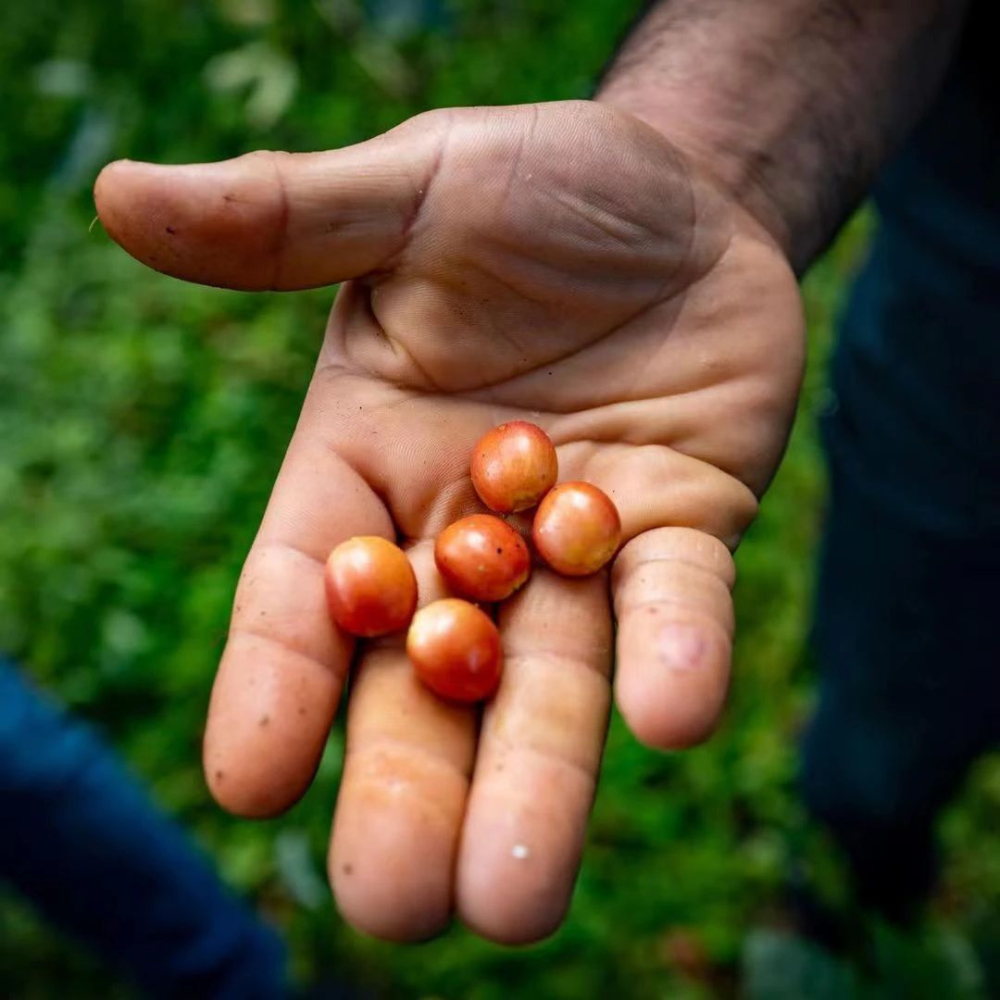
Two Common Bourbon Types (Red Bourbon, Yellow Bourbon)
As early as 1850, Brazil had already become a major global coffee producer, relying heavily at the time on the Typica variety introduced in 1720. But because this bean had a low yield, in order to ensure profits they introduced Bourbon from Réunion—that is, Red Bourbon—and planted it on a large scale.
After the Red Bourbon coffee tree flowers and bears fruit, the color of the coffee fruit changes in sequence as follows: green > turning slightly yellow > turning slightly orange > turning ripe red > then turning a more mature dark red—that is, what we generally call Bourbon. Bourbon grown at high altitude usually has better aroma and bright acidity, and can even taste somewhat like red wine.
Yellow Bourbon
Yellow Bourbon is a Bourbon variant unique to São Paulo State, Brazil. Its coffee fruit does not turn red when ripe but instead takes on an orange-yellow color, hence the name "Yellow Bourbon." Because its yield is relatively low and it is also relatively intolerant of wind and rain, it has not been widely planted. Yellow Bourbon grown in high-altitude areas shows extremely excellent flavor performance.
V60 Pour-Over Parameters
Grind size: medium-fine grind
Water temperature: 90°C;
Coffee dose: 15 grams;
Coffee-to-water ratio: 1:15;
Total brewing time: 2 minutes
Specific pour-over brewing method:
Bloom: 30 grams of water, wait 30 seconds;
First pour: slowly pour in a circular motion 90 grams, stopping at a reading of 120 grams, and wait for the liquid level to drop to the surface of the coffee bed.
Second pour: increase the water flow and pour in a circular motion, adding 105 grams of water, stopping at a reading of 225 grams, and once the coffee bed is exposed, remove the dripper.
Flavor performance: fresh floral aromas, clearly defined layers, pronounced citrus and small tomato aromas, still soft acidity after the temperature drops, caramel sweetness in the finish, smooth and clean mouthfeel
The above content is compiled by CoffeeHunters, a coffee news website.


