








Why Have Yunnan Coffee Bean Prices Stayed So Low?
Yunnan produces more than ninety-nine percent of China's coffee, yet local green bean prices have long followed the New York futures market, leaving farmers with little bargaining power. Prices have at times fallen below fifteen yuan per kilogram, under the cost of production. Planted area in the province dropped from about 1.831 million mu in 2014 to roughly 1.497 million mu in 2020.
Pu'er accounts for more than half of provincial output, and early Yunnan coffee went mostly into instant products because quality was uneven. Specialty roasters now buy graded lots directly, and arabica flavor, cultivation history and international grading standards are increasingly discussed. Fair trade coffee facts and figures show similar price pressure in other producing countries.
Yunnan is China's main coffee bean producing region, accounting for over ninety percent of the national output, but for a long time its prices have been constrained by international futures, leaving coffee farmers with meager returns. Starting from the varieties, growing conditions, and flavor characteristics of Yunnan Arabica coffee, this article sorts out its price tiers and the path of its specialty transformation, and reviews the low-price predicament, the production decline crisis, and the rescue actions of industry associations together with governments at all levels and e-commerce platforms over the past thirty years. It also introduces the cultivation history of Yunnan coffee, international grading standards, and the differences among major cultivated varieties, and retains the brand recommendation information of Front Street Coffee, so that coffee lovers can fully understand the current situation and potential of Yunnan beans.

In the early years, Yunnan coffee was often used in large quantities for instant products because of unstable quality, and over time it gained a mediocre reputation in the eyes of outsiders. However, in recent years, Yunnan beans have seemed like a dark horse charging out, gradually securing a place in the specialty coffee circle.
Yunnan is China's most important coffee bean producing region, with more than 99% of the national output coming from here. Yet for a very long time, the pricing of local coffee beans followed the New York futures exchange quotations entirely, leaving coffee farmers almost no room to bargain. In recent years, the international coffee market has remained weak, and green bean prices have kept falling, even dropping below the cost line of 15 yuan per kilogram.
Some growers with severe losses could no longer afford further investment and had no choice but to cut down coffee trees, abandon their estates, and seek other livelihoods. The coffee farmers still struggling to hold on also had faces full of helplessness.
Statistics show that in 2020 Yunnan Province's coffee planting area was about 1.497 million mu, while in 2014, at its peak, it had reached 1.831 million mu, shrinking by nearly 20% over six years.
Yunnan: Trading Quality for Price, Specialty Coffee Opens New Sales Channels
Coffee beans from the Pu'er producing region account for more than half of the province's total, and local coffee farmers number over 300,000. Yet even with such a large producing area, the beans still cannot fetch a good price. In order to reverse this passive situation, some young practitioners began exploring new paths.
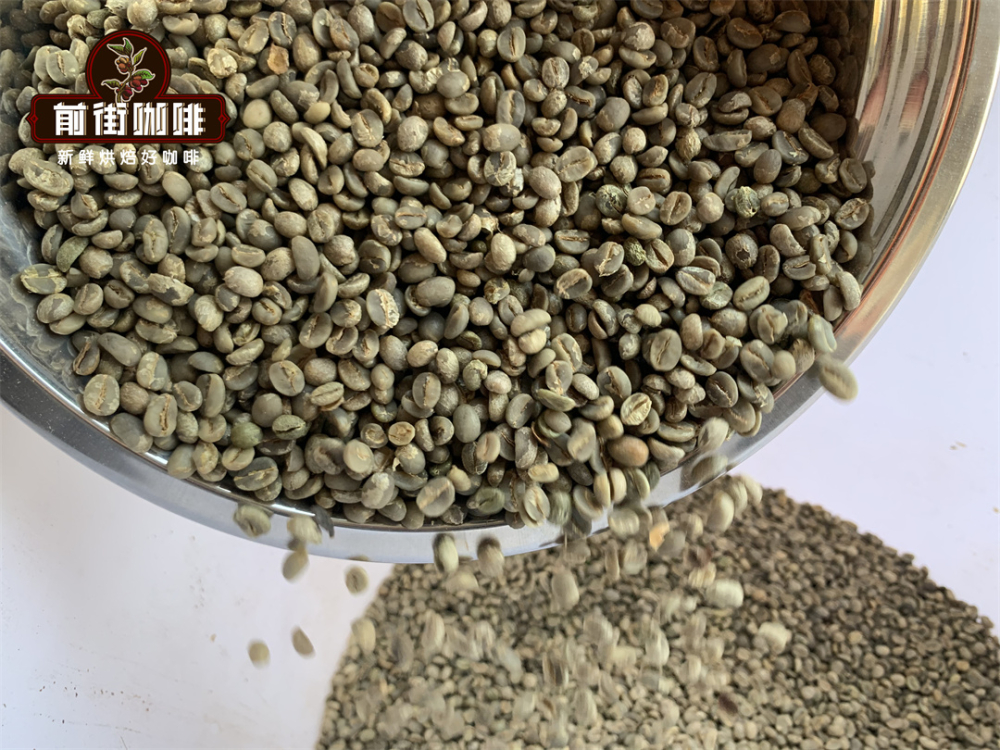
Specialty Coffee Gains Popularity, Consumers Gradually Recognize Yunnan Beans
In the view of Front Street, making good specialty coffee not only imposes stricter requirements on cultivation and bean selection, but also requires refined processing, with considerable investment of manpower and resources. So how well is this kind of specialty coffee accepted in the market, and can it compete with traditional major coffee brands?
In Kunming, the provincial capital closest to the producing region, nearly a thousand new cafés have opened in recent years. By deepening the domestic market and focusing on the specialty route, Yunnan coffee's presence has clearly strengthened, and its online performance is equally impressive. In 2020, the consumption scale of Yunnan coffee on the Tmall platform reached 245 million yuan, a year-on-year increase of 135%, and the number of local Yunnan coffee brands also increased by 80%.
Not long ago, the Yunnan Coffee Industry Association successively received multiple complaint letters from coffee farmers, planting cooperatives, and planting enterprises in various producing regions. The core question was: why has Yunnan coffee never been able to fetch a good price in thirty years? If international coffee giants continue to buy at low prices, growers will have no choice but to keep cutting down trees and withdraw from cultivation. Most of the letters suggested: seek the help of public interest litigation lawyers and sue those international coffee giants!
Yunnan Coffee Production Plummets Across the Board, Output Nearly Halved
According to incomplete statistics from the Yunnan Coffee Industry Association, by 2020 Yunnan's coffee planting area had sharply decreased from a peak of more than 1.8 million mu to 1.38 million mu. In the 2020 to 2021 production season, Yunnan coffee output was estimated at only 80,000 to 90,000 tons, almost half less than the peak of 150,000 tons. Some coffee farmers wrote in their complaint letters that if the purchase price continues to be suppressed, this year may be the last harvest. One grower lamented: thirty years ago cabbage was three cents a pound, and coffee beans were more than ten yuan a pound; thirty years later cabbage has risen to more than three yuan a catty, and coffee is still more than ten yuan a catty. We really cannot hold on anymore, and are preparing to cut down the coffee trees!
Saving Yunnan Coffee: All Parties Are Taking Action
On January 5, 2021, the Yunnan Coffee Industry Association issued a statement saying: there obviously exists a misunderstanding in information communication between the association and Alibaba. Both sides share the same original intention, which is to help Yunnan coffee develop better and faster and to let coffee farmers live a good life as soon as possible. In addition to Alibaba's statement of increased support, platforms such as JD.com and Pinduoduo are also actively seeking a way out for Yunnan coffee and boosting the industry's development.
Those most concerned about Yunnan's coffee industry are the Yunnan Provincial Party Committee, the provincial government, and leading cadres in the cities and counties of each coffee-producing region. Since 2013, the average purchase price of Yunnan coffee (grade one and grade two) has never exceeded 15 yuan per kilogram, lower than the coffee farmers' cultivation costs. It is precisely thanks to the timely assistance of party committees and governments at all levels that Yunnan's coffee industry has survived one difficulty after another year after year. In particular, the provincial Department of Agriculture and Rural Affairs, Department of Finance, Department of Science and Technology, and Department of Industry and Information Technology allocate hundreds of millions of yuan each year to support the construction of national-level modern coffee industrial parks, one county one industry, innovative processing, and other fields. Since the 19th National Congress of the Communist Party of China, the Yunnan Provincial Party Committee and the provincial government have included coffee in the "Green Food Brand" and the province's eight major plateau characteristic industries. Without these measures being implemented quickly, Yunnan's coffee industry would probably have fallen into an even more dangerous situation!
By contrast, international coffee companies set their own purchasing standards and buy beans at prices lower than international futures prices. While taking away the reasonable profits that should belong to growers, they also advertise "fair trade" and "international poverty reduction." One need only look at the countries in Central and South America and Africa that have grown coffee for hundreds of years, and this rhetoric collapses on its own.
According to incomplete statistics from the Yunnan Coffee Industry Association, Yunnan coffee has been purchased at low prices for thirty years. Compared with coffee of the same quality from other regions, each ton sells for about 3,000 yuan less. A rough estimate puts the losses of Yunnan coffee over the past thirty years at several billion yuan.
Complaints from Yunnan Farmers
Growers from the four major producing regions of Pu'er, Baoshan, Dehong, and Lincang believe: first, one kilogram of coffee beans can make about 100 cups of coffee, each selling for more than 20 yuan, yet growers cannot even get 1% of the revenue. On what grounds do international giants suppress the purchase price so low? Second, from the perspective of the global coffee planting map, countries that grow coffee are becoming poorer and poorer, while countries that consume coffee are becoming richer and richer. Are "fair trade" and "international poverty reduction" merely pretexts used by international giants to fool people?
Yunnan coffee farmers are awakening, and rights protection actions are about to unfold! At present, the International Coffee Exporting Countries Organization is also calling on global coffee-producing regions to demand that international giants raise purchase prices; otherwise, growers must actively defend their own rights and interests.
In recent years, more and more domestic consumers have chosen Yunnan coffee, supporting the industry's development with practical actions; domestic coffee companies have also raised purchase prices one after another. Taking January 2021 as an example, the purchase price of domestic coffee companies was already about 2,000 yuan per ton higher than that of international giants.
The History of Coffee Cultivation in Yunnan
It can be traced back to 1892, when a French missionary brought coffee seeds from abroad into Yunnan and successfully planted the first coffee tree in a place called Zhukula. He probably would not have imagined that a century later coffee would become a major highlight of Yunnan's plateau characteristic agriculture.
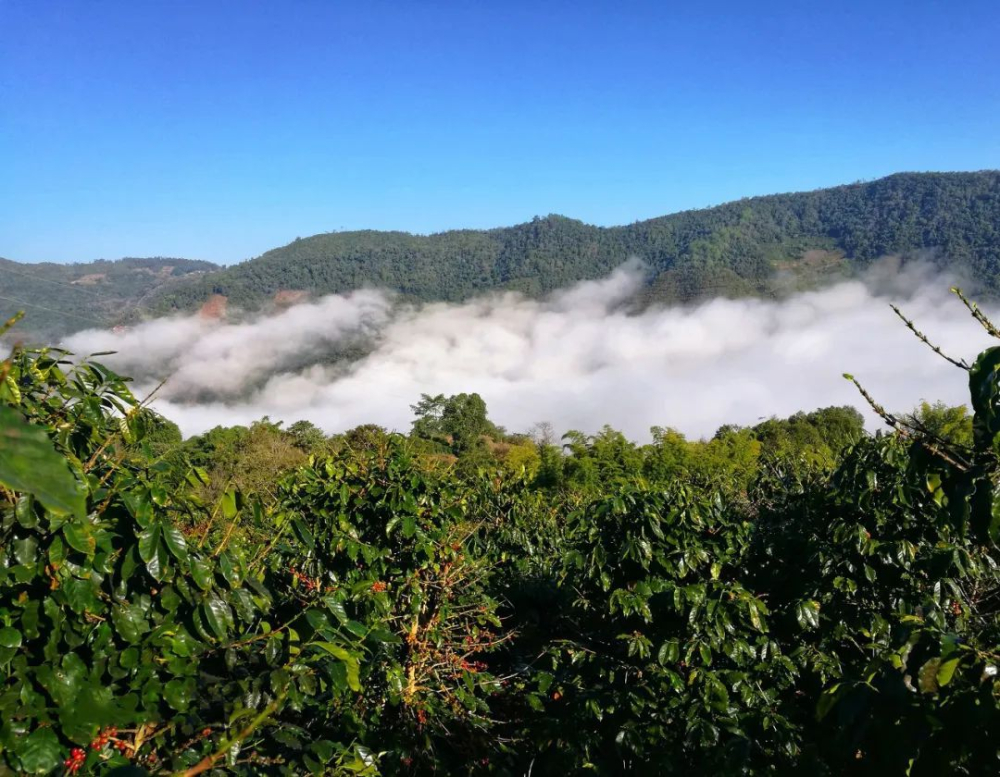
After 1930, the famous overseas Chinese leader Mr. Liang Jinshan introduced coffee cultivation to the Pupiao and Luoming areas, and it continued after the founding of New China. Since 1952, under the guidance of expert Ma Guojin of the Baoshan Tropical and Subtropical Economic Crops Research Institute, large-scale coffee cultivation began in Lujiang and other places, and there has been a history of large-scale cultivation for nearly 60 years so far.
In the mid-(20th century), the planting scale once reached 4,000 hectares. By the end of 1997, the province's coffee planting area had reached 7,800 hectares. At present, the province's planting area accounts for 70% of the country's total and its output accounts for 83% of the country's total. In terms of both area and output, Yunnan coffee has established a dominant position in China.
Detailed International Standards for the Inspection of Defects in Arabica Coffee:
Grading is based on the number of defects, usually determined by how many defects are contained in a certain amount of coffee beans. According to the methods for identifying foreign matter and defective beans stipulated by the International Organization for Standardization, a 300-gram sample of coffee beans is randomly taken, and the number of foreign matter and defective beans is counted before grading.
Typica and Bourbon, these two classic high-quality varieties, are the main cultivation targets of Yunnan coffee. In 1991, the Catimor series was introduced from Kenya (with stronger disease resistance and higher yield), a variant of the Arabica species (also called the small-bean species). Because the two varieties are similar in morphology and habits, they are mostly cultivated in mixed planting.
Yunnan Coffee Producing Regions
Western and southern Yunnan Province lie between 15 degrees north latitude and the Tropic of Cancer. Most areas are 1,000 to 2,000 meters above sea level, and the terrain is mainly mountainous and sloping land with obvious undulations, fertile soil, abundant sunshine, ample rainfall, and large temperature differences between day and night. These unique natural conditions create the special flavor of Yunnan Arabica coffee: strong but not bitter, fragrant but not harsh, with a slight fruity note. Yunnan coffee is mainly distributed in Lincang, Baoshan, Pu'er, Dehong, and other places. Natural resources such as low latitude, high altitude, and large temperature differences make Yunnan a golden growing region for producing high-quality coffee such as Arabica (small-bean) coffee.
Yunnan coffee is Chinese people's own coffee, and this brand is also slowly rising.
For more specialty coffee beans, please add the private WeChat of Front Street Coffee (FrontStreet Coffee), WeChat ID: kaixinguoguo0925
The above content is compiled by CoffeeHunters, a coffee news website.


