







How Does the Catimor Coffee Variety Shape Coffee Production?
Catimor is a coffee variety bred in 1959 by Portugal's CIFC research center, created by crossing Timor and Caturra to combine disease resistance with high yield. It carries Robusta genes from Timor, giving it strong resistance to coffee leaf rust and coffee berry disease, and its compact plant type suits dense planting. Roughly 99 percent of Yunnan's coffee production now comes from Catimor.
The trade-off is flavor. Grown above 1,200 meters, Catimor cups noticeably below varieties such as Bourbon and Caturra, and higher chlorogenic acid brings bitterness and unpleasant acidity. At low altitudes the gap shrinks. Example lots from Lujiangba in Baoshan, Yunnan, show how roast profile can shape results, which is why Catimor remains a debated but widely planted choice.
Catimor is a coffee variety bred by crossing Timor and Caturra. Developed in 1959 by Portugal's CIFC, it is known for disease resistance and high yield, and is widely planted in Central and South America. It inherits the Robusta genes of Timor, giving it extremely strong resistance to leaf rust and berry disease. The plant is short and compact, suitable for dense planting, and its yield far exceeds traditional varieties. Currently, 99% of Yunnan's coffee production comes from Catimor. However, the Robusta genes also bring controversy in terms of flavor—when grown at high altitudes, its cupping performance is noticeably inferior to varieties such as Bourbon and Caturra, and the increased chlorogenic acid content brings bitterness and unpleasant acidity. This article will comprehensively analyze Catimor's varietal origins, plant characteristics, and flavor controversies, and, using the high-mountain Catimor of Lujiangba in Baoshan, Yunnan as an example, combined with Front Street Coffee's roasting recommendations, explore this variety's position and value in the specialty coffee era.
The Catimor Variety
Catimor is a coffee variety bred by crossing Timor and Caturra. It was developed in 1959 by CIFC, the Portuguese Coffee Leaf Rust Research Center, with the goals of disease resistance and high yield. In the 1970s and 1980s, the variety began to be promoted on a large scale in Brazil. With its advantages of strong disease resistance and high yield, Catimor secured a firm foothold among Central and South American coffee varieties. The frequent coffee leaf rust crises in Central and South America further drove Catimor's widespread adoption.
Because it inherits the Robusta genes of Timor, Catimor has better resistance to coffee berry disease (CBD) and coffee leaf rust, as well as stronger resistance to pests and diseases overall, but this also leads to its cupping performance often being criticized. Catimor's resistance to leaf rust is expressed as sub-immunity or extremely high resistance. Its plant type is compact, and it has a certain inhibitory effect on longhorn beetles that like to lay eggs on exposed branches. Its yield is high, and the alternate bearing phenomenon is not obvious.
When grown at low altitudes, Catimor's cupping performance shows no obvious advantage or disadvantage compared with other commercial varieties. But if grown above 1,200 meters, Catimor's cup flavor is noticeably inferior to varieties such as Bourbon, Caturra, and Catuai.
Catimor Plant Characteristics
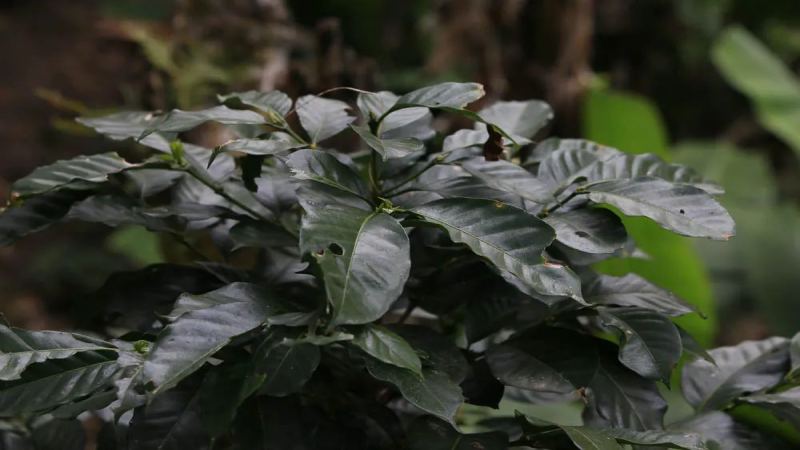
Catimor grows vigorously and its secondary traits are stable. The young leaves at the top bud of the canopy are emerald green, and the whole plant's leaves are dark green. The plant shape is columnar, with short internodes, many branches, wide adaptability, and strong drought resistance, and it also has a certain degree of cold resistance.
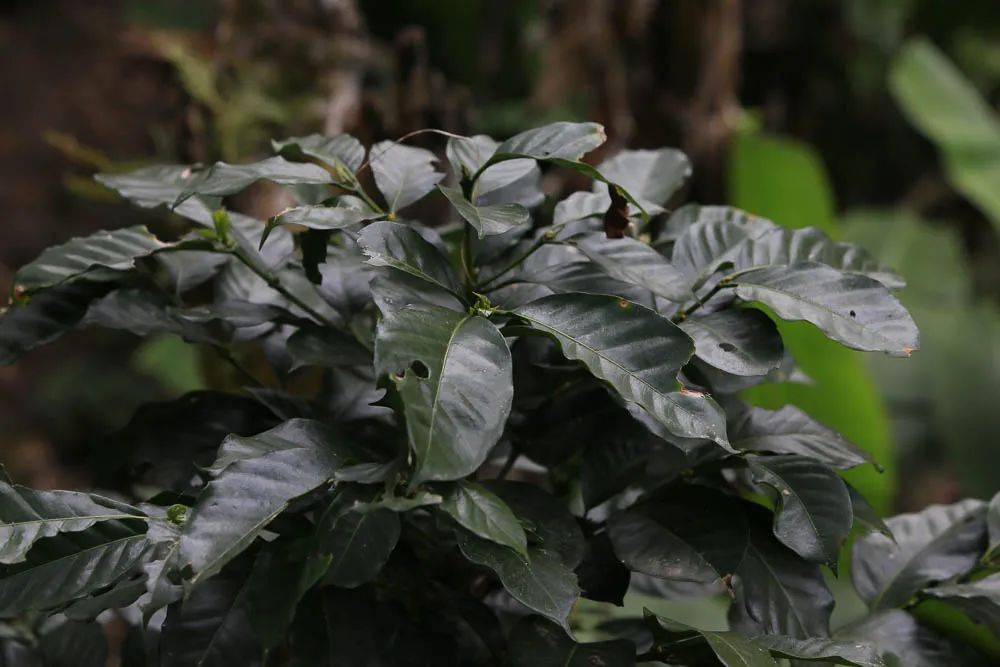
From its appearance, Catimor coffee seedlings have shorter branch nodes, and the distance between nodes is compact. This allows the coffee tree to bear more fruit, and is also one of the reasons why Catimor's yield per plant is higher than that of other traditional low-yield varieties.
Catimor plants are short, so planting density can be more compact (the distance between trees can be shorter). This is another reason why Catimor's yield per unit area is higher than that of traditional varieties. At the same time, the short plants require no extra pruning and are also easier to pick.
Catimor's core characteristics are high yield, short plants, and suitability for dense planting.
Currently, 99% of Yunnan's coffee production comes from Catimor, so what we usually call Yunnan small-bean coffee actually refers to Yunnan Catimor.
The Flavor Controversy of Catimor Coffee
Catimor's flavor has always been a highly controversial topic in the coffee world. As mentioned earlier, Catimor comes from a cross between Caturra and Timor, and Timor contains Robusta genes. It is precisely this portion of genes that gives Catimor its superstrong vitality; the high yield and Bourbon-lineage characteristics brought by the other half, Caturra, give Catimor more flavor expression.
There is no doubt that Catimor is undoubtedly successful in terms of yield and resistance to disease, drought, and cold, but as the saying goes, "You can't have your cake and eat it too." FrontStreet Coffee has previously shared that high-quality coffee trees are mainly grown at high altitudes. The large temperature difference between day and night at high altitudes causes coffee trees to grow slowly and accumulate more sugars or nutrients, and this is the source of refined flavor.
Catimor's time from planting to harvest that brings actual returns is shorter than that of traditional varieties, and the nutrients it accumulates are less than those of traditional varieties that require long growth periods.
In addition, high yield inevitably leads to the dispersion of nutrients. It is like the same cake: whether cut into four pieces or eight pieces, judging only by quantity, perhaps eight pieces is more, but the four pieces are larger.
The Robusta genes may also increase Catimor's chlorogenic acid content (Robusta's chlorogenic acid content is far higher than Arabica's). Although chlorogenic acid helps resist pests, it is also an organic acid that brings bitterness and unpleasant acidity to coffee.
Therefore, although Front Street Catimor has high yield, in the specialty coffee era that pursues flavor expression, Catimor may find it difficult to satisfy some picky gourmets. Take Costa Rica as an example. After gaining independence in 1821, Costa Rica began vigorously developing its coffee industry to drive economic development. In 1989, Costa Rica legislated to prohibit the domestic cultivation of Robusta and began to boycott the Catimor variety.
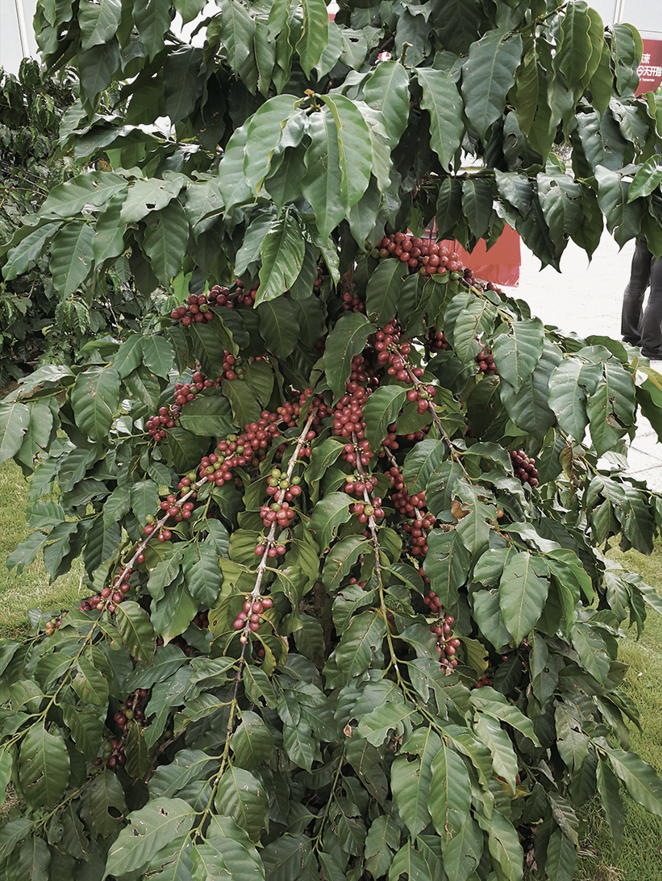
Although its flavor is inferior to other varieties, Catimor still occupies many production areas as a major variety. Taking Yunnan as an example, we might as well use it to explore Catimor's flavor. Front Street selected high-mountain Catimor coffee beans from Lujiangba in Baoshan, Yunnan. Front Street believes that the Catimor here is relatively high quality for all of Yunnan and can represent the flavor characteristics of Yunnan's coffee-producing region.
If you have a coffee machine and want to taste the flavor of Yunnan coffee, buy Front Street Black Cocoa—an espresso bean recommended by many baristas. This is an espresso blend composed of Yunnan small-bean coffee and Brazil Red Bourbon. It uses a medium-dark roast. During extraction, it gives off aromas of caramel and hazelnut. Paired with milk to make a latte, it has flavors of cocoa cookie and cream, with a balanced mouthfeel, making it very suitable for beginners.
Front Street Coffee's Recommended Roasting Plan for Front Street Yunnan Small-Bean Coffee
Charge at a drum temperature of 190°C, with heat at 120 and the damper set to 3; the turning point is at 1'40". When the drum temperature reaches 145°C, open the damper to 4 without changing the heat; when the drum temperature reaches 166°C, the bean surface turns yellow, the grassy smell completely disappears, and it enters the dehydration stage; when the drum temperature reaches 188°C, adjust the heat to 60°C and set the damper to 5; at 8'37", the bean surface shows ugly wrinkles and dark streaks, and the toast aroma clearly turns into coffee aroma, which can be defined as the prelude to first crack. At this time, you need to listen clearly for the sound of the first crack point; at 9'00", first crack begins, the damper remains unchanged, and after 3 minutes of development after first crack, drop the beans at 198°C.
Cupping after roasting revealed that Front Street Yunnan small-bean coffee is smooth on entry, with Asian herbal aromas, soft acidity, good body and balance, and rich layers. The aftertaste has notes of dark chocolate, honey, and sucrose, and after completely cooling it presents a brown sugar flavor.
The above content is compiled by CoffeeHunters, a coffee news website.


