







Is SOE Coffee Better Than Blended Espresso Beans?
SOE coffee, or single origin espresso, is not automatically better or pricier than a blend. SOE means one origin pulled as espresso; a blend combines two or more. The idea that SOE is superior is a bias. What matters is whether the bean suits high-pressure extraction and the flavor profile a drinker wants.
SOE gained ground overseas from around 2007 and matured after 2010, helped by World Barista Championship competitors favoring single origins. Yet a single origin can turn sharp or thin under espresso pressure, while blending coffee beans balances acidity, body and crema. Examples: a Brazil-plus-Mandheling mix is a blend, a pure Mandheling is SOE.
In recent years, SOE (Single Origin Espresso) has frequently appeared on café menus in China, and many people mistakenly believe that it is necessarily of higher quality and more expensive than espresso blends. This is not the case. From the perspective of Front Street Coffee, this article systematically reviews the definitions, development history, respective advantages and disadvantages of SOE and espresso blends, as well as the problems that single-origin beans may encounter during high-pressure extraction, and offers practical selection advice. The article also lists several espresso blend beans currently sold by Front Street Coffee along with their flavor descriptions, helping coffee enthusiasts make rational judgments based on their own needs, rather than blindly chasing or disparaging a particular type of coffee bean.
\n\nFor more specialty coffee knowledge, please follow our WeChat public account: Front Street Coffee (FrontStreet Coffee)\n\nSome people believe that espresso made from single-origin coffee beans (SOE / Single Origin Espresso) is necessarily superior to espresso made from blend beans (Espresso Blend)? And that its price must also be higher than blend espresso? In reality, these perceptions are biased. In this article, Front Street Coffee (FrontStreet Coffee) will discuss with you the respective strengths and weaknesses of single-origin espresso and blend espresso.\n\nWhat is SOE Single Origin Espresso?\n\nSOE has a history of about ten years overseas and is now quite well-developed, while in China it has only gradually emerged in the past two years. If you are still not sure what SOE actually is, it is indeed worth catching up on, because this term will appear more and more frequently on café menus in the future.\n\nSOE began to gain popularity in 2007 and has become increasingly mature since 2010. The most typical example is that friends who follow the WBC will notice that most competitors in the WBC (World Barista Championship) choose SOE coffee, that is, single-origin coffee.\n\n
\n\nFor example, suppose there are two types of beans, A and B. A consists of Brazil and Mandheling, while B is purely Mandheling. Then A broadly belongs to blend beans, while B can be regarded as SOE. Equating SOE with a high price is actually a misunderstanding; it can also be affordable and accepted by ordinary consumers. As long as the flavor of the beans is outstanding enough, the recipe for espresso does not necessarily need to be complex, and a single type of bean can also perform wonderfully. This is actually a major direction in contemporary coffee development.\n\n
\n\nFront Street Coffee (FrontStreet Coffee) believes that one reason SOE is increasingly favored is that competitors in various competitions have adopted single-origin beans to make espresso, which has led many industry professionals and enthusiasts to form the impression that “SOE is stronger than blend espresso,” and it has also become a way to demonstrate one’s professionalism.\n\nAnother reason is that, with the continued spread of specialty coffee culture, consumers increasingly want to taste the flavor and layering of coffee itself under conventional extraction and without adding any ingredients, and single-origin beans happen to better satisfy this demand. So no matter which extraction method is used, more and more people will pursue single-origin beans.\n\n
\n\nAlthough single-origin beans make very tasty espresso, not all single-origin beans are suitable for making espresso. First, coffee is an agricultural product, and its flavor quality is affected by the climate of the producing area, making it difficult to maintain stability over the long term.\n\nSecond, espresso is made by grinding coffee very finely and then using a machine to extract a highly concentrated coffee liquid quickly under pressure and high temperature, so the flavor of the beans themselves is concentrated and amplified. Certain sour or full-bodied substances easily present sharp acidity and astringency, resulting in a thin mouthfeel and unbearable burnt bitterness.\n\n
\n\nTherefore, Front Street Coffee (FrontStreet Coffee) does not recommend that everyone blindly try extracting espresso with single-origin beans. If you really want to drink SOE, you can directly buy coffee beans specifically roasted for SOE, or choose beans with a medium roast level or above.\n\nWhat is espresso blend?\n\nEspresso blend is the most commonly seen espresso, and it is also the default espresso method in most coffee shops. It is usually made by blending coffee beans from two producing areas. Its advantages lie in its mellow flavor, rich and solid mouthfeel, low acidity, and strong sweet aftertaste, though it is less layered in flavor than SOE.\n\n
\n\nThe emergence of blend beans was precisely to alleviate the problems of single-origin beans overexposing their own defective flavors during high-pressure espresso extraction and being unable to perform stably over the long term. So coffee professionals began combining beans from different producing areas in different proportions, making up for each other’s shortcomings and blending comprehensive coffee beans that can maintain a stable and balanced flavor at any time.\n\nTherefore, if it is for a coffee shop’s offerings, Front Street Coffee (FrontStreetCoffee) more strongly recommends using blend beans as the default choice for espresso, and adding an SOE bean option if needed.\n\n
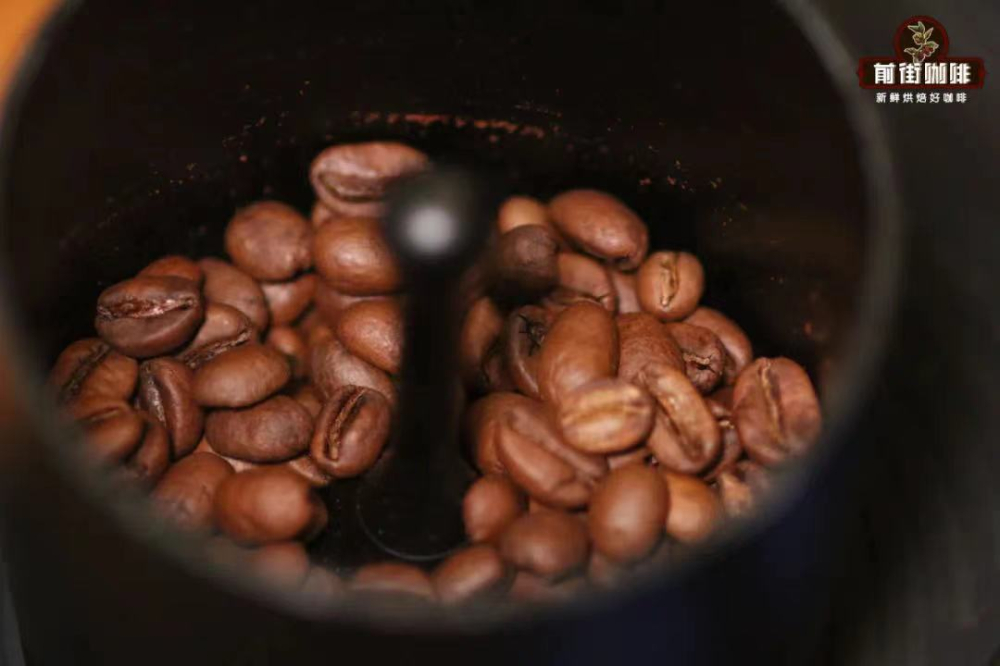
\n\nAt present, Front Street Coffee (FrontStreet Coffee) has 4 espresso blend beans on sale. In order for customers to taste the fullest coffee flavor, all coffee beans sold by Front Street Coffee (FrontStreet Coffee) are shipped within 5 days after roasting is completed.\n\n“Warm Sun Blend Coffee Beans” consists of Ethiopian natural Red Cherry (30%) and Honduras Sherry Barrel (70%), presenting rich wine aroma, vanilla cream, berry sweetness and acidity, and roasted nut flavors.\n\n“Specialty Blend Coffee Beans” consists of Colombian washed beans (30%) and Brazilian semi-washed beans (70%), with flavor notes of nuts, dark chocolate, and caramel.\n\n
\n\n“Commercial Blend Coffee Beans” consists of Robusta washed beans (10%), Colombian washed beans (30%), and Brazilian semi-washed beans (60%), presenting flavors of nuts, cocoa, and caramel.\n\n“The espresso beans recommended by many baristas - Front Street Black Cocoa Blend Coffee Beans” consists of Yunnan washed small-bean coffee (30%) and Brazilian semi-washed beans (70%), with flavor notes of soft fruit acidity, caramel, and nuts.\n\n
\n\nIs SOE tastier than blend espresso?\n\nThere are many factors that determine whether a cup of coffee tastes good, such as bean quality, freshness, roasting, the coffee machine, the preparation process, personal taste preferences, and so on. SOE merely refers to espresso made with single-origin beans, and the beans used are not necessarily better than blend beans. The other factors also have a huge impact on coffee quality, so whether a certain coffee tastes better cannot be generalized.
The above content is compiled by CoffeeHunters, a coffee news website.


