







How do you make coffee with a coffee machine at home?
Espresso balances dose, yield, time, and grind size. A change in any one shifts the cup, so dial in one variable at a time. Commercial machines push water above nine atmospheres and above 90°C through a fine, level bed, producing a small, concentrated shot with thick crema and wine-like aroma.
If you want to know how to make coffee with a coffee machine at home, start with a fixed dose, weigh the liquid output, and adjust grind to hit your target time. A deep roast usually needs a coarser grind or shorter time to avoid harsh bitterness, while lighter roasts can take a finer grind and longer extraction.
Behind that golden layer of crema on espresso lies a precise balance among dose, yield, time, and grind size. Many coffee enthusiasts want to recreate an ideal espresso at home, yet are often troubled by flavor fluctuations caused by parameter changes. This article starts from the calculation logic of the coffee-to-water ratio, systematically sorts out the interactions among extraction time, grind coarseness, and dose adjustment, and, combined with actual operating cases from Front Street stores, shows how to correct the extraction direction by observing flow rate and taste perception. Whether you use a semi-automatic or fully automatic espresso machine, understanding the relationships among these variables can help you more efficiently dial in an espresso with rich wine-like aroma and abundant crema.
For more specialty coffee knowledge, please follow the WeChat public account: Front Street Coffee (FrontStreet Coffee)
Front Street has noticed that many friends are attracted by that golden crema on espresso and have the idea of making it at home. Unlike the immersion extraction of pour-over, espresso relies on steam pressure to let scalding hot water quickly pass through the coffee bed, resulting in a small cup of coffee liquid with a thick texture and concentrated flavor. On the surface, the operation does not seem complicated, but once the parameter details shift, the final quality changes accordingly. For this reason, every step is worth taking seriously, and every parameter needs repeated consideration.
Before the birth of espresso, people generally used immersion methods to brew coffee, which required grinding the coffee beans very fine and going through a long extraction process, with a considerable waiting time. In order to improve brewing efficiency, Italians were the first to think of using steam pressure to let high-temperature, high-pressure water pass through the coffee puck, thereby speeding up the rate of what had originally been drip extraction. After generations of improvement and iteration, it gradually evolved into the semi-automatic and fully automatic espresso machines we commonly see today.
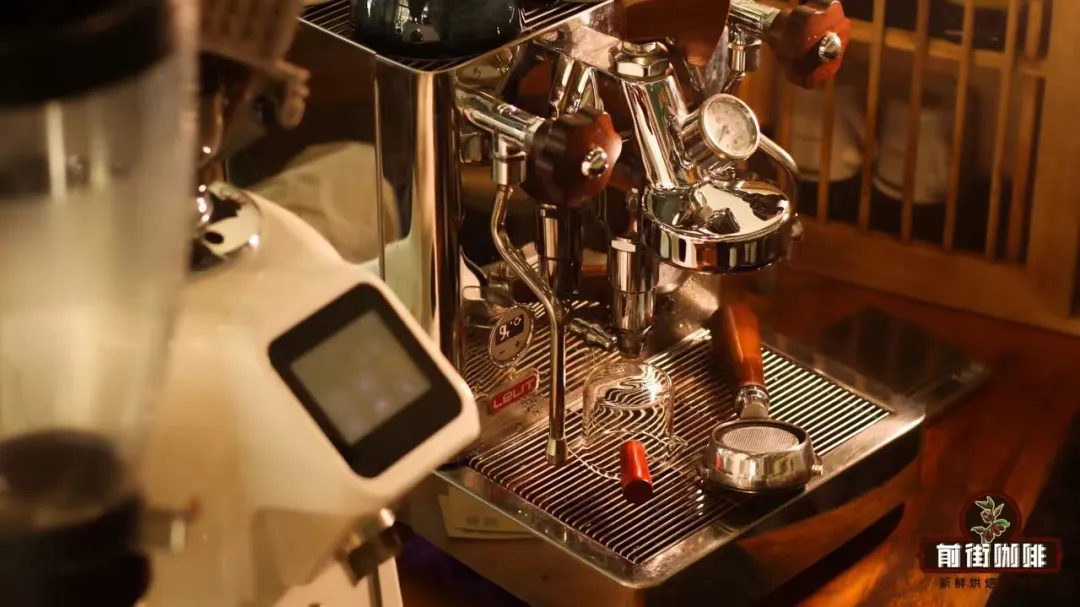
Commercial espresso machines on the market can usually output stable pressure above nine atmospheres and hot water above ninety degrees Celsius. High pressure forces hot water to quickly penetrate finely ground coffee, thereby extracting coffee liquid rich in crema, with a strong aroma and a full-bodied mouthfeel. To obtain an ideal cup of espresso, the barista's core task is to figure out the variables that affect flavor and adjust them into the optimal extraction range.
From a coffee bean to a cup of coffee liquid, there are quite a few factors that influence flavor, covering grind size, boiler pressure, water temperature, distribution and tamping force, dose, extraction time, and extraction yield, among others. Generally speaking, the machine's pressure and water temperature are not changed frequently once set; distribution and tamping force vary according to the barista's personal habits. In daily extraction adjustment, the four most commonly used variables are dose, time, yield, and grind size.
The coarseness of the grind and the uniformity of the particles are key factors determining the flow rate variation of each cup of espresso. Even if the dose differs by only one gram, the time required to extract the same liquid volume may differ by several seconds. When coffee particle sizes are uneven, the denser areas after tamping create greater resistance to water flow, and the extraction distribution becomes uneven. Grind condition is directly reflected in the flow rate of the coffee liquid, the extraction time, and the final flavor.
The ratio between dose and extraction yield is what we often call the coffee-to-water ratio, and it is a relatively intuitive extraction parameter. The dose depends on the specification of the basket in the portafilter, divided into double and single types. For example, the coffee machine used in Front Street stores uses a double basket filled with twenty grams of coffee powder, and adjustments fluctuate up and down based on this value, accurate to zero point one gram. Since the coffee-to-water ratio is not fixed, the coffee's output volume ultimately still has to be decided by flavor performance.
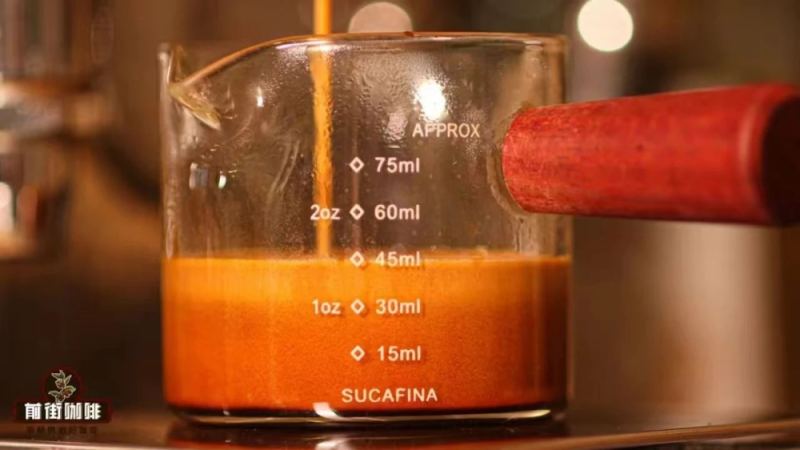
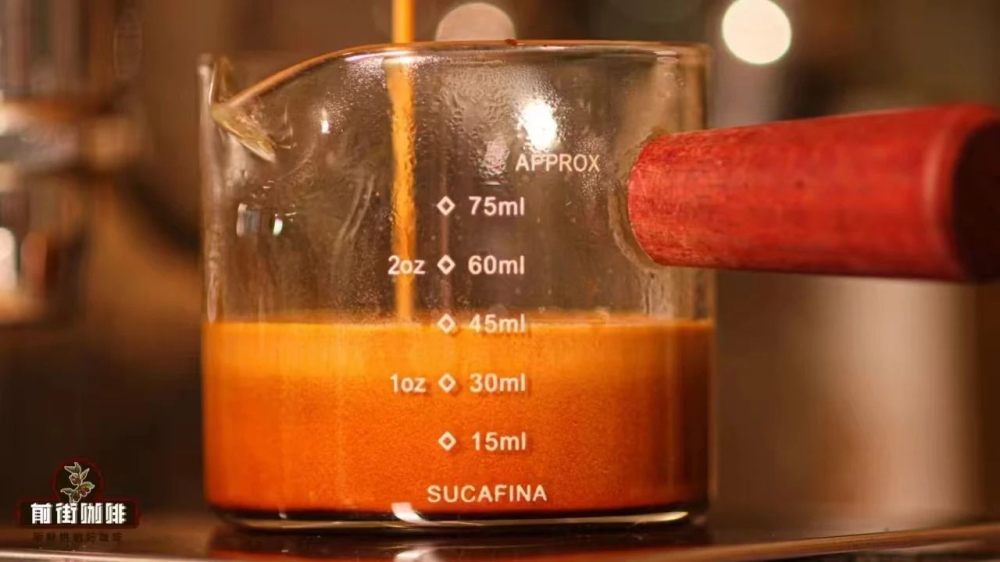
In earlier years, baristas did not have precise weighing tools and could only judge when to stop the flow by observing changes in the color of the crema. When it first flows out, the liquid is dark brown with a rich texture; as time passes, it gradually turns golden yellow, then light yellow. Usually when the crema begins to turn white, it means extraction should end. Today's espresso extraction standards are more rigorous, with more stable data accumulated, and the coffee-to-water ratio also tends toward a fixed reference value—one to two. For example, Front Street stores use twenty grams of coffee powder to extract forty grams of coffee liquid.
Extraction time is constrained by the mutual influence of the above key factors. Generally, espresso extraction time falls between twenty-five and thirty seconds. Under the premise of a fixed coffee-to-water ratio, the shorter the extraction time, the fewer coffee substances are dissolved; the longer the extraction time, the more substances are dissolved. Under the same coffee-to-water ratio, if you want to change the extraction time, you can only do so by adjusting grind size or dose.
Once the interconnected relationships among the factors are clarified, you can debug based on the state of the coffee liquid and the feeling after tasting. The expression of coffee flavor ultimately depends on the espresso beans selected. Here, the house-roasted "Front Street Sunflower Warm Sun Blend" is used, made from sun-dried Yirgacheffe Red Cherry coffee beans and Honduras coffee beans. Under ideal conditions, this espresso shows whiskey-like aroma, vanilla, cream, and berry acidity.
If you prefer a mellow and rich taste, Front Street Classic Espresso Blend is worth trying. This recipe is composed of coffee beans from three origins: Brazil, Indonesia, and Vietnam. It uses a deep roast to highlight the coffee's mellow aroma to the greatest extent. The extracted espresso not only has rich, dense golden crema, but on the palate you can also feel the aromas of dark chocolate, caramel, butter, and roasted almonds, with quite rich layers. It can be purchased at the Front Street Taobao store or the Front Street Tmall flagship store.
For example, the extraction parameters of Front Street's first espresso were: nineteen point eight grams of coffee powder, forty grams of coffee liquid, twenty-six seconds, with a relatively fast flow rate. After tasting, it was found that the mouthfeel was weak, the wine aroma and fruit aroma were not prominent, and astringency remained in the finish. This was very likely caused by under-extraction plus excessive extraction in the later stage. Front Street's approach was to increase the dose and reduce the yield to make the flavor more concentrated. When the astringency disappears and the wine aroma becomes stronger, it shows that the adjustment direction is correct.
If the flow rate is still relatively fast and the aroma is insufficient, it is most likely under-extraction, and the grind needs to be adjusted finer to extend the extraction time. Conversely, if the flow rate is relatively slow and the taste shows heavy bitterness or sharp acidity, it is very likely over-extraction, and the extraction rate needs to be reduced. This can be done by reducing the dose and coarsening the grind so that the yield increases within the same extraction time.
Front Street believes that as long as the relationships among extraction parameters are straightened out, dialing in a delicious espresso is not difficult. But it should also be clear that most home espresso machines are not as stable as commercial machines and produce fewer cups, which instead tests our ability to control the parameters. Front Street suggests recording the parameters and flavor performance when daily extraction reaches a satisfactory state. More comparison and more summary will help improve adjustment efficiency.
The above content is compiled by CoffeeHunters, a coffee news website.


