







Where can you grow coffee beans like Ethiopia's Guji?
Guji sits in southern Ethiopia under the Oromia Region and became an independent specialty region in 2010, when the ECX trading system separated it from Sidama. Its volcanic soil runs nearly two meters deep, altitudes pass 1,800 meters, and wide day-to-night temperature swings slow cherry growth so aromatic compounds build up inside the bean.
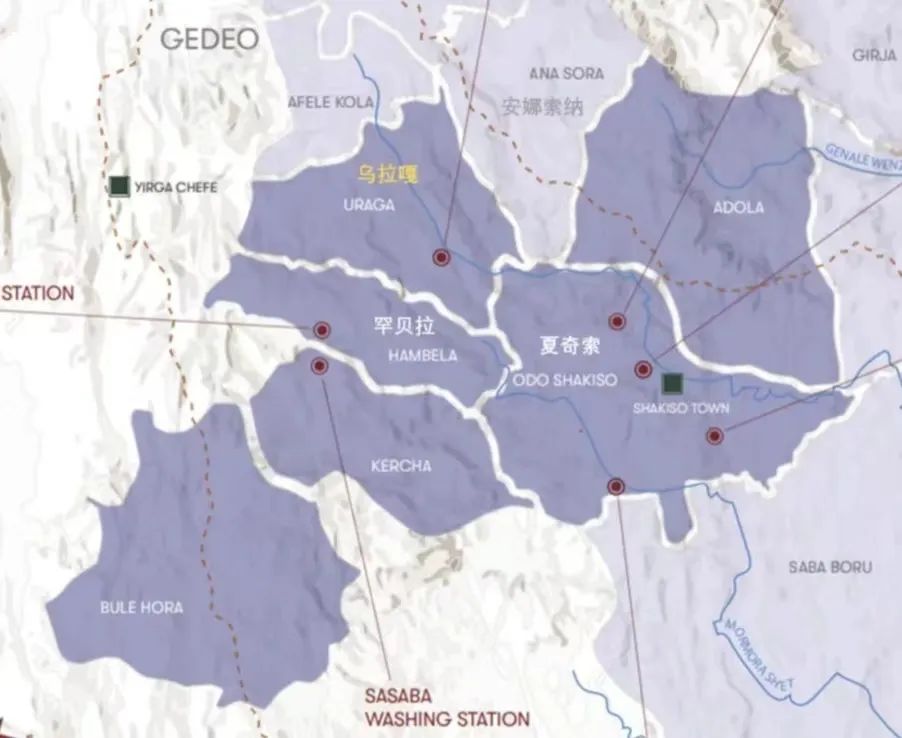
Each sub-region reads differently in the cup. Hambela is the birthplace of the Huakui bean, Shakiso carries a lemon-honey profile, and Uraga shows a tea-like body with floral and fruit aromas. The Guji area is easily compared with Yirgacheffe, which borders Hambela to the west across a highland ridge.
Guji is the second specialty coffee region in Ethiopia to gain independence from Sidama after Yirgacheffe, and it quickly rose to fame in just over a decade thanks to its highly distinctive regional flavors. Guji's terrain is complex, with deep volcanic soil, and its high altitude and significant temperature differences between day and night together create a rich array of aromatic compounds. Its sub-regions such as Hambella, Shakiso, and Uraga each have their own characteristics: Hambella is the birthplace of "Huakui," Shakiso is known for its lemon-honey profile, and Uraga stands out for its tea-like body and floral-fruity aroma. Front Street Huakui comes precisely from naturally processed beans in the core Hambella producing area. This article will provide a complete analysis of the flavor code of Guji coffee, from regional divisions and terroir conditions to processing methods and brewing parameters.
For more specialty coffee knowledge, please follow the WeChat official account: Front Street Coffee (FrontStreet Coffee)
In 2010, Ethiopia's unique ECX trading system separated Guji from the Sidama producing region, making it an independent region thanks to its outstanding and highly recognizable flavors, administratively under the Oromia Region.
The Guji producing region is located in southern Ethiopia, where high mountains, highlands, plateaus, valleys, and plains are interwoven, creating highly diverse terrain. The area's geology consists of volcanic soil, with a soil layer nearly two meters deep and a surface that is dark brown or brown. Large areas remain dense, undeveloped, or pristine forest, and the fallen branches, leaves, and plant roots of surrounding trees provide natural nutrients for coffee trees. The average altitude exceeds 1,800 meters, and the temperature difference between day and night is significant, which slows the growth rate of coffee cherries and allows rich aromatic compounds to accumulate within the beans, forming the unique regional flavors of each sub-region. Several small producing areas under Guji are widely known for their outstanding coffee quality.
Hambella
This is the birthplace of "Huakui" coffee beans and one of the sub-regions that made Guji coffee famous. To the west, Hambella faces Yirgacheffe's Kochere across a mountain, with a 3,200-meter-high, roughly 30-kilometer-wide highland lying between them, creating complex and diverse terrain. The growing altitude reaches 2,100–2,300 meters, and the harvest period is concentrated from November to January of the following year. Hambella coffee has obvious floral aromas, a sweet fruity scent, and a balanced, layered mouthfeel.
The most famous economic activity in Guji's history was gold mining, with the main gold-producing areas located northeast of Shakiso, where early residents often panned for gold. In the 1990s, Haile Gebre, a former governor of Oromia Region, saw promising prospects in the coffee trade, left government service, settled in Guji, and cooperated with farmers to grow coffee in Shakiso.
Many specialty coffee buyers, seeking more interesting and cost-effective beans, began turning their attention to regions around Yirgacheffe and then to Guji, eventually discovering this remote but highly advantaged land. The average altitude of the Shakiso producing region is between 1,800 and 2,200 meters. The book "Specialty Coffee Studies" summarizes its coffee flavor as a "sweet lemon-honey profile."
Uraga
This producing region is located at the northernmost tip of Guji, with an altitude of up to 2,300 meters. It is geographically close to Yirgacheffe, and its soil is fertile black soil. Uraga became famous relatively late and only gradually became known after the region's washed beans achieved excellent results in the 2019 TOH competition. Uraga coffee has a tea-like body, rich floral and fruity aromas, and excellent acidity.
In the Guji coffee flavor profile map drawn by the Dutch green bean company Trabocca, citrus fruits account for the highest proportion, followed by possible aromas of stone fruits, berries, flowers, chocolate, and more. At the same time, it is accompanied by lively, bright acidity and a juicy mouthfeel, with medium body and a smooth texture. The overall flavor lies between Yirgacheffe and Sidama, with a complex aroma structure.
In 2008, Ethiopia officially established the coffee trading center ECX, and Guji coffee was classified as "Sidama A" in auction categories. Afterward, as multiple outstanding Guji beans emerged one after another, the region successfully "went solo," becoming the second independent producing region after Yirgacheffe to break away from Sidama, and enjoying an independently traceable source identity under its own name in ECX.
The Guji producing region is located southeast of Yirgacheffe, and its terrain includes towering mountains, valleys, and plains, with complex variations. The area's geology is nutrient-rich black soil (Vertisol), with a soil layer nearly two meters deep and an average altitude above 1,800 meters. The unique geographical conditions create a significant temperature difference between day and night, giving the area all kinds of terroir conditions for producing high-quality specialty coffee. When it comes to what made the Guji producing region famous, Front Street must mention Front Street Huakui coffee beans.
Front Street Huakui comes from Hambella, located in Guji, Ethiopia's largest coffee producing region, and administratively under Oromia Region. Western Hambella faces Yirgacheffe's Kochere across a mountain, with a 3,200-meter-high, roughly 30-kilometer-wide highland lying between the two producing regions. It borders Guji's Shakiso, Uraga, and Kercha sub-regions to the southeast, south, and north respectively, making it Ethiopia's highest-altitude coffee sub-region.
At present, the Hambella producing region has nearly 20 processing plants of various scales. In 2017, a naturally processed bean from DW Company's "Buku Abel" processing plant won the Ethiopia National Taste of Harvest Competition championship, and a Chinese green bean importer named this bean Huakui; at the time, it had intense strawberry and cream aromas. Subsequently, DW Company added processing plants in Dimtu, the core producing area of Hambella, namely "Buku Abel," "Buku Saysay," "Haro Soresa," and "Tirtiro Goye," with an annual coffee output of about 1,100 tons. Strictly speaking, among all these estates and processing plants, only the naturally processed coffee beans from the "Buku Abel" processing plant can be called "Huakui coffee beans."
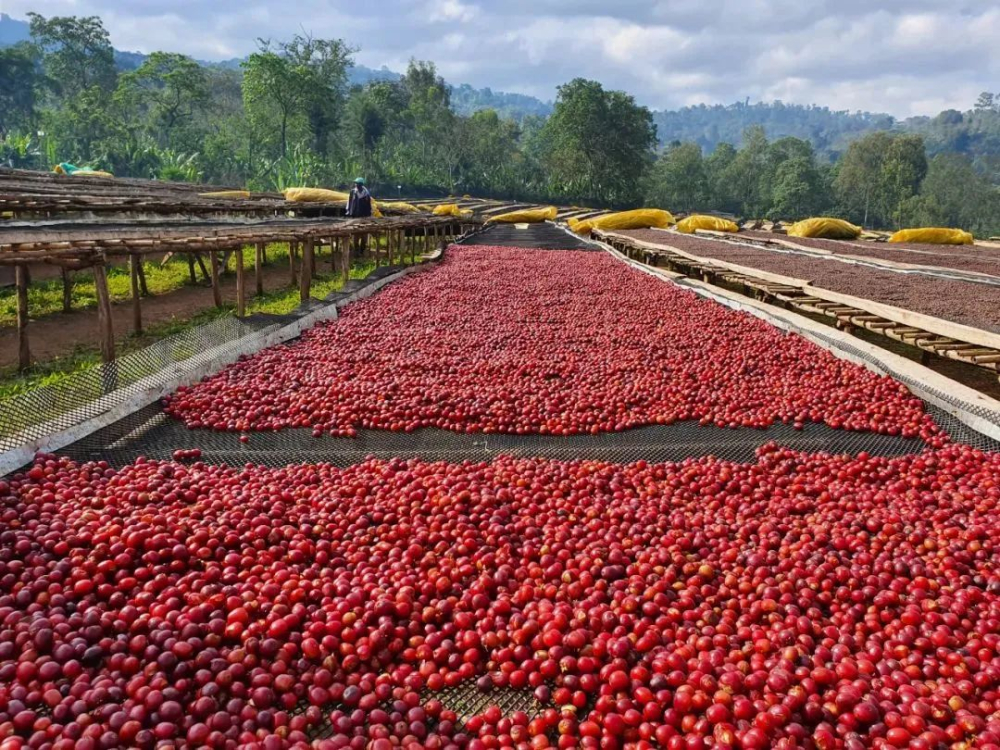
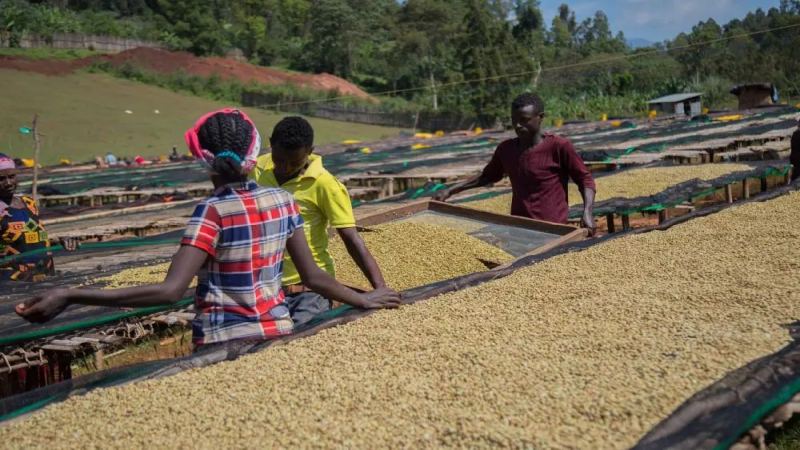
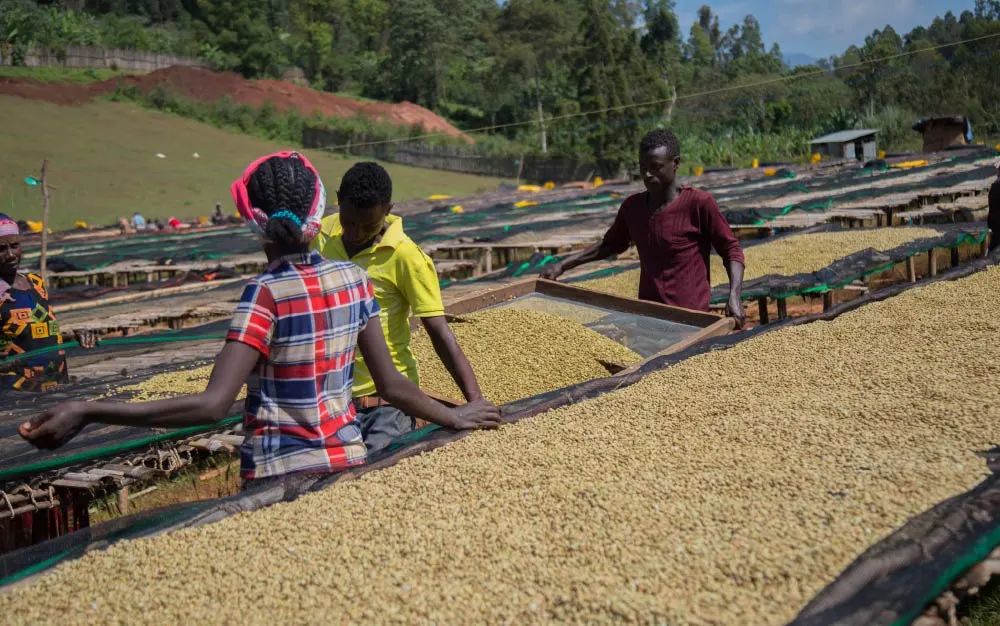
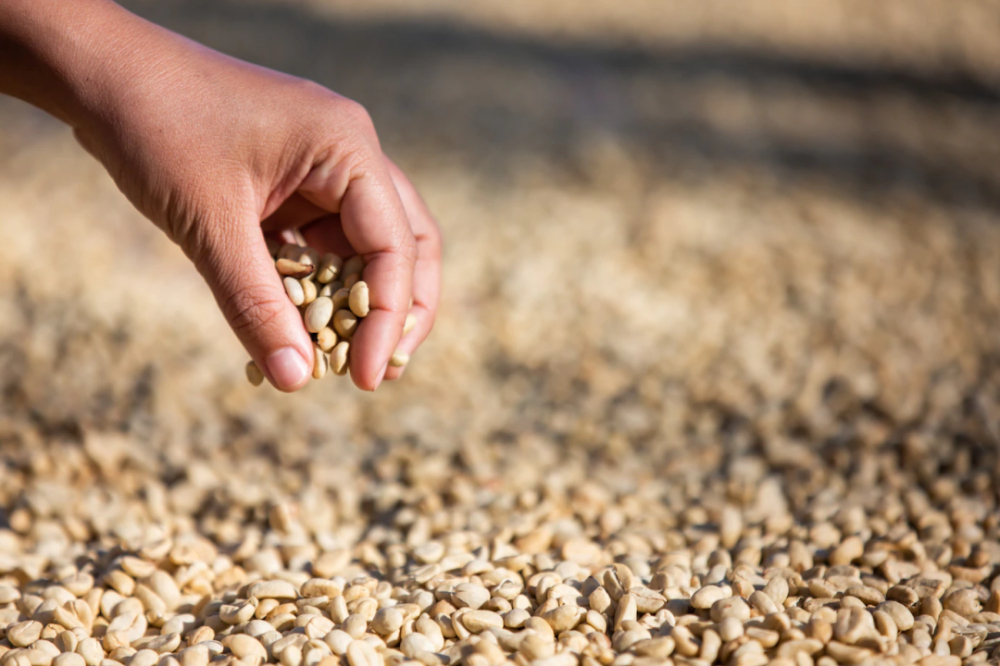
During the annual coffee harvest season (December to January of the following year), the Buku processing plant only harvests fully red cherries, selecting coffee cherries with a sugar content value of 30 or above and placing them on African raised beds to dry. The local temperature difference between day and night is extreme. Farmers shade the cherries at noon to avoid excessive fermentation caused by overly high temperatures, and at night they wrap them with plastic sheeting to prevent sudden rain. They turn them continuously throughout the day and ensure the coffee cherries are not piled too thickly, so the fruit dries evenly while also preventing sunburn or unpleasant fermented flavors. After about 18 days of sun-drying, the green coffee beans' moisture content drops to 13%, and they can be bagged and stored.
Front Street uses a medium-light roast to highlight the floral and tropical fruit notes of Front Street Huakui. High-altitude hard beans absorb water less readily after grinding, so Front Street chooses a medium-fine grind size, paired with a higher water temperature and a V60 dripper, to emphasize the layering of floral and fruity notes.
To taste the rich aroma of Front Street Huakui, Front Street Coffee (FrontStreet Coffee) recommends brewing with freshly roasted coffee beans, as this preserves more aromatic compounds. The coffee beans sold by Front Street are all freshly roasted within 5 days, and with shipping time added, customers receive them at their optimal flavor period and can brew and enjoy them directly. (Coffee beans have a resting period of 4–7 days, and the optimal flavor period is usually from 4 to 30 days. After receiving fresh beans, everyone can also observe flavor changes based on the roast date.)
Dripper: V60
Water temperature: 92°C
Grind size: 80% passing a No. 20 standard sieve
Coffee-to-water ratio: 1:15
Coffee dose: 15 grams
The ground Front Street Huakui coffee powder has a honey-like sweetness. Pour the coffee grounds into the V60 dripper, wet the coffee bed with twice the coffee dose in water, and bloom for 30 seconds. Then, using a thin stream of water, pour in circles from the inside outward until reaching 125 grams, then pause. When the coffee bed drops to half the height of the dripper, continue pouring the third stage with the same thin stream until reaching 225 grams. Once all the coffee liquid has filtered through, remove the dripper. The total time is about 2 minutes (with a 10-second margin of error).
In the 2025 new crop season, Front Street Huakui pour-over coffee has an intense sweetness of tropical fruits such as passion fruit and mango on the palate, accompanied by the acidity of berries and citrus, a creamy smooth mouthfeel, and a black tea-like finish that fills the mouth.
The above content is compiled by CoffeeHunters, a coffee news website.


