







What Makes an SOE Americano Different from a Regular One?
An SOE americano is simply an americano made with single-origin espresso (SOE) instead of a blend, and the difference shows up mainly in the cup. Single-origin beans often carry clearer, more distinctive aromatics, while blends are built for balance and consistency. Neither is automatically better: green bean quality, roast profile, equipment, and technique all shape the final flavor just as much as origin does.
SOE stands for Single Origin Espresso, the practice of pulling espresso from one origin rather than a blend. The term has been established abroad for over a decade and has grown more visible in China in recent years. A Yirgacheffe SOE, for example, is extracted under high pressure like any espresso, so the flavour shifts come from the bean, not the method.
When customers walk into a café and ask whether they can choose their beans for espresso, this actually raises a topic worth exploring in depth: what does it really mean to make espresso with single-origin coffee? SOE (Single Origin Espresso) has gradually become popular in China in recent years, but it is not some advanced technique—it simply replaces espresso blend beans with single-origin beans and extracts them under high pressure using an espresso machine. Drawing on Front Street Coffee's practical experience, this article systematically examines the taste differences between Yirgacheffe SOE americano and standard americano, discusses whether SOE is necessarily superior to blends, and shares the complete operational key points from bean selection and roasting to extraction parameters, helping coffee enthusiasts make a cup of Yirgacheffe americano or latte with clear, balanced, and pleasant flavors at home.
When drinking coffee at Front Street, customers often ask the baristas: are there other beans available for espresso? Can single-origin beans be used? This question happens to lead into today's topic—when a customer initially wants to order a single-origin coffee, what is it that they truly want?
Front Street Coffee Science: SOE has actually been popular abroad for over a decade and has developed quite maturely, while in China it has only gradually emerged in recent years, so many friends are still relatively unfamiliar with SOE. SOE is the abbreviation for Single Origin Espresso, which literally translates to single-origin espresso. It sounds quite professional, but at its core it is simply replacing the blend beans commonly used for espresso with single-origin beans, while the extraction method remains the high-pressure espresso from an espresso machine—there is nothing mysterious about it.
So is SOE necessarily better tasting than blends? The quality of a cup of coffee depends on many variables, including green bean quality, roasting curve, equipment performance, preparation technique, and personal taste preferences. SOE only indicates that the coffee beans used come from a single origin; it does not mean it is necessarily superior to a blend. Other factors also have a huge impact on the final flavor, so one cannot simply conclude which type of coffee is better.
Taking Front Street Coffee's iced americano as an example, the Strawberry Candy espresso blend used is not intended to cut costs or mask defective flavors, but to create a unique flavor expression. This recipe combines coffee beans from Costa Rica, Panama, and Colombia, presenting notes of rose, grape, preserved fruit, and fruit candy, reflecting Front Street Coffee's recipe design philosophy that distinguishes it from other cafés.
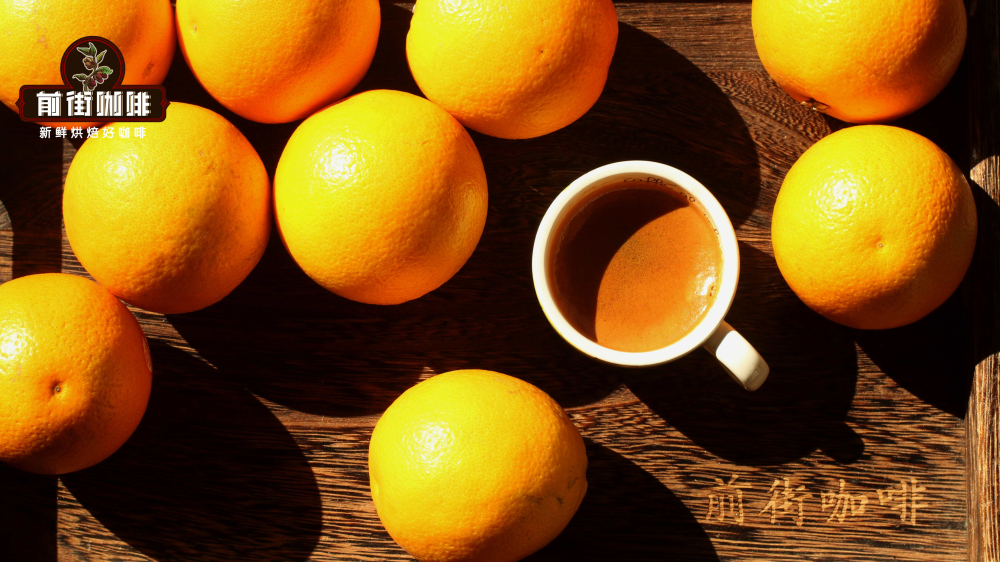
Returning to the question in the title: what exactly is the difference between Yirgacheffe americano and standard americano? According to Front Street Coffee's explanation above, Yirgacheffe americano is essentially SOE americano. Front Street's Yirgacheffe coffee beans carry quite delicate floral notes, with a round and smooth mouthfeel, where floral and fruity aromas intertwine with the fragrance of high mountain black tea. When used to make espresso, notes of dark chocolate even emerge, paired with a clean and bright acidity, making the overall flavor soft, pleasant, and with a lingering finish. This is what a qualified cup of Yirgacheffe americano should deliver.
Front Street believes that making espresso with single-origin beans is essentially about allowing those who prefer espresso or milk coffee to also experience the flavor personality of single-origin beans themselves. If a single-origin bean lacks sufficient distinctiveness and the resulting coffee does not show the expected origin characteristics, then it would be better to choose a balanced, full-bodied blend coffee. The difference between americano and latte lies in the dilution medium: americano dilutes espresso with water, while latte blends it with milk. When making SOE coffee, one must also additionally consider the latte's performance, because milk flavors may overpower the delicate notes of single-origin beans. Regarding single-origin coffee, Front Street has another perspective: there is no need to excessively pursue SOE's consistency. Coffee is ultimately an agricultural product, and single-origin beans are affected by climate, growing conditions, and many other factors. SOE from the same origin in different years having flavor differences is a very normal phenomenon.
What points need attention when making SOE?
Front Street has found that many people assume SOE simply means applying the espresso machine extraction process directly to single-origin beans to produce a series of single-origin espressos. It is only after buying various floral and fruity beans, taking them home, and trying them on the machine that they discover something is wrong—first comes a spluttering gush, then they are frightened by the extremely sour espresso and dare not take a second sip, and afterward they begin to suspect the equipment is not good enough or that something went wrong in their operation.
In reality, if you cannot make the same SOE at home as in the café, the problem is likely neither the equipment nor the technique, but rather that the roast level of that coffee bean itself is simply not suitable for making espresso. According to Front Street baristas' experience, choosing a coffee bean suitable for SOE extraction not only makes it easy to produce a delicious espresso, but also makes it twice as effective when subsequently adding water or milk to make americano or latte. On Front Street's bean list, two single-origin beans offer SOE versions: one is Front Street Huakui with prominent strawberry aromatics, and the other is Front Street Konga with classic Yirgacheffe flavor. Simply select espresso roast when placing your order.
Speaking of which, quite a few people have indeed asked whether there is Yirgacheffe SOE coffee. Why does everyone pay attention to Yirgacheffe? Front Street believes this is closely related to its fame. Yirgacheffe was originally part of the Sidamo region in Ethiopia but was independently designated as a new region due to its outstanding quality. Some naturally processed coffee is produced here, but washed processing still predominates. The coffee aristocrat with a unique lemon fruity aroma comes from Yirgacheffe, Ethiopia, where coffee is grown almost entirely in a wild manner. After manual harvesting and screening, qualified beans often amount to only one-quarter of the harvested volume. With faint floral notes and balanced acidity, it carries an aristocratic quality on the palate, which is why Yirgacheffe is hailed as the finest coffee in Ethiopia.
Front Street Coffee currently offers four Yirgacheffe coffees: Front Street Sun-Dried Red Cherry Konga (natural), Front Street Goddingding Cooperative (washed), Front Street Washed Yirgacheffe. Among them, Front Street Red Cherry offers two different roasting curves: one is a medium-light roast for pour-over and cold brew, and the other is a medium-dark roast for moka pot and espresso machine. Each bean has its own characteristics, with the overall flavor direction centered on citrus and berry notes.
Front Street's Red Cherry green coffee beans are purchased from Trabocca, the largest green coffee bean trader in the Netherlands. In pursuit of higher quality, this green bean trader proposed the Red Cherry Plan (ORC), requiring fully manual harvesting of only fully red cherries, aiming to improve green bean quality and thereby raise coffee prices. While bringing higher profits to coffee farmers, it also brings surprises to roasters.
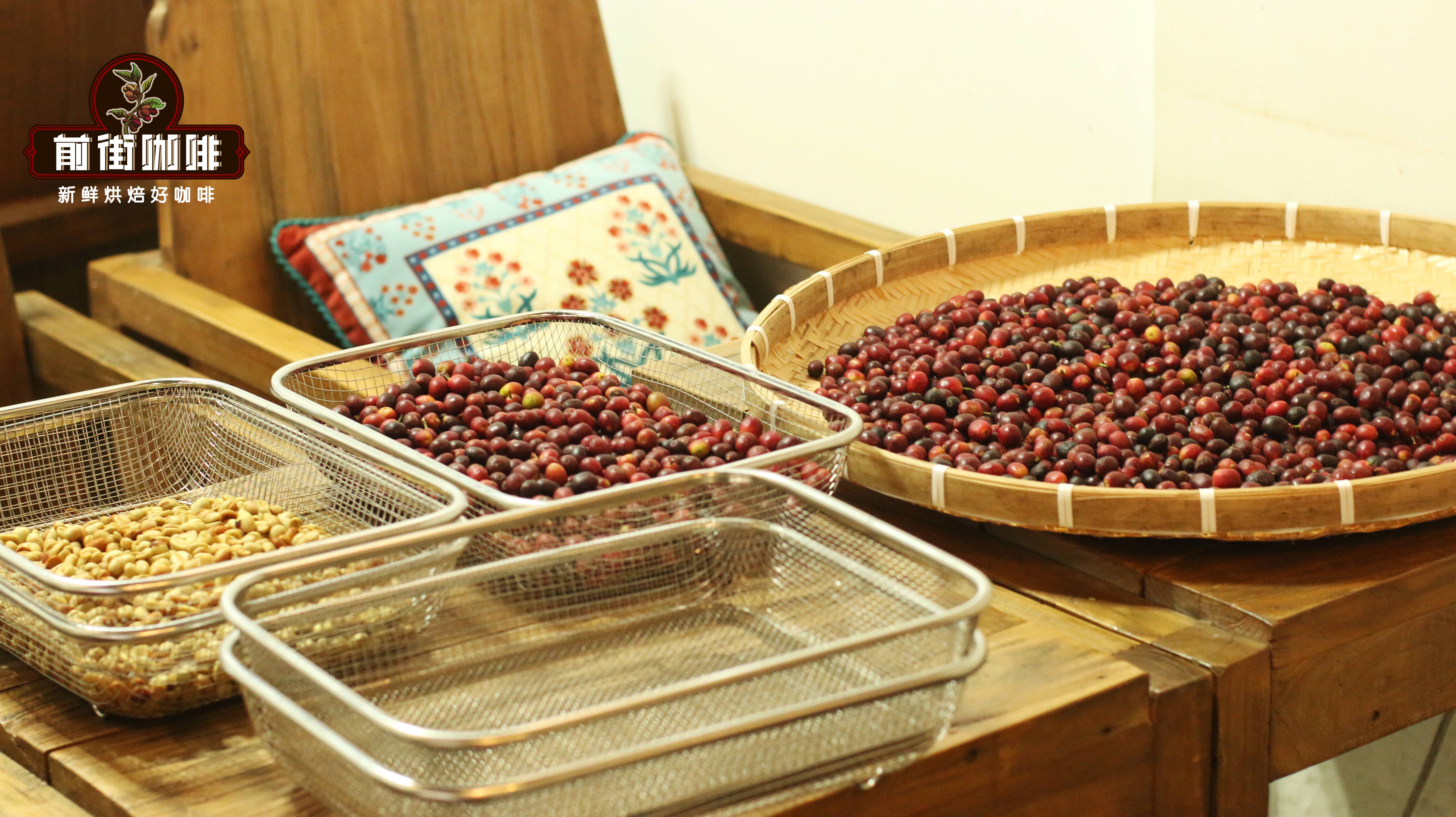
Konga Cooperative is one of the 26 cooperatives under the Yirgacheffe Coffee Farmers Cooperative Union. What makes Konga special is the red soil where the coffee is grown. Red soil is rich in iron, and iron is a micronutrient that helps plants synthesize chlorophyll, greatly benefiting photosynthesis, allowing plants to absorb more energy and produce higher-quality fruit. Red soil is undoubtedly the key factor behind Konga Cooperative's delicious coffee beans. Front Street Coffee (FrontStreet Coffee) believes that Front Street SOE Konga coffee beans combine fruity sweet-tartness, almond cookie, and delicate floral notes, making them very suitable for crafting a balanced and rich latte.
The coffee machine used at Front Street's shop is a commercial single-group Lelit Bianca, which can adjust extraction by changing pressure, with a maximum pressure of 11 bar. A home espresso machine only needs to reach 9 bar of pressure to meet the needs of extraction and milk frothing, paired with an espresso coffee grinder.
SOE Coffee Extraction Parameters Sharing
Coffee beans: Front Street Ethiopia Sun-Dried Konga
Coffee dose: 20g
Coffee liquid yield: 40g
Dose-to-yield ratio: 1:2
Extraction time: 26–33 seconds
Grind setting: Galileo 2.0
Front Street uses a double basket with a capacity of approximately 18–20 grams, and uses 20 grams of coffee grounds when preparing.
Typically, the ratio of coffee grounds to coffee liquid ranges between 1:1.5 and 1:2.5. Front Street adopts an extraction ratio of 1:2, meaning 20 grams of coffee grounds yield 40 grams of coffee liquid. Time is related to the flow rate of the coffee grounds; a single extraction is generally controlled within 20–35 seconds, because under 20 seconds the coffee taste is usually thin, while over 35 seconds it tends to over-extract and develop burnt bitterness. Front Street's espresso mostly falls within the 28–30 second range.
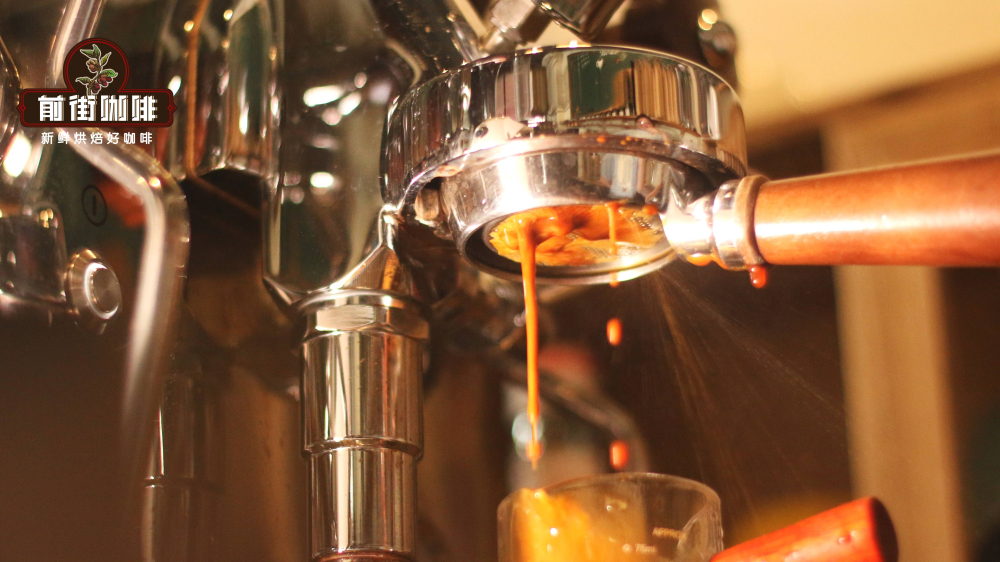
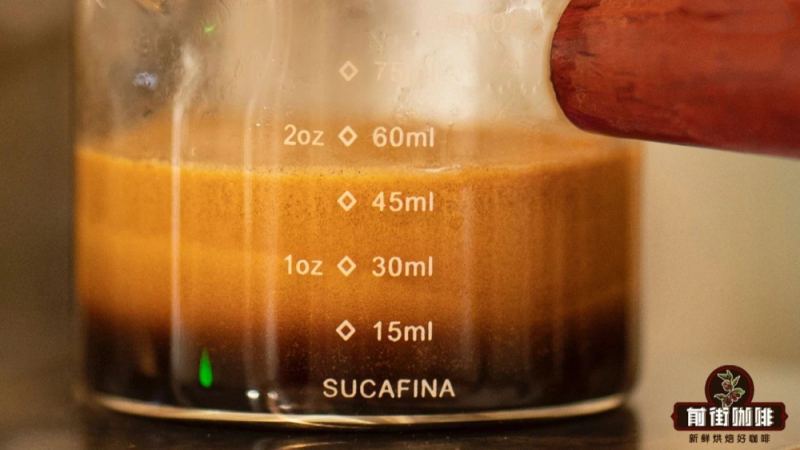
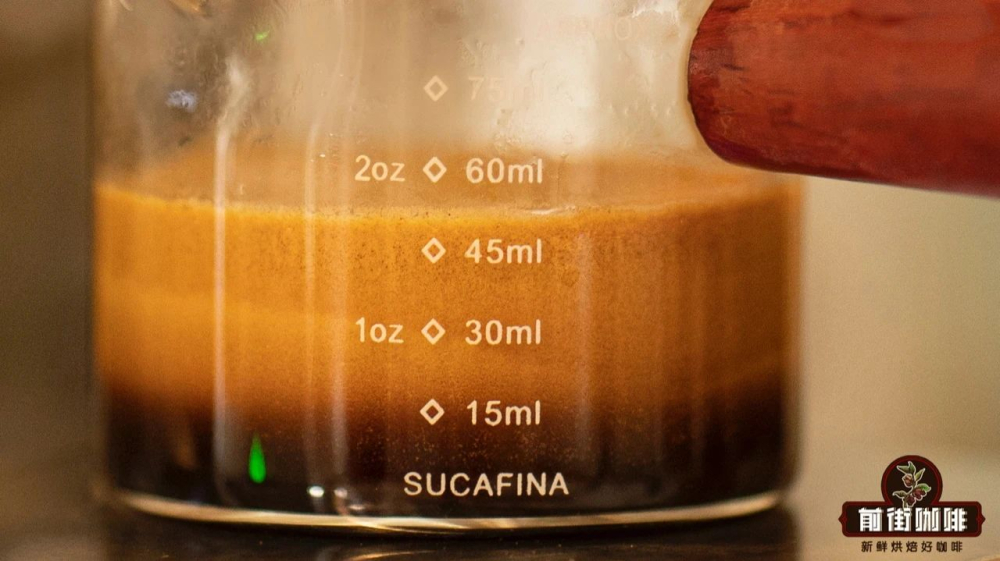
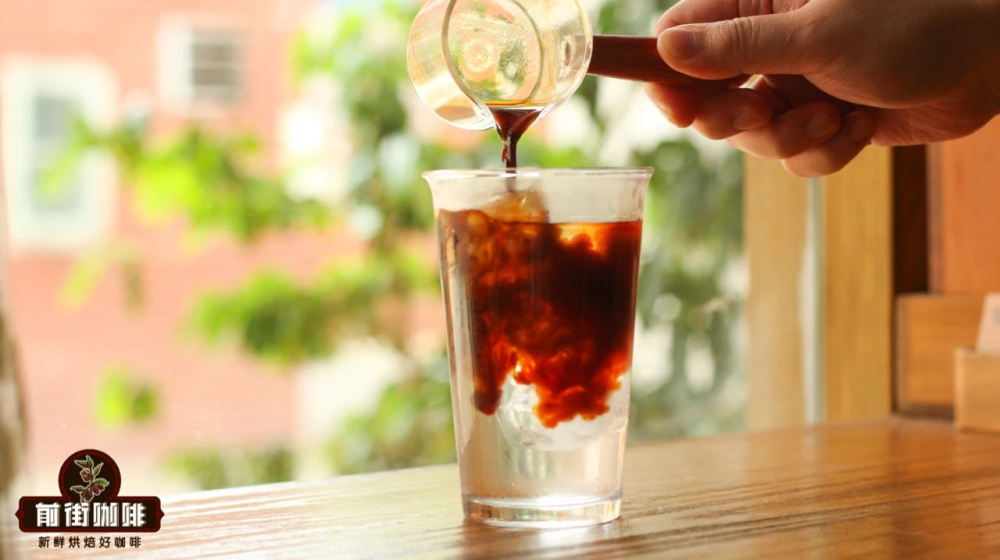
Front Street first wipes the basket dry, turns on the grinder, grinds a double dose of coffee grounds, and places it on an electronic scale, adjusting to 20 grams. Then use a tool to distribute the grounds evenly and tamp the coffee puck firmly to ensure more stable extraction. Next, turn on the extraction switch to release water, moistening the brew head while carrying away attached coffee residue. Gently lock the portafilter onto the brew head and flip down the extraction switch. When the electronic scale shows 40 grams of extracted coffee liquid at approximately 28–33 seconds, pull down the extraction switch, and a cup of SOE espresso is complete. You can add an appropriate amount of ice water or 80°C hot water according to personal preference to make a cup of Yirgacheffe SOE americano.
When making an SOE hot latte, Front Street uses a 1:6 ratio, adding 40 grams of espresso to a preheated coffee cup, then using the espresso machine's steam to froth 240 grams of milk. The milk temperature is best controlled between 50–65°C to form a dense, moderately thick milk foam, which is then evenly integrated with the coffee liquid.
The Yirgacheffe SOE latte made this way tastes like biting into a lemon-flavored cookie on the palate, with a rich, fragrant, and smooth mouthfeel that warms you up all over after drinking.
The above content is compiled by CoffeeHunters, a coffee news website.


