







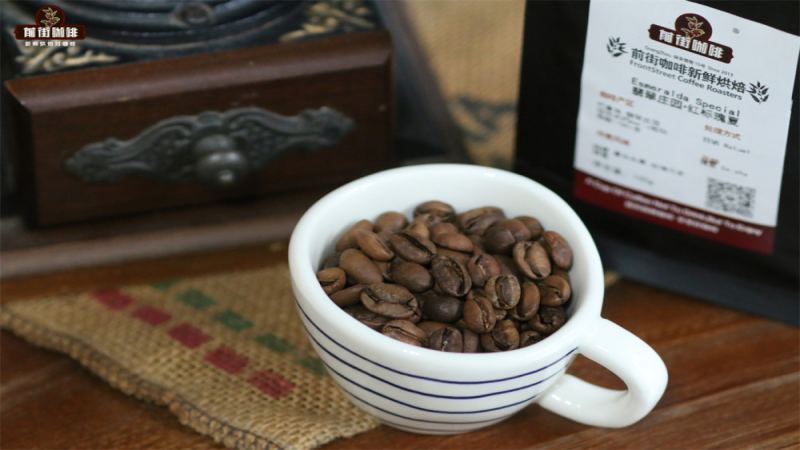
What makes Panama Red Label Geisha coffee so expensive?
Panama Red Label Geisha coffee is expensive because the variety is rare, yields are very low, the plants are delicate, and cultivation demands careful management. Auction results show the scale: at the 2017 reliable of Panama auction, a natural Geisha lot from Hacienda La Esmeralda sold for $601 per pound, equal to roughly 8,900 yuan per kilogram of green beans.
The price run continued in later years. In 2018, Red Label Geisha brought $340 per pound, while other auction Geisha lots landed between $80 and $100 per pound, and the top bid in 2019 passed $1,029 per pound. The flavor explains the demand: elegant floral aroma, citrus and peach acidity, a creamy body, and a sweet oolong tea-like finish.
Geisha coffee is famous for its elegant floral aroma and high price, and among them, Panama Red Label Geisha is even more of a focal point in the specialty coffee world. This article starts with auction market conditions and sorts out the multiple reasons why Geisha coffee prices remain high: the variety is rare, yields are extremely low, the plants are delicate, and cultivation and management are difficult. At the same time, it reviews how Hacienda La Esmeralda discovered and promoted Geisha flavor, taking it from the competition stage to the world. The article also introduces the high-value Boquete region washed Geisha launched by Front Street Coffee, and includes detailed pour-over parameters and brewing steps to help coffee lovers enjoy the classic Geisha flavor in daily life.
For more specialty coffee information, welcome to follow our WeChat public account: Front Street Coffee (FrontStreet Coffee)
Today, more and more people treat a leisurely cup of coffee at a cafe as a small joy in life. However, coffee prices on the menu range from thirty yuan to three hundred yuan. It is all just a cup of coffee, so why is the difference so huge? Front Street believes that when it comes to expensive coffee, Geisha is inevitably a name that cannot be avoided. When people talk about Geisha, their first reaction is often its outstanding flavor, followed immediately by its high price.
So, exactly why is Geisha so expensive?
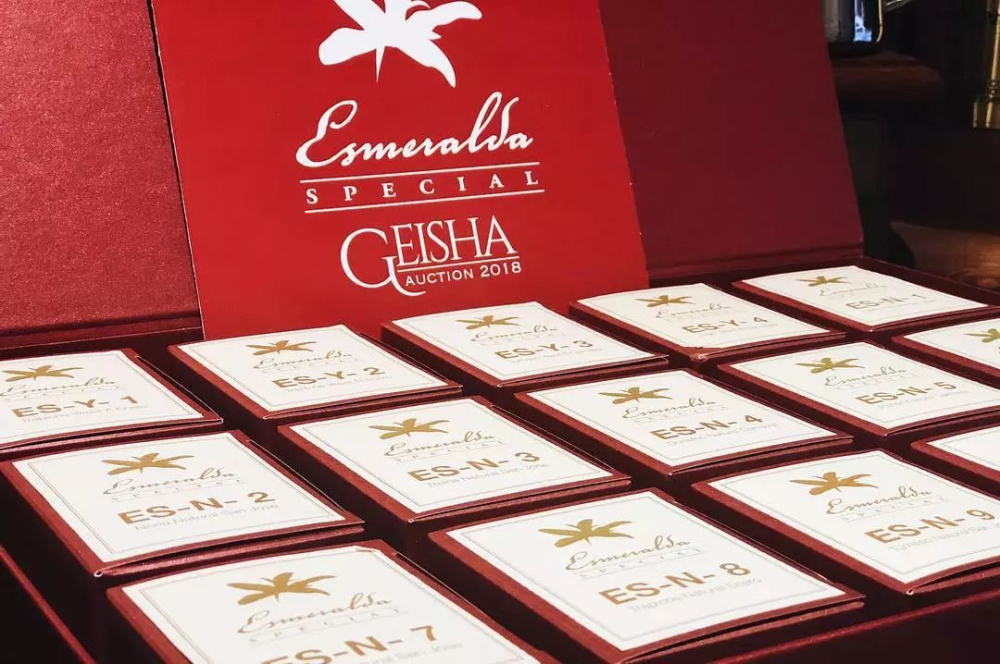
After Geisha entered auctions in 2004, the bidding frenzy pushed its price to astonishing heights. Take the 2017 Best of Panama specialty coffee auction as an example: a lot of natural Geisha from Hacienda La Esmeralda sold for $601 per pound, nearly double the previous auction price for coffee beans. Converted, the price of green beans reached as high as 8,900 yuan per kilogram. In 2018, the auction price of Emerald Red Label Geisha reached $340 per pound, purchased by HARU International Corp, while other auction Geisha lots fell in the range of $80 to $100 per pound. By 2019, the highest bid even exceeded $1,029 per pound.
Geisha is a coffee variety with a rich, elegant floral aroma, a complex fruity acidity interwoven with citrus and peach, a creamy and smooth mouthfeel, and a sweet oolong tea-like note in the aftertaste. Its refined and delicate flavor expression often makes people feel as if they are not drinking coffee, but tasting a fragrant fruit tea. Front Street has mentioned in many articles that coffee, as an agricultural product, always has its flavor closely connected to variety, climate, altitude, soil, management, and other factors, and is a true reflection of the variety and its local terroir. Post-processing methods and roasting should preserve, restore, and present these most authentic flavors as much as possible. The reason Geisha can be so outstanding is precisely the combined effect of all the conditions above.
As the saying goes, things are precious when they are rare, and Geisha coffee production is extremely limited. Panama's total annual coffee production is about 10,000 tons, while the renowned Hacienda La Esmeralda produces only 150 bags of green beans each year, about 9,000 kilograms. If Geisha is calculated as only 3% of total production, that is merely 270 kilograms. Add to that the continuous hype by various media about Geisha's flavor, and enthusiasts' enthusiasm for it only grows, so its price naturally remains high for a long time.
Compared with other Arabica varieties, Geisha not only has low yields, but the plant itself is also especially fragile and quite picky about its growing environment. It needs high altitude, fertile soil, and cloud cover or shade from plants, and cannot be directly exposed to the sun. The leaf system of the Geisha coffee tree is very thin, photosynthesis efficiency is relatively low, and the root system is also fragile, absorbing water and nutrients very slowly, resulting in extremely low yields. The high-altitude growing environment also causes the fruit to mature later. A single Geisha coffee tree produces only half the yield of a Caturra variety, and the cost of manual care is higher, which is also one of the reasons for its high price.
How did Geisha become famous?
Front Street believes that Geisha coffee's current fame is largely thanks to Panama's Hacienda La Esmeralda. Daniel, the third-generation owner of the estate, once said that after years of comparison and testing, he finally identified this variety in 2003. That same year, two weeks before the Best of Panama competition (BOP), while selecting competition lots on the internal cupping table, he discovered that Geisha had outstanding flavors of jasmine, citrus, peach, blueberry, bergamot, sugarcane, and more. These flavors differed from the mainstream preferences in the coffee circle at the time, but Daniel still insisted on entering Geisha in the competition and won first place in one go.
In 2005, Hacienda La Esmeralda sent Geisha to compete in the Specialty Coffee Association of America (SCAA) evaluation, defeating many star seed contenders, taking the honor of world-class specialty coffee, and sweeping the world championships in 2006 and 2007, once again attracting the attention of coffee people around the world. After that, coffee-producing regions everywhere successively introduced Geisha, including Yunnan in China, which also began growing this popular variety. Although Geisha can now be produced all over the world, Front Street believes that as the discoverer of Geisha flavor, Hacienda La Esmeralda not only strictly controls coffee quality at every level, but its natural processing method also best presents the classic "Geisha taste."
Where can you drink high-value Geisha coffee?
Panama, as the place where Geisha rose to fame, has mature cultivation techniques and processing methods that have kept local Geisha coffee enjoying a reputation guarantee in the industry. Therefore, Front Street has launched a very cost-effective Geisha coffee from the Boquete region, using washed processing. At Front Street's store, you only need 30 yuan to taste the classic Geisha flavor.
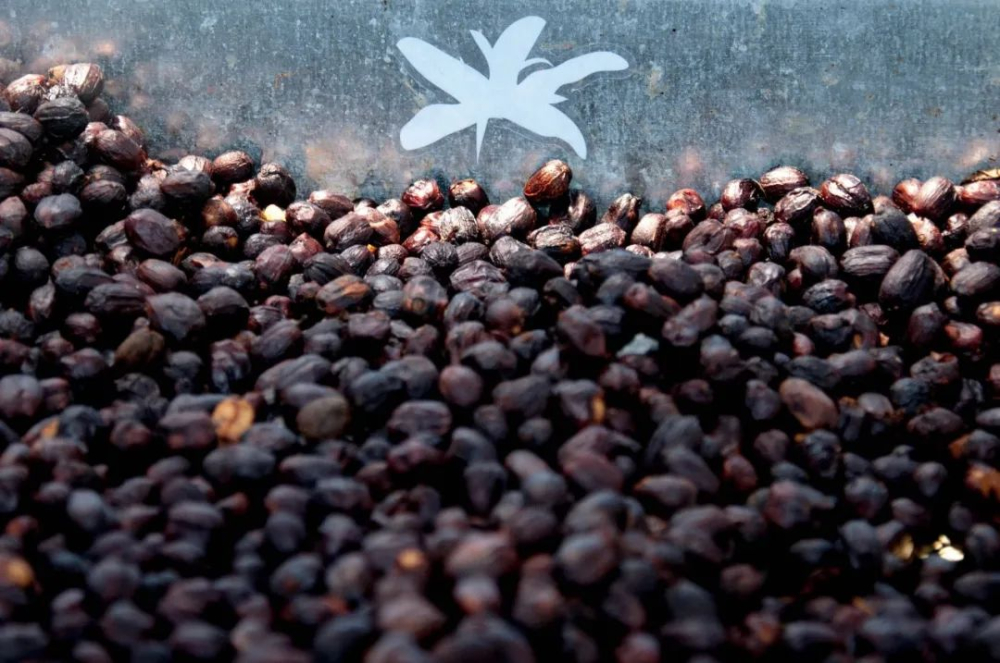
Washed processing is to first put selected coffee cherries into a depulper to initially remove the skin and pulp; then soak the green coffee beans with residual pulp and mucilage in water and ferment for about 24 hours; after fermentation is complete, put the parchment coffee beans into a flowing water channel to wash off the pulp and mucilage; after washing, dry them in the sun or with a dryer until the moisture content drops to about 12%. Finally, remove the parchment from the green coffee beans.
As one of the most traditional green bean processing methods, washed processing not only makes coffee quality more stable, but also gives Geisha a higher cleanliness and a fresher flavor profile. After roasting, Front Street perceived Geisha's elegant white floral aroma, lifted citrus and lemon acidity, and a slight green tea note, like drinking a gentle Tieguanyin tea. Geisha coffee has such a rich mouthfeel, so how should it be brewed without wasting it?
Front Street pour-over recommendations
Panama's Geisha growing environment is high altitude, and the coffee beans are relatively hard. Front Street's roaster generally uses medium-light roasting for beans with floral and fruity profiles to retain more high-quality acidity. Light roasting does not significantly change the internal structure of the coffee beans, so Front Street Coffee baristas use a higher water temperature and finer grind to bring out Geisha's aroma.
Dripper: V60 Water temperature: 91-92°C Dose: 15g Coffee-to-water ratio: 1:15 Grind size: fine granulated sugar size (80% of grounds pass through a No. 20 sieve)
Three-stage extraction: For the first stage, use 30g of water to bloom for 30 seconds, pouring evenly in circles to form a dome; for the second stage, pour 95g of hot water, and when the coffee bed drops halfway, begin pouring the third stage of 100g until all the coffee has finished dripping. Note to start pouring from the center point, using a gentle small stream in circles throughout, to avoid uneven extraction.
The pour-over Panama washed Boquete Geisha coffee has a clear acidity of citrus, lemon, and bergamot, a creamy smooth mouthfeel when swallowed, and a finish of green tea and honey sweetness.
The above content is compiled by CoffeeHunters, a coffee news website.


