







How Does Hambella Huakui 8.0 Perform as Americano SOE?
Hambella 8.0, a natural-process bean from Ethiopia's Sidamo region, can be pulled as espresso and holds up in milk drinks. As an americano soe it keeps its floral and tropical fruit notes while gaining the concentration of a shot. In a latte, those fruit notes meet steamed milk and read as sweet and rounded, with the coffee still identifiable.
Hambella rose in visibility after Li Jianfei won the China division of the 2017 World Brewers Cup with a natural Hambella coffee, and it is often compared with Geisha. The name comes from the Guji area of Sidamo, and versions like 8.0 track changes in lot and processing. Extraction parameters, grind and ratio decide how the shot tastes.
As a star natural-process bean from Ethiopia's Sidamo region, Hambella coffee has been steadily rising in popularity in the specialty coffee scene in recent years, and is even regarded as a variety capable of rivaling Geisha. But many coffee enthusiasts are curious: can this bean, known for its floral and tropical fruit notes, handle being made into espresso? What flavors would it present as an SOE or latte? This article will draw on Front Street Coffee's practical experience to sort out the origin of the name Hambella, its regional characteristics, processing methods, and version evolution, and share in detail the extraction parameters and flavor performance of Hambella 8.0 in espresso, Americano, latte, and other espresso drinks, providing a complete reference for friends who want to try using Hambella for espresso.
Introduction
In recent years, Geisha coffee has maintained an extremely high level of discussion in the specialty coffee field, and its English name Geisha also means "geisha" in Japanese. In Ethiopia's Sidamo region, there is likewise a coffee that can be mentioned in the same breath as Geisha, and that is Hambella.
In 2017, Li Jianfei won the China division of the World Brewers Cup with a natural Hambella coffee, and since then Hambella's reputation has continued to rise. Front Street might even say that it has long occupied a leading position on specialty coffee lists. This bean broke Geisha's legendary status and became an existence capable of standing on equal footing with Geisha.
In traditional Chinese culture, the top three places in the ancient imperial examinations were called Zhuangyuan, Bangyan, and Tanhua. What many people do not know is that the name of this Hambella from the Guji region of Sidamo also originates from a Chinese expression. If you pay attention, you will notice that the Chinese name and English name of the bean "Hambella" do not correspond. In Chinese it is called "Hambella," while in English it is more often written as "Hambella," which translates literally as "Hambella." Front Street will now briefly talk with everyone about the origin of the name Hambella coffee.
What is Hambella coffee?
Hambella, understood literally, means the chief of a hundred flowers. When Chinese green bean traders first encountered Hambella from Hambella in the Guji region of Sidamo, they were deeply attracted by its vanilla-cream-like aroma and believed that as long as this bean continued to improve in processing, it fully had the potential to become the next Geisha. So the Chinese green bean traders named this natural coffee from the Guji region "Hambella," placing high hopes on it.
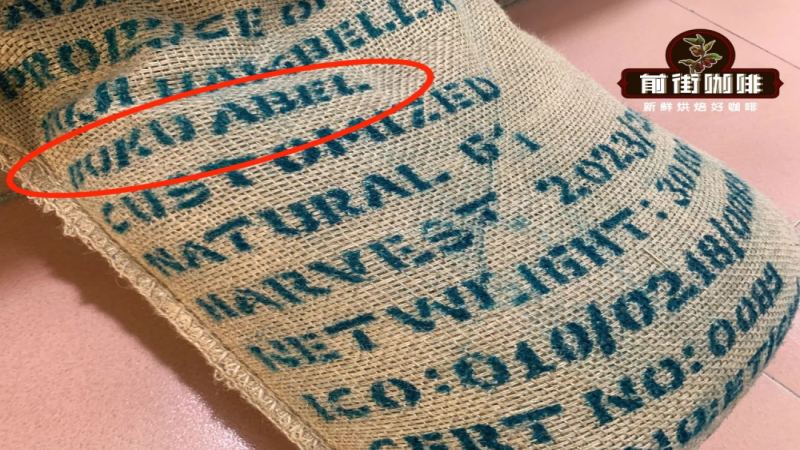
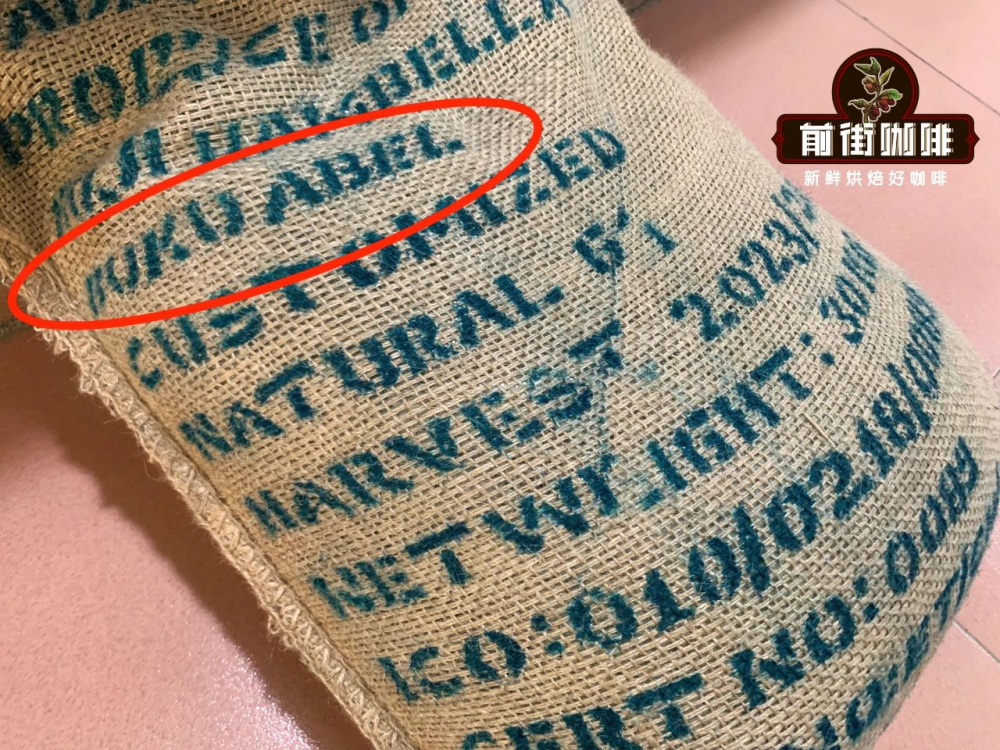
However, the baristas at Front Street Coffee (FrontStreet Coffee) must remind everyone that not all natural coffees produced in the Guji region of Sidamo can be called Hambella. Generally speaking, only natural coffee produced and processed by Buku Abel estate deserves the name "Hambella," so Buku Abel estate is also called "Hambella estate." The surrounding area where Hambella is grown is covered with sugarcane and bananas. Under high-altitude climatic conditions, Hambella coffee has a smooth mouthfeel, passion-fruit-like acidity, and the fermented wine aroma imparted by natural processing.
Unlike the lemon-citrus notes of the Yirgacheffe region, which has an extremely high order rate at Front Street Coffee (FrontStreet Coffee), coffee beans from the Guji region have a more intense floral aroma, and the natural processing method used in Guji undoubtedly takes Hambella's aroma and sweetness to an even higher level. In addition, the flavors of these two regions are so outstanding that they have been separately classified by the Ethiopian Commodity Exchange.
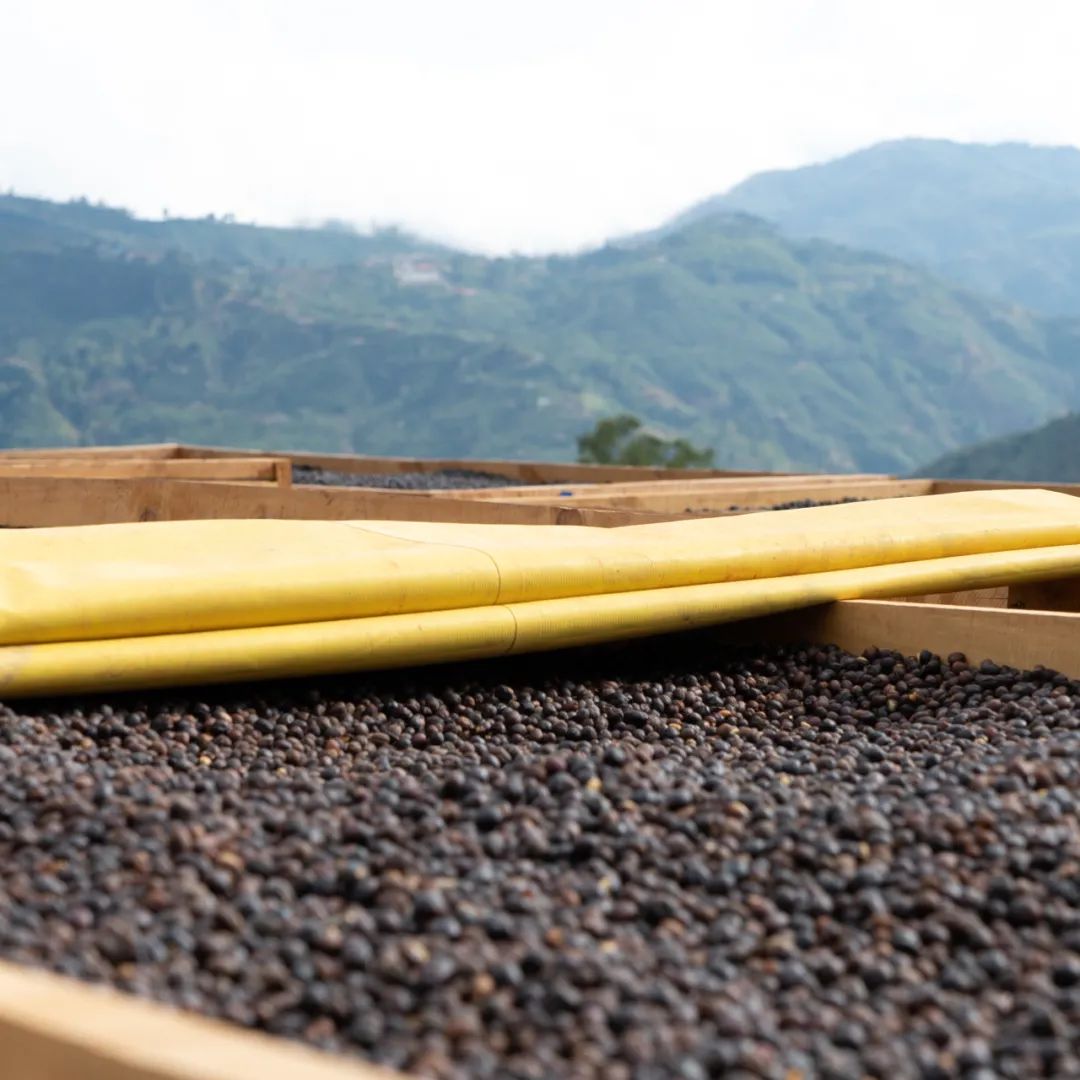
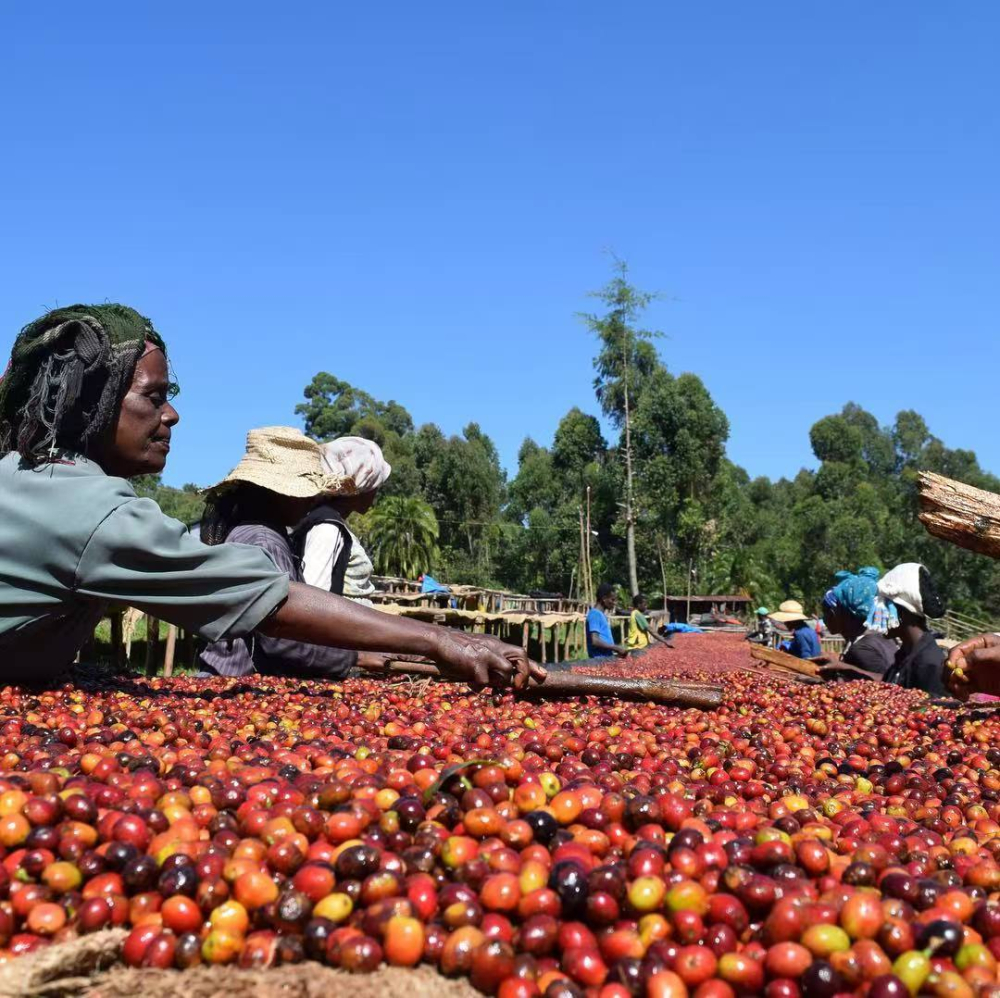
Hambella's unique flavor is inseparable from its natural processing method. According to Front Street Coffee (FrontStreet Coffee), coffee farmers harvest from December to January each year, and the sugar content of the coffee cherries must reach above 30% before natural processing can begin. The sun-drying process is quite particular. For the first two days, the humidity of the coffee cherries must be ensured so that the fruit sugars can fully ferment. When the midday temperature is high, shade must be provided in time to prevent the cherries from being sunburned and affecting fermentation. At night, to prevent sudden rain, they need to be wrapped in thick plastic sheeting.
The fermentation and dehydration of coffee cherries require relatively low temperatures. After the eighteenth day of sun drying, the moisture content of the green coffee beans will drop to about 13%. At this point, sun drying is stopped, and the beans are put into burlap sacks and placed in a warehouse. On this basis, the beans continue to be rested for about fifty days and further dehydrated. When the moisture content of the green beans reaches about 11%, they are then transported to the processing plant for hulling and other subsequent processing. It can be seen that choosing which processing method to use is crucial to the formation of coffee flavor.
I wonder if everyone has noticed that the Hambella listed by Front Street Coffee (FrontStreet Coffee) sometimes has numbers added after the name, such as Hambella 2.0, Hambella 3.0, Hambella 3.1, and Hambella 4.0. Everyone may not quite understand why Hambella has so many versions, because only what is produced by the Buku Abel processing station in the Guji region is truly Hambella; coffee beans from other processing stations are referred to by Hambella version numbers.
In addition, most of these Hambella coffees belong to Ethiopian local heirloom varieties. Some friends may not be very familiar with what Ethiopian heirloom varieties are. Front Street will briefly introduce them here. Because Ethiopia is the homeland of coffee and can be called coffee's gene bank, there is an extremely large number of varieties. In addition, local economic conditions do not support large-scale verification of coffee varieties. On the other hand, the Ethiopian government is also unwilling to disclose information in order to protect native coffee tree resources. Therefore, these unknown coffee varieties are collectively called Ethiopian local heirloom varieties.
However, Front Street Coffee (FrontStreet Coffee) also cupped these Hambella coffees and found that Hambella 3.1 differs greatly in flavor from the original Hambella, and is instead closer to the flavor of Geisha from Panama's Hacienda La Esmeralda. The flavor of Hambella 4.0 is very close to Hambella's original flavor, but through cupping, Front Street still felt that both its aftertaste and body were slightly inferior to the original Hambella.
Hambella's flavor changes every year, mainly because coffee is essentially an agricultural product, and it is impossible to grow exactly the same flavor every year. Agricultural products are highly susceptible to uncertain factors such as climate and rainfall. So it is very normal for coffee bean flavors to differ from year to year. This reason applies not only to Hambella, but to every coffee listed by Front Street.
For example, natural coffee beans also from the Sidamo region are very different. Take the Sidamo Arsi coffee listed by Front Street. Through cupping comparison of these two coffees, Front Street found that Arsi's juiciness is more intense than Hambella's, while Hambella's flavor leans more toward tropical fruit, and its fermented quality is also heavier than Arsi's.
How to brew Hambella coffee?
The grinder is also very important. The coarseness of the coffee grounds directly affects the taste of pour-over coffee. If the grounds are too coarse, the taste will be weak; if too fine, the taste will be bitter. Front Street Coffee (FrontStreet Coffee) recommends a medium-fine grind for pour-over coffee, with a passing rate of 80% using a 0.85mm standard sieve.
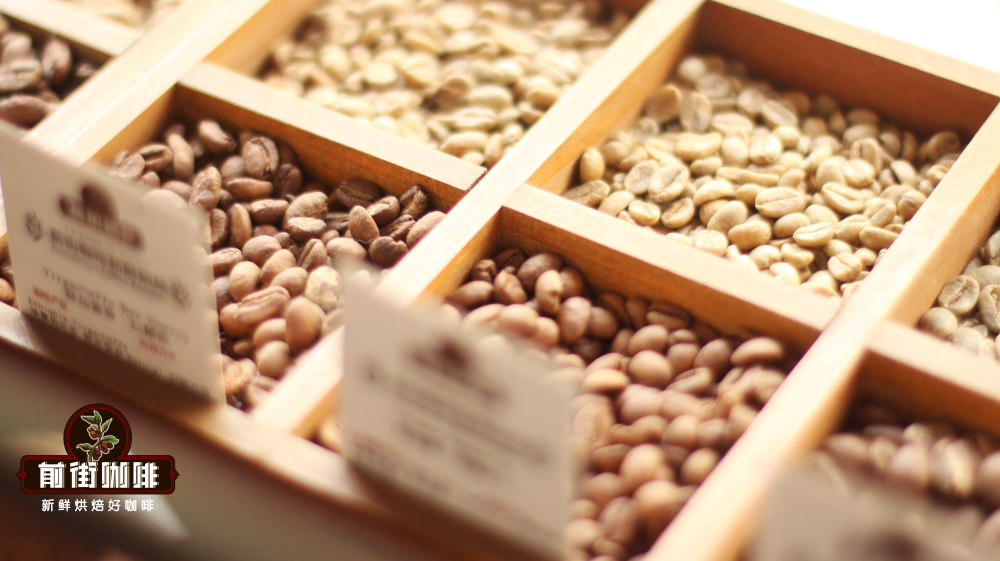
Can Hambella coffee beans be used to make espresso?
To cater to friends who like espresso coffee, Front Street specifically adjusted the roast profile of Hambella 8.0 to make the coffee beans' crema richer, thereby making the flavor of Americano after adding water or latte after adding milk fuller.
When using Hambella coffee beans to make espresso, Front Street's extraction parameters are: Galileo Q18 setting 1.4, dose 20 grams, yield 40 grams, brew ratio 1:2, time 28–32 seconds. The Hambella SOE made this way has a fresh floral-fruity profile. When drinking the espresso directly, Front Street can perceive a balanced aroma of dark berries, dried apricot, caramel, and creamy chocolate; when made into an Americano, one can perceive fresh citrus-like fruit acidity; after adding milk to make a latte, it presents rich notes of butter cookies, plum, almond, and chocolate biscuits.
How to make Americano with Hambella coffee beans?
For Americano, use a 200 ml cup, extract 40 grams of coffee liquid from 20 grams of grounds, add 160 ml of warm hot water, and the ratio of coffee liquid to water is 1:4.
Hot Americano is not too sour at high temperature. What is surprising is the medium-temperature stage, with soft berry-like acidity, a slight tropical fruit note, a mouthfeel similar to fruit juice, and a creamy, caramel aftertaste.
For iced Americano, first extract 40 grams of coffee liquid from 20 grams of coffee grounds, then add 260 grams of ice-water mixture. The first sip has obvious citrus acidity and is refreshing, but the drawback is that it has no aftertaste and insufficient body. To solve this problem, the baristas at Front Street Coffee (FrontStreet Coffee) increased the dose and readjusted the parameters, using 2 grams of coffee grounds to extract 40 grams of coffee liquid, with an extraction time of 28 seconds.
The readjusted iced Americano is noticeably much softer. After stirring the coffee and ice water evenly, the first sip has a livelier acidity, a slightly fuller mouthfeel, a flavor profile like dark berries, and at the same time a juice-like texture. In Front Street's view, when making iced Americano and iced pour-over (extracted with hot water, then cooled and diluted with ice), there must be plenty of ice, and the coffee liquid must also be concentrated enough; otherwise, the ice will melt when encountering heat and dilute the coffee into something bland and tasteless.
What does latte made with Hambella coffee beans taste like?
When the baristas at Front Street Coffee (FrontStreet Coffee) tried making a latte with Hambella coffee beans, they chose a 300 ml latte cup, with espresso parameters of 20 grams of coffee grounds extracting 40 grams of coffee liquid and an extraction time of 30 seconds. Because Hambella itself is roasted relatively light and a large amount of milk is added, the coffee taste after making a latte is on the weak side. The first sip is the sweetness of milk, dense and smooth, and only in the aftertaste can Hambella's berry aroma be detected.
The method for making iced latte is the same as for iced Americano, only replacing water with milk. Overall it is light, with a slight berry flavor, but the drawback is still that the body is relatively insufficient and the aftertaste is a bit short.
The above content is compiled by CoffeeHunters, a coffee news website.


