







Ice Drip or Cold Brew: Which Coffee Maker Fits?
Ice drip and cold brew are both low-temperature methods, but they differ in design. An ice drip coffee maker passes ice water slowly through a bed of grounds over six to eight hours, giving a clean, full-bodied cup. Cold brew soaks grounds in cold water for about twelve hours, which is simpler but leaves more fine particles in the liquid.
Cold brew is still black coffee because nothing is added beyond water and coffee. Grind coarser than for a hot brewer, then use roughly a 1:8 ratio for concentrate or 1:15 for ready-to-drink. If you want to know how to prepare coffee in a coffee maker of this kind, keep the grounds cool, store the finished brew covered in the fridge, and drink it within a few days.
Coffee doesn't have to be brewed with hot water—cold water can also extract surprisingly delightful flavors. Ice drip and cold brew are two common low-temperature extraction methods: the former uses ice water drip filtration, while the latter uses ice water immersion, and the resulting cup profiles each have their own distinctive character. This article will start from the essential differences between the two, explain how cold water extraction and hot water extraction differ in flavor expression, answer whether cold brew counts as black coffee, and share recommended beans suitable for making low-temperature coffee. It will then break down in detail the operating steps, grind parameters, and coffee-to-water ratios for ice drip coffee and cold brew coffee, and finally offer recommendations on refrigeration storage time, helping coffee enthusiasts consistently make clean, full-bodied cold coffee at home.
For more specialty coffee knowledge, please follow: Front Street Coffee ( Frontsteet Coffee )
Is coffee only extractable with hot water? The answer is no. Cold water can also make a delicious cup of coffee. As early as the 1960s, Japan popularized an ice drip coffee maker shaped somewhat like a chemistry lab apparatus, which, by controlling the drip rate of ice water through a bed of coffee grounds, produced a rich, full-bodied coffee liquid without unpleasant bitterness.
Because cold water lacks thermal molecular movement, the extraction pace slows down noticeably, often taking six to eight hours, during which one must also watch the melting of the ice and replenish it in time to ensure the dripping water stays at a low temperature. Combined with the limited output per batch, ice drip coffee usually sells for more than other regular coffee drinks.
However, ice drip equipment itself is not cheap, and in an era when coffee gear was not yet widely available, making ice drip coffee at home was a rather high threshold for ordinary households. So some people switched to a more direct method: fully soaking coffee grounds in cold water, then refrigerating for about twelve hours. The coffee obtained this way may not be as clean-tasting as ice drip (because fine particles are hard to filter out completely), but it is still full and balanced overall, with no unpleasant bitterness.
The difference between ice drip and cold brew
Therefore, the most core difference between ice drip coffee and cold brew coffee is: the former extracts coffee liquid through ice water drip filtration, while the latter extracts coffee liquid through ice water immersion. In terms of taste, the former leans rich and refreshing, while the latter leans full and balanced.
What is the difference between coffee extracted with cold water and hot water?
Cold water lacks thermal molecular movement, so the large molecules in coffee (the source of bitterness) are not easily released; what can mainly be extracted are the sweet and sour flavors, so the finished cup tastes cleaner, though the aroma is slightly weaker. Hot water, on the other hand, can more fully extract the various aromatic substances in coffee, and the hot steam carries the aroma upward, so the coffee aroma one can smell is also richer.
How do you make ice drip coffee and cold brew coffee?
To make low-temperature extracted coffee, Front Street Coffee (FrontStreet Coffee) recommends choosing coffee beans with noticeable sweetness and acidity and outstanding flavor, such as the Ethiopia Yirgacheffe natural-process Red Cherry coffee beans currently sold by Front Street Coffee (FrontStreet Coffee), which have a full berry juice sensation, citrus-like acidity, soft fruit fermentation aroma, and a black tea-like sweet aftertaste.
If you don't like pronounced acidity, you can try the Front Street Mozart raisin coffee beans from the Costa Rica Musician series, which have a rich raisin aroma, soft sweet orange acidity, slight fruit fermentation aroma, and caramel-like sweetness.
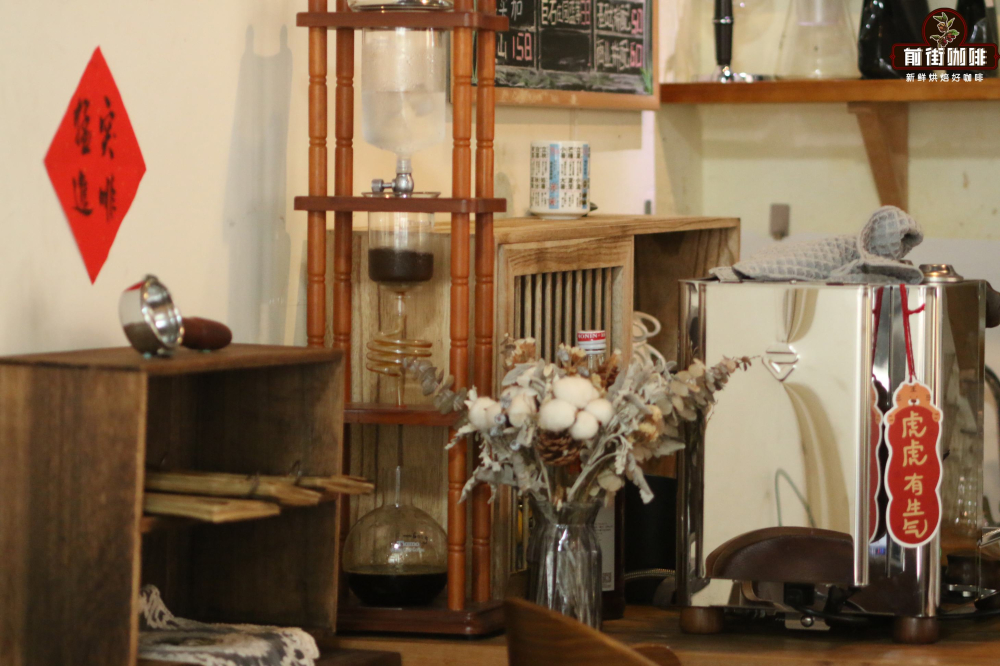
In this article, Front Street Coffee (FrontStreet Coffee) uses freshly roasted Mozart coffee beans to make ice drip and cold brew coffee. Only freshly roasted coffee beans can extract coffee with rich flavor, so all coffee beans sold by Front Street Coffee (FrontStreet Coffee) are shipped within 5 days after roasting is completed, and the optimal flavor period for the coffee beans is 4-35 days after roasting is completed.
The method for making ice drip coffee is as follows:
For grind size, Front Street generally chooses the same grind size as ice pour-over; because the low-temperature water reduces the extraction rate, the coffee is ground a bit finer to increase extraction. For this bean, choose an 85% passing rate on the Chinese No. 20 standard sieve; according to Front Street's store grind size, that is a grind setting of 9 on the ek-43s grinder.
Generally, we first calculate the extraction parameters, using a coffee-to-liquid ratio of 1:10, extracting 600g of coffee liquid from 60g of coffee; the ratio of ice to water mixture is 1:1, and the valve flow rate is controlled at 7 drops per 10 seconds, usually finishing drip filtration within 6-8 hours. (Usually the ice drip ratio is 1:10-1:12; everyone can adjust according to their own taste.)
At the bottom of the middle pot, attach a circular filter paper with water, then grind the coffee beans into powder and pour them in. Be careful to level it so extraction is even, and also place a circular filter paper on the surface of the coffee bed to prevent water droplets from disturbing the bed. Before dripping, the coffee bed needs to be moistened with cold water first; this both saves extraction time and avoids uneven extraction at the beginning.
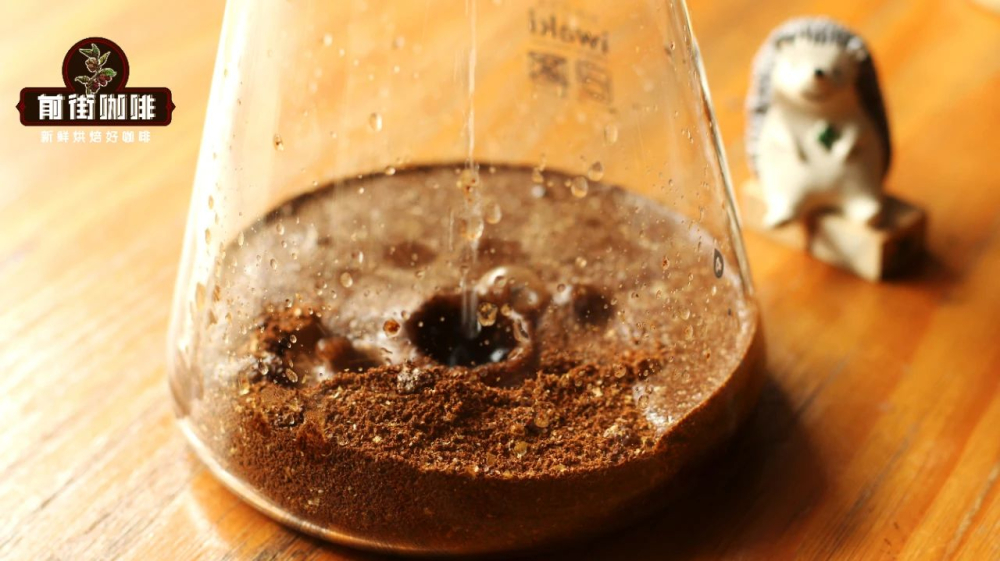
Place the powder cup on the stand and begin adding the ice-water mixture, usually half ice and half water. Adjust the valve flow rate to 7 drops/10 seconds, mainly keeping the dripping water aligned with the position where the coffee liquid filters out. After drip filtration is complete, pour the liquid from the lower pot into an airtight container—at Front Street we use a glass bottle—and put it in the refrigerator to ferment for more than 12 hours; it is usually ready to drink the next day.
The method for making cold brew coffee is as follows:
The grind size of the coffee grounds used for cold brew coffee is also the same as for ice drip. Then, when making it, you only need to prepare a clean, sealed container and extract using a coffee-to-water ratio of 1:11, that is, add 11g of cold water to 1g of coffee grounds. Then stir with a tool so the coffee grounds and water fully contact, then seal it and put it in the refrigerator's cold storage compartment. After low-temperature extraction for 12-16 hours, use a filtering tool to strain out the coffee grounds and it is ready to drink.
How many days can cold brew kept in the refrigerator last at most?
Front Street has noticed that many convenience-seeking friends will soak a large pot of coffee all at once and store it in the refrigerator, pouring it out whenever they want to drink it. This also leads to the problem that, if no mark is made, it is easy to forget exactly how many days the coffee you made has been sitting in the refrigerator, and whether it might have spoiled.
First, the fermentation process of low-temperature extraction cannot be interrupted; refrigeration only slows the fermentation rate of the coffee, and as time passes, the substances dissolved in the water continuously change, eventually causing spoilage. In addition, each time we open the bottle cap, the coffee liquid actually comes into contact with air, which not only causes the aroma to dissipate but may also bring bacteria into the container along with it.
To understand the effect of cold brew storage days on flavor, Front Street recorded two pots of cold brew and tasted them when just made, after refrigeration for 1–2 days, 3–4 days, 5–6 days, and 7–8 days, and finally found that the coffee tasted best within the 1–4 day refrigeration range. Generally speaking, for considerations of flavor experience and health safety, whether ice drip or cold brew, for any extraction method carried out in a low-temperature environment, Front Street recommends everyone drink it within 5 days (counting from the production day).
If you operate as in Front Street's past articles, using warm water to quickly make cold brew, the optimal flavor period will be shorter. Because higher water temperature causes a greater release rate of flavor substances, compared with cold brew made with room-temperature water, warm-water cold brew is more likely to breed microorganisms in the refrigerator, so Front Street believes it is best to finish it within 2 days to avoid gastrointestinal discomfort.
The above content is compiled by CoffeeHunters, a coffee news website.


