








How Does Ice Extraction Compare to Cold Brew Coffee?
Ice extraction is the simplest iced coffee method: pile ice cubes directly on top of ground coffee in a large dripper and let the melting ice do the extracting. It needs no special equipment, just a dripper, ice and ground coffee. In the demonstration, Ethiopian Dorothea beans produced a cup with a white peach oolong tea flavor.
It differs from ice drip, where ice water passes through the coffee bed drop by drop, and from cold brew, which soaks grounds in cold water at low temperature. Key parameters include coffee dose, grind size, pouring details and waiting time. When thinking about what is coffee made of, remember that coffee tree beans are seeds, and grind size controls how fast water reaches the soluble material inside them.
In the iced coffee family there is ice drip, cold brew, and an even easier method—ice extraction. Ice extraction requires no special equipment; a large dripper, some ice cubes, and ground coffee are enough. It has a low barrier to entry and high fault tolerance, making it very suitable for making at home daily. This time, Front Street Coffee focuses on ice extraction coffee, first clarifying the differences between it and ice drip and cold brew, then explaining step by step the key parameters such as coffee dose, grind size, pouring details, and waiting time. For the beans, Front Street Coffee uses Ethiopian Dorothea for the demonstration, and the finished cup has a refreshing and appealing white peach oolong tea flavor. The article also provides ideas for choosing coffee beans suitable for ice extraction, as well as tips for improving the drinking experience, for friends who want to try iced coffee.

For more specialty coffee knowledge, please follow the WeChat public account: Front Street Coffee (FrontStreet Coffee)
When it comes to iced coffee, many people may first think of ice drip or cold brew. Today, Front Street Coffee is going to share another extremely simple way to make iced coffee—ice extraction.
Front Street Coffee will first sort out these three concepts clearly: the characteristic of ice drip is that ice water passes through the coffee bed drop by drop, extracting and filtering out coffee liquid; cold brew, also called cold immersion, generally involves soaking coffee grounds in cold water and completing extraction at low temperature; ice extraction, on the other hand, piles ice cubes directly on top of the coffee grounds, allowing the melting ice to contact the coffee grounds and extract them. Ice extraction requires very few tools—a large dripper, ice cubes, and ground coffee are enough—and the method is quite direct: put a filter paper into the dripper, pour in the ground coffee, then add ice cubes on top of the coffee bed, and leave the rest to time.
Some friends may have tried this ice extraction method long ago, and some may have figured out this iced coffee method on their own. The principle and general process are basically the same, and the differences are often only in some parameter details, so friends who have already mastered the method can also compare parameters and exchange ideas.
For bean selection, Front Street Coffee recommends using coffee beans with relatively rich flavor layers, such as the Ethiopian Dorothea chosen for this demonstration, which becomes refreshing when made into iced coffee and carries a white peach oolong tea-like character. The coffee dose should be determined according to the size of the dripper, and the ground coffee should preferably not exceed half the height of the dripper, because space still needs to be left above for the ice. Front Street Coffee uses the Hario V60 02 dripper, with a dose of 30 grams. The grind size is coarser than for pour-over, with a 20-mesh sieve pass rate of 65-68%.
After the coffee is ground, pour it into the dripper, tap it gently to level it, then pour in 30 ml of cool water to wet the coffee bed. This step is to prevent obvious uneven extraction.
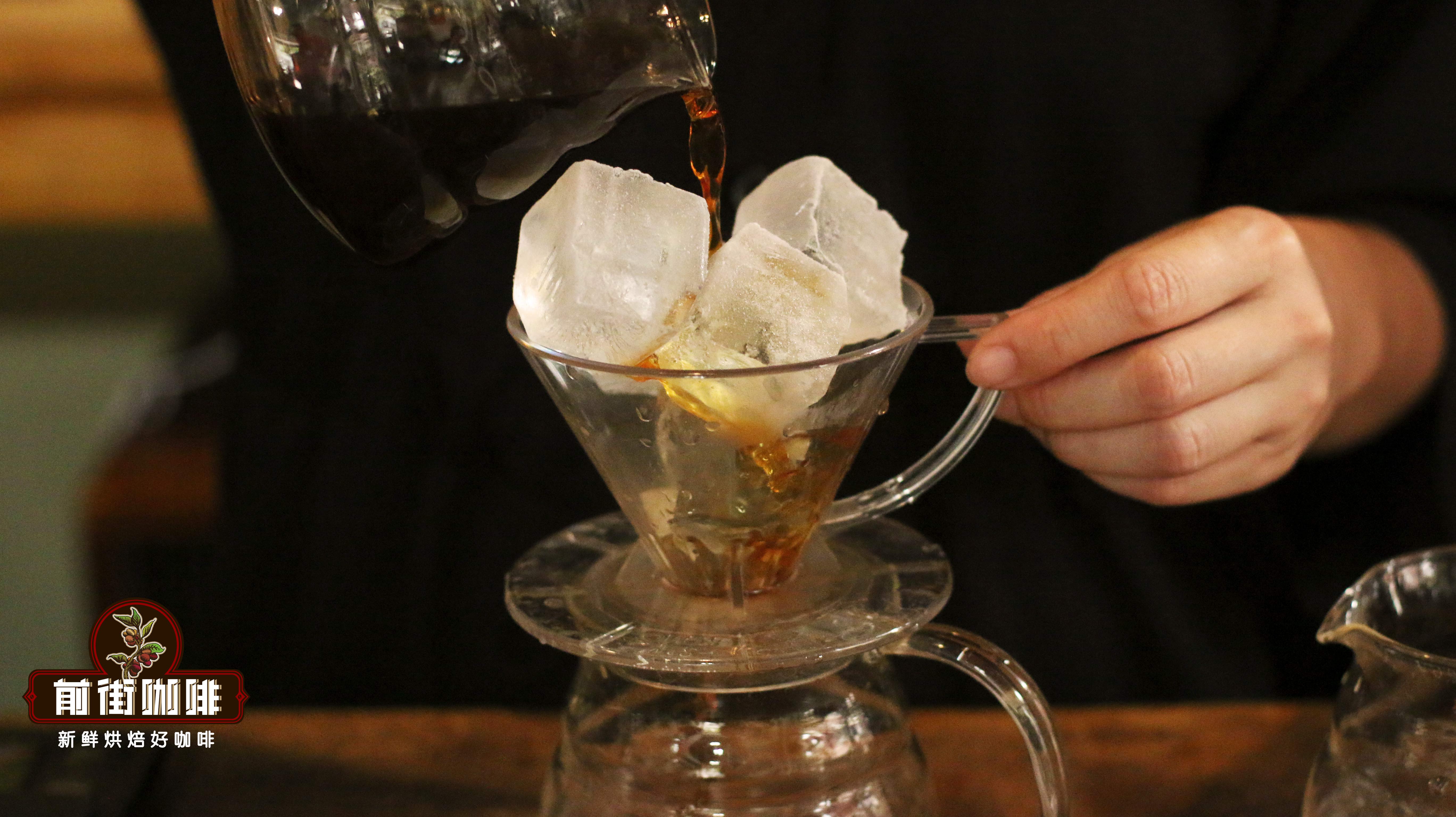
After that, the carafe can be set aside, and the ice cubes are left to melt slowly at room temperature so that the coffee is extracted.
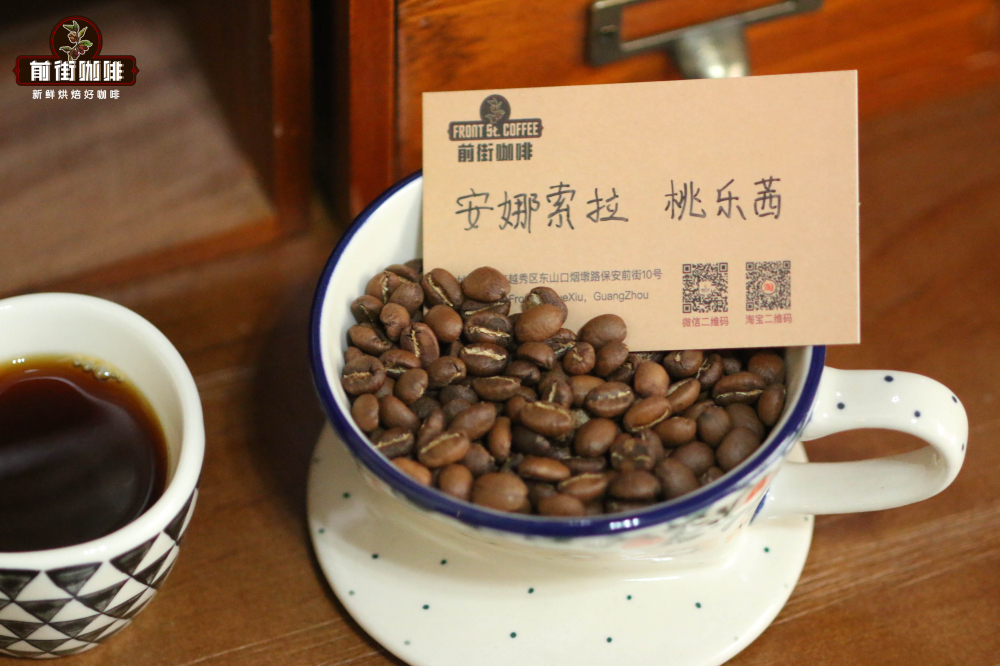
It takes about 5 hours for the ice cubes to melt completely, and once all the ice has dissolved, the dripper can be removed. The extracted coffee liquid can be drunk directly; when drinking, add 1-2 large ice cubes to keep it cold, and the taste will be better; it can also be placed in the refrigerator to chill for a while before drinking.
This ice extraction method does have quite a few uncertainties in extraction, such as the melting speed of the ice cubes being difficult to control and the flow direction of the meltwater in the coffee bed being hard to manage. But its fault tolerance is actually very high, which means that for daily drinking, the coffee made this way usually tastes quite good.
The above content is compiled by CoffeeHunters, a coffee news website.


