







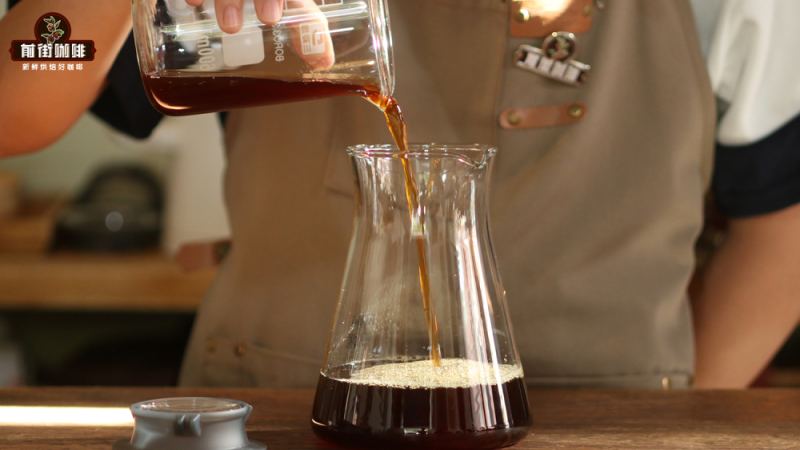
Can coffee extraction happen with cold water instead of hot?
Cold water can extract coffee, but the result is cold brew, not hot-brewed coffee cooled down. Cold brew is soaked in room-temperature or ice water and kept cold throughout, usually between 4 and 10 degrees Celsius. Coffee made with hot water cannot be called cold brew, no matter how it is later chilled or served.
Two forms exist: cold immersion, where grounds sit directly in cold water, and ice drip, where water passes through the bed drop by drop. The low temperature slows extraction, so bitter large molecules release less and sugars and organic acids come through more fully, giving a more balanced acidity, sweetness, and body. Bean choice, grind size, steeping time, and coffee-to-water ratio decide the outcome.
Coffee extraction methods are not limited to hot water—cold water can accomplish the same process, and the cold brew coffee born from this presents a completely different flavor profile compared to hot-brewed coffee. Cold brew coffee is mainly divided into two forms: cold immersion and ice drip. The former soaks coffee grounds in cold water, while the latter uses the drip filtration principle to extract drop by drop. Many friends ask: should cold brew coffee be made with hot water or cold water? The answer is actually very clear—coffee brewed with hot water can no longer be called cold brew coffee. Cold brew coffee can only be soaked in room-temperature water or ice water, and the entire soaking process needs to be maintained in a low-temperature environment. This article, based on Front Street's hands-on experience, will detail the key aspects of making a delicious cold brew coffee, covering coffee bean selection, grind size, steeping time, and coffee-to-water ratio.
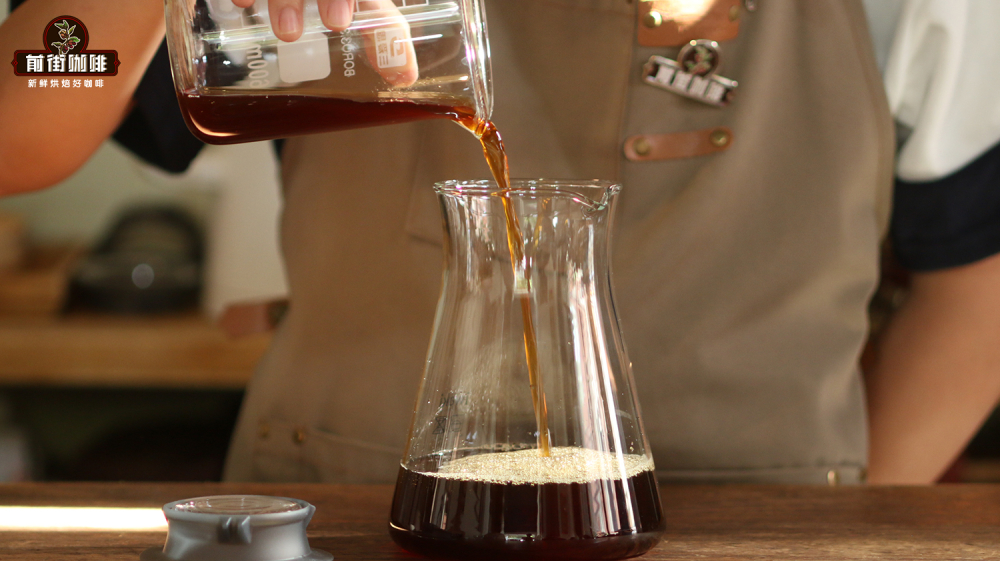
Besides extracting coffee with hot water, cold water can also accomplish the brewing. Coffee made with cold water is called "cold brew coffee," and it has a completely different flavor profile compared to hot-brewed coffee.
Cold brew coffee can be further divided into two categories: cold immersion coffee and ice drip coffee. Cold immersion coffee involves soaking coffee grounds directly in cold water, while ice drip coffee uses a drip method to let water pass through the coffee grounds drop by drop to complete the extraction. A friend asked Front Street: "Should cold brew coffee be soaked with hot water or cold water?" It needs to be made clear that coffee brewed with hot water cannot be called cold brew coffee. Cold brew coffee can only be soaked in room-temperature water or ice water, and the soaking environment must be kept at a low temperature.
Because it only comes into contact with low-temperature cold water at 4-10°C throughout, the extraction efficiency is very low, and bitter large molecules are not easily released. The long low-temperature soaking allows compounds such as sugars and organic acids to be extracted more fully, so the acidity, sweetness, and body in the coffee are more balanced.
So how should cold brew coffee be made to taste good? Here Front Street shares a few operational details with everyone.
Selection of Coffee Beans
If you don't want to mess up, Front Street recommends choosing medium-light roasted coffee beans, which have a higher margin for error compared to medium-dark roasts. Currently, there is a dazzling array of coffee beans with various processing methods and different roast levels on the market. As long as they are single-origin coffee beans labeled for pour-over use, they can all be used to make cold brew coffee. Dark-roasted coffee, when extracted with hot water, presents a rich coffee aroma, first mellow and bitter then sweet; but when made into cold brew, drinking it at iced temperature mostly gives a burnt bitter, carbonized taste, and it is hard to have the refinement of hot coffee.
Therefore, Front Street more recommends light to medium roasted coffee beans. If you want a refreshing juicy feel, you can choose light-roasted washed coffee, such as Front Street Washed Yirgacheffe and Front Street Kenya Little Tomato. If you want a stronger fruity and winey aroma, you can use fermented or honey-processed coffee, such as Front Street Colombia Sidra, Front Street Colombia Pacamara, Front Street Strawberry Candy, and Front Street Mozart. If you don't like coffee with acidity and only like a balanced "coffee taste," you can also choose Front Street Papua New Guinea Bird of Paradise.
Coffee Grind Size
Because the cold brew production process is carried out in a low-temperature environment, cold water extracts coffee grounds relatively slowly, and compared to hot water extraction, bitter substances are not easily released. Therefore, in terms of grind size, coffee-to-water ratio, and steeping time, it is not as rigorous as pour-over coffee. Usually, as long as it roughly falls within a range and the coffee beans are chosen correctly, a delicious iced coffee can be made in just a few simple steps.
Taking Front Street's daily cold brew production as an example, the coffee bean grind size is slightly finer than for pour-over, that is, 75-80% passing through a Chinese No. 20 standard sieve. To the naked eye, it is about the texture of fine granulated sugar, corresponding to a 9.5-10 setting on an EK43s, and for a hand grinder, taking the C40 as an example, about 22-26 clicks.
Steeping Time
In pour-over, we pay special attention to water temperature and time because water, as the main brewing medium, directly affects the extraction efficiency of coffee; too high or too low will change the taste of the coffee. For cold brew, because it only comes into contact with low-temperature water at 4-10°C throughout, the extraction efficiency is very slow, so a certain steeping time needs to be extended to allow more aromatic substances to be released, thereby allowing compounds such as sugars and organic acids to be extracted more fully, and the resulting coffee is also more balanced in acidity, sweetness, and body. Generally, the steeping time for cold brew coffee is usually recommended to be controlled at 8-18 hours.
Front Street once conducted a cold brew experiment using time as a variable, soaking one coffee for 6 hours, 10 hours, 16 hours, and 24 hours respectively. In the end, it was found that the 6-hour coffee tasted too thin with a flat aroma, while the cold brew soaked for 24 hours was noticeably bitter with signs of over-extraction. The 10-hour and 16-hour groups had the best flavor performance, with a rich aroma and a full-bodied taste.
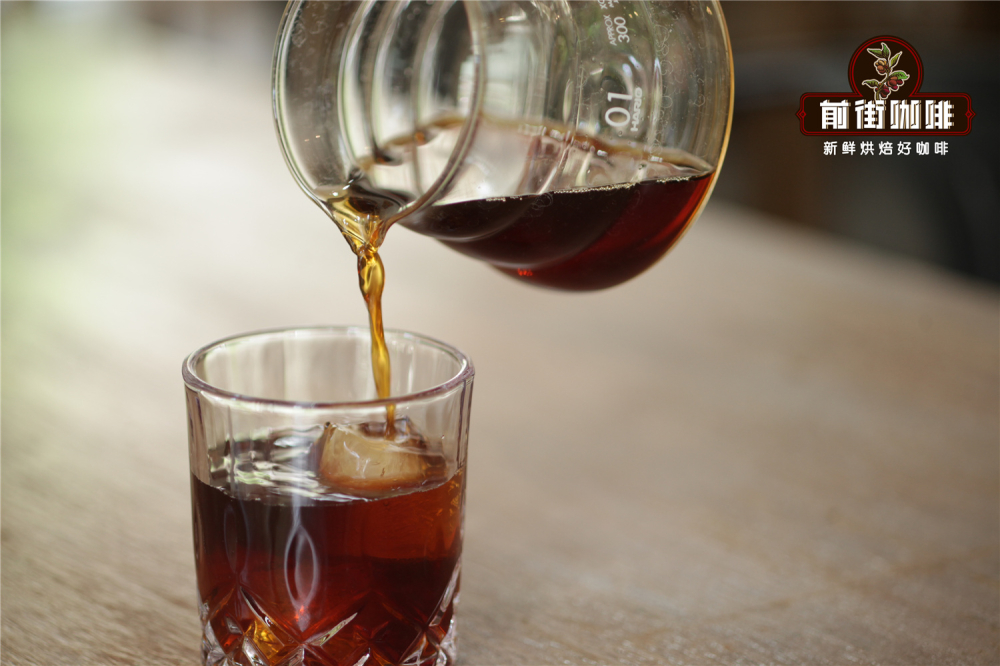
Coffee-to-Water Ratio
Front Street has noticed that some friends, for convenience, directly pour coffee grounds and water into a pot and start soaking. As long as it is coffee extraction, the parameter of coffee-to-water ratio is involved. Without weighing, coffee is like opening a blind box—you never know what taste you will get. To ensure the brewed coffee tastes better, Front Street recommends keeping cold brew production within the range of 1:10 to 1:13. If the concentration is too high, an appropriate amount of ice cubes can be added to dilute it.
Finally, Front Street will explain Front Street's cold brew coffee production method! First, for coffee beans, Front Street tends to use medium-light roasted coffee beans. For the container, only a clean sealable container is needed. Prepare 40 grams of coffee grounds, grind to a fine grind (85% passing through a No. 20 sieve), pour into the container, then pour in 480 milliliters of cold water, stir evenly with a wooden stick, and cover with a lid.
After stirring evenly, seal the opening with plastic wrap, place in the refrigerator and refrigerate for 12 hours, then take it out and filter out the grounds. After filtering out the coffee grounds, the clear coffee liquid obtained can be drunk immediately, or the filtered coffee liquid can be put into a bottle and continued to be refrigerated for 4 hours, and the flavor and taste will be even better.
Generally speaking, for consideration of flavor experience and health safety, whether it is ice drip or cold brew, as long as it is an extraction method carried out in a low-temperature environment, Front Street recommends that everyone finish drinking it within 5 days (counting from the production day).
The above content is compiled by CoffeeHunters, a coffee news website.


