








How do you make americano, and does temperature change it?
An americano is simply espresso combined with water in a set ratio, which dilutes the concentrated shot and makes its flavors easier to read. Because no milk is added, it belongs to the black coffee family and shows the bean's origin character more directly than a milk drink. The same beans served hot or iced give noticeably different sensory results.
Aroma, acidity, and sweetness all shift with temperature: hot americano releases more volatile aromatics, while the iced version tends to read leaner and more refreshing, which is why people ask whether an iced americano is acidic. Either way, the recipe is the same base of espresso and water, adjusted to taste and to the beans used.
As the specialty coffee wave continues to advance, more and more people are paying attention to the flavor expression of coffee itself. As an important member of the black coffee family, Americano can present the regional characteristics of coffee beans more directly because it does not add milk. The same bean, made into a hot drink or a cold drink, brings completely different sensory experiences. Starting from the production practice of Front Street Coffee, this article analyzes in detail the differences between iced Americano and hot Americano in terms of aroma, acidity, sweetness, and other aspects, and shares the specific parameters and steps for making Americano in the shop, helping coffee lovers recreate a cup of richly layered Warm Sun blend Americano at home.

Introduction
The rise of specialty coffee has kept the public's attention on coffee flavor steadily increasing. So-called specialty coffee usually refers to coffee beans cultivated under the climate and geographical conditions of a specific origin that have a recognizable flavor, and pour-over happens to present the characteristics of the beans themselves relatively completely, so it is often regarded as a classic form of specialty coffee production.
However, Front Street Coffee has always felt that pour-over is only an extraction method and cannot be directly equated with specialty coffee. The core of specialty coffee lies in whether the beans themselves have high quality and the taste of their origin. Similarly, coffee made with an espresso machine paired with specialty beans can also be classified as specialty coffee, which is exactly why single origin espresso, or SOE, has gradually become popular in recent years.
Like pour-over, Americano belongs to the black coffee family, and its recipe contains no milk, so it may be the one in the espresso system that most directly reflects the original flavor of the beans. Front Street Coffee has also mentioned before that Americano is simply a combination of espresso and water. By dilution, the originally intense espresso becomes easier to drink, while the flavor profile also becomes clearer.
Flavor differences between hot Americano and iced Americano
The method for making Americano is not complicated. Just mix the extracted espresso with water in a certain ratio and it is done. Choosing hot or iced, aside from personal preference, is actually similar to pour-over coffee in that people's taste perception changes noticeably at different temperatures.
Temperature affects the taste buds' judgment of flavor. The advantage of hot coffee is that you can feel the dynamic evolution of its flavor as it goes from piping hot to cooling down. After the temperature drops, the tongue's sensitivity to bitterness and sweetness weakens, while the perception of acidity instead increases. At the same time, the quinic acid in coffee gradually converts into quinic acid lactone, so coffee tends to taste more acidic after it cools.
The Front Street Coffee shop currently uses a blend called Warm Sun, composed of 70% Honduras sherry barrel beans and 30% sun-dried Red Cherry Project Yirgacheffe. The sherry barrel beans contribute aromas like dark chocolate and whisky, while the sun-dried Yirgacheffe is responsible for supporting the acidity of the whole blend and adding layering.
The espresso extracted from the Warm Sun blend, mixed with hot water at a ratio of 1:4.5, makes the entire cup of hot Americano show clear notes of dark cocoa and cream. Because the temperature is higher, the aroma molecules are more active in the air, and it smells fuller.
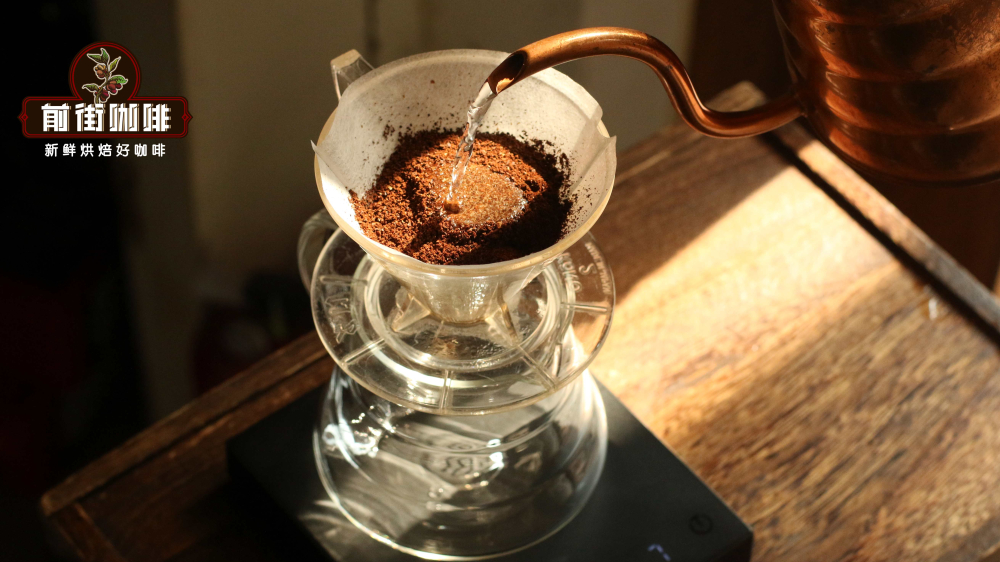
Iced Americano leans toward a refreshing style, with the overall flavor more concentrated on deep dark cocoa notes, clean and crisp acidity, balanced and richly layered.
How do baristas make Americano?
Both the iced and hot Americano served at Front Street shops use the house-roasted Front Street Sunflower Warm Sun blend coffee beans. Under ideal extraction conditions, this blend should display aromas of wine, vanilla, cream, chocolate, and berries.
In order to fully release these aromas, Front Street, after repeated comparative tests, finally locked the ratio of espresso to water at 1:4.5, that is, 40 grams of espresso mixed with 180 grams of hot water. The Americano produced this way has a moderate strength, balanced acidity and sweetness, and a refreshing mouthfeel. When making it, use a double dose of 20 grams, with extraction time controlled between 28 and 33 seconds. Prepare a 250 ml ceramic cup, first pour in hot water at about 80 degrees Celsius to about 80% full, then slowly pour in the espresso, and it is complete.
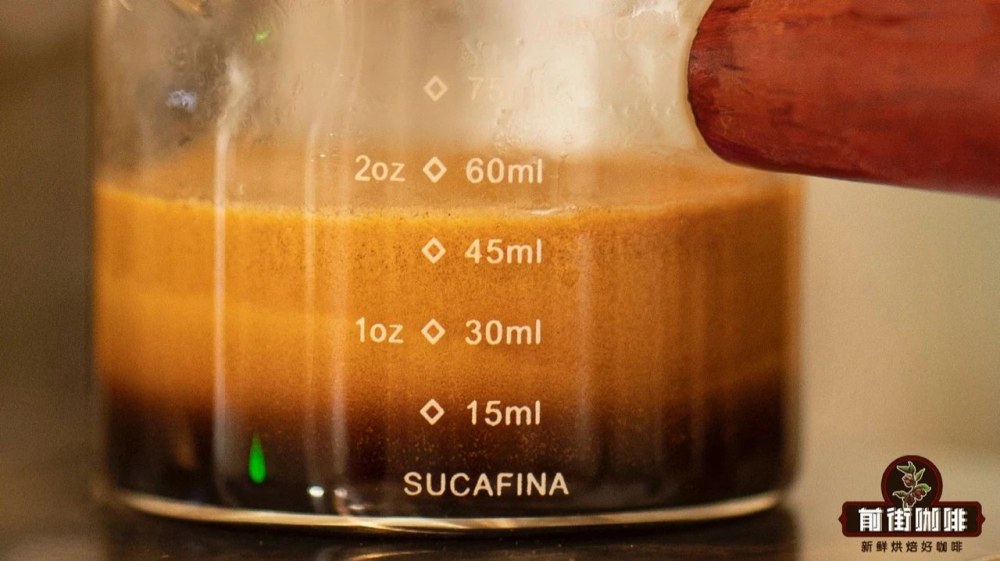
Method for iced Americano: put three large ice cubes in a cup, pour in direct drinking water to 90% full, then pour in the double espresso extracted from the Warm Sun espresso blend beans, stir evenly with a straw, and it is ready to drink. On the palate you can feel obvious vanilla, cream, and berry flavors, with a faint fermented wine aroma and caramel sweetness in the finish, richly layered and very pleasant.
For more specialty coffee knowledge, please follow the WeChat public account: Front Street Coffee
The above content is compiled by CoffeeHunters, a coffee news website.


