







What Is Cold Brew Coffee and Why Does It Take So Long?
Cold brew coffee is coffee extracted with cold water over a long period, usually 6 to 8 hours or more. Low temperature slows the movement of flavor molecules, so acidic compounds with smaller molecular weights dissolve early while bitter compounds with larger molecules need far more time. The result is a smooth, low-bitterness cup.
The umbrella term covers two methods, immersion-style cold brew and drip-style ice drip, the latter tied to Dutch maritime brewing and later Japanese ice drip craftsmanship. Because extraction is slow, a shop may need a two-day advance reservation for an ice drip made from a chosen lot, and the low-temperature process also helps preserve coffee once it is brewed.
Cold brew coffee has gained increasing attention from coffee enthusiasts in recent years thanks to its smooth, delicate mouthfeel and low bitterness. But many people don't realize that cold brew is actually an umbrella term encompassing two methods: immersion-style cold brew and drip-style ice drip coffee. This article will start from the scientific principles of low-temperature extraction, trace the historical arc of cold brew coffee from the Dutch maritime era to Japanese ice drip craftsmanship, analyze the differences in flavor and mouthfeel between cold brew and ice drip, and include Front Street Coffee's detailed home ice drip parameters and steps, along with several coffee bean recommendations suitable for making cold brew, helping you easily craft a cup of iced coffee to your satisfaction this summer.
Whether in sweltering heat or bitter cold, a refreshing glass of iced coffee remains one of the most popular coffee categories. The cool coffee on the palate brings a calm, pleasurable, and thoroughly satisfying sensation. At Front Street Coffee's locations, beyond common espresso-based iced coffees like iced lattes and iced Americanos, cold brew coffee is also a frequently ordered option.
【The Principles Behind Cold Brew Coffee】
Why can't cold brew be bought anytime like iced Americanos, despite both being iced coffee? This comes down to how temperature affects extraction. The essence of making coffee is bringing water into contact with coffee grounds, dissolving and drawing out the flavor compounds within the particles.
In this process, the higher the water temperature, the faster the various flavor molecules within the particles move. Among coffee's common three tastes—acidity, sweetness, and bitterness—acidic compounds have smaller molecular weights and dissolve more quickly, while bitter compounds have larger molecular weights and require more time to be released.
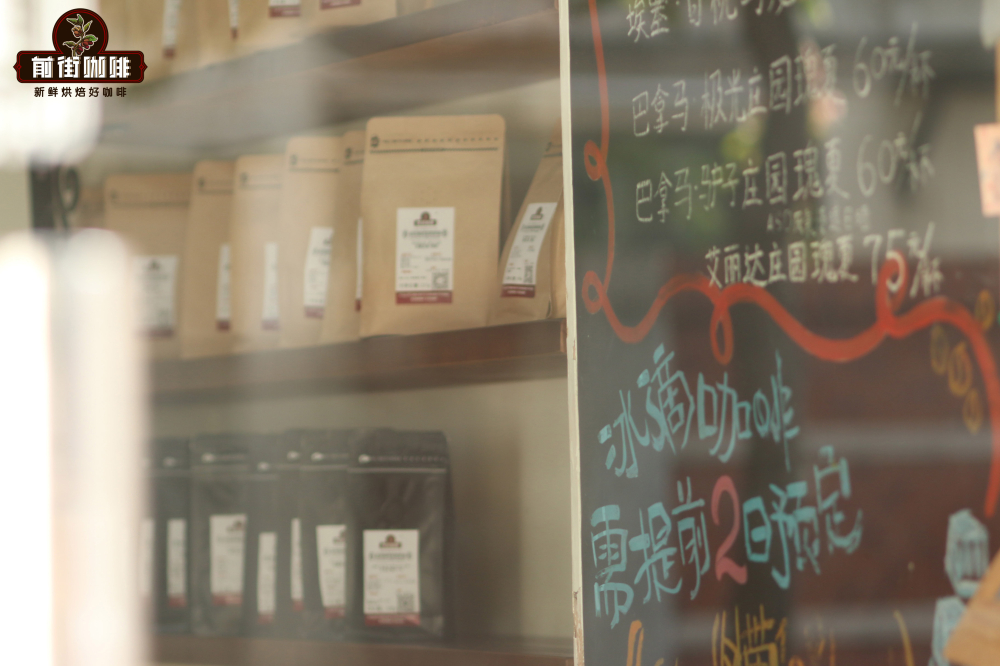
Ice drip coffee uses an ice-water mixture; the lower the water temperature, the longer it takes to achieve the same extraction effect. Because extraction rates drop dramatically in low-temperature environments, cold brew coffees typically require 6 to 8 hours or even longer. This is one reason why ordering an ice drip coffee made from a specific coffee bean at Front Street's shops often requires a two-day advance reservation.
Of course, Front Street Coffee's bean shelves display nearly a hundred coffee beans from different origins, varieties, and processing methods, each with its own unique flavor profile. Cold brew is just one of many preparation methods—different brewing techniques can also bring out different strengths in the same bean. Moreover, cold brew coffee has a fairly low barrier to entry. Front Street Coffee's suggestion is: why not pick a bean you like and make cold brew at home.
Below, Front Street Coffee will discuss the ins and outs of cold brew coffee as well as specific preparation methods.
【The Origins of Cold Brew Coffee】
There aren't many historical records about cold brew coffee. The most widely circulated account is that in the 17th century, the Dutch, needing a way to preserve coffee for long ocean voyages during far-sea trade, soaked coffee grounds in cold water for extended periods to obtain a concentrated coffee essence. Some sailors habitually heated the extracted essence before drinking, while others drank it directly for convenience.
As European colonial expansion advanced, the Dutch established the East India Company, long dominating Asian trade and at one point extending their reach to Japan—and with it, the practice of cold brew coffee was introduced to Japan.
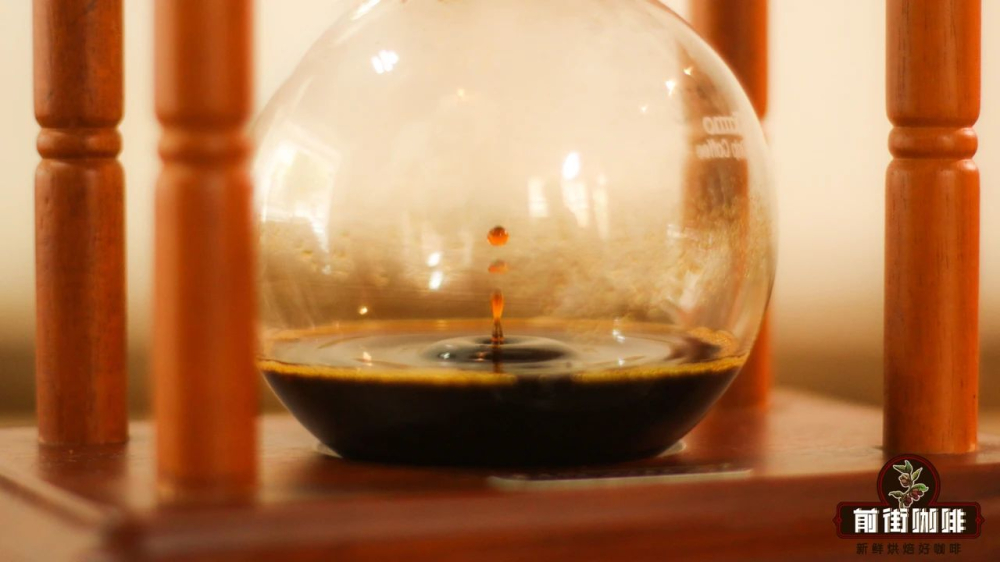
Japan itself has a long tradition of cold-brewed tea, locally called "suium tea." So cold brew coffee wasn't entirely novel when it arrived in Japan. The Japanese improved upon the preservation method for cold espresso concentrate and further invented ice drip coffee—letting ice water drip drop by drop onto coffee grounds for immersion extraction, rather than mixing grounds and water directly. This formed the ice drip coffee we know today.
These records, however, cannot confirm the original method of cold brew coffee, but the industry generally believes cold brew coffee was invented by the Dutch. Because it's a low-temperature frozen extraction, cold brew coffee has a smooth, delicate mouthfeel, which also creates its low bitterness and gentle acidity.
【The Relationship Between Cold Brew Coffee and Ice Drip Coffee】
Due to limited equipment, Front Street Coffee's shops only serve ice drip coffee. Front Street also often encounters customers who like to categorize and compare cold brew coffee with ice drip coffee. In fact, cold brew coffee's original meaning refers to coffee extracted with cold or room-temperature water. So it can be understood this way: cold brew coffee divides into two categories—immersion-style cold brew coffee and drip-style ice drip coffee.
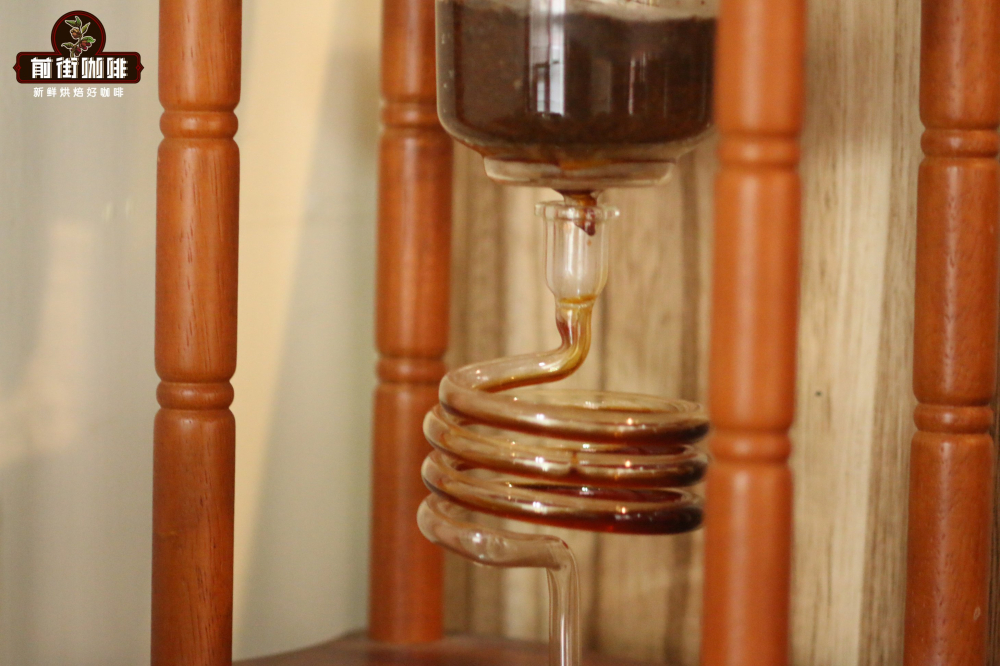
Ice drip coffee uses ice water for long, slow drip extraction. Under low-temperature conditions, more high-quality aromatic compounds and small-molecule components like acids are extracted, while large-molecule substances like tannins that bring bitterness are difficult to extract. After extraction is complete, the coffee liquid is poured into a sealed container for low-temperature fermentation overnight. Simply smelling it may not reveal its charm, but once it hits the palate, a distinct fermented quality and the coffee bean's own sweet aroma are fully released in the mouth.
The extraction liquid from cold brew coffee, on the other hand, shows a thin layer of oil floating on the surface, and its clarity is far less transparent than ice drip coffee. In terms of flavor and mouthfeel, cold brew coffee is noticeably heavier than ice drip coffee.
【Front Street Coffee's Ice Drip Coffee Preparation Process】
Water temperature: 0–4°C
Dose: 60 grams
Coffee-to-water ratio: 1:10
Grind size: 85% passing a Chinese standard No. 20 sieve
Time: 6–8 hours
1. Place a circular filter paper in the powder cup and wet it with water.
2. Adjust the filter paper position so it clings to the inner wall of the powder cup.
3. Pour in 60 grams of coffee grounds.
4. Shake the coffee grounds level and place another circular filter paper on the surface of the grounds layer.
5. Add water in multiple small portions to wet the grounds layer, completing the "pre-infusion."
6. Place ice cubes and an appropriate amount of water in the water vessel.
7. Adjust the valve to a drip rate of 7 drops per 10 seconds.
8. After 600 grams of coffee liquid has dripped through, pour it into a sealable glass bottle and refrigerate overnight for fermentation.
Front Street Coffee has mentioned a 1:15 coffee-to-water ratio in many articles—so why does cold brew coffee use a 1:10 ratio? This is because Front Street takes into account that each customer's taste preferences differ: some prefer lighter, some prefer stronger. So when serving, Front Street adds two ice cubes (about 25 grams each) to the cup. As the ice melts, the ice water dilutes the coffee liquid, satisfying both the strong-preference and light-preference crowds.
【Coffee Beans Suitable for Making Cold Brew Coffee】
Front Street Coffee's bean shelves hold nearly a hundred coffee beans, and many customers feel at a loss facing such a dazzling array of choices. Front Street Coffee mentioned earlier that cold brew coffee is a low-temperature, long-duration extraction that amplifies a coffee bean's sweet, aromatic, and acidic flavors.
Therefore, Front Street suggests that when selecting coffee beans for cold brew, prioritize beans with good acidity or unique flavors—such as Ethiopia Natural Red Cherry and Honduras Sherry.
Front Street Kenya Little Tomato Coffee Beans
Region: Thika, Kenya
Washing Station: Asali Honey Washing Station
Altitude: 1550m–1750m
Variety: SL28, SL34
Processing Method: K72 Washed Process
On the palate, there's the tart aroma of smoked plum, berry-like acidity, a sweet-and-sour little-tomato juice sensation coating the mouth, with caramel sweetness—tangy, sweet, and refreshingly palate-cleansing.
Front Street Honduras Sherry Coffee Beans
Region: Marcala, Honduras
Estate: Mocha Estate
Altitude: 1500m–1700m
Variety: Caturra, Catuai, Pacas
Processing Method: Fine Washed & Whiskey Barrel Fermentation
On the palate, you can taste rich vanilla, cream, and oak barrel flavors. With the boost of low-temperature long fermentation, the overall experience is like sipping Sherry whiskey—truly unique.
For professional coffee knowledge exchange and more coffee bean information, please follow Coffee Studio (WeChat public account: cafe_style)
For more specialty coffee beans, please add the private WeChat of Front Street Coffee, WeChat ID: qjcoffeex
The above content is compiled by CoffeeHunters, a coffee news website.


