







How Does Coffee Processing Create the Lychee Orchid Flavor?
Honduras Lychee Orchid gets its flavor from low-temperature barrel fermentation lasting 30 days, a coffee processing method that gave the bean brandy, liqueur chocolate, and honey aromas when it arrived in 2019. The lot comes from the Moka Estate in the Masaguara region and uses Caturra and Catuai varieties, so the wine-like character sits on top of the estate's terroir.
Honduras is one of the coffee producing regions of Central America, and in 2011 it was the largest producer in the region. Much of its output is sold to Germany and the United States, with a considerable share consumed domestically, which is why Honduran coffee is less common on the international market than beans from its neighbors Nicaragua, El Salvador, and Guatemala.
Honduras Lychee Orchid coffee, with its unique brandy barrel fermentation process, took the coffee world by storm in 2019 and became a representative work of wine-flavored coffee. This bean comes from the Moka Estate in the Masaguara region, uses Caturra and Catuai varieties, and undergoes low-temperature barrel fermentation for 30 days, presenting rich aromas of brandy, liqueur chocolate, and honey. This article will provide a complete analysis of the flavor sources of Lychee Orchid, from the background of Honduras's coffee industry, variety characteristics, and estate terroir to the brandy barrel fermentation process, and will also include Front Street Coffee's brewing parameters and methods to help you recreate this intoxicating wine aroma by hand.
Coffee processing methods have always been evolving. In addition to the classic flavors presented by traditional methods, various innovative techniques are also constantly expanding the taste boundaries of coffee. In the past, if someone said you could taste alcohol in coffee, probably no one would believe it; today, however, many people have become fascinated by this wine-like character. Of course, Front Street does not believe that any one processing method is superior. It is precisely because each processing method has its own characteristics that the coffee world is so rich and varied.
Experiencing the flavor differences brought by different processing methods is itself one of the great pleasures of coffee tasting. When it comes to wine-flavored coffee, the most notable is Honduras's barrel fermentation process. This technique gives coffee a unique wine aroma and set off a craze in the coffee world in 2019, with many people enchanted by that intoxicating scent. In addition to Honduras Sherry Barrel, there is another bean equally worth trying - Honduras Lychee Orchid. Today Front Street will talk with you about the ins and outs of this Honduras coffee bean .
Overview of Honduras Coffee
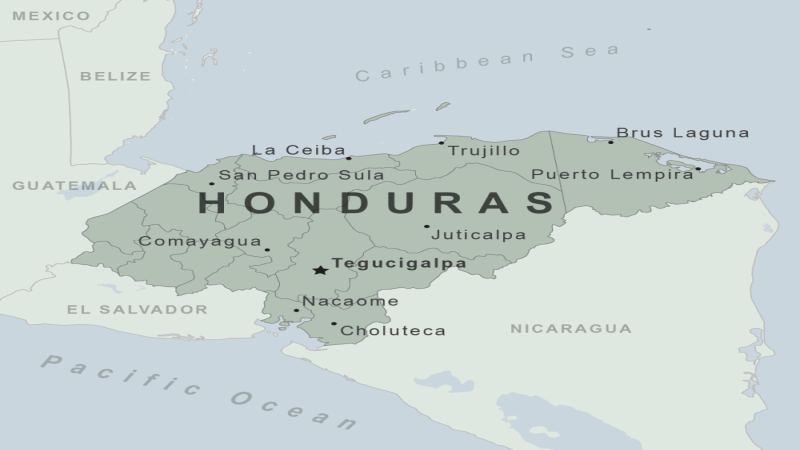
Honduras is located in Central America. Its neighboring countries Nicaragua, El Salvador, and Guatemala are all well-known coffee-producing countries. Honduran coffee is not particularly common in the international market, but in 2011 Honduras was the largest coffee producer in Central America. Most of its beans are sold to Germany and the United States, and a considerable portion is also consumed domestically, which gives the impression of a niche producing country. Honduras is mainly mountainous and highland terrain, with a tropical climate and a tropical rainforest climate along the coast. In terms of growing conditions, Honduras is not inferior to its neighboring producing countries. The country's coffee plantation area reaches 280,000 hectares, mainly small plantations, whose output accounts for more than half of the country's total coffee production.
Coffee is mostly grown on hillsides. High altitude, large temperature differences, abundant rainfall, and sufficient sunlight all meet the growing requirements. However, the mountainous terrain makes mechanical harvesting impossible, so it can only rely on manual picking, which instead ensures that every coffee cherry is picked only when fully ripe. After picking, fine processing is carried out, laying the foundation for the high quality of Honduran coffee and gradually opening up opportunities for the country's producing regions.
Coffee Varieties
The coffee grown in Honduras all belongs to the Arabica species, including Bourbon, Caturra, Catuai, Pacas, and others, while Lychee Orchid uses the country's most common Caturra and Catuai. Caturra was discovered in 1937 in the city of Caturra, Brazil, and was named after the city. This variety has better yield and disease resistance than Bourbon, while also inheriting Bourbon's short tree shape, which makes picking easier. Catuai is a hybrid of Caturra and Mundo Novo, with stronger disease resistance, but its flavor performance is slightly inferior to Caturra.
Coffee Producing Regions and Estates
Moka Estate is located in the Masaguara region. This region is a municipality in the Intibuca department of Honduras, located in the southern part of the Jesus de Otoro Valley. The overall altitude of the region is not particularly high, averaging between 800 and 1,000 meters, with high-altitude areas reaching 1,500 meters. Moka Estate is a small estate within the Masaguara region.
Brandy Barrel Fermentation
The process of brandy barrel fermentation is as follows: first, the harvested coffee cherries are sorted, then washed, and then the coffee beans are placed into barrels for fermentation. The temperature inside the barrels is maintained at a low range of 15 to 20 degrees, and the fermentation lasts about 30 days. After fermentation is completed, the beans are dried. The finished beans carry an extremely strong brandy aroma, rich and striking, with great impact. Under a medium-light roast, they present rich aromas of brandy, liqueur chocolate, and honey, with a mellow, smooth, and creamy mouthfeel and a long finish.
The above is the background information shared by Front Street about Honduras and Lychee Orchid coffee, which also explains why this bean can have such a rich wine aroma - it is the product of barrel fermentation, absolutely not added flavoring as some outsiders speculate. Now that the story is told, let's move on to the brewing stage. Faced with coffee with such a rich aroma, how could you not have a cup?
Front Street Coffee: Honduras Moka Estate Lychee Orchid Coffee Beans
Region: Masaguara
Variety: Caturra, Catuai
Altitude: 1,500 meters
Processing Method: Brandy Barrel Fermentation
Front Street Coffee parameters: water temperature 91°, dose 15, coffee-to-water ratio 1:15, medium-fine grind
Front Street Coffee brewing: use 30g of water for blooming for 30s, then pour in the second stage up to 120g in stages, and wait until the water level drops and is about to expose the coffee bed before pouring again. In the third stage, pour up to 225g and stop brewing. Wait for the coffee liquid to finish dripping, then remove the dripper. Extraction time is 2:00.
Flavor and mouthfeel: brandy, liqueur chocolate, honey, cream; sweet and fragrant, smooth, with a lasting finish
For more specialty coffee beans, please add the private WeChat of Front Street Coffee, WeChat ID: kaixinguoguo0925
The above content is compiled by CoffeeHunters, a coffee news website.


