







How Does Kenya Coffee Reach Its Berry Acidity in a Cup?
Kenyan coffee is grown mainly on red volcanic soil in the highlands, using the SL28 and SL34 varieties and the washed K72 process, which together produce the wild berry acidity and clean, bright flavor the country is known for. Cultivation began at the end of the 19th century, introduced by French Holy Spirit priests from Réunion Island; Kenya became a British colony in 1895.
Bean grades and processing decide much of the cup. For pour-over, a three-stage pouring plan suits these beans; for SOE espresso, the practical target is about 40g of liquid from 20g of grounds in 28 to 30 seconds. This keeps the berry and tomato aromas intact whether the drink is black coffee or an SOE latte.
Kenyan coffee, with its wild berry acidity and clean, bright flavor, has become a favorite among many coffee connoisseurs. This article, from the perspective of Front Street Coffee, systematically outlines the history of Kenyan coffee cultivation, the main producing regions, the grading system, and the sources of its signature acidity—red volcanic soil, the SL28 and SL34 varieties, and the unique K72 washed processing method. It then provides Front Street Kenya · Little Tomato coffee beans' pour-over parameters and three-stage pouring plan, and extends to SOE espresso extraction: from bean selection, roast level, grinding, ratio to the practical steps of extracting 40g of liquid from 20g of grounds in 28–30 seconds, helping you make a cup of Kenyan black coffee or SOE latte full of berry and tomato aromas at home.
For more specialty coffee knowledge, follow our WeChat official account: Front Street Coffee.
When ordering pour-over coffee at Front Street stores, if customers don't specify a particular flavor direction, most people tend to choose coffee beans from African regions. But Africa is vast with many producing countries—how do people pick the bean that's right for them? For beginners, the first choice is often Ethiopia's Yirgacheffe or Sidamo; but many coffee connoisseurs prefer Kenyan coffee beans, because the characteristic taste of Kenyan coffee is its wild berry acidity. Below, Front Street Coffee will take a detailed look at Kenyan coffee beans.
History
Everyone knows that the birthplace of coffee is Ethiopia. Although Kenya is adjacent to coffee's birthplace Ethiopia, its coffee-growing history isn't particularly long. Regarding the origins of coffee cultivation in Kenya, there are mainly two versions:
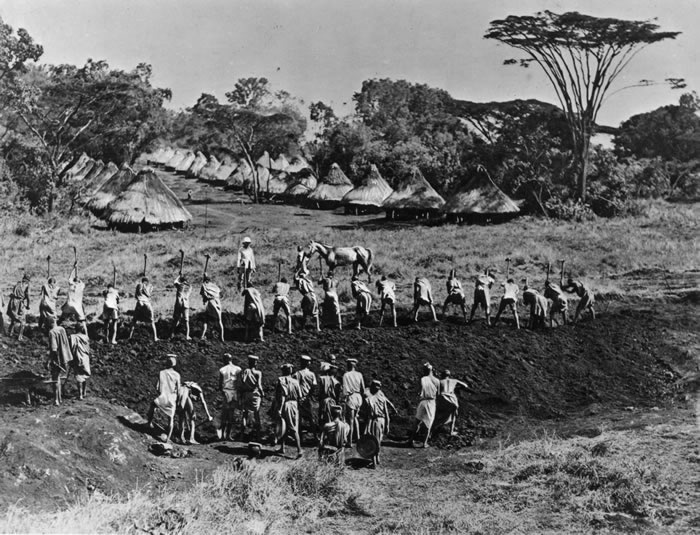
One common account is that coffee was brought to Kenya by Holy Spirit Church priests at the end of the 19th century. The more popular version is that in 1893, French Holy Spirit priests brought coffee to Kenya from Réunion Island (Bourbon Island, where Bourbon coffee was discovered); some also believe it was introduced from Ethiopia.
Another account comes from an article titled Coffees from Africa and Arabia: Kenya Coffee, published in 2001 by Mr. Kenneth Davids, founder of Coffee Review, which mentions that coffee was introduced to Kenya by the British around 1900.
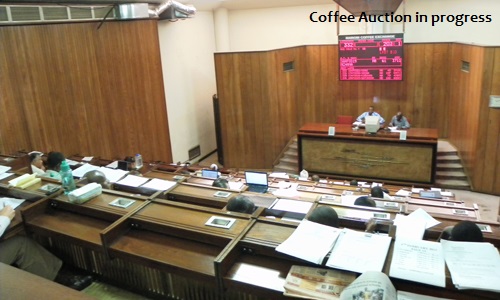
What can be confirmed is that Kenya became a British colony in 1895 and was incorporated into the "East Africa Protectorate," so the British controlled agriculture in the region during that period, including coffee cultivation. In 1933, the Kenya Coffee Board was established. In 1934, the auction system was created and is still in use today. It wasn't until the 1960s that Kenyans began to have the right to grow and process coffee themselves.
By the late 1980s, Kenyan coffee reached its peak, with annual production reaching 130,000 tons. But in recent years, Kenya's coffee industry has shown signs of decline, with annual production of only about 40,000 tons. Fortunately, Kenyan authorities have formulated a coffee revitalization plan to save the country's declining coffee industry.
Producing Regions
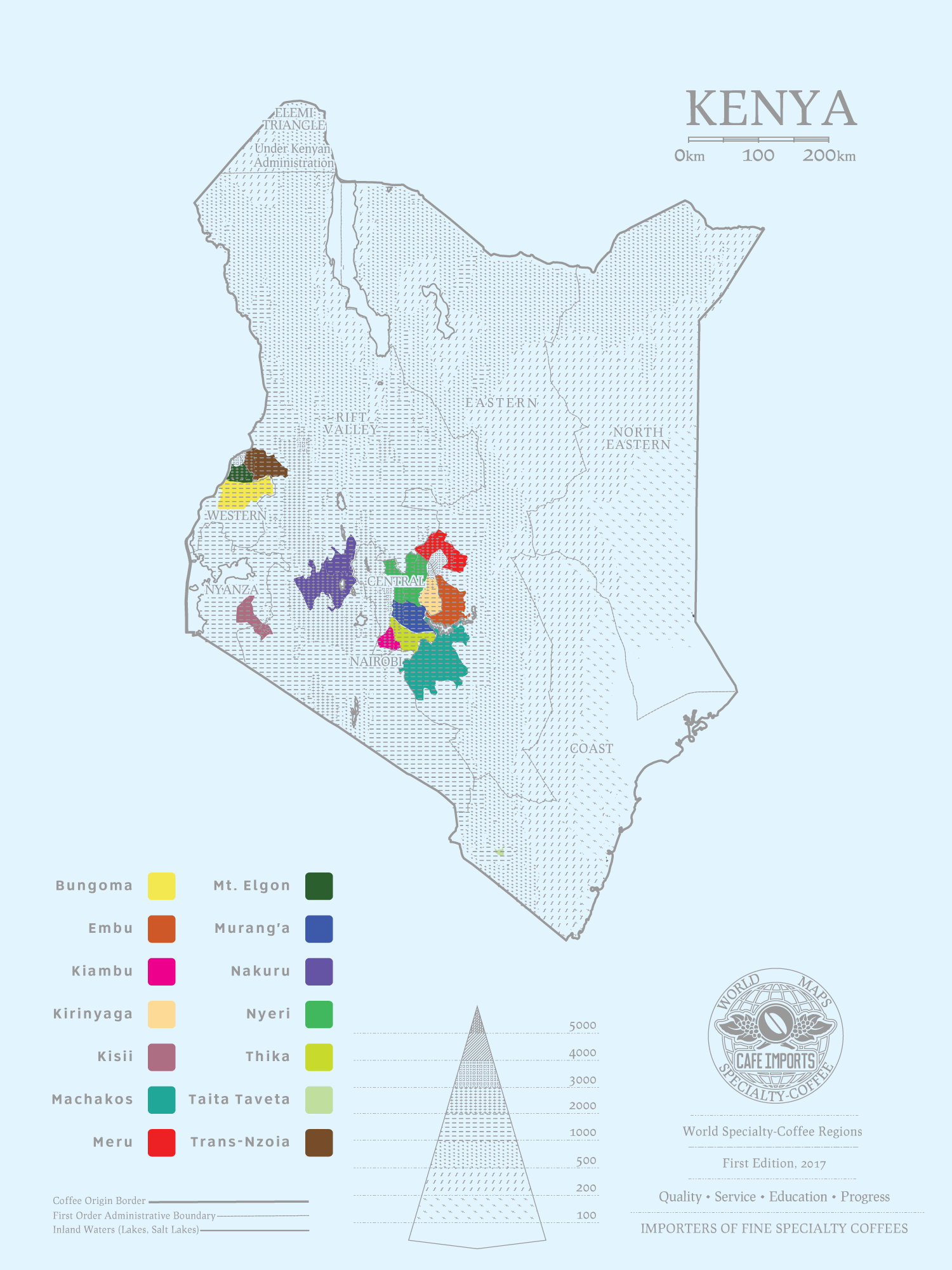
After reading James Hoffmann's book "The World Atlas of Coffee," Front Street Coffee learned that most of Kenya's coffee comes from the country's central producing regions, and high-quality coffee also comes from there.
Among Kenya's 14 coffee-producing regions, coffee from Kiambu and Muranga has bright acidity and a thick mouthfeel; coffee from Nyeri has bright blackberry notes and a heavy oily body, along with citrus and even floral aromas; coffee from Kirinyaga has bright fruit acidity with a medium oily body and delicate sweetness; coffee from Embu has moderate acidity, with a balanced and clear flavor and a surprising finish; coffee from Machakos has refreshing fruit acidity, a delicate flavor, moderate mouthfeel, and a delicate, fresh finish; coffee from Kisii and Elgon has solid sweetness and a mild flavor.
Grading System
When ordering Kenyan coffee at cafes, if you look closely at the grade, it's not hard to spot the letters AA. Front Street Coffee's baristas are also asked by some beginner coffee enthusiasts: Is Kenya AA the highest grade? How are the grades distinguished?
Kenyan coffee beans are roughly divided into eight grades based on bean size: E, PB, AA, AB, C, TT, T, MH/ML.
Front Street Coffee needs to emphasize here that coffee bean grades are determined before roasting, so don't think about sifting roasted coffee beans.
E: Kenya E is called Elephant Bean, large in size, and relatively low in production.
PB: PB stands for Peaberry, which is the well-known round bean, oval in shape. A normal coffee fruit contains two coffee seeds, while a peaberry is a single seed.
AA: Kenya AA can be said to be the most common grade, larger in size, with a screen size of 17/18.
AB: Screen size 16/17.
C: Screen size below 14.
TT: Large screen size but low density, yet quality sufficient to be classified as specialty coffee.
T: Below 14 screen size, small beans, density and quality insufficient to be classified as specialty coffee.
MH/ML: Low-quality natural beans, mostly overripe beans dried on the tree.
Why Is Kenyan Coffee So Acidic?
When a coffee enthusiast asks, "I want the most acidic bean," Front Street Coffee's baristas will first recommend the Kenya Asaliya on the menu. Kenya's bright, clean acidity can also be considered a characteristic taste of Kenyan coffee.
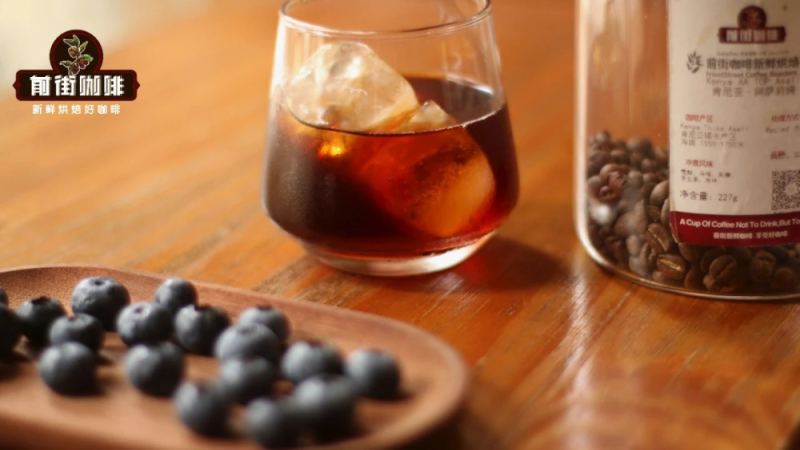
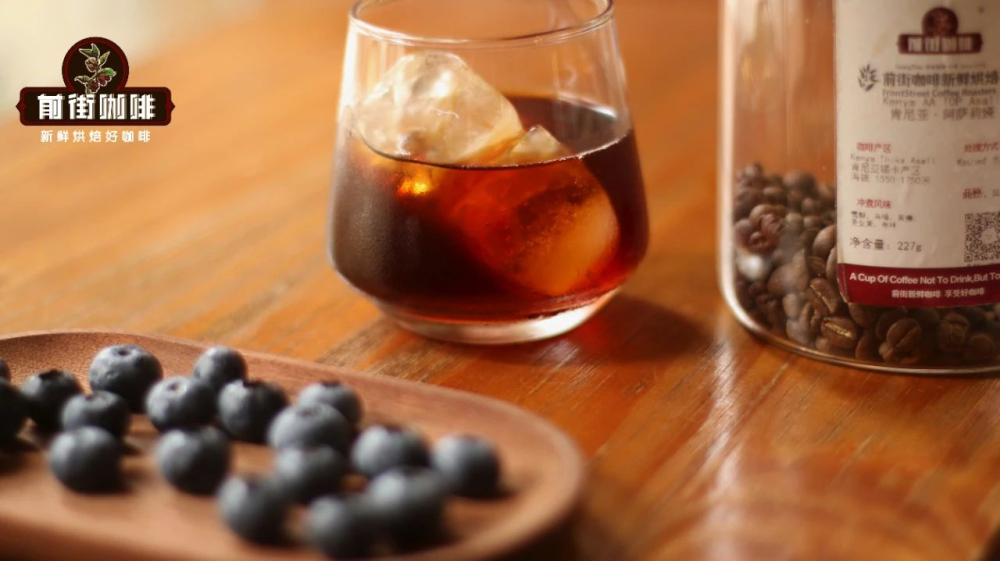
Front Street Coffee: Kenya · Little Tomato Coffee Beans
Region: Thika, Kenya
Altitude: 1550m–1750m
Processing Method: K72 Washed Processing
Varieties: SL28, SL34
If we want to discuss in depth how Kenyan coffee beans' acidity comes about, we must mention Kenya's local growing environment, coffee varieties, and processing methods.
The red volcanic soil where Kenya grows coffee contains large amounts of phosphoric acid. In addition, Kenya's common SL28 and SL34 coffee varieties are Bourbon variants. Through cupping multiple Kenyan coffee beans, Front Street also found that these two varieties, SL28 and SL34, have prominent berry acidity.
The reason Kenyan coffee's flavor is so clean and bright is thanks to Kenya's unique post-processing method—the Kenya 72-hour washed processing method. The Kenya 72-hour washed processing method is also known as the K72 washed processing method.
After the coffee cherries are depulped, the parchment beans with mucilage are placed into fermentation tanks without water for dry fermentation, with water introduced every 6–8 hours to wash the parchment beans and drained, repeating the dry fermentation; this stage takes 24 hours.
In the second stage, the fermentation tank is not filled with water, fermenting for 12–24 hours, then manually channeled into washing channels, where most of the mucilage is removed by stirring.
The second stage repeats the fermentation step once more, this time filling the fermentation tank with more water, then performing a second fermentation in clean water; the second soaking lasts 12–24 hours, during which the small amount of residual sugar and mucilage on the parchment bean surface continues to ferment and is finally removed. Finally, the coffee beans are moved to drying beds for sun drying.
Front Street believes that coffee beans processed through the Kenya 72-hour washed method can have a cleaner, brighter yet fuller flavor.
Front Street's brewing parameters for the Kenya Asaliya coffee beans are as follows:
Filter: Hario V60
Water Temperature: 90℃–93℃
Dose: 15 grams
Coffee-to-Water Ratio: 1:15
Grind Size: EK43s #10 (80% passing through China standard No. 20 sieve)
Front Street uses a three-stage pouring method: use 30g of water for a 30-second bloom, then pour in a circular motion to 125g in the second stage, wait for the water level to drop until the coffee bed is about to be exposed, continue pouring to 225g and stop, remove the filter once the coffee liquid has fully flowed into the server; extraction time is 2 minutes.
When it comes to enjoying single-origin coffee, besides pour-over, SOE—increasingly popular in cafes in recent years—has also become one of many people's home brewing options. For the above fruit-rich Kenyan coffee beans, some customers have asked Front Street whether they can be made into SOE Americano or SOE Latte; the answer is undoubtedly, of course it's no problem.
In Front Street's view, a good SOE first requires good beans, then a roast level suitable for the espresso machine, and then ideal extraction and serving—the premise of the latter being freshly ground. Since roasted coffee beans have an optimal flavor period, and once past the peak of aroma, the flavor will be difficult to extract. The beans shipped by Front Street are all freshly roasted within 5 days, with the aim of letting everyone enjoy the most complete flavor window, so if you want to taste the fullest Kenyan coffee aroma, Front Street does not recommend buying pre-ground coffee powder directly.
The so-called "suitable roast" for SOE involves three requirements: first, preserving the "terroir" of the producing region; second, giving the resulting espresso a good balance; and a crucial point—providing the maker with higher extraction stability. Otherwise, either the coffee tastes bad or lacks any SOE character, or the extraction difficulty is too high, and by the time the whole bag of beans is used up, you still haven't dialed in a satisfactory cup of SOE coffee.
Below, Front Street uses the equipment available in the store as a reference and demonstrates how to make an SOE using the Kenya · Asaliya coffee beans introduced earlier.
Front Street's store coffee machine is a commercial single-group "Lelit Bianca," which can adjust extraction by changing pressure, with a maximum pressure of 11 bar. A home coffee machine only needs to reach 9 bar of pressure to satisfy the functions of extraction and milk frothing, paired with an espresso grinder.
Front Street uses a double basket capacity, with a dose of about 18–20 grams; Front Street uses 20 grams of coffee grounds when producing. Typically the ratio of coffee grounds to coffee liquid is 1:1.5–1:2.5; Front Street's extraction ratio is 1:2, that is, 20 grams of coffee grounds extracting 40 grams of coffee liquid. Time is related to the flow rate of the coffee grounds; generally a single extraction is controlled within 20–35 seconds, because within 20 seconds the coffee usually tastes thin, while exceeding 35 seconds tends to over-extract and produce astringent and burnt bitterness. Front Street's espresso mostly falls within the range of 28–30 seconds.
Front Street first wipes the basket dry, turns on the grinder, grinds a double dose of coffee grounds, places them on an electronic scale to adjust up or down until reaching 20 grams. Then use a tool to distribute the grounds evenly and tamp the coffee puck firmly to ensure more stable extraction. Then turn on the extraction switch to release water, moistening the brew head while carrying away stuck coffee grounds, gently lock the portafilter onto the brew head, and begin extraction. When the scale shows 40 grams of coffee liquid extracted, at about 30 seconds, you can pull down the extraction switch. Pour the coffee liquid into an Espresso cup and enjoy.
The extracted Kenya · Asaliya SOE can be drunk directly, but the taste will be very intense; remember to pair it with a glass of water to rinse your mouth. When tasting, you can perceive the light-yellow crema and the berry, tomato, and cookie aromas of the coffee liquid underneath. If you can't accept espresso's strong bitterness, Front Street suggests adding ice water or warm water at a 1:4 ratio according to your preference to make a refreshing, smooth Kenyan SOE Americano, or adding steamed fresh milk at a 1:6 ratio to soften the taste, making a delicious Kenyan SOE Latte.
The above content is compiled by CoffeeHunters, a coffee news website.


