







French Press vs Wok Roast: Why These Two Ethiopian Beans Taste So Different
Yirgacheffe and Huakui 8.0 both come from Ethiopia but taste very different: washed Yirgacheffe shows bright, lemon-like citrus acidity, while natural Huakui 8.0 delivers full, juicy berry sweetness. The gap comes from two things, the processing method and the terroir of the two producing regions, Yirgacheffe and Sidamo in southern Ethiopia.
Sidamo sits in southern Ethiopia with a coffee belt between 1,400 and 2,000 meters, and most of its cherries are processed naturally to keep the fruity sweetness. Washed processing, by contrast, gives a cleaner, more delicate coffee. Water temperature and pouring technique should be adjusted to each bean, so the same brewing setup does not flatten both profiles.
Also from Ethiopia, Yirgacheffe and Huakui 8.0 present strikingly different flavor profiles—one is known for its bright, lemon-like acidity, while the other is celebrated for its full, juicy sweetness. Where exactly does this difference come from? The answer lies in the core logic of the two processing methods, washed and natural, as well as in the terroir of the two producing regions, Yirgacheffe and Sidamo. This article will take you into these two famous regions, break down the mechanisms by which processing methods influence coffee flavor, and, based on the characteristics of these two beans, offer Front Street Coffee's recommendations on water temperature, pouring technique, and parameter adjustments for actual brewing, helping you find the brewing solution that best suits your own taste.
For more specialty coffee knowledge, please follow our WeChat public account: Front Street Coffee (FrontStreet Coffee)
When it comes to African single-origin coffees with a clean flavor and rising acidity, Ethiopia is always a producing region you cannot avoid. Washed Yirgacheffe carries a signature bright citrus quality, while natural Huakui presents a full, juicy berry-like character. These two beans alone account for a large share of the favorites among lovers of medium-light roasts. They come from the same country, so why do they perform so differently in the cup? Today, Front Street will take you into two heavyweight Ethiopian producing regions—Yirgacheffe and Sidamo—to find out.
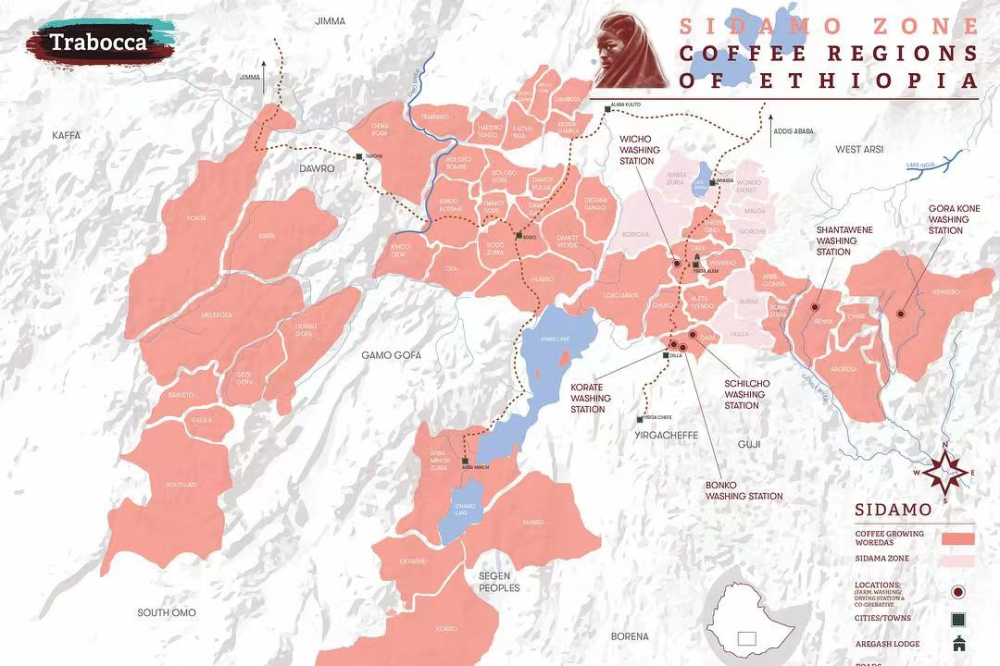
Sidamo Coffee Producing Region
Sidamo is located in southern Ethiopia, bordered by the Arsi and Bale administrative zones to the east and Gamogofa to the west. Its coffee-growing belt is generally distributed between 1,400 and 2,000 meters above sea level. Agriculture is the main industry in the area, and most coffee farms are spread around the East African Rift Valley.
In recent years, the Sidamo region has gained strong momentum and has gradually become an important coffee export hub in Ethiopia. Its terrain, soil, microclimate, and countless native varieties together create subtle differences in the flavor of coffee from each town. Thanks to its rich floral and fruity aroma expression, Sidamo coffee cherries are mostly processed by the natural method, with the aim of maximizing the retention of the floral-fruity sweetness and juicy character of the fruit.
Why can natural processing give coffee a full fruity flavor?
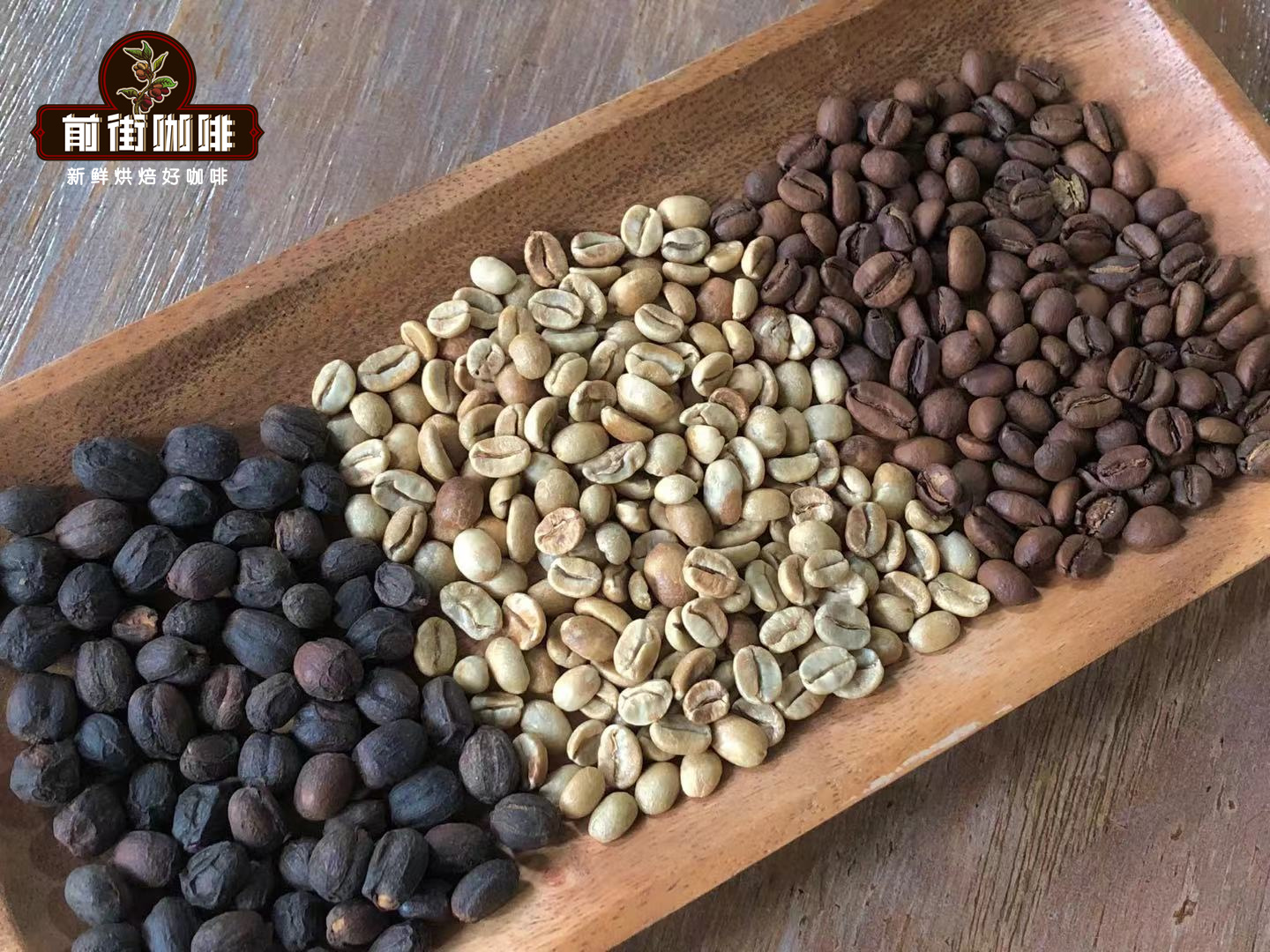
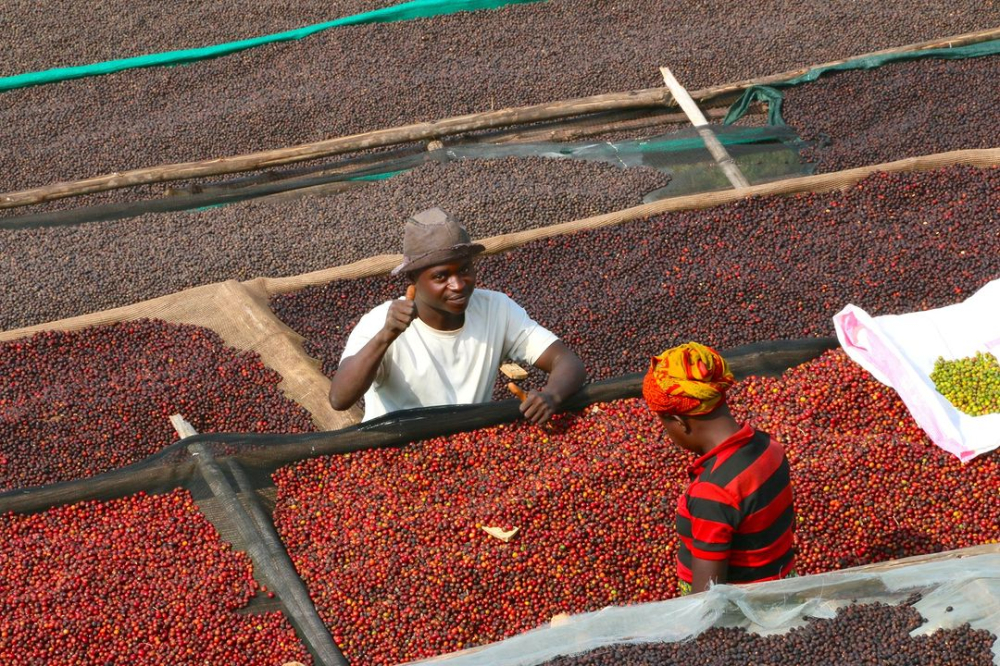
Natural processing, known in English as Dry Process, Natural, or Sun Dried, simply means spreading the whole coffee cherry directly under the sun to dry. Compared with other processing methods, the steps of natural processing are much simpler. As long as the weather cooperates, whether on African-style drying racks or clean concrete patios, the cherries can be spread out to receive sunlight.
Because natural processing dries the fruit with the entire pulp intact, its moisture content is much higher than that of washed beans with the skin and mucilage removed, so the drying cycle is also longer, usually twice that of washed coffee. For example, in sunny Ethiopia, it takes at least three weeks to dry to a storable level. In Central and South America, some large estates with the means to do so build wooden drying racks or sheds with shading functions, allowing the fruit to dry more slowly and producing varying degrees of fermentation. This slow natural drying often takes four to five weeks.
After the coffee cherries are sun-dried and their moisture content drops to 11% to 13%, the skin, pulp, and pectin layer are then removed. During the drying process, which lasts about a month, the coffee beans continuously absorb sugars from the pulp and pectin layer, and these sugars are ultimately transformed into the juicy sweet-and-sour taste in the cup. At the same time, under sunlight the pulp undergoes slight fermentation, and after the fermented flavors are absorbed by the beans, the brewed coffee presents a full and smooth texture. Front Street believes that the most prominent flavor labels of natural processing are intense fruity aroma and a slight fermented note, with high sweetness and a rounded mouthfeel.
Huakui coffee beans come precisely from a natural batch in the Hambela region of Sidamo. Unlike other Sidamo coffees, only natural beans from the Buku processing plant in Hambela are eligible to bear the name "Huakui." As an agricultural product, coffee varies slightly in flavor each year with climate and soil changes. Therefore, in order to distinguish later batches from the one that won the championship in 2017, subsequent batches are given an X.0 number. For example, the 2021 batch was called "Huakui 5.0," and the latest 2024 batch is naturally called "Huakui 8.0."
Front Street Coffee (FrontStreet Coffee) : Sidamo · Huakui 8.0 Coffee Beans Country : Ethiopia Region : Sidamo · Guji Region Altitude : 2,250–2,350 meters Variety : Local heirloom varieties Processing Method : Natural process
Flavor : Floral, jackfruit, dried fruit, apricot, juicy
The new-crop Huakui 8.0 shows a more intense fruit profile at the dry-aroma level than 7.0, with guava, jackfruit, apricot, dried fruit, citrus, and pink floral notes interwoven into a dense aromatic layer. After hot water is poured, the sweet aromas of honey, berries, and chocolate emerge.
When Front Street cupped this 8.0, the first impression on the palate was the overlapping sweet-and-sour fruit layers of dried mango, jackfruit, orange, and passion fruit, with a clear juicy character and a rounded texture. After the temperature dropped slightly, the delicate sweetness of white peach and the bright acidity of berries gradually emerged, and after swallowing there was a sweet finish reminiscent of black tea, with quite rich layering.
Yirgacheffe Coffee Producing Region Yirgacheffe ( Yirgacheffe ) was originally a sub-region under Sidamo, but because of its bright and delicate coffee flavor it developed a style of its own. Due to its extremely high recognizability, coffee farmers took pride in their beans having a Yirgacheffe-like flavor, and it eventually became independent from Sidamo, becoming today's most famous Yirgacheffe producing region. According to Front Street's understanding, aside from its innate terroir, the introduction of the washed processing method contributed greatly to Yirgacheffe's ability to possess such a distinctive style label.
Ethiopia as a whole has a high altitude and abundant sunshine, making it naturally suitable for drying coffee cherries directly in the sun. In earlier years, Yirgacheffe also mainly used natural processing. But traditional natural processing meant spreading the cherries directly on the ground to dry, without sorting or flotation, resulting in uneven quality. It was not until the 1970s, when the first washing station in Sidamo State was built in Yirgacheffe town, that washed processing gradually spread locally.
As farmer cooperatives continued to be established, the willingness to build washed processing plants grew stronger in order to improve green bean quality for export, increase income, and serve more communities at the same time. Unlike natural processing, washed stations first had to solve the problem of water supply, then invest in depulping machines, and also needed sufficient manpower. Therefore, from a production perspective, places with people, water, and roads were the best choices for building washing stations, and Yirgacheffe happened to have these conditions.
Yirgacheffe town is located in the Gedeo Zone, right downstream of the Great Lakes, and is rich in springs and river resources, providing ample fresh water for washing stations. Front Street also noticed that in ancient Ethiopian language, "Yirgacheffe" is composed of two words: Yirga ይርጋ Yərga means calm and stable, while Cheffe ጨፌ Č̣äfe refers to marshy wetlands. Together they mean "let us settle and thrive in this wetland."
Why can washed processing make coffee flavor bright and elevated? After harvesting, the coffee cherries first undergo flotation to remove cherries with insufficient density. Then the skin and pulp are removed by machine, and the beans are placed in water tanks for fermentation with or without water, using fermentation to break down the pectin layer. After fermentation is complete, the remaining pectin is rinsed off with clean water, and finally the beans are sun-dried until the moisture content drops to between 11% and 13%.
Every step of washed processing removes impurities and defective beans, so the quality of green beans is more uniform, and the trading price is generally higher than that of natural drying methods. Washing not only greatly reduces the defect rate, but also gives Yirgacheffe a fresh citrus profile and elegant white floral notes, with an overall flavor that is bright, delicate, and clean. The Yirgacheffe daily-drinking beans launched by Front Street are washed processed, with the classic Yirgacheffe flavor profile, suitable for pour-over, cold brew, French press, and many other brewing methods.
So are there only washed beans in the Yirgacheffe region? Not at all. Although washed Yirgacheffe is refreshing, some cooperatives still retain the natural tradition. For example, batches such as Natural Red Cherry and Konga on Front Street's bean rack are well-known natural representatives of Yirgacheffe.
When brewing Yirgacheffe and Sidamo, do the techniques and parameters need to be treated differently?
When roasting coffee beans from these two regions, Front Street uses medium-light roasting to preserve rich acidity. However, the acidity and fruity direction of the two beans are not the same: washed Yirgacheffe has bright citric acidity, while natural Sidamo has soft berry acidity, so targeted adjustments can be made to water temperature and pouring technique during brewing.
The recommended coffee-to-water ratio is maintained at 1:15, with a medium-fine grind (78% passing through a Chinese standard No. 20 sieve). If too coarse, it cannot extract enough body, and the coffee will taste thin; if too fine, it is prone to over-extraction at high temperatures, bringing bitterness.
Front Street also recommends using freshly roasted coffee beans for brewing, as only then can you experience the coffee's rich flavor to the greatest extent. The coffee beans shipped by Front Street Coffee (FrontStreet Coffee) are all within 5 days of roasting, because Front Street deeply understands the great impact of freshness on flavor. Front Street's roasting philosophy is "freshly roasted good coffee," so that every customer who places an order receives the freshest beans upon delivery. The resting period for coffee is about 4-7 days, so by the time customers receive it, it is exactly at its optimal flavor state.
For washed Yirgacheffe, Front Street uses coffee beans produced by the Gotiti Cooperative. The Gotiti Cooperative was once affiliated with the Worka Cooperative, and because of its outstanding coffee quality, it was discovered by CoffeeHunters and became an independent coffee production cooperative, which fully demonstrates the excellence of its washed Yirgacheffe.
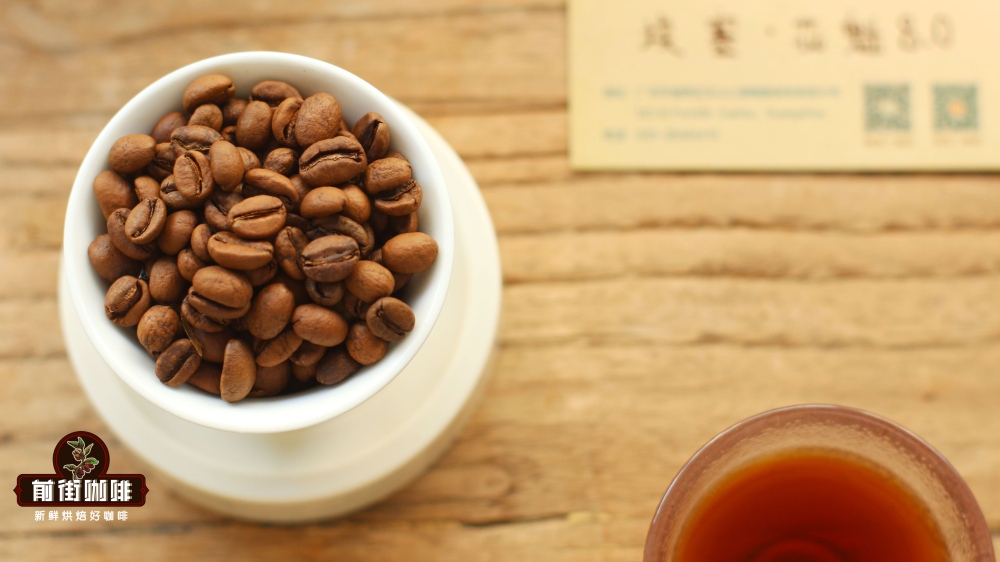
Washed Yirgacheffe (Gotiti) brewing adjustments: If you pursue bright, elevated acidity with a tea-like finish, you can brew at 90°C-91°C; if you want fuller acidity and higher body, use 92°C-93°C. When cupping washed Yirgacheffe, Front Street noticed that at different temperatures it can display different layers of delicate flavors (white floral, green tea, etc.), so the brewing technique uses three-stage extraction, allowing different flavor compounds to be released one by one as the coffee bed rises in temperature stage by stage.
For natural Sidamo, Front Street believes the most representative is Huakui. Many fans know that Huakui refers to a natural bean from Ethiopia's Hambela region, with the full English name "Ethiopia Guji Hambella Buku Abel." Broadly speaking, it is a champion bean from Guji; more specifically, it is a natural batch processed by the Buku Abel processing plant in Hambela. The resounding stage name "Huakui" means "leader of a hundred flowers." Its fame, excellent quality, rich and juicy fruit flavor, affordable price, and extremely high extraction compatibility—these advantages combined not only make Huakui stand out among many Ethiopian beans, but also make it the first choice for many people trying single-origin coffee for the first time.
Natural Sidamo brewing adjustments: In order to highlight sweetness and a full juicy character, Front Street brews at 91°C-92°C to enhance the overall body. When cupping natural Sidamo, Front Street found that its mouthfeel is full, with prominent juiciness and sweetness, so the brewing technique uses center-pour extraction, allowing the coffee bed to steadily and fully extract sweet-and-sour flavor compounds at the same temperature.
Three-stage pouring: The ground Huakui 8.0 coffee powder carries a sweet aroma like honey and creamy strawberry. Pour the coffee powder into a V60 dripper, wet the coffee bed with twice the coffee dose in water, and bloom for 30 seconds. Then pour in a thin stream in circles from the inside outward until 125 grams, pause, and when the coffee bed drops to half the height of the dripper, continue pouring the third stage with the same thin stream until 225 grams. Wait until all the coffee liquid has filtered through, then remove the dripper. The total time is about 2 minutes (a 10-second margin is allowed).
The above content is compiled by CoffeeHunters, a coffee news website.


