








What causes pressure to drop in espresso coffee machines?
Crema forms because a pump pushes water through a fine coffee puck at roughly 9 bar. That pressure dissolves carbon dioxide and forces oils out of the grounds. When the coffee leaves the machine, the oils trap the escaping gas and hold the golden layer on top. Weak or thin crema usually means the pressure is off.
Check the basics first: dose and grind setting, puck preparation, and pump type, since vibratory and rotary coffee machines behave differently. Too little pressure gives a thin, pale shot and fast flow; too much gives a harsh, slow extraction. Small adjustments to grind and dose usually restore a steady flow.
Espresso serves as the base for drinks like lattes and Americanos, and the golden, dense layer of crema on its surface has always been a focal point for coffee enthusiasts. To consistently achieve ideal crema performance, controlling extraction pressure is crucial. Starting from the practices at Front Street Coffee, this article first explains the formation principle of espresso crema, then discusses the impact of 9bar pressure on extraction efficiency, followed by an analysis of the specific manifestations of insufficient or excessive pressure in coffee machines, and finally summarizes the common causes of insufficient pressure. Whether you use a vibratory pump or a rotary pump model, you can find ideas for troubleshooting and adjusting pressure to ensure every cup of espresso maintains consistent quality.

Espresso is the foundation of fancy coffee drinks like Americanos and lattes. Its most distinctive feature is the thick, golden layer of crema on top. Today, Front Street Coffee (FrontStreet Coffee) will guide you through an in-depth look at the extraction principles of espresso machines.
How is espresso crema formed?
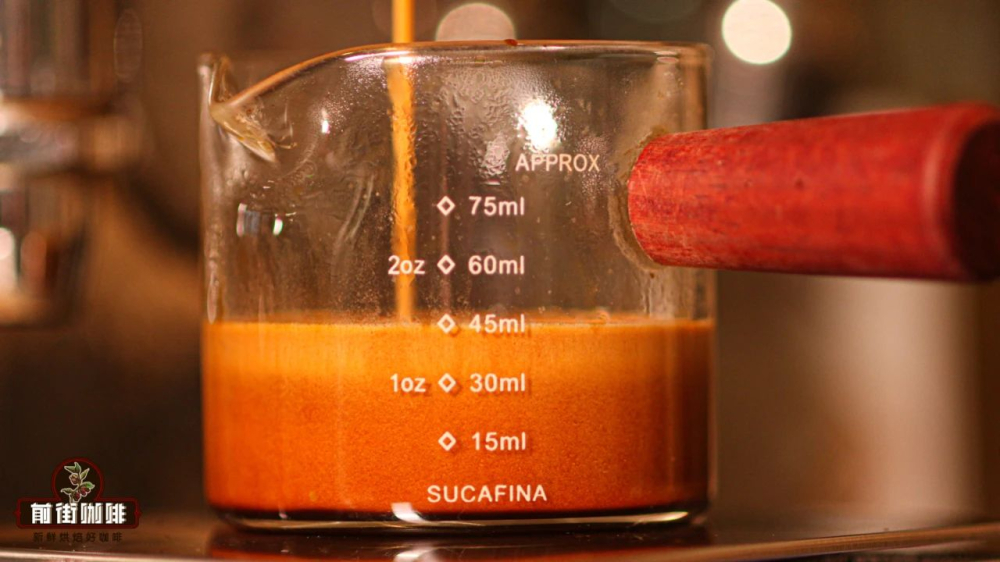
Brewing coffee under normal atmospheric pressure cannot produce golden crema. When an espresso machine extracts espresso, the coffee grounds are ground very finely, and the extraction process is subjected to pressures as high as 9bar. As hot water penetrates the coffee puck, the carbon dioxide inside the grounds becomes supersaturated due to the high external pressure, and the gas cannot escape, so it dissolves directly into the coffee liquid. At the same time, the high pressure forces the oils in the coffee grounds out of the puck, carrying them along with the hot water.
When extraction ends and the coffee liquid flows out of the machine, atmospheric pressure returns to normal. The carbon dioxide still in the coffee liquid tries to return to the air but encounters the oils also present in the liquid. The oils encapsulate the escaping carbon dioxide, forming the layer of crema we see.
From this, it is clear that the key to espresso having rich crema lies in the pressurized extraction method of the espresso machine and the use of freshly roasted espresso beans.
Unlike pour-over coffee, which pursues floral and fruity flavors, espresso emphasizes a full-bodied mouthfeel and rich crema, so it is recommended to prioritize medium-dark roasted coffee beans for making it. If you prefer a rich nutty profile, you can try Front Street's specialty blend of Brazil and Colombia; if you want even richer crema, Front Street's commercial blend and Front Street's classic blend are top choices, as they both contain a small amount of Robusta beans, which can give espresso a beautiful golden foam.
How much pressure is needed to make espresso?
When Front Street makes espresso, the coffee grounds in the portafilter basket are extracted under 9bar pressure. The soluble substances in the coffee grounds are rapidly released under pressure, so the extraction time for espresso is very short. Pour-over coffee takes an average of 2 to 3 minutes, while espresso usually finishes extraction in 20 to 30 seconds. It is this extraction method that classifies espresso as "pressurized extraction."
Espresso machines mainly rely on pumps to provide pressure, and pumps are divided into two types: vibratory and rotary. Vibratory pumps generate pressure through a piston-like structure that vibrates back and forth at high speed. The drawbacks are that they are noisy, have a shorter lifespan, and the pressure rises gradually, making it difficult to maintain a stable 9bar throughout the extraction process.
Rotary pumps, on the other hand, rely on metal blades rotating at high speed to generate pressure. Compared to vibratory pumps, they have no reciprocating motion, are quieter, last longer, and can achieve pressure instantly. Therefore, most commercial coffee machines use rotary pumps, offering superior stability for continuous cup production.

What impact does insufficient or excessive pressure in a coffee machine have on coffee?
Normally, if the extraction pressure of the coffee machine is below 9bar, extraction efficiency will decrease, and the crema will appear thin and lighter in color. When the pressure is above 9bar, extraction efficiency increases, which may cause the espresso to have a burnt and bitter taste. Of course, these discussions are based on 9bar as the reference extraction parameter.
What are the reasons for insufficient extraction pressure in a coffee machine?
Assuming the coffee machine itself is not malfunctioning, Front Street believes the following reasons may exist:

1. Insufficient heating time, insufficient boiler water temperature, and low steam volume, so the pressure cannot rise. 2. The coffee machine's boiler capacity is too small; after continuous cup production or heavy use of hot water, the boiler refills, which can also lead to insufficient pressure. 3. The coffee machine's boiler pressure is set too low at the factory, resulting in insufficient steam pressure under any circumstances. In this case, you need to contact after-sales service to readjust the pressure.
The above content is compiled by CoffeeHunters, a coffee news website.


