







Why Is Boiling Coffee Not the Same as Espresso?
Espresso is not made by boiling coffee grounds in water, and it is not concentrated reheated coffee. A standard shot comes from an espresso machine that pushes water at about 94 degrees Celsius and 9-10 bar of pressure through a very fine coffee bed, producing a honey-thick liquid in roughly 25-30 seconds.
Because home brewers often burn the grounds, the fix is parameter control: a fine grind, a firm tamp, and a machine that holds steady pressure. Blended coffee beans suited to home setups make this easier, since they are formulated to give a balanced shot with rich crema even when equipment and technique vary.
Espresso is popular worldwide for its rich, full-bodied taste, but many enthusiasts who try it at home often cannot replicate the high-concentration output of a coffee shop, and even tend to burn the coffee. In fact, making a standard espresso does not rely on simply boiling coffee grounds in water, but requires a professional espresso machine to complete the extraction by forcing high-temperature, high-pressure water quickly through a very finely ground coffee bed. This article will systematically explain the extraction principles of espresso, how to judge whether extraction is proper, the key parameter adjustment approaches, and recommendations for blended coffee beans suitable for home use, along with detailed operating steps to help you consistently make an espresso with rich crema and balanced flavor at home.
For more specialty coffee knowledge, please follow the WeChat public account: FrontStreet Coffee
Espresso enjoys extremely high recognition among coffee categories worldwide and has always been known for its rich, full-bodied taste and extremely high concentration. Many friends report that no matter how they brew at home, they cannot make the rich espresso like in a coffee shop, and if they are not careful, a burnt bitter taste appears. Today Front Street Coffee will talk with everyone about how coffee shops actually extract espresso.
How is espresso extracted?
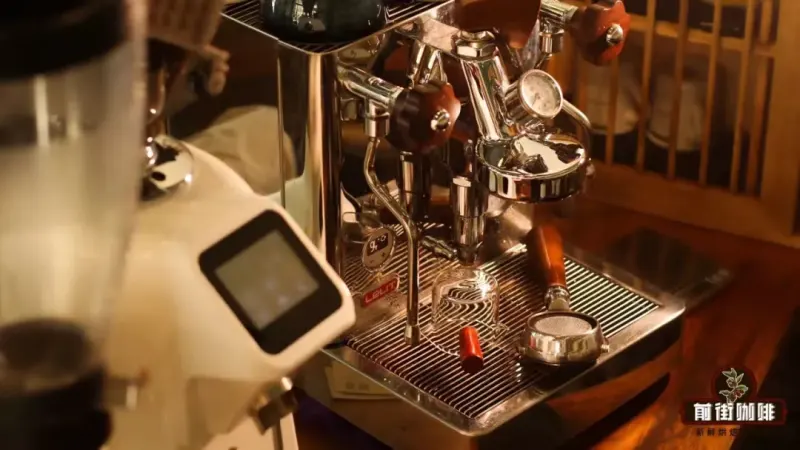
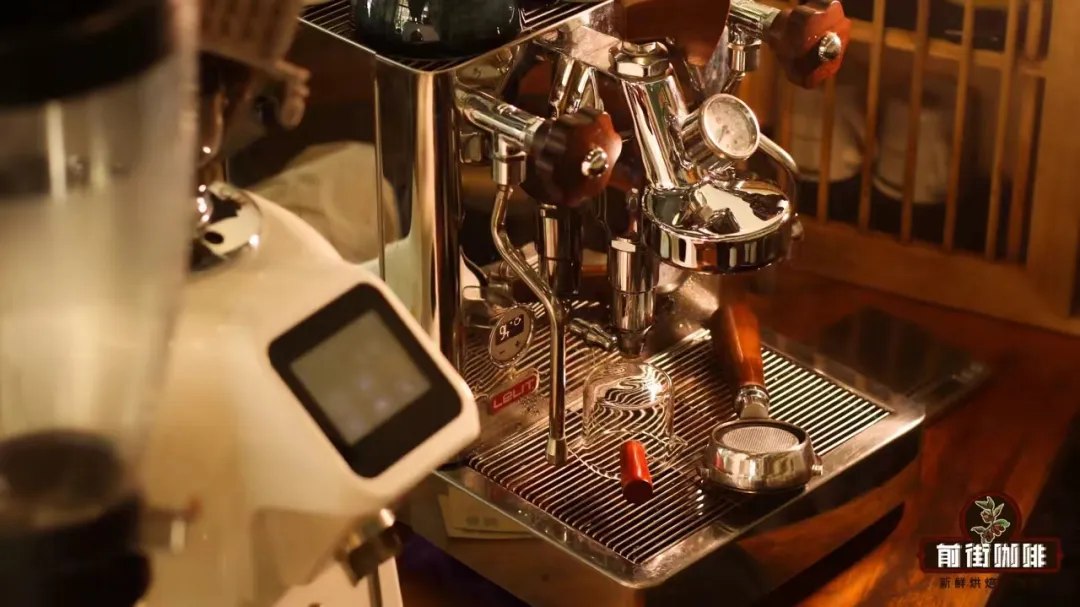
First, it must be made clear that espresso is not made by directly boiling coffee grounds in hot water, nor by reheating and concentrating already brewed coffee liquid. Making espresso requires a dedicated espresso machine, that is, the machine in a coffee shop that can shoot out steam.
The extraction principle of an espresso machine is to heat the water in the boiler to produce steam, and then use steam pressure to force hot water at about 94 degrees Celsius, under 9-10 bar of pressure, quickly through an extremely finely ground coffee bed, thereby obtaining a coffee liquid with a texture as thick as honey.
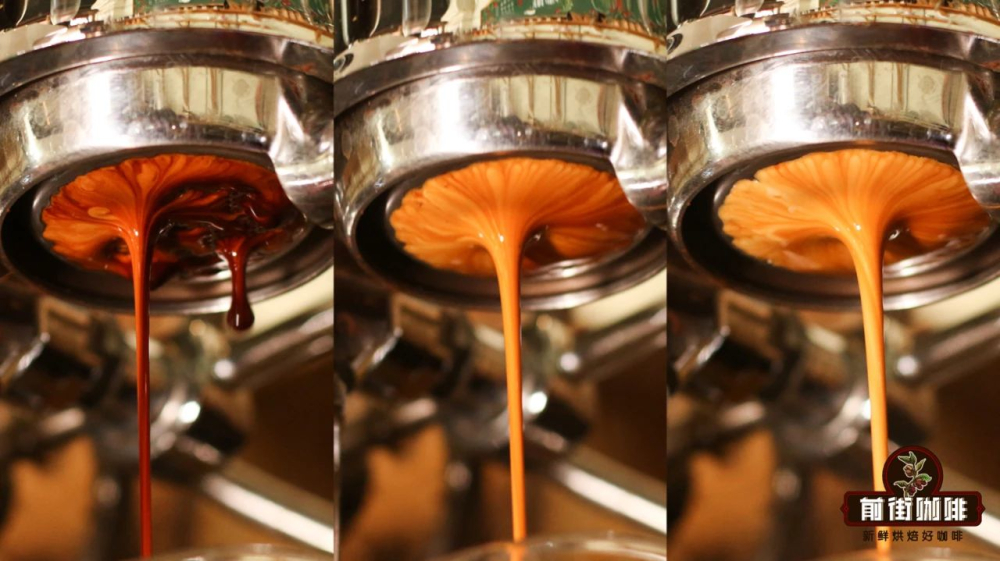
At the very beginning of extraction, the flowing coffee liquid is brownish-red, with a thick and smooth texture. As extraction time lengthens, the color of the liquid stream gradually turns golden yellow, and then light golden yellow.
How do you judge whether espresso extraction is proper?
The entire espresso extraction is very fast, usually completed in 25-30 seconds. However, because the performance of each coffee machine and grinder differs, espresso does not have a fixed, unchanging parameter that can be copied exactly.
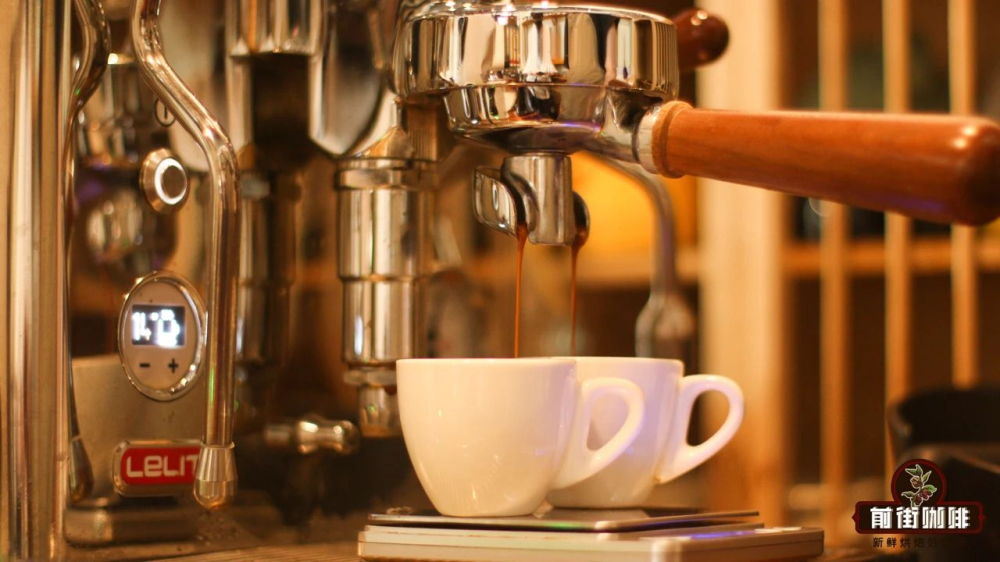
Therefore Front Street Coffee can only provide a starting reference value, and everyone should then fine-tune based on the taste performance of the final espresso: (double basket) use 20g of coffee, at a 1:2 ratio, with 9 bar pressure and 94 degrees Celsius hot water, extract 40g of coffee liquid; (single basket) use 10g of coffee, at a 1:2 ratio, with 9 bar pressure and 94 degrees Celsius hot water, extract 20g of coffee liquid. Extraction time should be controlled between 25-30 seconds for both.
If the flow rate is too fast during extraction, or the espresso tastes thin, you can adjust the grind finer, or increase the amount of coffee grounds used for extraction (choose one of the two); if the flow rate is too slow during extraction, or the espresso shows burnt bitterness, you can adjust the grind coarser, or reduce the amount of coffee grounds used for extraction (choose one of the two).
What coffee beans are used to extract espresso?
If you are new to espresso, Front Street Coffee recommends choosing blended coffee beans designed specifically for espresso. The greatest advantage of blend beans is stability, and they are also cost-effective. Through combinations of different origins and different proportions, you can avoid single-origin coffee beans (from a single origin) exposing their own shortcomings when concentration is high and extraction yield increases.
If you want espresso to have a unique and rich aroma and flavor, you can buy Front Street Strawberry Candy Espresso; the 227g package is very suitable for home use. This is an espresso recipe launched specifically for friends who like floral and fruity aromas, blending three major origins: Costa Rica, Colombia, and Ethiopia. It has aromas of roses, citrus, grapes, and dried blueberries, and when paired with milk it presents a flavor like strawberry gummy candy.
If you want espresso that is rich and not sour, with a full aroma, you can try the medium-dark roasted Front Street Specialty Blend coffee beans; the 454g package is very suitable for friends who love drinking coffee. This coffee uses Arabica coffee beans from the Huila region of Colombia and the Cerrado region of Brazil, with a rich roasted nut aroma, a full-bodied feel like dark cocoa, and a caramel-like sweetness and lingering finish.
The extraction steps for espresso
First turn on the coffee machine switch and wait for the machine to heat up automatically. Then prepare freshly roasted coffee beans and grind them into extremely fine coffee grounds. Next, according to the capacity of the filter basket, lock in the portafilter and fill it with the corresponding amount of coffee grounds.
After filling with coffee grounds, use your fingers to distribute the coffee bed as evenly as possible in the filter basket, then use the tamper provided with the coffee machine (or the flat end of the other side of the coffee bean/grounds scoop) to tamp the coffee grounds vertically.
Next, lock the portafilter onto the group head of the coffee machine and confirm whether it is locked tightly. Then press the switch and extract to the desired state, and the espresso is complete.
The above content is compiled by CoffeeHunters, a coffee news website.


