







What Makes Panama Geisha Taste So Distinct?
Panama Geisha is known for floral aroma, juicy acidity, and a clean cup, and the Red Label from Hacienda La Esmeralda is a benchmark example. The variety arrived from Ethiopia, reached Costa Rica's CATIE collection as T2722, and was later planted in Boquete, Panama, where its reputation was built.
A home recipe for Hacienda La Esmeralda Red Label works well with both V60 pour-over and French press, aiming at white florals, berry sweetness, and honeyed body. Following the estate's grading system matters too, since label differences explain why some Geisha cups taste far from the expected flavor profile.
Geisha coffee has conquered countless coffee lovers with its signature floral aroma and juicy mouthfeel, and the Red Label Geisha from Panama's Hacienda La Esmeralda is the finest among them. This article will start with the historical origins of the Geisha variety, tracing its spread from the forests of Ethiopia to the Boquete estate in Panama, and analyzing how Hacienda La Esmeralda discovered and promoted this legendary flavor. At the same time, Front Street Coffee will share a complete brewing recipe for Hacienda La Esmeralda Red Label Geisha, covering both V60 pour-over and French press methods, so you can recreate that clean cup with white florals, berry-like sweetness and acidity, and honeyed sweetness at home.
If you randomly asked a coffee lover which coffee is the most expensive right now, most people would probably answer Geisha. Times change, and people's preferences for coffee flavors continue to evolve. The full-bodied Blue Mountain that was once highly praised has now given way to Geisha with its floral and fruity profile.
Those encountering Panama Geisha for the first time are often stunned by its striking fragrance and juice-like sweetness and acidity, finding it hard to believe coffee can present such a fascinating flavor. However, some friends have only heard of Geisha's reputation and are not clear about the grading information behind it. Next time they catch a glimpse of the words Red Label on a cafe menu and get excited, only to find when they taste it that it is completely not the flavor they expected.
The Geisha variety originally came from Ethiopia. In 1931, a British diplomat recorded Geisha during an expedition in Ethiopia, marking the first time the variety appeared in literature. After that, Geisha was sent to coffee research institutions in Kenya and Tanzania. After many twists and turns, it arrived at Costa Rica's CATIE agricultural research center and was given the number T2722.
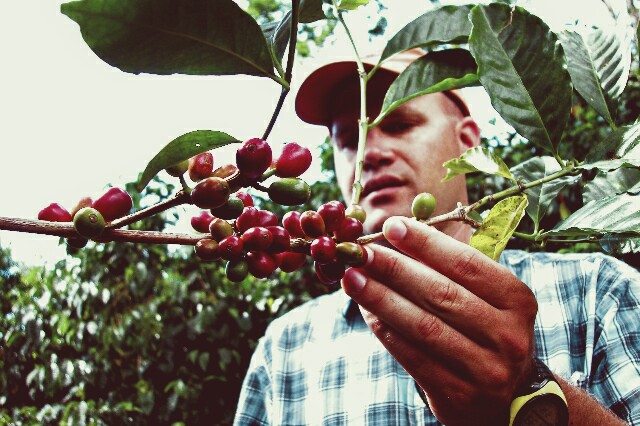
Because Geisha has a certain resistance to coffee leaf rust, some coffee farmers obtained Geisha seeds from CATIE. One estate owner named Don Pachi introduced Geisha for cultivation in the 1960s and exchanged different varieties with other estate owners in Panama. At the time, many estates did not mark their plantings in detail, and many people only noticed that coffee at low altitude tasted better than at high altitude, never realizing the issue was the variety. It was not until years later, when Hacienda La Esmeralda won the competition, that everyone suddenly understood.
In order to improve coffee quality, Hacienda La Esmeralda had purchased seeds of multiple varieties from Costa Rica's CATIE for cultivation. After recording and comparison, Geisha performed especially brilliantly. Traditional Central American coffee is mainly characterized by nutty notes, soft fruit acidity, and caramel sweetness, while Geisha showed a unique profile of white florals and rich fruit flavors.
Daniel, the owner of Hacienda La Esmeralda, took the advice of industry insiders and sent a washed Geisha from the Mario plot to compete in the 2004 BOP competition. It won first place in one go and set a new auction price record for green coffee that year, completely shedding the shadow of ranking at the bottom of BOP at the end of the last century.
After that, major estates in Panama began planting Geisha one after another. Hacienda La Esmeralda was both the discoverer and promoter of Geisha's flavor, and even many estates in Central and South America came to learn from it. Some people also made special trips to Ethiopia to trace its roots and established Gesha Village near the Geisha forest. Although Gesha Village also plants the Geisha variety, scientific verification shows that it differs significantly from Panama Geisha at the genetic level, and its main flavor profile is therefore completely different.
At present, regions growing Geisha include Colombia, Costa Rica, El Salvador, as well as Yunnan and Taiwan in China. After cupping and comparing Geisha from multiple regions, Front Street believes that Geisha produced in Panama performs more prominently in flavor.
Panama Geisha is known for its distinct floral aroma, full juicy mouthfeel, and rich layering, which are difficult for other regions to match. Panama's coffee-growing areas are located around Baru Volcano. The volcano's highest peak is nearly 3,500 meters above sea level. Warm, moist air currents from the Pacific and Atlantic converge here, bringing abundant rainfall; mineral deposits around the volcano provide the soil with rich nutrients. Such superior natural conditions and high-altitude terrain together create a heavenly coffee flavor.
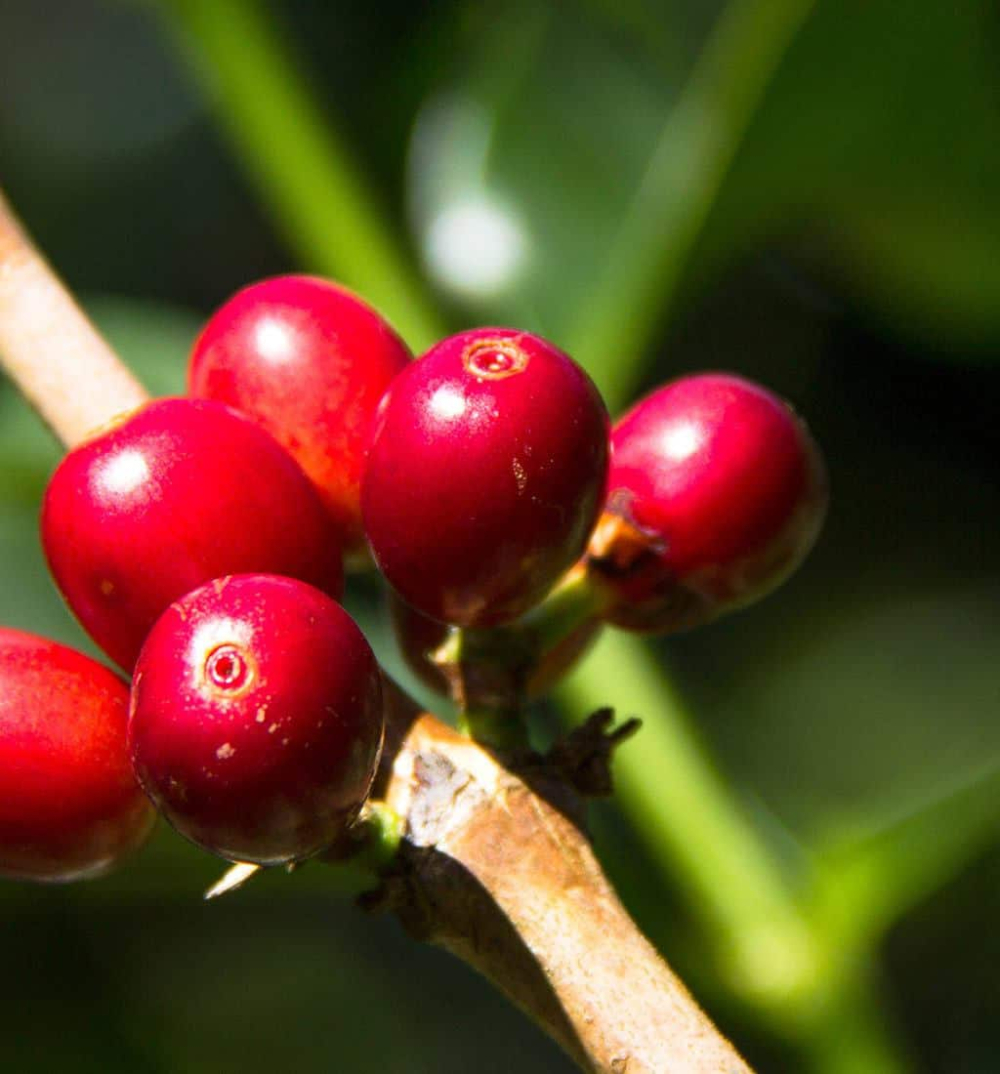
Front Street mentioned earlier that Hacienda La Esmeralda in Panama is the discoverer and promoter of Geisha's flavor. FrontStreet Coffee naturally also reserves a place for it on its bean list. Friends familiar with Hacienda La Esmeralda all know that its Geisha brand was originally divided into three grades: Red Label, Green Label, and Blue Label. In 2021, Hacienda La Esmeralda discontinued Blue Label to protect its brand image, leaving only Red Label and Green Label in the Geisha line.
Red Label is Hacienda La Esmeralda's most core Geisha brand, requiring Geisha coffee beans grown above 1,600 meters and a cupping score above 90 points. The Hacienda La Esmeralda Red Label Geisha on FrontStreet Coffee's bean list is selected from the slow natural Geisha of the Mario plot. Front Street specifically chose beans from the same plot as the 2004 BOP champion, namely the Mario plot.
In addition, the slow natural process keeps the whole coffee cherry for slow drying, allowing as many sugars as possible to slowly penetrate into the green beans, giving the coffee a richer aroma and sweetness.
Front Street Panama Hacienda La Esmeralda Red Label Geisha coffee beans
Region: Boquete, Panama
Estate: Hacienda La Esmeralda
Plot: Mario
Altitude: 1,600 meters—1,800 meters
Variety: Geisha
Process: Slow natural
When roasting this bean, FrontStreet Coffee used a medium-light roast to highlight the floral and fruity aroma and full juicy mouthfeel as much as possible. For brewing, Front Street recommends a coffee-to-water ratio of 1:16. Slightly widening the water-to-coffee ratio allows you to perceive the floral aroma more clearly, keeps the flavor from being too concentrated, and makes the acidity softer.
Dripper: Hario V60
Water temperature: 90°C
Dose: 15 grams
Coffee-to-water ratio: 1:16
Grind size: 80% passing through a China standard No. 20 sieve
Pour 30 grams of hot water and bloom for 30 seconds. Pour from the center with a thin stream of water and slowly circle to 140 grams. When the water level in the dripper drops to the point where the coffee bed is about to be exposed, continue pouring in circles to 240 grams. Total extraction time is about 2 minutes.
Even if the coffee beans are freshly roasted within 5 days when Front Street ships them and have already rested for 4 to 7 days by the time you receive them, Front Street still recommends blooming during brewing. This is because carbon dioxide in the coffee beans hinders hot water from entering the internal structure to dissolve flavor compounds. Blooming promotes degassing of the coffee grounds and provides more stable conditions for subsequent extraction.
The Hacienda La Esmeralda Red Label Geisha brewed by FrontStreet Coffee according to the above parameters has a berry-like sweetness and acidity, obvious white florals, and honey-like sweetness, with a clean and bright mouthfeel.
If brewing with a French press, Front Street recommends a grind size of 75% passing through a China standard No. 20 sieve, a coffee-to-water ratio of 1:15, a steeping time of 4 minutes, and a water temperature of 93°C.
First preheat the French press and discard the hot water, then add 15 grams of coffee grounds, then pour in 225 grams of hot water, and cover with the lid.
After 4 minutes, gently press the plunger down to one quarter of the carafe, then pour out the coffee liquid and enjoy.
The above content is compiled by CoffeeHunters, a coffee news website.


