







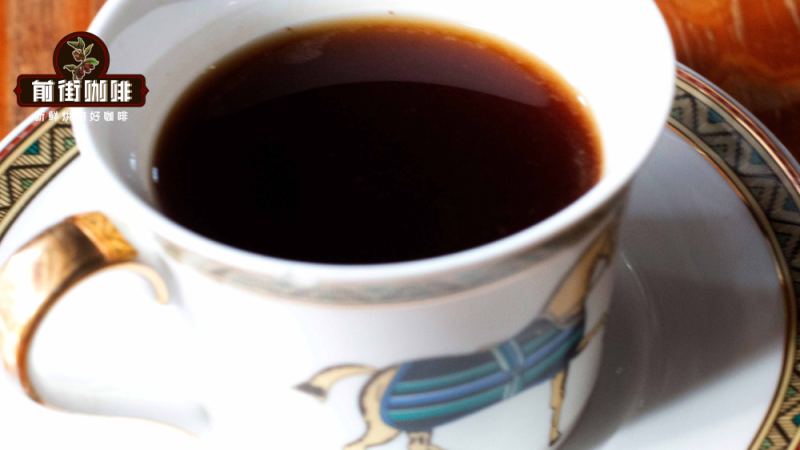
What sets Blue Mountain coffee apart from an Americano?
Blue Mountain coffee is a single-origin coffee from Jamaica's Blue Mountain region, graded by altitude, green bean size, and defect rate, with No. 1 beans grown between 1,000 and 1,700 meters on a 17/18 screen. Americano is not a bean at all: it is espresso diluted with hot water, an Italian-style category rather than a place of origin.
The two differ at every stage. Blue Mountain No. 1 is often brewed pour-over on a KONO dripper at 88°C with a 1:15 ratio, while Americano depends on espresso extraction and added water. One is defined by its coffee green bean source and grading, the other by how a shot is built and diluted.
Many coffee lovers have drunk plenty of coffee, yet may not necessarily be able to distinguish the essential difference between Blue Mountain coffee and Americano. The former is a single-origin coffee produced in Jamaica's Blue Mountain region, with strict grading for altitude, screen size, and defect rate; the latter is an Italian-style coffee category made by diluting espresso as a base with water. This article, from the perspective of Front Street Coffee, systematically sorts out the origin story and grading of Blue Mountain coffee, explains in detail the KONO dripper, 88°C water temperature, 1:15 coffee-to-water ratio and other parameters used by Front Street to brew Blue Mountain No. 1, and also explains the historical origins of Americano and the logic of espresso extraction. It also gives the specific ratios for Front Street's Sunflower Warm Sun blend in hot Americano and iced Americano, and finally compares the fundamental differences between the two technical routes of pour-over and espresso.
For more specialty coffee information, welcome to follow: Front Street Coffee (Frontsteet Coffee)
The aroma of a cup of coffee can often give busy workers a moment of relaxation. However, drinking a lot of coffee does not mean everyone clearly understands what Blue Mountain coffee and Americano actually are. Now let Front Street talk about what differences truly exist between the two.
What is Blue Mountain coffee?
Blue Mountain coffee beans belong to single-origin coffee beans. The reason they are called "Blue Mountain" is that their place of origin is located in the Blue Mountain area of Jamaica. The Blue Mountain range is surrounded by the Caribbean Sea. On clear, fine days, sunlight shines directly on the sea surface, and the dazzling blue radiance reflects on the mountains, which is how Blue Mountain got its name.
It should be noted that not all coffee grown in the Blue Mountain area can be called Blue Mountain coffee. According to cultivation altitude, Blue Mountain coffee beans can be divided into Jamaica Blue Mountain coffee, Jamaica High Mountain coffee, and Jamaica Prime coffee; based on green bean size and quality, they are further divided into four grades: No. 1, No. 2, No. 3, and PB.
Among them, Jamaica Blue Mountain No. 1 coffee beans require a cultivation altitude between 1,000 and 1,700 meters, a green bean size of 17/18 screen, and a defective bean proportion below 2%, making them the highest grade in the Jamaica Blue Mountain system. Outstanding quality naturally comes with a high price.
Genuine Blue Mountain coffee is expensive. This world-class coffee bean grows in fertile volcanic soil with suitable temperature conditions, and the finished product has a rich nutty aroma with a balanced and mellow taste. Blue Mountain coffee beans are usually presented by pour-over. Many friends worry that they cannot brew a result with balanced acidity, sweetness, and bitterness and a full body, so they go to the Front Street Coffee (FrontStreet Coffee) store and ask Front Street's baristas for help.
The parameters used by Front Street Coffee (FrontStreet Coffee) when brewing Blue Mountain coffee are as follows:
Dripper: KONO dripper
Water temperature: 88°C
Coffee dose: 15 grams
Coffee-to-water ratio: 1:15
Grind size: 75% passing through a Chinese standard No. 20 sieve
In order to highlight the mellowness of Blue Mountain coffee, Front Street recommends choosing a dripper with an immersion function. The upper wall of the KONO dripper is smooth, while the lower part has short ribs. After the filter paper is wet, it can fit against the wall, and the ribs below serve to guide the flow, allowing the coffee grounds and hot water to fully contact and thereby extract more flavor substances. Compared with the Hario V60, coffee brewed with the KONO dripper shows a clear improvement in body.
Because Blue Mountain coffee beans are roasted relatively dark, Front Street controls the grind for this bean at 75% passing through a Chinese standard No. 20 sieve. Dark-roasted beans have a looser structure, and coffee substances are released more easily, so the grind size should be coarser than for light-roasted beans to avoid brewing out burnt and bitter flavors.
When Front Street brews Blue Mountain coffee, it first pours 30 grams of hot water for a 30-second bloom; after the bloom is complete, it slowly pours in a thin stream in circles from the center point to 125 grams; when the water level in the dripper drops to the point where the coffee bed is about to be exposed, it continues pouring in circles to 225 grams, with a total extraction time of about 2 minutes.
After Front Street's Blue Mountain No. 1 coffee is brewed, it presents rich nutty and dark chocolate flavors, with balanced acidity, sweetness, and bitterness, and a mellow taste.
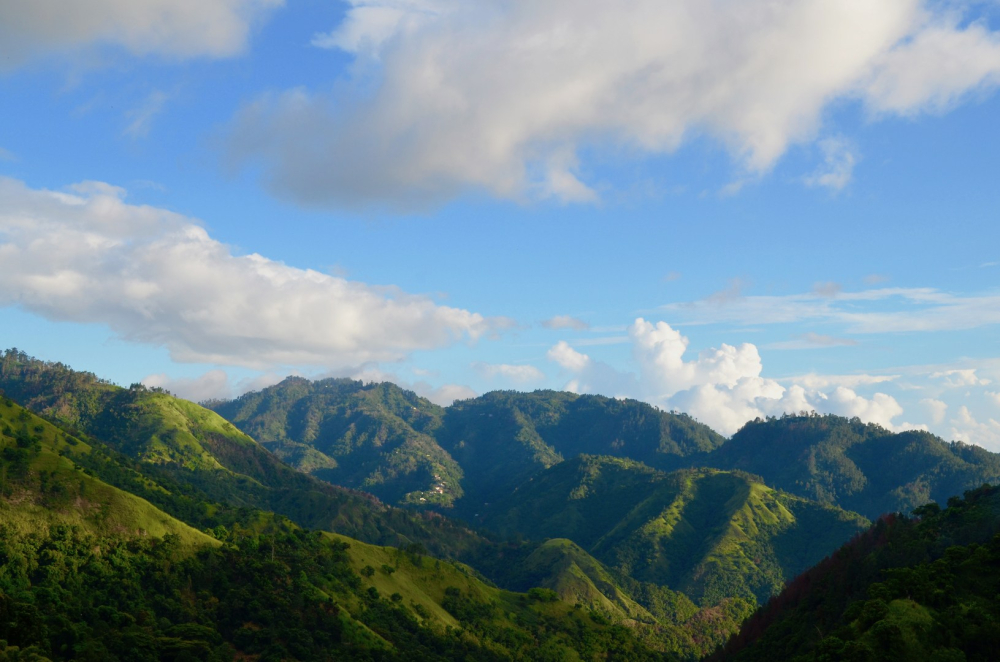
Front Street Coffee (FrontStreet Coffee) Jamaica Blue Mountain No. 1 coffee beans
Region: Jamaica Blue Mountain
Estate: Clifton Farm
Altitude: 1,310 meters
Variety: Typica
Processing method: washed process
Blue Mountain coffee is famous, and some merchants play word games with consumers. Many products such as "Blue Mountain flavor coffee" and "Blue Mountain blend coffee" have emerged on the market. Such coffee may not contain a single bean truly from Jamaica Blue Mountain. Front Street's Blue Mountain No. 1 coffee beans come from Clifton Farm in Jamaica's Blue Mountain, a farm with more than two hundred years of history. After comparing multiple Blue Mountain No. 1 coffee beans, Front Street believes that Clifton Farm's Blue Mountain No. 1 performs outstandingly and can be regarded as one of the excellent representatives of Blue Mountain coffee.
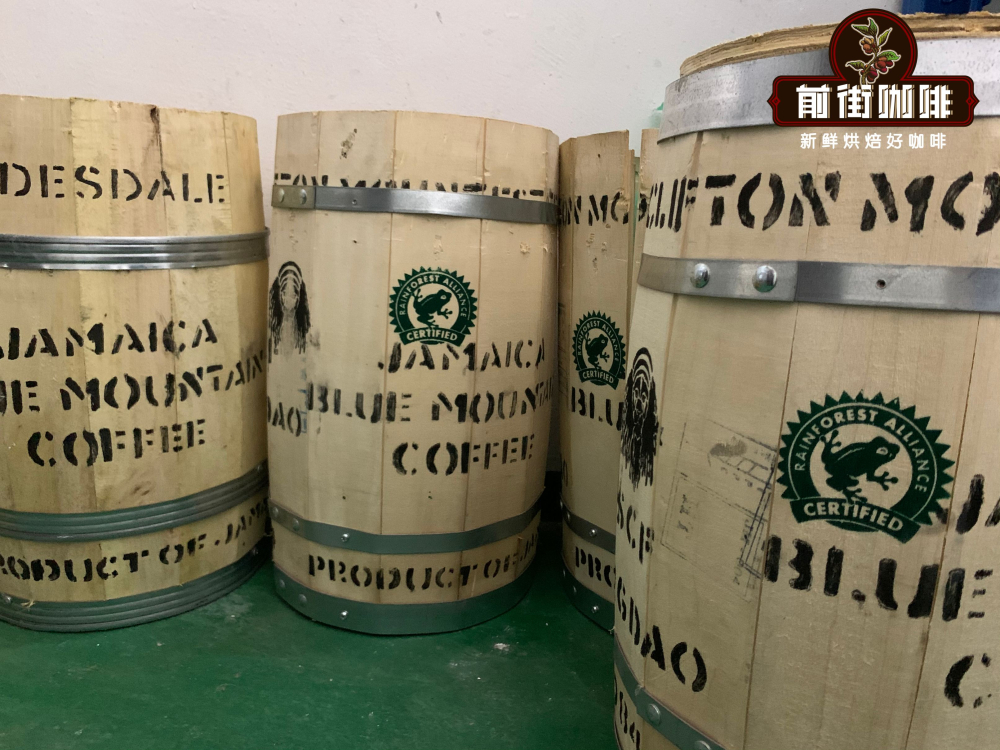
Blue Mountain coffee is also the only coffee among all coffee-producing regions so far that uses wooden barrels to hold green beans. In the Front Street Coffee (FrontStreet Coffee) store, there are Blue Mountain coffee green bean wooden barrels and Jamaica Blue Mountain coffee bean certification certificates on display. Friends who are interested can visit the Front Street store and see them in person.
What is Americano?
Americano belongs to the category of espresso coffee. It is convenient and quick: simply dilute the extracted espresso liquid with water in a certain ratio, and you get a cup of Americano. Interestingly, Americano was not invented by Americans, but was invented for Americans. According to unofficial history, during World War II, American soldiers stationed in Europe were not used to the local black coffee with concentrated flavors and strong taste, so they added a large amount of hot water to dilute it. To express contempt for this practice, people named it Americano, translated into Chinese as Americano.
The base of Americano is espresso, and the coffee beans used to make espresso are mostly blends. The extraction principle of espresso is to use about 9 bar of high pressure to push nearly boiling hot water through a compacted puck of finely ground coffee, thereby obtaining a coffee liquid with concentrated flavor and thick texture.
If single-origin coffee beans were used instead, certain prominent flavors would be magnified several times, and an originally pleasant acidity might become a sharp acidity that is hard to drink. Therefore, making espresso usually uses beans blended from two or more single-origin beans, with the aim of maintaining stable flavor and balanced taste.
Unlike pour-over coffee, espresso emphasizes overall balance more. Front Street Coffee (FrontStreet Coffee) uses Sunflower Warm Sun blend coffee beans to make espresso, blended from 70% Honduras Sherry and 30% Ethiopian natural Red Cherry. This Front Street Sunflower Warm Sun blend presents rich vanilla, cream, fermented wine aroma, and berry notes in flavor, with a unique flavor and mellow taste, making it quite suitable for making espresso coffee.
When Front Street Coffee (FrontStreet Coffee) uses Sunflower Warm Sun blend beans to extract espresso, adjustments are made every day according to the condition of the beans. In order to highlight the flavor of the Sherry coffee beans, 20 grams of coffee grounds are used to extract 40 grams of coffee liquid, taking 27 seconds.
When Front Street Coffee (FrontStreet Coffee) serves hot Americano, the ratio of coffee liquid to hot water is 1:4.5. At this ratio, hot Americano can highlight wine aroma, vanilla, and chocolate flavors, with a mellow taste.
When making iced Americano, considering that the ice cubes will melt, the ratio of coffee liquid: ice cubes: water is set at 1:2.5:3. Iced Americano at this ratio will not be too strong when just made, and as the ice cubes gradually melt, the flavor will not become too weak.
The difference between Americano and Blue Mountain coffee
Both Americano and Blue Mountain coffee belong to black coffee. Blue Mountain coffee usually refers to single-origin coffee produced in Jamaica's Blue Mountain, and single-origin coffee is mostly brewed by pour-over. Americano belongs to espresso coffee, and espresso coffee uses espresso as a base, then adds a certain proportion of water or milk.
Pour-over coffee and espresso coffee differ obviously in extraction principles. The grind size of pour-over coffee is much coarser than that of espresso coffee, and the extraction pressure is also lower. As the coffee beans used differ, the flavor of espresso coffee also changes accordingly. For example, Front Street uses the Sunflower Warm Sun blend, 70% of which is Honduras Sherry. In addition to the nutty and chocolate notes that suit public tastes, it also has rich vanilla and wine aromas.
The above content is compiled by CoffeeHunters, a coffee news website.


