







How do single and double espresso ratios differ?
A traditional single shot uses 8 to 9 grams of grounds to yield 25 to 35 milliliters in about 30 seconds, a brew ratio near 1:1. A double shot scales the dose and yield up while keeping that baseline ratio, so the flavor stays concentrated rather than diluted.
Adjusting grind size is the main lever: finer slows the flow, coarser speeds it up, and the baseline line inside the filter basket helps judge the dose. Espresso coffee beans such as blends built for milk drinks, including lattes, work well because the shot holds up once milk is added.
Espresso is the foundation of the Italian coffee system, and its extraction ratio directly determines the quality of a cup of coffee. This article provides a detailed explanation of the dose, extraction time, liquid yield, and brew ratio for single and double espressos, while also introducing how to use the baseline line in the filter basket and how to adjust grind size. For different flavor needs, the article also outlines the recipes and flavor characteristics of several coffee beans, including Front Street Classic Espresso Blend, Strawberry Candy, Specialty Blend, Commercial Blend, and Black Cocoa Blend. Using latte as an example, it explains the ratio of espresso to milk, milk frothing, and the key steps of integration and latte art, making it suitable for coffee enthusiasts who want to systematically understand espresso preparation parameters.
Espresso has traveled a considerable history since its birth. It is not only the pride of Italians, but also a cultural treasure that Italian coffee has contributed to the world. Its status is similar to the significance of Ethiopian native varieties to specialty coffee.
Italian coffee started in Italy and gradually spread around the world, becoming an iconic presence. Without espresso, there would be no later development of Italian coffee. For this reason, espresso is often called the base of coffee. For example, cappuccino, latte, mocha, and other drinks in Front Street Coffee stores are classic representatives of Italian coffee and also a reflection of culture. Next, Front Street Coffee will explain the extraction ratios of Italian coffee.
Single and Double Espresso Ratios
Espresso is important because it directly affects the quality of a cup of coffee. A reasonable brew ratio is the core of making good espresso, so Front Street Coffee will briefly explain the preparation ratios for espresso and how to adjust them to achieve a suitable brew ratio.
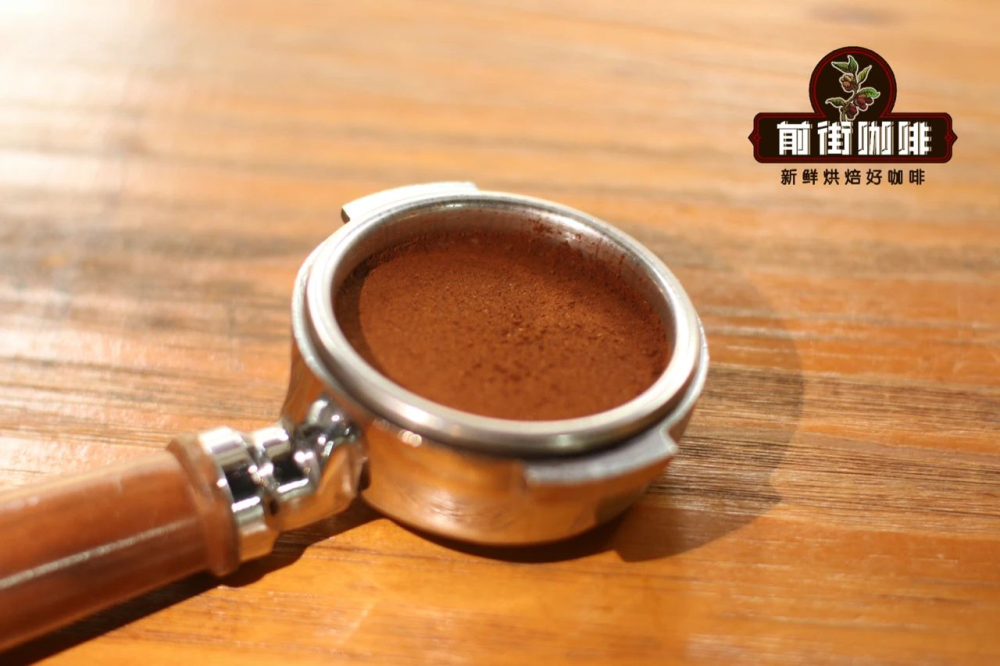
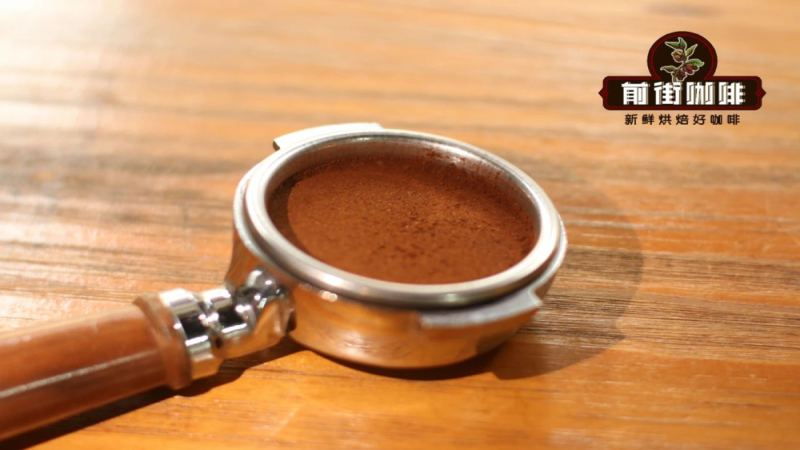
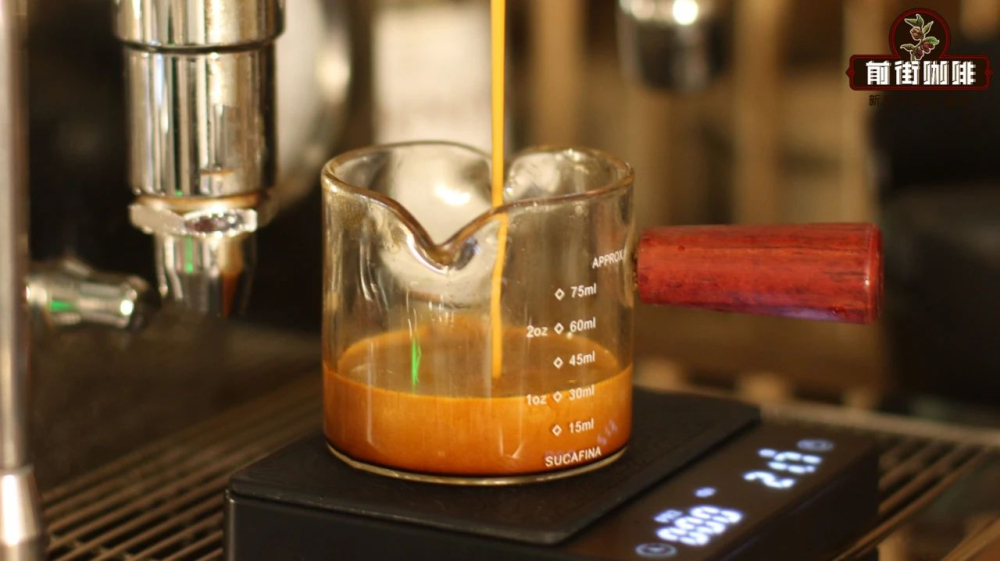
Espresso is divided into single and double doses. Traditionally, a single shot uses 8-9 grams of coffee grounds and extracts 25-35 milliliters of espresso in about 30 seconds. The brew ratio for a single shot is 1:1, the traditional ratio that has been used for the longest time. A single shot has a rich taste and is difficult for most people to drink directly. A key step for the dose is weighing: place the portafilter on the scale and tare it, weigh out about 9 g of coffee grounds, and if 25-35 g of espresso liquid can be extracted within 25-35 s, it is considered a suitable brew ratio. A single espresso is the dose commonly used for cappuccino. With equal proportions of milk, espresso, and milk foam, depending on cup capacity, the traditional ratio is 1:1:1.
A double espresso naturally doubles the amount based on a single shot. A dose of 18-20 g also extracts 55-65 g of espresso liquid within 25-35 s, which is considered a suitable brew ratio, also at 1:1. In practice, weighing and taring are also required. A double espresso is the main amount used to make lattes and Americanos. In terms of taste, it is richer and heavier than a single shot because milk and water are added, diluting the concentration and换来 a mellow, smooth mouthfeel; a single shot tends to make the coffee taste insufficient, so the amount of double espresso should be determined according to cup capacity.
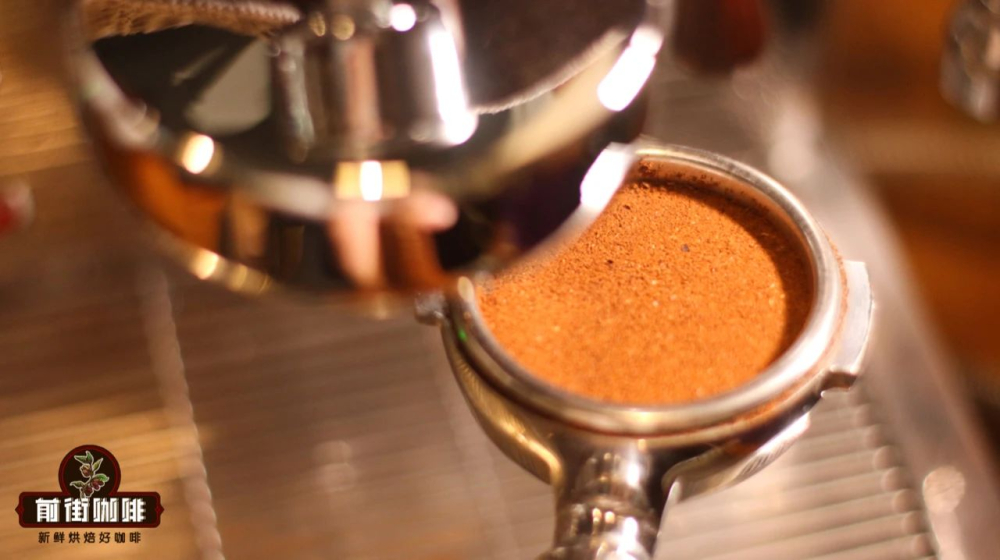
How to determine how much dose to use: the above are the traditional single and double espresso doses. Filter baskets come in different specifications, and a single basket can hold as much as 14 g. This should be adjusted according to the baseline line in the basket. There is an inner recessed fill line in the basket, which is the baseline for the specified dose. The dose can be adjusted by referring to the baseline; exceeding the baseline means too much, and it may also be caused by grinding too coarse, resulting in larger gaps between particles.
Weighing is the way to accurately achieve a reasonable brew ratio. The grind size for espresso is as fine as flour. The grind setting is usually the smallest number on an espresso grinder, adjusted between 1 and 1.5, mainly based on dose and extraction time. This is a relatively accurate method.
What Coffee Beans to Use for Espresso
In addition, using different espresso coffee beans to make espresso will also present different flavors. Beginners can use Front Street Classic Espresso Blend. This is a recipe composed of three origins: Brazil, Indonesia, and Vietnam, so it has both the caramel aroma of American coffee and the wild character of Asian coffee. In order to maximize the mellow aroma of the coffee and to make it easy for everyone to extract rich and dense crema, Front Street Coffee uses a dark roast. It is very suitable whether making an Americano diluted with water or a latte paired with milk. It can be purchased from the Front Street Taobao store or the Front Street Tmall flagship store.
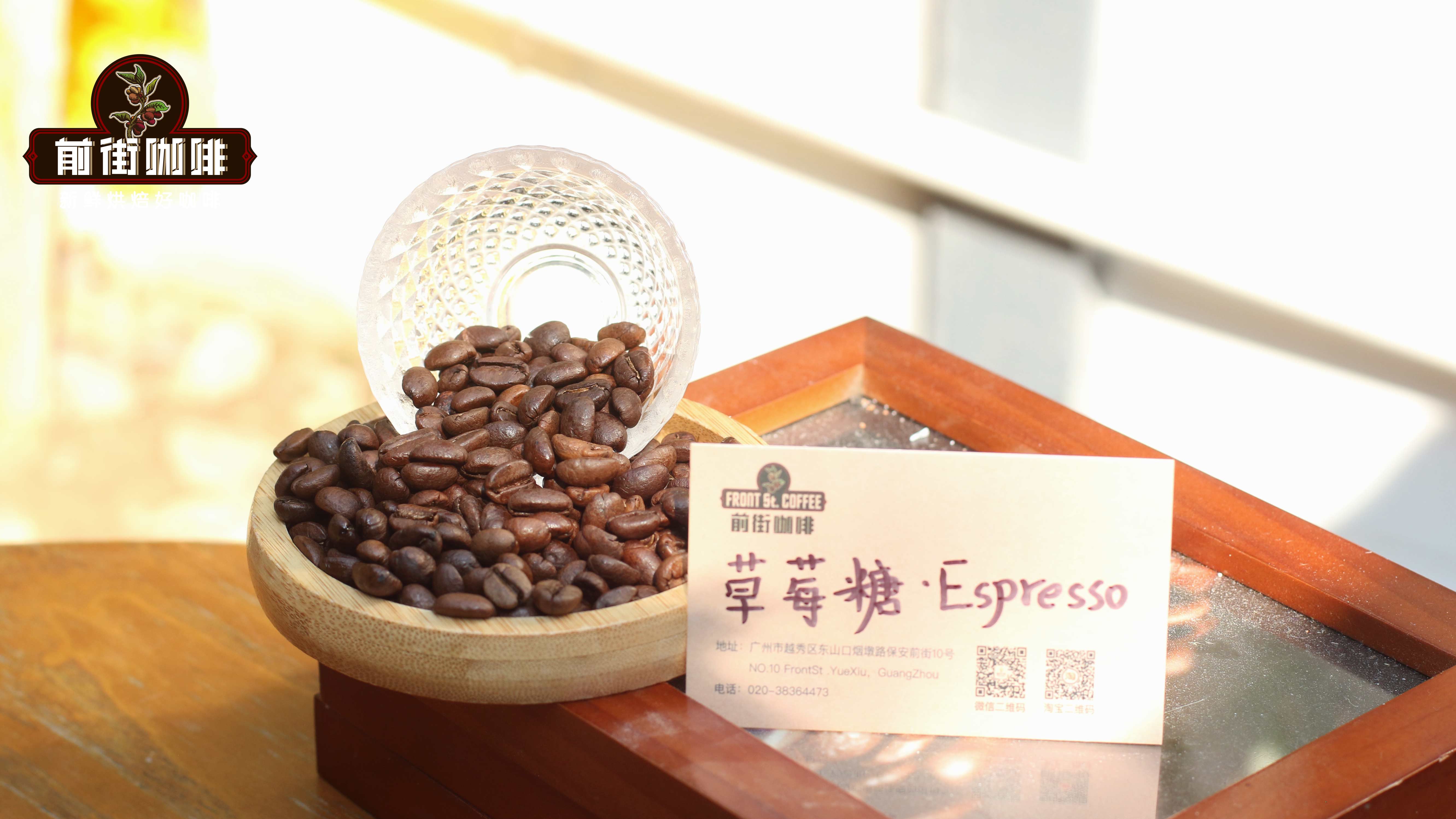
If you like espresso with floral and fruity notes, focus on medium-roast coffee beans. You can buy Front Street Strawberry Candy espresso coffee beans, which can be ordered directly from the Taobao or Tmall store. This is a blend based on two major origins: Front Street Costa Rica Tarrazu, known for its honey process, and Ethiopia, the birthplace of coffee. On this basis, Colombian coffee beans are added. The espresso prepared this way is not only not harsh, but also has good crema and a dense texture under extraction by the coffee machine, while also having a sweet-and-sour taste like strawberry gummy candy.
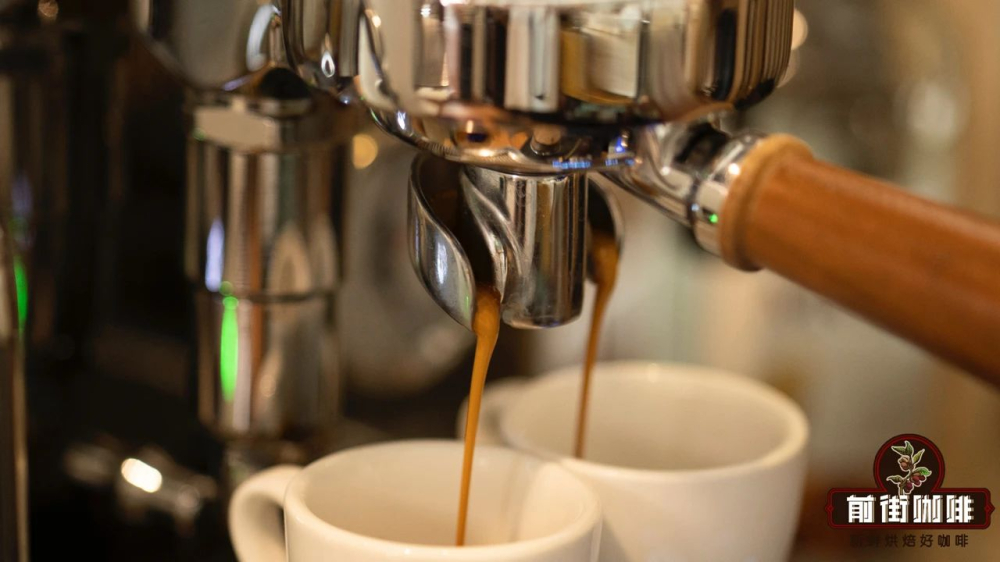
Because espresso machines have a very distinctive characteristic, which is that they amplify the original flavors of coffee beans, and light-roasted coffee beans themselves have relatively prominent acidity. If extracted with an espresso machine, the acidity will be even more obvious, so they are not suitable for making espresso.
So what coffee beans should be used to make latte? Generally speaking, coffee beans used to make latte must be suitable for espresso machines, so coffee that is too light-roasted is not suitable for making latte. The darker the roast, the stronger the coffee flavor in the latte (caramel, bitterness), while the lighter the roast, the more obvious the milk flavor in the latte. Therefore, the roast level should be chosen appropriately so that coffee and milk are better compatible.
Next, Front Street Coffee recommends the following four espresso coffee beans for everyone to choose from.
Front Street Specialty Blend Flavor: Soft and slightly acidic, lightly sweet, with a nutty aftertaste. The overall impression is not too harsh, rather mild, and the crema is medium. Recipe: Colombia: Brazil
For this blend, Front Street used a combination of Brazil and Colombia. It tastes of a light roasted grassy aroma, with a delicate fragrance and slight bitterness, smooth and pleasant, with a refreshing aftertaste. This is because coffee beans from the Huila region of Colombia have a pleasant acidity, a mellow aroma, moderate acidity, and rich sweetness, making them very intriguing; coffee beans from the Cerrado region of Brazil have a comfortable bittersweet taste and are extremely smooth on the palate. So the combination is excellent.
Front Street Commercial Blend
Flavor: caramel sweetness, notes of nuts and cocoa, dark chocolate, balanced acidity and sweetness, with a slight bitterness, and a lasting finish.
Recipe: Colombia: Brazil: Robusta
For this blend, Front Street used coffee beans from Brazil and Colombia plus 10% Robusta coffee beans. The taste is classic. Front Street believes this blend tastes of rich crema and body, caramel sweetness, and also has notes of nuts and cocoa, dark chocolate, balanced acidity and sweetness, with a slight bitterness and a lasting finish. This commercial blend, like the Front Street Specialty Blend, uses a ratio of Colombian and Brazilian coffee beans. The difference is that Robusta is also added, providing rich crema and making the coffee body richer.
Front Street Espresso Coffee Beans Recommended by Many Baristas - Front Street Black Cocoa Blend
Flavor: with soft fruit acidity, caramel sweetness, notes of nuts and dark chocolate, smooth and viscous, but the taste is relatively light.
Recipe: Yunnan: Brazil
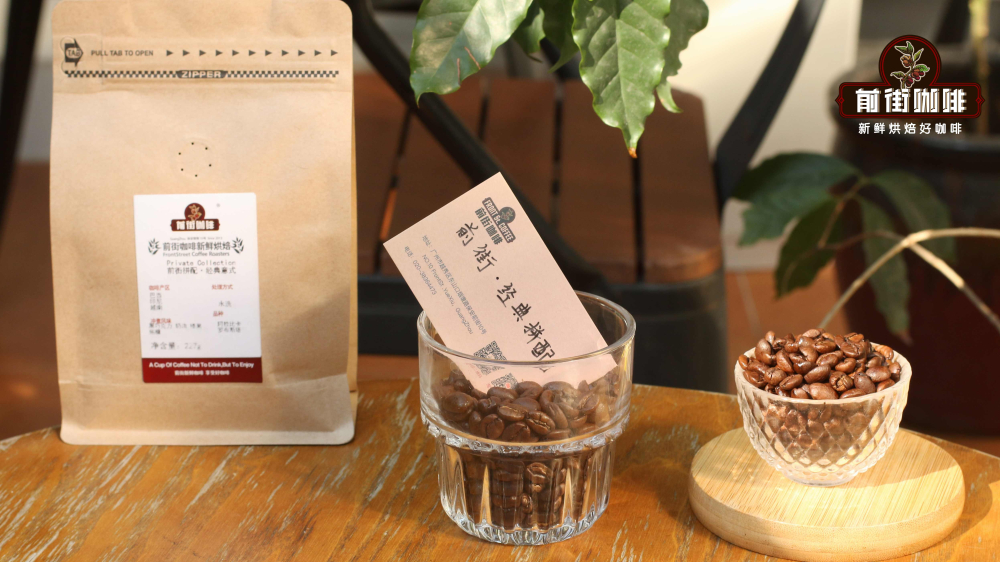
For this blend, Front Street used a combination of Brazil and Yunnan. Front Street believes it tastes of soft fruit acidity and caramel sweetness, as well as notes of nuts and dark chocolate, smooth and viscous, but the taste is relatively light. This is because Yunnan's natural conditions are very similar to those of Colombia, with high altitude and a large temperature difference between day and night. Its flavor is mellow, with moderate acidity, a rich and full taste, uniform beans, high oil content, and fruity aroma. Its quality and mouthfeel are similar to Colombian coffee, but still slightly lighter than Colombia; while coffee beans from the Cerrado region of Brazil have a comfortable bittersweet taste and are extremely smooth on the palate. Therefore, the flavor of these two coffee beans mixed together is also good, and this espresso coffee bean recommended by many baristas - Front Street Black Cocoa Blend coffee beans - is very cost-effective and suitable for espresso beginners and small coffee shops.
Milk-to-Coffee Ratio in Italian Coffee
As Front Street Coffee also mentioned above, the common Italian coffees on the market today are made from espresso and milk in different proportions. So exactly what ratio of espresso to milk is needed to perfectly combine into a cup of milk coffee? Next, Front Street Coffee will use making mocha coffee as an example to explain.
Latte Preparation Ratio
The latte recipe used by Front Street is 1:6, that is, 40 g of espresso mixed with 240 g of steamed milk.
The espresso extraction plan used by Front Street is 20 g of coffee grounds extracted in 27 seconds to yield 40 g of espresso liquid, as the base for latte.
Next is frothing the milk. First, you need a steam wand. General semi-automatic coffee machines are equipped with a steam wand; second, you need a container to hold the milk, such as a milk pitcher or latte art pitcher (professional equipment will make the work more efficient with half the effort).
Finally, there is the choice of milk. Whether it is shelf-stable milk or chilled milk, whole milk or skim milk, all can be frothed. But if you want the milk to have better texture, flavor, and stability, Front Street still recommends using chilled whole fresh milk.
Next is integration and latte art. Once the espresso is extracted and the milk is steamed, you can proceed with integration and complete the latte. Integration is also a very important part of making latte. Good integration can make the latte smooth and comfortable to drink, without any杂乱感. After good integration comes what we often call pouring latte art. Then a cup of latte is complete.
Flavor of Front Street Coffee's Recipe Latte: Smooth mouthfeel, lasting chocolate taste, mixed with a pleasant alcoholic note, long finish, and obvious sweetness.
The above content is compiled by CoffeeHunters, a coffee news website.


