








What makes Dota Goddess Estate geisha coffee distinctive?
Finca Dota El Diosa sits in Costa Rica's Tarrazu region at about 1,800 meters and grows the geisha variety, processed with an anaerobic enzyme wash. The result is a cup with rose aroma and lemon and honey sweetness, closer to a refreshing fruit tea than a heavy coffee.
Volcanic ash soil, mild temperatures, and steady rainfall in Tarrazu support that profile, and recent micro-mills there use roughly 5 percent of the water of traditional washed processing. A coffee roaster using a high-temperature fast roast, followed by V60 pour-over with staged extraction, brings out the sweet, aromatic character.
This article focuses on Finca Dota El Diosa in the Tarrazu region of Costa Rica, offering an in-depth analysis of the unique charm of its Geisha variety. From the terroir and estate history to the anaerobic enzyme washed process, and further to green bean analysis, roasting curve, and cupping and brewing, it presents the complete flavor profile of this coffee. The Front Street Coffee roaster adopts a high-temperature fast-roast strategy to highlight its rose aroma, lemon and honey sweetness. For pour-over, a V60 dripper is recommended with staged extraction, ultimately yielding a cup of refreshingly sweet fruit tea.
Costa Rica Dota El Diosa Geisha
Origin: Costa Rica
Region: Tarrazu Estate: Finca Dota El Diosa Variety: Geisha Altitude: 1800m Process: Anaerobic Enzyme Washed
| Region Introduction
Costa Rica's coffee cultivation relies on its volcanic terrain, with fertile volcanic ash soil, mild temperatures, and stable, abundant rainfall—conditions that together have made coffee one of the country's main agricultural products. Meanwhile, coffee beans produced in Costa Rica's high-altitude regions are internationally renowned, offering a rich body and mild flavor, though with relatively high acidity. All local coffee beans undergo meticulous processing, which is also the guarantee of their high quality.
Costa Rica's coffee harvest season is divided into two periods: the dry season from December to April of the following year, which is precisely when coffee is harvested; and the wet (rainy) season concentrated from May to November. In recent years, micro-mills have been established one after another, using only 5% of the water consumed by traditional washed processing plants, and requiring no large tanks or drying yards, making the investment threshold relatively much lower. Low-acidity, high-complexity, intensely sweet and aromatic "honey-processed coffee" has consequently become a target eagerly pursued by the coffee world in recent years.
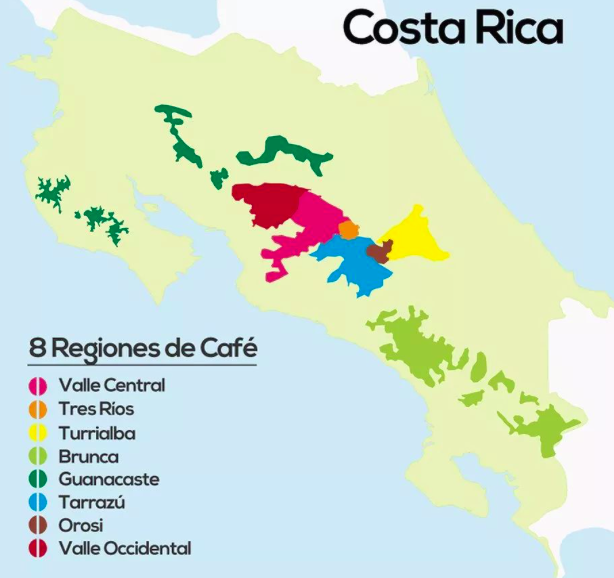
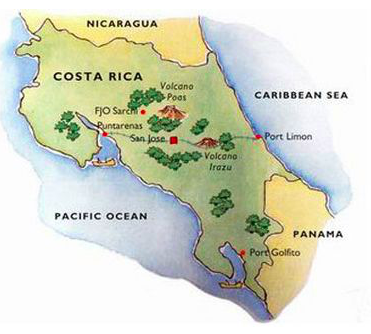
Costa Rica is located south of San José, the capital of Tarrazú. It is one of the country's most valued coffee-growing regions. Among Costa Rica's many excellent producing regions, Tarrazu stands out, enjoying great prestige in the specialty coffee world and being one of the world's major coffee origins.
Tarrazu is situated in Central America's fertile volcanic zone, with a humid climate, fertile volcanic soil, abundant year-round rainfall, high altitude, and dense forests providing natural shade—creating an exceptionally favorable environment for coffee growth. No pesticides or artificial fertilizers are used during cultivation. Nearly 95% of the coffee beans produced in Tarrazu's high mountains are classified as Strictly Hard Bean (SHB), typically grown above 1,500 meters in altitude.
| Finca El Diosa
Finca El Diosa is located in the Dota area within Costa Rica's most renowned Tarrazu region, and is celebrated for producing micro-lot Geisha varieties.
As early as 1865, the Dota area already enjoyed a reputation for Costa Rica's high-quality coffee. Because the road extending from the capital to the Dota Valley had to pass through the Tarrazu district, when the Costa Rican Coffee Board later designated producing regions, it customarily labeled the area as Dota Tarrazu. This region features typical highland terrain, and in terms of both soil and temperature-humidity conditions, it ranks among the finest for coffee cultivation.
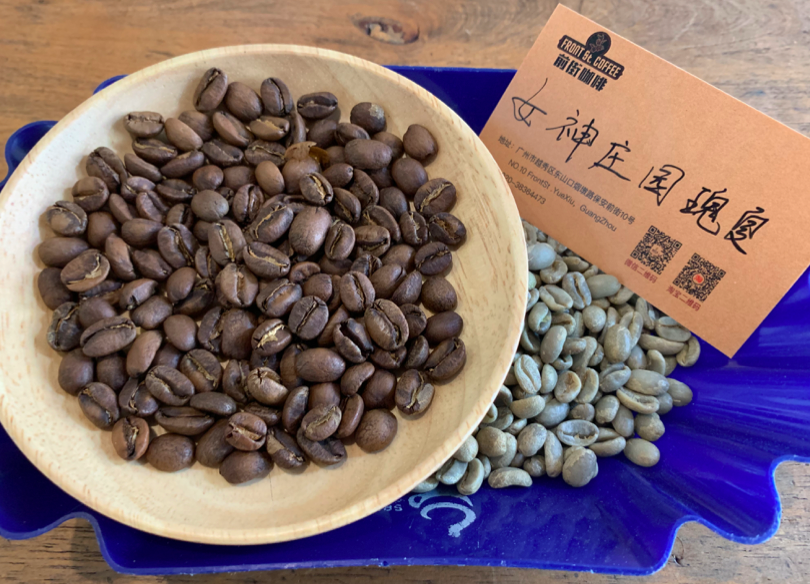
Finca El Diosa was established in the 1960s, and its owner was a good friend of Pachi Serracin, now famously known as the father of Panama Geisha. Pachi Serracin brought the Geisha variety back from CATIE, the world's largest coffee species and variety industrial scientific research station in Costa Rica. Finca El Diosa cultivates coffee organically, using native trees and fruit trees for shade.
The fertilizer used is made from coffee cherry pulp mixed with molasses, combined with fertile soil rich in minerals from nearby mountain areas, and processed through microbial fermentation to create an organic fertilizer that strengthens the coffee trees' disease resistance. The estate also habitually uses California earthworms to cultivate the soil, and during the fertilization period these serve directly as the primary nutrient source for the coffee trees, while multiple coffee varieties are interplanted. During harvest, only fully ripe red-purple cherries are selectively picked, and the soaking and fermentation process is strictly controlled, developing a very unique constant-temperature processing method. The degree of fermentation is just right, achieving an excellent balance between clarity and complexity, with flavor expression that is more stable and intoxicating.
| Geisha Variety
Geisha is pronounced the same as the Japanese word for "geisha," hence it is also sometimes called geisha coffee. Because the tree is taller than ordinary coffee trees, it was originally planted in a small section within the estate and used as a windbreak.
The Geisha variety was discovered in 1931 in the Geisha forest of Ethiopia, then sent to the Kenya Coffee Research Institute; in 1936 it was introduced to Uganda and Tanzania, and in 1953 Costa Rica introduced it. For a long time, Geisha did not receive much attention, until Don Pachi first brought Geisha from the small town of Gesha in southwestern Ethiopia to Costa Rica, after which Geisha entered Panama along a southern route. Panama's Hacienda La Esmeralda separated it from other varieties and went on to win the national coffee competition championship in one stroke.
| Process: Anaerobic Enzyme Washed
The anaerobic enzyme washed method refers to harvesting fully red ripe cherries, mechanically washing off the peel and pectin, then adding enzymes in the fermentation tank to enhance the coffee's flavor and sweetness.
| Green Bean Analysis
The green beans appear somewhat elongated and pale green. Unlike the grassy smell of typical green beans, El Diosa Geisha smells not only of grass but with even more of the fresh fragrance of bergamot and berries.
| Roasting Analysis
Considering that Costa Rican beans are generally hard with medium moisture content, the Front Street Coffee roaster chose a high temperature rise during roasting, using rapid dehydration and a faster roasting pace to express this El Diosa Geisha's fruit flavors and floral aroma.
Roasting machine: Yangjia 800N (roasting capacity 300g)
Charged at 170°C, power 120, damper set to 3; turning point at 1'36", when temperature reached 140°C the damper was opened to 4 with power unchanged; at 149°C the bean surface turned yellow and the grassy smell completely disappeared, entering the dehydration phase; when the temperature reached 166°C, power was adjusted to 110 with the damper unchanged;
At 7'09", the bean surface showed ugly wrinkles and dark patches, and the toast aroma clearly turned to coffee fragrance, which can be defined as the prelude to first crack. At this point, listen carefully for the sound of first crack. At 8'25" first crack began, and the damper was adjusted to 5 (adjust power very carefully, not so low that cracking sounds disappear). After first crack, developed for 1'30", dropped at 190°C.
Agtron bean color value 72.9 (top image), Agtron ground color value 88.2 (bottom image), Roast Delta value 15.3.
| Cupping Report

Flavor: Rose, lemon, honey, maple syrup, fruit tea
| Brewing
Recommended brewing method: Pour-over Dripper: Hario V60 Water temperature: 90-92°C Dose: 15g Coffee-to-water ratio: 1:15/1:16 Grind size: Medium-fine (BG 7T: 58% passing through China standard No. 20 sieve) Brewing technique: Staged extraction Bloom with 30g water for 30 seconds, then pour in a slow circular stream to 124g for the first stage; when the water level is about to expose the coffee bed, continue pouring to 227g and stop; when the water level is about to expose the coffee bed again, remove the dripper. (Timing starts from the beginning of bloom) Total extraction time: 2'01".
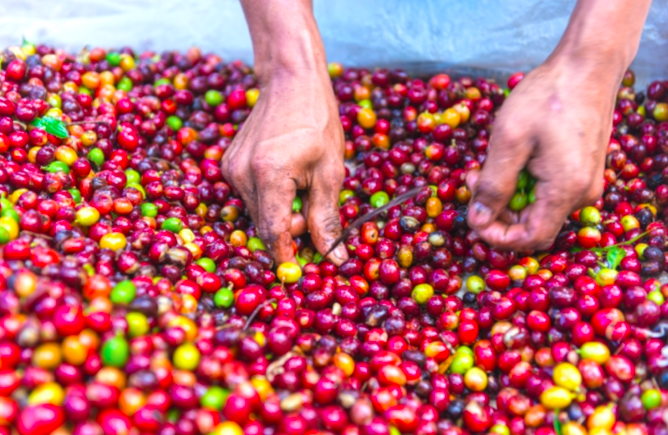
Flavor: Overall, the floral aroma is quite prominent, very much like lemon fruit tea. On the palate there are citrus and cream, with a refreshing, clean sweetness.
The above content is compiled by CoffeeHunters, a coffee news website.


