








How Do You Get Good Crema From a Moka Pot?
Rich crema from a moka pot depends on three things: fresh coffee beans, a grind sized for the basket, and careful heat control during brewing. The moka pot has been a direct-fire espresso device since 1933, and it remains easy to operate, but the result changes a lot with bean choice and grind adjustment.
Start with beans roasted for espresso and grind slightly finer than for drip, then fill the basket level without tamping. Fill the base with water to just below the valve and keep the flame low so the coffee flows steadily rather than sputtering. Because the pot is often mistaken for a mocha coffee maker, it helps to remember the name refers to the device, not the drink.
As a classic direct-fire espresso device, the moka pot has been beloved by coffee enthusiasts worldwide since its debut in 1933. It is easy to operate, but to brew a rich, full-bodied espresso with plenty of crema, everything from bean selection and grinding to brewing details matters greatly. This article will systematically introduce the history and components of the moka pot, the principles of choosing coffee beans, how to adjust the grind size, and the complete brewing steps, along with several Front Street Coffee blend recommendations to help you avoid common pitfalls and easily make a cup of moka pot coffee with beautiful crema at home.

Coffee is both an ancient and a trendy beverage. It is ancient because it carries a long history and profound culture, influencing countries and people around the world. People of all ages are fascinated by coffee, perhaps not only because it refreshes the mind, but also because they are drawn into this circle by coffee culture. It is trendy because coffee is constantly evolving and innovating—from instant coffee to espresso to specialty coffee, coffee has always kept pace with the times and brought forth the new.
The reason coffee has remained so popular lies both in its profound cultural heritage and in those ancient yet indispensable brewing methods. The moka pot is one of them. Deeply influenced by espresso culture, it has loyal followers all over the world. This traditional Italian coffee device has never faded from view, just like espresso itself.
History of the Moka Pot
The moka pot was born in 1933, invented by a man named Alfonso Bialetti. It is a coffee device that can be heated directly over fire, also called a direct-fire espresso pot, commonly known as the moka pot. Because its name contains the word "moka," it is often mistaken as being related to mocha coffee, and many people think the moka pot is used to make mocha coffee. It is under this beautiful misunderstanding that the moka pot gradually became a tool for making espresso at home, especially popular in Europe, where almost every household has one. Due to its high popularity, it also became a popular gift between family and friends. With its classic and distinctive appearance, the moka pot is both practical and decorative; besides daily use, it also carries a certain commemorative value.
The moka pot is relatively simple to operate, but its drawbacks are also obvious. Because it uses direct-fire heating, the water must reach boiling point to extract coffee substances. Compared with the 92°C water temperature of an espresso machine, the moka pot is more prone to over-extraction during the brewing process, so attention must be paid to heat adjustment. And with open-flame heating, if you don't watch it constantly, it could even cause a fire hazard, so you must stay vigilant.
Moka Pot Components
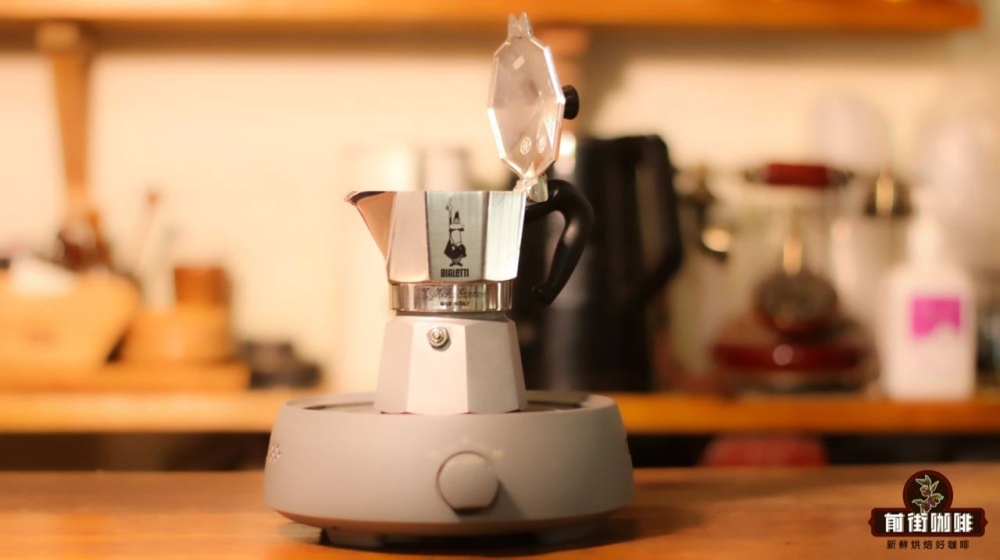
The moka pot doesn't have many components. They mainly consist of: the upper and lower chambers, the filter basket, and the gasket. Among these, the gasket is the most easily overlooked and least valued component, but its importance is self-evident. Without the gasket, the upper and lower chambers cannot close completely, water will seep through the gaps, and brewing coffee would be impossible.
Moka pots come in two types: single-valve and double-valve, and the difference is quite clear. A single-valve moka pot only has a pressure valve on the lower chamber; a double-valve one adds an extra pressure valve on the upper chamber, resulting in greater extraction pressure and a more intense brew, capable of extracting coffee with crema and a full-bodied taste.
Brewing Essentials
Coffee-to-water ratio: The moka pot does not have a fixed coffee-to-water ratio. The amount of coffee usually depends on the size of the filter basket—simply fill the basket with coffee grounds, and add water to the lower chamber without exceeding the pressure relief valve.
Grind size: Although the moka pot is a device for making coffee with crema, if you grind as fine as for an espresso machine, bitterness is more easily extracted. Therefore, if you want to minimize the release of bitter substances, a grind size close to fine salt is good—it feels fairly fine to the touch while retaining a slight grittiness.
If the coffee liquid is slow to come out during heating, it is very likely that the grind is too fine and has clogged the outlet, so you need to coarsen the grind; if the coffee liquid spurts out violently after the water boils, it means the grind is too coarse and needs to be finer.
Coffee beans: Many people buy a moka pot hoping to make coffee close to espresso, with a certain amount of crema. Compared with medium-light roasts, medium-dark roasted coffee beans have a higher expansion rate due to longer heating time, so they contain enough carbon dioxide gas. When extracted in a fresh state, they can produce an ideal cup of moka pot espresso rich in crema.
If you seek intense flavor and a full-bodied taste, buy Front Street Coffee Classic Italian Blend Coffee Beans (traditional Mamba recipe, with fine, rich crema, suitable for home use and commercial use in coffee shops);
If you want to make coffee shop-style drinks, we recommend Front Street Coffee Commercial Blend Coffee Beans (the same ingredients used by coffee shops, with abundant crema);
If you like nutty aromas, you can choose Front Street Coffee Specialty Blend Coffee Beans (prominent caramel aroma, with obvious sweet aftertaste).
Moka Pot Brewing Steps
1: Fill the filter with the ground coffee, level it off, and do not tamp.
2: Pour the prepared hot water into the lower chamber, without exceeding the pressure relief valve, as that is the pot's safety device.
3: Place the filter filled with coffee grounds into the lower chamber, then fit the gasket fully against the upper chamber, and slowly screw the upper chamber and lower chamber together.
4: Place the moka pot on a gas stove and heat over medium-low heat. After a while, the water in the lower chamber begins to boil, generating steam pressure; the hot water is pushed up through the coffee filter, and then heating continues slowly. When you open the lid, you will see coffee liquid slowly emerging from the spout. At this point, pay attention and listen: if you hear a gurgling sound inside the pot, it means the water is almost used up, and you can turn off the heat to end extraction.
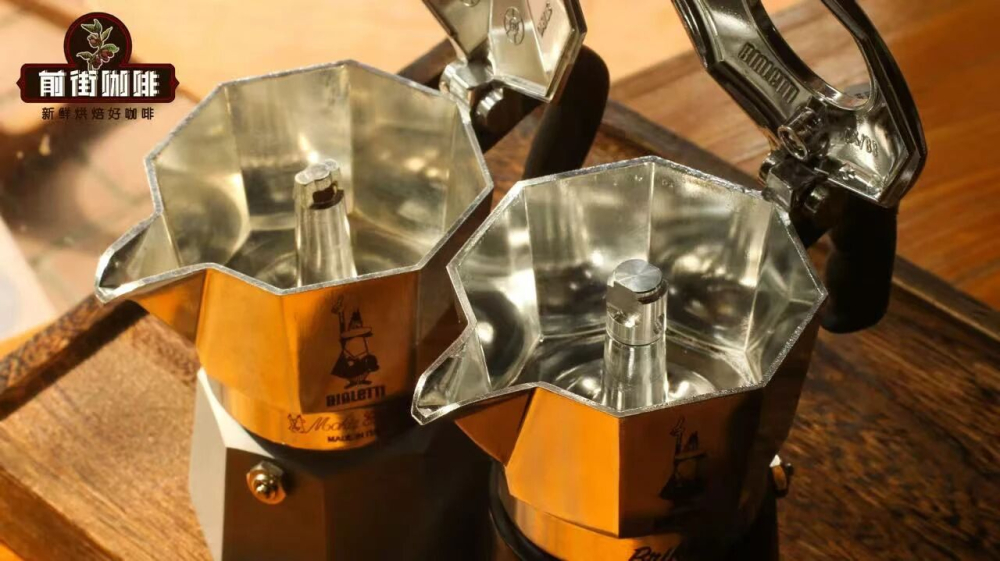
5: Remove the moka pot from the gas stove. You can cool the base with cold water, and the internal pressure will dissipate. The brewed coffee has crema and can be made into a hot latte by adding milk.
The above content is compiled by CoffeeHunters, a coffee news website.


