







Why Does Coffee Grinding Decide How a Cup Tastes?
Grind size sets extraction. Finer grounds expose more surface area, raise extraction yield and slow water flow; coarser grounds do the opposite. Each brewer has a matching standard, from ultra-fine Turkish powder to the coarse particles a French press needs, and the wrong setting leaves even good beans tasting thin or harsh.
Eight grind levels run from finest to coarsest, mapped to espresso machines, AeroPress, siphon, pour-over, moka pot, cold brew and French press. Grinders carry assembly tolerances, so one setting may not give the same particle size across machines. Contact time, extraction yield and flow rate pull against each other during brewing.
The choice of coffee grind size directly determines the success or failure of a cup of coffee. From the ultra-fine powder for Turkish coffee to the coarse particles needed for a French press, every brewing device has its corresponding grind standard. The finer the grind, the higher the extraction yield and the slower the water flow; the coarser the grind, the opposite. There are assembly tolerances between different grinders, so even the same setting may not produce coffee grounds of the same particle size. This article will systematically sort out eight grind levels from finest to coarsest, matching them one by one to devices such as espresso machines, AeroPress, siphon, pour-over, moka pot, cold brew, and French press, and combine them with Front Street Coffee's brewing examples to help coffee lovers find a grind plan that suits them.
From a coffee seed to that sip of rich aroma finally presented in the cup, the wait in between is quite long. Even when it comes to the final stage of extraction, it is still necessary to ensure that the coffee grounds used meet the brewing requirements. Extraction itself is not complicated, but coffee grounds are the carrier of flavor, and variables such as water quality, beans, and equipment will all influence the direction of the final flavor. What I want to talk about this time is the topic of grind size—it is far less simple than imagined. There are differences even between grinders of the same brand, and a tiny change in particle size is enough to alter the extraction performance of coffee grounds. Coffee grounds are not like soy milk, where blending them into powder is enough. Precisely because of this, grinders are equipped with a large number of settings, requiring repeated fine-tuning to lock in the appropriate coarseness, otherwise even the highest-quality beans cannot perform at their best.
Why grinding is key
Grinding directly affects extraction: the finer the grounds, the higher the extraction yield; the coarser the grounds, the lower the extraction yield. Behind this are three mutually constraining factors—contact time, extraction yield, and flow rate—which are closely linked, and changing one affects the others.
1. As coffee grounds become finer, their surface area increases, and the extraction yield rises accordingly.
2. A larger surface area corresponds to a finer grind, while a smaller surface area corresponds to a coarser grind.
3. The finer the grind, the higher the extraction yield, and the shorter the required contact time.
4. With a finer grind, the water flow slows down and contact time lengthens; with a coarser grind, the water flow speeds up and contact time shortens.
This logic is not hard to grasp. Espresso machines require extremely fine grounds, so the extraction window is only around thirty seconds; drip coffee uses a medium-fine grind, with a contact time of about two minutes. When you choose a certain device for brewing, you have to adjust the grind coarser or finer accordingly. If you use extremely fine grounds for drip coffee, the water flow will inevitably be slowed, the contact time will lengthen, and the extraction yield will be too high; conversely, if you use a medium-fine grind for espresso, the contact area is insufficient, the water flows too fast, the extraction time is short, and the extraction yield is low. Even if the coarseness you grind happens to be what pour-over requires, how do you confirm it is truly suitable? A slight deviation will change the flavor in the cup. Therefore, grind size needs to be verifiable so that brewing can be done as accurately as possible.
One thing worth noting: many people think that the same setting produces grounds of the same particle size, but in reality, different grinders inevitably have assembly tolerances, and they can be calibrated regularly. You can also use a standard sieve to measure the particle size distribution of the grounds, and choose the appropriate grind setting based on that.
FrontStreet Coffee grinding coarseness standard sieve pass rates are as follows:
Cold drip > pour-over siphon (siphon pot) 80% > moka American drip 75-80% > cupping 70-75% > French press 65-70%
How to choose grind size
Different grind coarseness suits different brewing devices, so the grind setting should be adjusted according to the equipment at hand. Below, in order from finest to coarsest, the corresponding grind levels and devices are explained one by one.
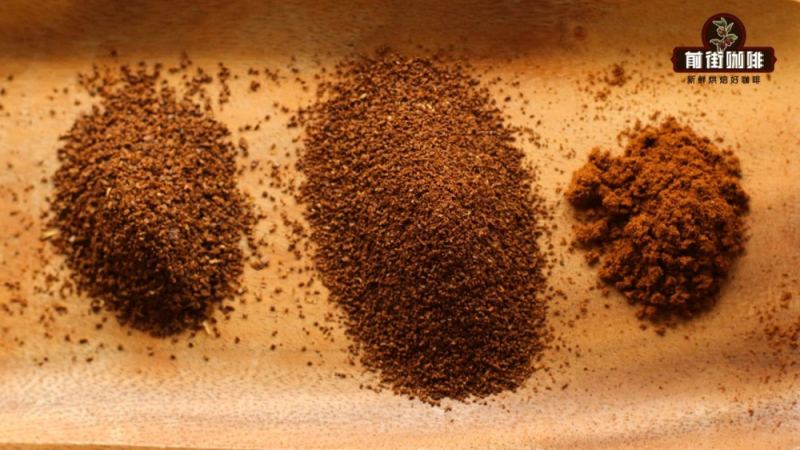
1. Turkish coffee: This is ultra-fine grinding, with a feel similar to flour, basically near the smallest setting on an espresso grinder; the smaller the number, the finer it is.
2. Espresso (as shown above): The espresso machine uses nine bars of pressure to force out the coffee substances, and this also belongs to the ultra-fine grind category. But if it is as fine as Turkish coffee, the portafilter basket will be clogged, the water will not come through, and the extraction time will be dragged out too long. So it needs to be adjusted coarser toward a larger setting and then tested. Usually, a single-shot portafilter basket holds 8-9 grams of grounds, and a double-shot holds 18-20 grams. Extracting 25-30 grams of coffee liquid for a single shot and 50-60 grams for a double shot within 25 to 30 seconds is regarded as standard.
3. AeroPress (as shown below): This is a piston-type device that relies on manual pressing to release liquid, with an extraction time of about two minutes. It is an immersion-style extraction, and fine grounds easily cause over-extraction. It is recommended to adjust one to one and a half settings coarser than pour-over coarseness, falling into the medium-fine to slightly finer range.
4. Siphon pot (as shown below): The siphon pot uses an open flame to heat the water in the lower chamber. After the water rises to the upper chamber, it undergoes immersion extraction, during which it is also stirred. Fine grinding likewise carries the risk of over-extraction, so it should be adjusted to a medium grind.
5. Pour-over coffee (as shown below): currently the most popular brewing method, but grind deviation is still common. A commonly heard saying is to grind to the size of fine granulated sugar, but many people still end up with differences when comparing by that standard. Pour-over uses a medium-fine grind, with particles close to fine granulated sugar. The SCA-recommended sieve pass rate is 75-80%, and this is the standard coarseness for pour-over coffee.
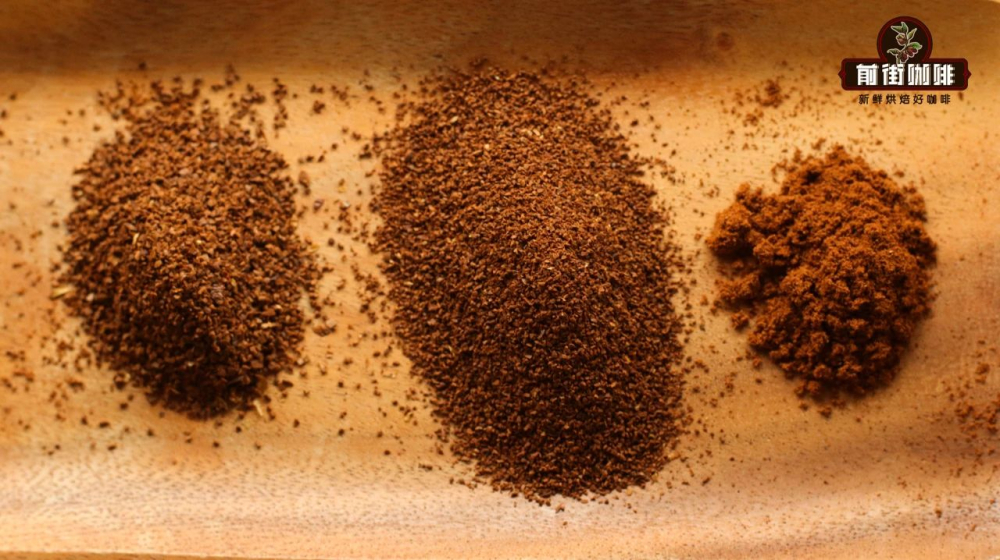
6. Moka pot (as shown below): The moka pot is a device with a long history. It relies on heating the water at the bottom until it boils, then extracting the coffee in the upper chamber. In earlier years it once served as the mainstay of espresso-style coffee. The pressure is about 1.5 bar, so a finer grind is used, close to espresso but slightly coarser.
7. Cold brew, cold drip: Both are low-temperature, long-duration immersion extractions, using ice water to slowly dissolve out the coffee flavor. Ice water has a very low extraction yield, so long soaking combined with a medium-coarse grind is needed. Medium-coarse grounds are better for filtration, and the gaps in the coffee bed are not so dense that water droplets cannot penetrate; cold brew likewise makes it easier to filter out coffee residue.
8. French press (as shown above): The French press also belongs to immersion extraction. The difference is that the coffee stays soaking in the pot the whole time, and long soaking inevitably continues extracting, so a coarse grind is essential. The grind level falls in the coarse range, with particles similar in size to brown sugar.
The above are some personal suggestions on coffee grind size, for reference only. In actual practice, once a problem is noticed, it should be adjusted immediately; there is no need to rigidly stick to a certain grind size. People's tastes are different to begin with. Some prefer it lighter, some prefer it stronger, and this is very normal. The taste you find just right may seem too strong or too weak to someone else, so do not let uncontrollable factors interfere with your judgment. At present, the commonly used coarseness for pour-over can be calibrated with a sieve, and those who need calibration can buy one to use. Next, let's move into the brewing sharing section, brewing Sidamo Flor Lover with the standard pass rate defined by the SCA, and see what surprises there will be.
Take Front Street [Ethiopia Flor Lover Natural] as an example
Region: Guji Hambela
Variety: Heirloom
Altitude: 1,800-2,000 meters
Processing method: Natural
Pour-over parameters
Dripper: V60 Water temperature: 91°C Grind size: fine granulated sugar (standard No. 20 sieve pass rate 80%) Water-to-coffee ratio: 1:15 Technique: three-stage extraction
Brewing: Bloom with 30g of water for 30s, then in the second stage slowly pour in a circular motion up to 120g and pause, and after the water level drops halfway, pour again up to 225g and stop brewing. Wait for the coffee liquid to finish dripping, then remove the dripper. Total extraction time is 2:00-2:10s.
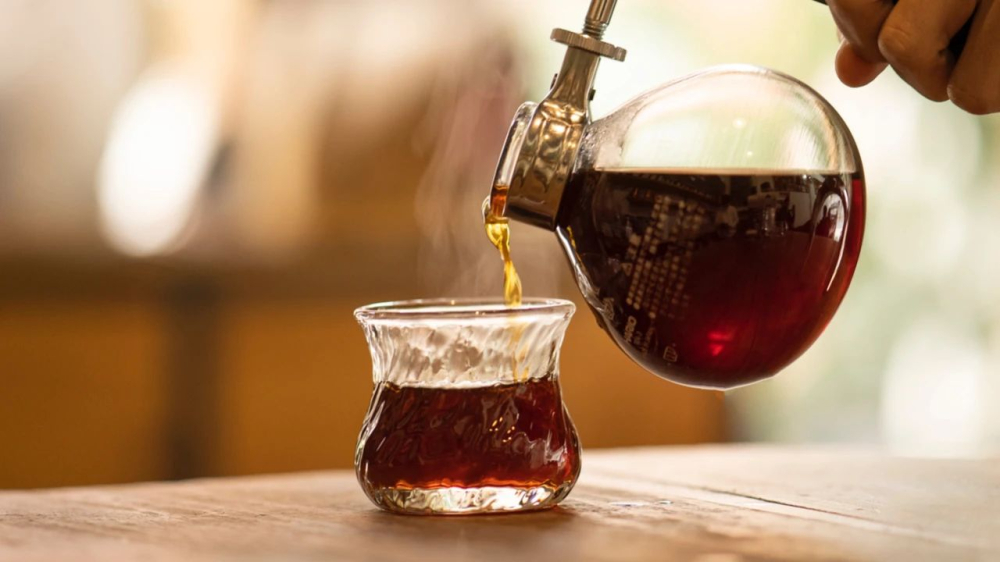
Flavor: tropical fruit, mango, strawberry, passion fruit, full and rounded acidity, solid mouthfeel
For more specialty coffee beans, please add the private WeChat of FrontStreet Coffee, WeChat ID: kaixinguoguo0925
The above content is compiled by CoffeeHunters, a coffee news website.


