







Why Does the Coffee Bean Process in Sumatra Taste Earthy?
Indonesia's wet-hulling method sets Mandheling apart. Frequent rain, typhoons and year-round humidity rule out the long sunny drying that natural processing needs, and limited water makes washed processing hard too. Farmers developed wet-hulling to fit those conditions, and it gives the beans their earthy, spicy character and horseshoe-like shape.
Dutch colonists brought coffee to Indonesia in the 17th century and favored fast returns; wet-hulling cut farm time and labor costs, so it spread. The process also causes compression cracks and chipped edges, and Indonesian plants rely on secondary and tertiary hand-sorting. Golden Mandheling, Tiger Mandheling and Lintong Mandheling are classic examples.
The reason Indonesian Mandheling stands out in the global coffee market is inseparable from its unique wet-hulling process. This method gives the coffee beans their distinctive earthy and spicy notes, and also creates their iconic horseshoe-like appearance. From the perspective of Front Street, this article systematically reviews the historical origins and operational process of wet-hulling, explains why the beans develop compression cracks and chipped edges, and clarifies the difference between secondary and tertiary hand-sorting at Indonesian processing plants. Finally, the article introduces three Mandheling beans from FrontStreet Coffee that use the wet-hulling method—Golden Mandheling, Tiger Mandheling, and Lintong Mandheling—listing their region, altitude, variety, and flavor one by one for coffee enthusiasts to reference when making a purchase.
Most coffee lovers have heard something like this: wet-hulling is a green bean processing method unique to Indonesia, and coffee beans processed this way tend to present an intertwined earthy and spicy flavor with extremely high recognizability, which is precisely an important reason why Indonesian Mandheling has long held its ground in the coffee consumer market. Below, Front Street uses this article to walk coffee enthusiasts through the operational steps and craft characteristics of wet-hulling.
The Origins of Wet-Hulling
Indonesia's coffee cherries are mainly distributed around Sumatra and Java. According to Front Street, the local climate is dominated by rainy and overcast weather, with frequent typhoons and year-round humidity, so the continuous sunny conditions required for the natural process simply cannot be met; at the same time, Indonesia's water resources are not particularly abundant either, making water-intensive methods like the washed process equally difficult to implement. Under these multiple constraints, local coffee farmers drew on experience to develop this wet-hulling method stamped with a distinct regional character.
Front Street also understands that Dutch colonists first brought coffee to Indonesia in the 17th century, and these colonists valued faster and greater economic returns. Wet-hulling greatly compressed the time coffee spent on the farm and also significantly reduced labor costs, which aligned closely with the demands of investors pursuing rapid profit and lower costs, and became another factor driving local adoption of wet-hulling.
The Wet-Hulling Process
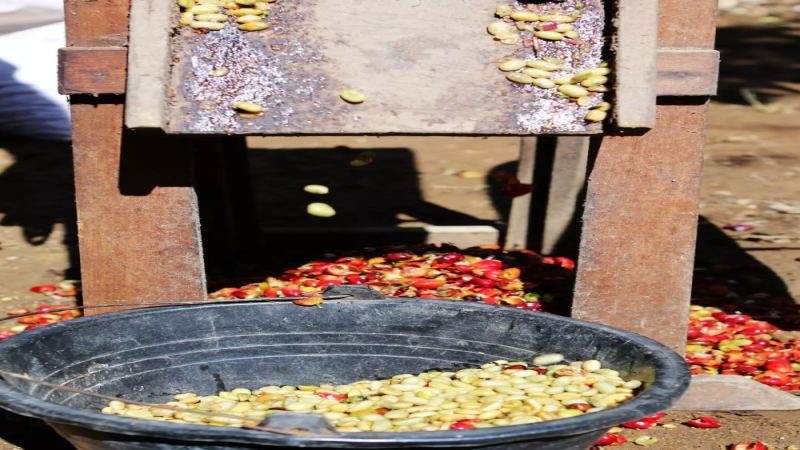
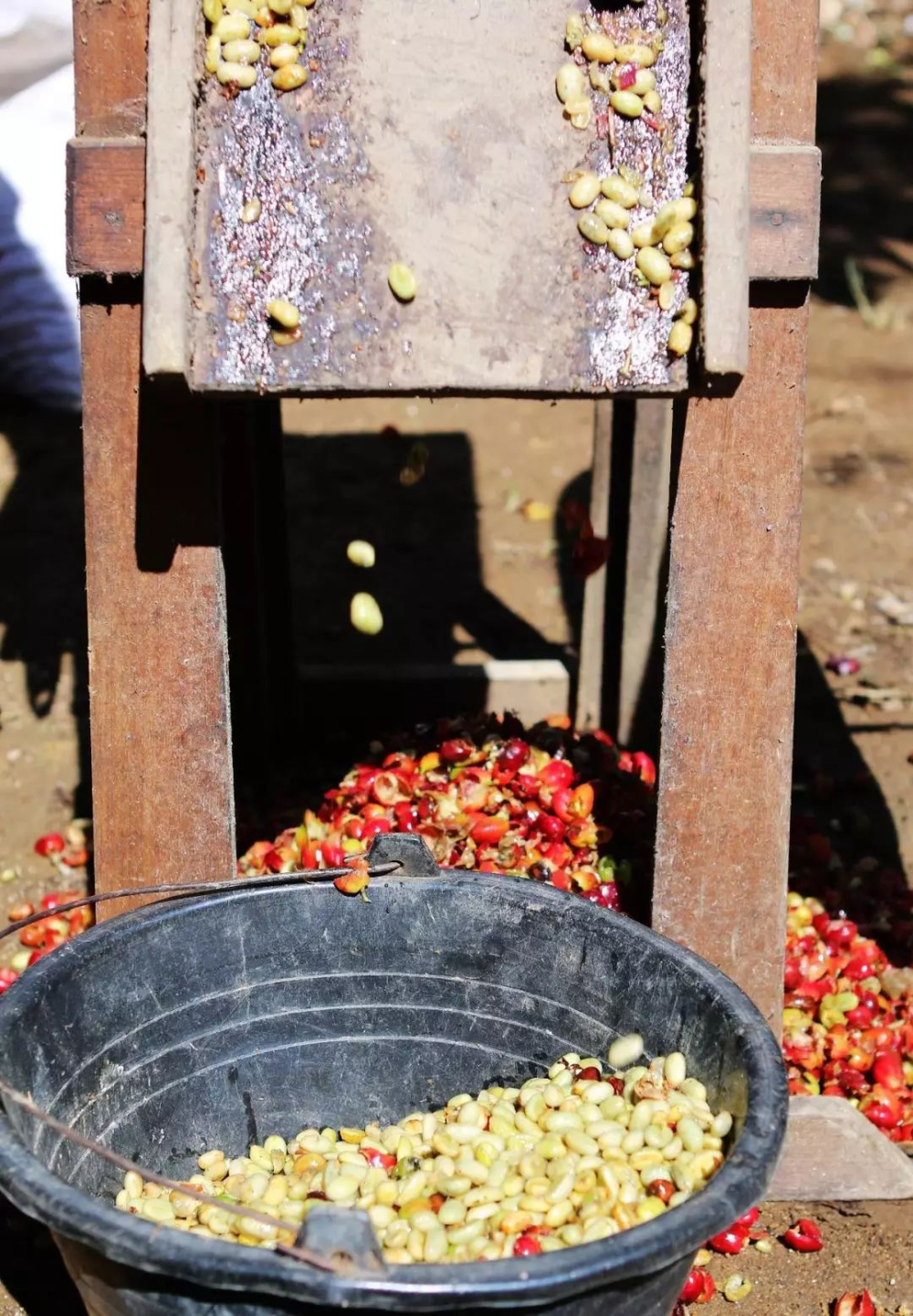
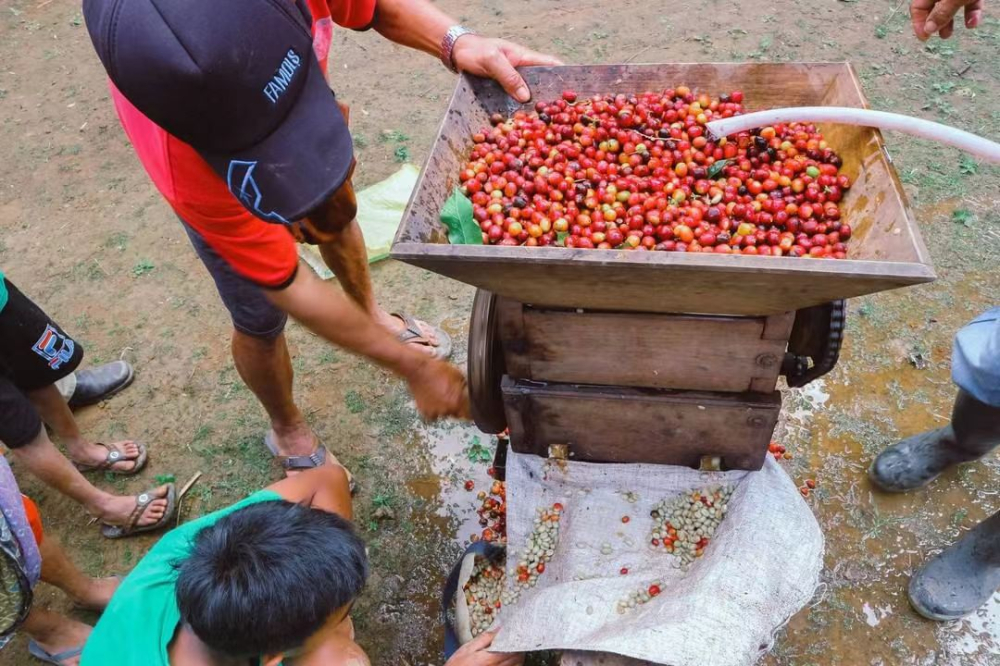
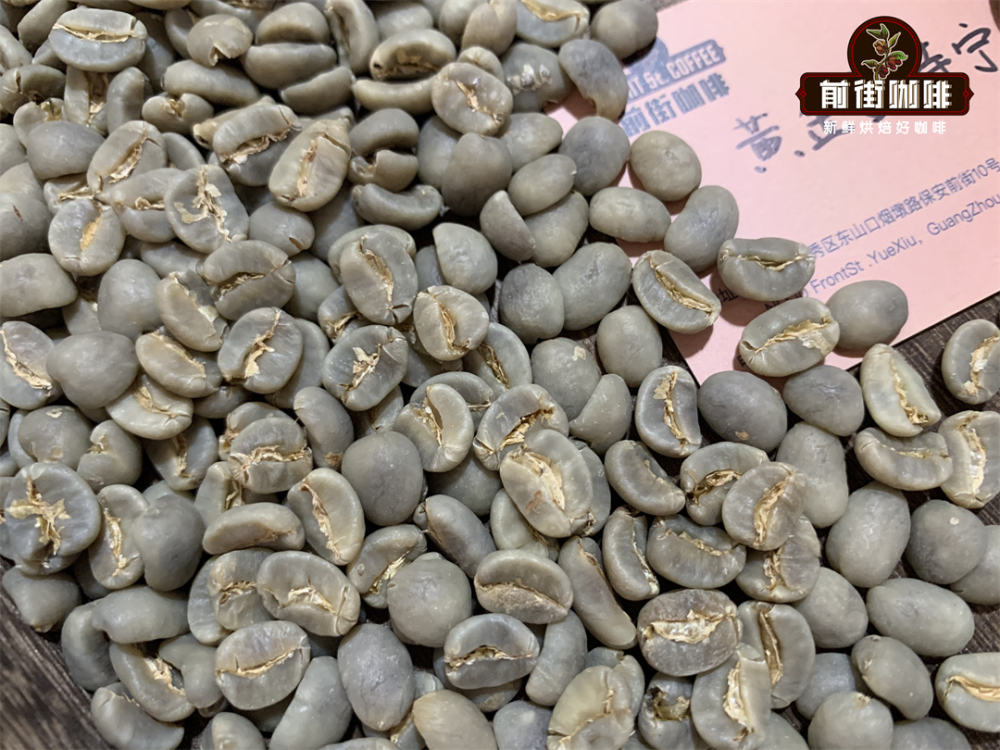
As Front Street mentioned above, wet-hulling is a fast-paced coffee bean processing method: first the skin and pulp are removed, then after a brief fermentation the beans enter the drying stage, next the mucilage and parchment layer are removed, and then the latter stage of drying continues until the moisture content drops to 12%. On the surface of Mandheling coffee beans processed by wet-hulling, compression cracks of varying degrees can often be seen. FrontStreet Coffee believes that such marks should not be counted as defective beans, but rather regarded as an inherent characteristic of Mandheling.
The "Horseshoe Beans" Caused by Indonesian Wet-Hulling
As Front Street mentioned above, wet-hulling causes coffee beans to develop "defects" because when the parchment is removed, the beans' moisture content is still as high as 20-24%, whereas conventional processing methods usually wait until the moisture content drops to 10-12% before hulling. In this "semi-dry" state, the parchment tends to stick to the surface of the green beans, making removal harder than in the "fully dry" state, and the hulling process requires stronger friction.
Looking at it another way, green coffee beans in the "semi-dry" state are extremely fragile at this point, with far less hardness than "fully dry" green beans, making them more prone to being crushed and forming tiny chips. This is why coffee enthusiasts, when buying Mandheling coffee beans from Front Street, will find that some beans look strikingly like horseshoes or goat hooves—and this has become one of the signature features of Mandheling coffee beans.
Wet-hulling is extremely fast, which also leads to a relatively high defect rate in Mandheling, so Indonesian processing plants arrange workers to hand-sort, usually divided into DP (secondary hand-sorting) and TP (tertiary hand-sorting); Mandheling that has undergone tertiary hand-sorting performs better in terms of defect rate than secondary hand-sorting.
The above is the information on wet-hulling compiled by Front Street, and we hope it can help coffee enthusiasts who want to understand this processing method. Next, Front Street will share a few Indonesian Mandheling coffees that use the wet-hulling method.
FrontStreet Coffee Golden Mandheling Coffee Beans
Country: Indonesia
Region: Sumatra
Altitude: 1100-1600
Variety: Typica, 19 screen
Processing Method: Wet-Hulling
Flavor: Nuts, spices, herbs, licorice, chocolate, caramel; clean and gentle flavor
In the Golden Mandheling category, only Mandheling produced by PWN counts as true Golden Mandheling. PWN's Golden Mandheling must undergo three rounds of hand-sorting and one round of machine-sorting, so the bean quality is excellent, essentially free of defective beans, and the roasted coffee is also cleaner.
For this reason, Front Street believes that Golden Mandheling has the most distinctive flavor, clean and translucent on the palate, with a more pronounced sweetness than ordinary Mandheling, while also softening some of the earthy off-notes brought by wet-hulling.
FrontStreet Coffee Tiger Mandheling Coffee Beans
Country: Indonesia
Region: Sumatra
Altitude: 1500m
Variety: Caturra, Typica, Sidikalong
Processing Method: Wet-Hulling
Flavor: Cream, dark chocolate, nuts, balanced taste
The Tiger Mandheling selected by FrontStreet Coffee comes from Tiger Estate in Sumatra, Indonesia, and is therefore also called "Mandheling Tiger." The criteria for Mandheling Tiger are a taste with an aroma reminiscent of traditional Chinese herbal medicine, and only Mandheling of screen 17 and above with a defect rate below 4% can be crowned with the name "Tiger."
FrontStreet Coffee Mandheling Coffee Beans (Lintong Mandheling)
Country: Indonesia
Region: Sumatra (Lintong)
Altitude: 1100-1600m
Variety: Typica, Caturra
Processing Method: Wet-Hulling
Flavor: Toasted bread, nuts, caramel, pine, herbs
Lintong Mandheling is the most common regular Mandheling at FrontStreet Coffee stores. It is named after the Lintong highlands of Sumatra, Indonesia, where it is produced; many coffees are named after their region, estate, or variety, and Lintong Mandheling is no exception. It is regarded as the most standard version because it uses only Indonesia's unique wet-hulling method, without any additional special processing, and the coffee cherry varieties are also Sumatra's native Typica and Caturra.
Front Street also understands that Lintong Mandheling is not particular about the sorting stage, so beans of varying sizes can appear. Less refined processing also tends to cause inconsistent output, but Indonesia's unique wet-hulling method can reduce the coffee's acidity and enhance its body, so it remains popular among coffee fans who prefer a full-bodied taste.
For more specialty coffee beans, please add the private WeChat of FrontStreet Coffee; WeChat ID: kaixinguoguo0925
The above content is compiled by CoffeeHunters, a coffee news website.


