








Is Mandheling a Region or a Coffee Variety?
Mandheling is neither a single origin nor a distinct variety; it is a trade name tied to Sumatra, Indonesia, and to specific grading and sorting practices. Indonesian Golden Mandheling, grown in Aceh's Gayo Mountain at 1,100 to 1,600 meters, is wet-hulled and manually sorted in several rounds rather than being defined by geography alone.
Indonesia's coffee grading system is based largely on the number of defective beans, and Golden Mandheling's plump green beans, high peaberry share, and low defect count reflect that sorting work. The Catimor variety and the wet-hulled process shape its baked toast, nut, pine, caramel, and herb notes, which helps buyers spot lots using Robusta or flavor labeling as substitutes.
Many coffee enthusiasts have a question when they first encounter Mandheling: Is Mandheling a coffee origin or a coffee variety? Front Street Coffee takes Indonesian Golden Mandheling as an example, starting from the geographical and climatic conditions of the Sumatra production region, tracing the origins of the local wet-hulling process, and providing a detailed explanation of Indonesia's coffee grading system based on the number of defective beans. The article will also delve into PWN Company's four rounds of manual sorting for Golden Mandheling, the background of the Catimor variety's introduction and its flavor changes, and finally include Front Street's practical tips for selecting authentic Mandheling, helping coffee fans avoid inferior products on the market that use Robusta as a substitute or are labeled with "flavor" wording.
For more specialty coffee news, welcome to follow our WeChat public account: Front Street Coffee (FrontStreet Coffee)
In recent years, Front Street Golden Mandheling has gained a large number of loyal followers in the global coffee community, and among the coffee enthusiasts who visit Front Street stores, many are particularly fond of this bean. A while ago, some coffee fans noticed that Front Street Golden Mandheling's green beans are especially plump, with a high proportion of peaberries and almost no defects to be found, showing a clear difference from the Mandheling they purchased through other channels. So in this article, Front Street will discuss how Front Street Golden Mandheling is actually graded.
Front Street Coffee (FrontStreet Coffee): Front Street Indonesia Golden Mandheling Coffee Beans
Country: Indonesia Region: Sumatra, Aceh, Gayo Mountain Altitude: 1100-1600m Variety: Ateng Processing Method: Wet-Hulled Flavor: Baked toast, nuts, pine, caramel, herbs
Flavor Characteristics of the Golden Mandheling Production Region
Front Street Mandheling comes from Sumatra Island in Indonesia, the largest island in Indonesia. Located near the equator, it has a typical tropical rainforest climate, with high temperatures and humidity year-round and abundant rainfall. From the perspective of natural conditions, this place is indeed very suitable for coffee cultivation. However, because the climate is too humid and water resources are scarce, coffee farmers cannot use conventional washed or natural methods to process coffee cherries. For this reason, Indonesia developed its unique wet-hulling process, which gives Indonesian coffee its signature herbal and earthy notes.
At the same time, the high-altitude areas in Indonesia suitable for growing Arabica coffee trees are quite limited. Arabica only displays its best flavor in high-altitude environments, so only about 25% of the coffee beans produced in Indonesia are Arabica, while the remaining 75% are Robusta coffee trees that can survive at low altitudes. This leads to enormous differences in the quality of coffee cherries in Indonesian production regions. To adapt to this reality, Indonesia established a coffee grading system centered on the number of defective beans.
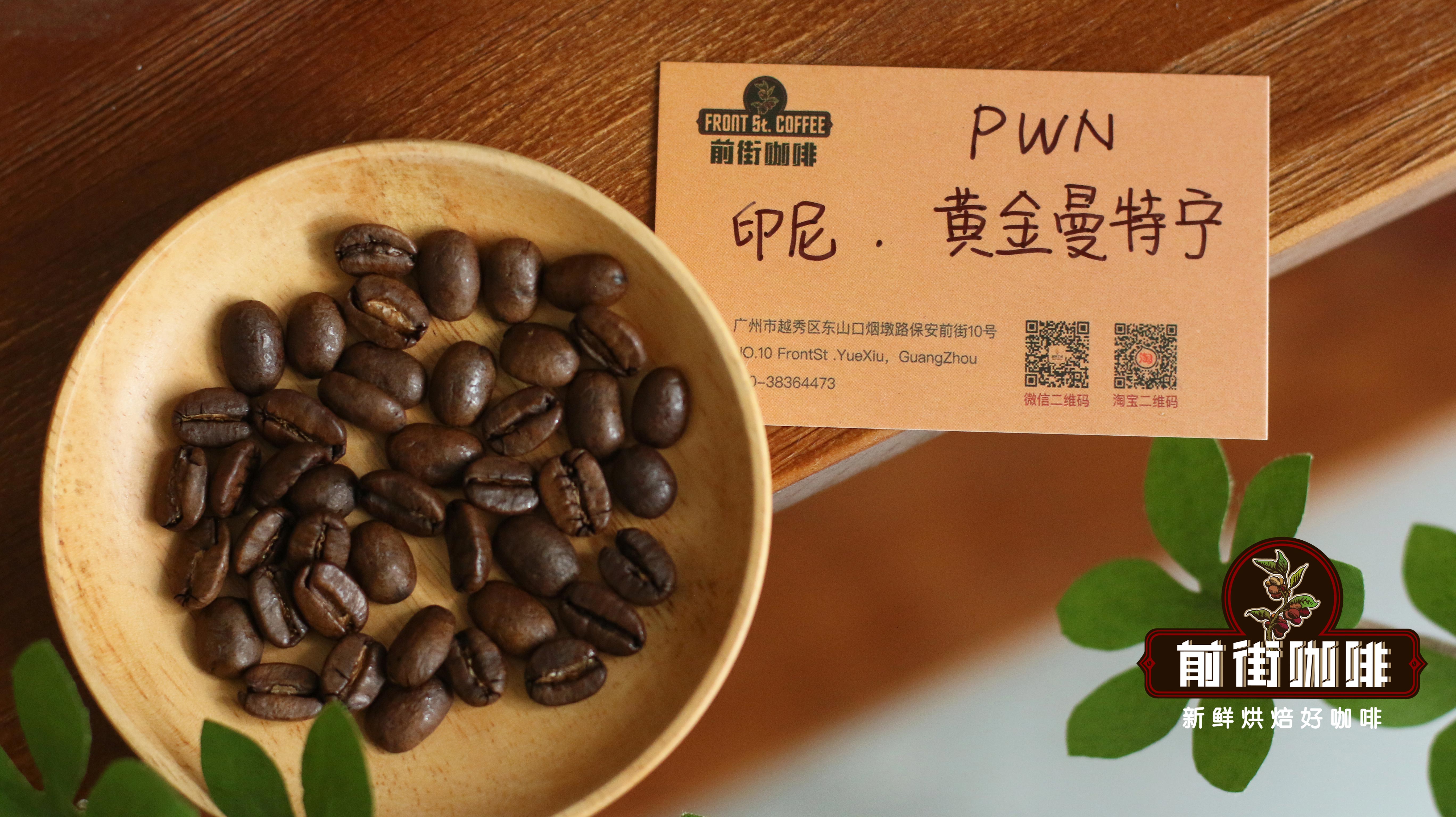
Front Street Indonesian Mandheling Coffee Bean Grading
As Front Street mentioned above, the grading of Indonesian Mandheling is mainly based on the number of defective beans, supplemented by bean size as a reference. According to Front Street's understanding, Indonesia's basic requirements for general-quality coffee beans include: no live insects, no moldy or putrid beans, maximum moisture content not exceeding 12.5%, and impurity rate below 0.5%.
The following is Front Street's defect-based grading standard for Indonesian Mandheling coffee beans (based on 300g):
In Front Street's product line, the grade of Indonesian Golden Mandheling is G1, and G1 is an extremely scarce grade that was originally customized specifically for Japanese trading companies. According to G1 requirements, a 300-gram sample may have at most 3 defect points.
Front Street PWN Golden Mandheling
Speaking of this, Front Street must mention what makes Golden Mandheling unique. Coffee fans may have already noticed that Sumatra Mandheling has many subdivided categories, such as Front Street Lintong Mandheling, Front Street Aged Mandheling, Front Street Tiger Mandheling, and so on. Among these categories, Front Street Golden Mandheling has the highest price because the coffee cherries it uses have undergone extremely rigorous screening.
This brings us to PWN Company, which specializes in producing Golden Mandheling. The Golden Mandheling produced by PWN undergoes four rounds of manual hand sorting, removing defective beans one by one and retaining only the most intact and highest-quality coffee beans. This standard is actually even stricter than G1-grade screening. It is also for this reason that PWN Company's Golden Mandheling has a cleaner mouthfeel and more pronounced sweetness than other Mandheling coffees.
Golden Mandheling Coffee Variety
At present, PWN Company no longer uses the old Typica variety derived from Arabica, and has instead adopted Catimor, a hybrid of Arabica and Robusta. Catimor was first successfully developed in 1959 and began to be widely promoted in Brazil in the 1970s and 1980s. With advantages such as strong disease resistance and high yield, it established a firm place among coffee varieties in Central and South America. The repeated outbreaks of coffee leaf rust crises in Central and South America also further promoted the spread of Catimor.
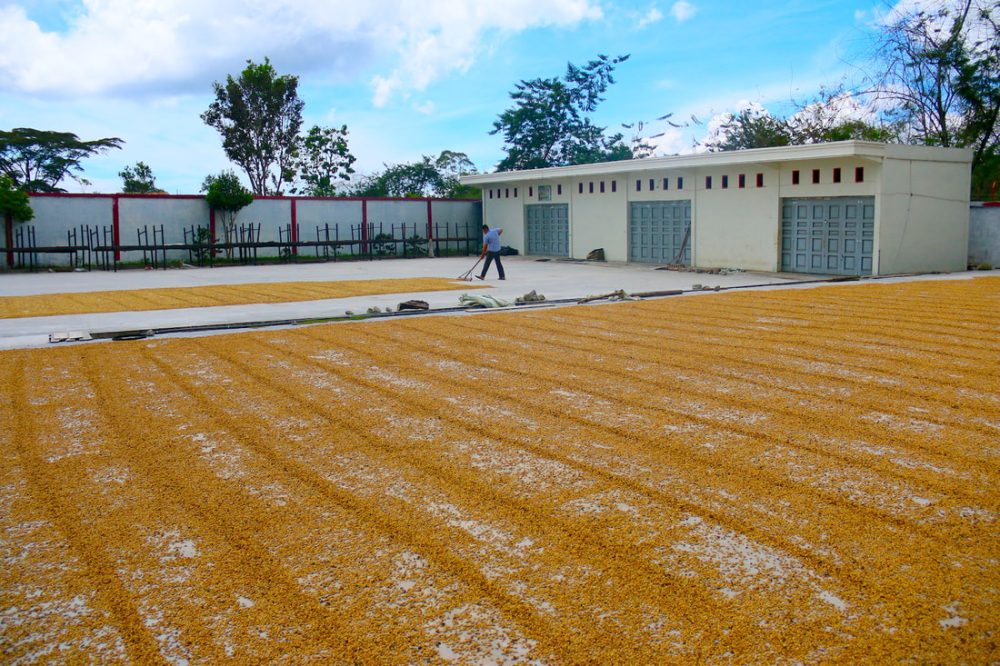
Catimor's characteristics include high yield, short plants, suitability for dense planting, and reddish-brown new leaves. However, because it matures quickly and has high productivity, its requirements for fertilizer supply and shade conditions are correspondingly higher. According to Front Street's understanding, the lifespan of Catimor trees is quite short, averaging only about ten years.
From this, it can be seen that PWN Company is also exploring ways to increase yield. Front Street believes that this coffee bean based on Catimor has a more prominent baked-toast profile in flavor performance than before, and its body has also improved, thanks to its Robusta genes, while the excellent flavors of the Arabica variety have also been retained.
The above is what Front Street has compiled regarding Front Street Golden Mandheling's grading standards and flavor characteristics. Next, Front Street will teach coffee fans how to identify unscrupulous Mandheling sellers.
Points to Note When Selecting Mandheling:
1. In fact, the largest coffee cultivation volume in Indonesia is still lower-quality Robusta (mainly used to make instant coffee, with poor flavor, so it is not within the scope of specialty coffee discussion). Arabica coffee beans account for only about 10% of annual production. Some vendors with insufficient skill or professionalism use Indonesian Robusta to pass off as Mandheling.
2. Product names containing the word "flavor": for example, Mandheling "flavor," Mamba (a blend of Mandheling and Brazil) "flavor," etc. In reality, the ingredients contain no Mandheling at all.
3. Too many defective beans: Due to the humid climate around Lake Toba, frequent pest problems, and local coffee farmers' lack of processing equipment and other factors, Mandheling is very prone to defective beans during planting, harvesting, and green bean processing. Of course, in addition to cupping and tasting, having the opportunity to observe the complete roasted beans or even green beans is also an effective way to ensure quality.
The above is what Front Street has compiled regarding some tips on how to select authentic Mandheling. We hope it will be helpful to all coffee fans.
The above content is compiled by CoffeeHunters, a coffee news website.


